The air grows heavy, thick with humidity and the buzz of cicadas. In many parts of the world, summer’s full force is arriving, bringing with it a unique set of challenges: lethargy, irritability, and that feeling of being overheated from the inside out. While modern life offers air conditioning and cold drinks, there is a deeper, more time-tested wisdom for navigating the summer heat. This wisdom is beautifully encapsulated in the Dragon Boat Festival (Duanwu Jie, 端午节), celebrated on the fifth day of the fifth lunar month. Far more than just a holiday of rice dumplings and boat races, it is an ancient public health observance, a ritual designed to harmonize the human body with the fierce energy of midsummer. Let’s explore how these Dragon Boat Festival summer rituals can offer us practical, cooling strategies for modern life.
- The Fifth Month: A Time of "Poison" and Protection
- The Cooling Elixir: Realgar Wine and Its Modern, Safer Alternatives
- Zongzi: More Than a Dumpling—A Seasonal Food Therapy
- The Five Colors and Vibrational Protection: Silk Threads and Sachets
- Dragon Boat Racing: The Embodiment of Community Qi
- Your Modern Dragon Boat Festival: A Practical Ritual Guide
The Fifth Month: A Time of “Poison” and Protection
In Traditional Chinese Medicine (TCM), the fifth lunar month is traditionally viewed as a period of heightened risk. The Huangdi Neijing, the foundational text of TCM, describes summer as the season when the energy of the Heart flourishes, but the fifth month specifically was considered a time when “five poisonous creatures” (五毒, wǔ dú)—the snake, scorpion, centipede, gecko, and toad—were most active. More importantly, the intense yang energy of the sun could easily become pathogenic, leading to what TCM calls “Summer-Heat” (shǔ, 暑) and “Damp-Heat” (shī rè, 湿热) invading the body.
My grandmother, who grew up in a village near Hangzhou, always marked the fifth month by hanging bundles of mugwort (Artemisia argyi) and calamus (Acorus calamus) on our doorframe. She’d say, “We hang the herbs not to scare ghosts, but to tell the summer heat and the bugs that this house is protected.” This wasn’t superstition; it was a form of preventative medicine. The volatile oils from these plants create an aromatic barrier, and modern research has confirmed their insect-repelling and antimicrobial properties. A 2015 study in the Journal of Ethnopharmacology noted that Artemisia argyi essential oil exhibits significant repellent activity against mosquitoes (Wang et al., 2015). The festival’s rituals are, at their core, a sophisticated public health campaign against the seasonal challenges of heat, dampness, and pestilence.
The Cooling Elixir: Realgar Wine and Its Modern, Safer Alternatives
One of the most iconic, yet now largely symbolic, rituals is drinking realgar wine (xióng huáng jiǔ, 雄黄酒). Traditionally, a tiny amount of realgar (arsenic sulfide) was mixed into rice wine or dabbed on a child’s forehead, ears, and nose. The belief was that its potent, “yang” nature could repel the “five poisons” and evil spirits. While we now know ingesting arsenic is toxic, the underlying principle is fascinating: using a strong, mineral-based substance to counteract the toxic influences of the season.
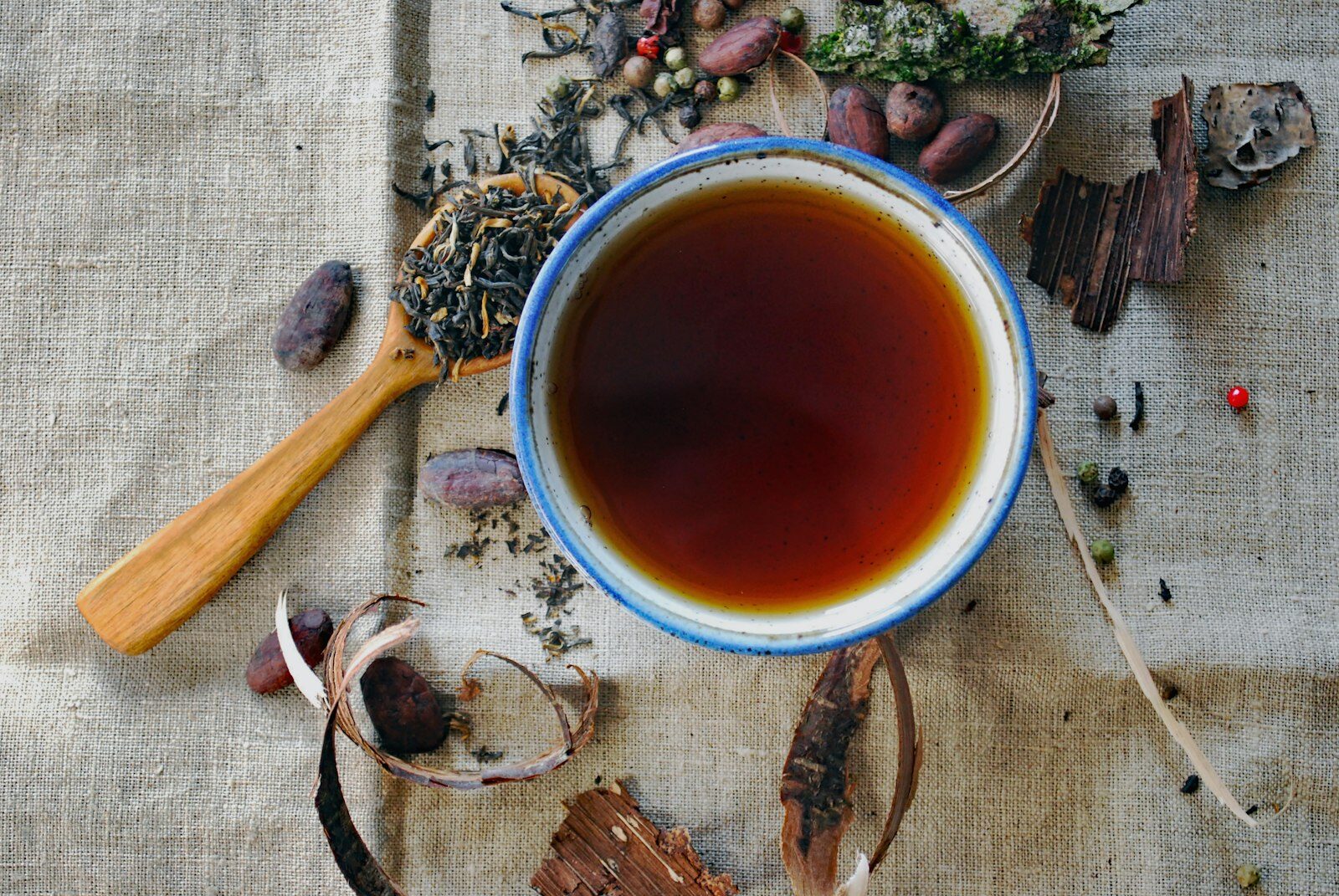
The modern, safe, and wisdom-filled alternative is to focus on herbal teas and infusions that clear heat and resolve dampness. Instead of realgar, we can turn to herbs that have a cooling, detoxifying nature. Here is a simple, actionable guide to creating your own “protective” summer infusions:
- Chrysanthemum & Goji Berry Tea (Júhuā Gǒuqǐ Chá): Use 5-6 dried Chrysanthemum moriflorum flowers and 1 tablespoon of goji berries (Lycium barbarum). Steep in hot water (80°C/176°F) for 5 minutes. This classic combination clears Liver-Fire (associated with summer irritability and red eyes) and nourishes Yin fluids. It’s a staple in my home from June through August.
- Barley and Job’s Tears Tea (Dàmài Chá / Yìyǐ Chá): Toast 1/2 cup of unhulled barley (Hordeum vulgare) and 1/4 cup of Job’s tears (Coix lacryma-jobi) in a dry pan until fragrant. Simmer in 4 cups of water for 20 minutes, strain, and drink warm or cool. This is a powerhouse for draining dampness. Research in the Journal of Agricultural and Food Chemistry suggests barley phenolics have antioxidant and anti-inflammatory effects (Idehen et al., 2017).
- Mint and Honeysuckle Cooler: Steep a handful of fresh mint (Mentha haplocalyx) and 1 tablespoon of dried honeysuckle flowers (Lonicera japonica) in a pitcher of cold water overnight in the fridge. This “cold infusion” method extracts gentle flavors and cooling properties without bitterness. It’s incredibly refreshing and helps vent rashes or skin irritations that flare in summer heat.
Zongzi: More Than a Dumpling—A Seasonal Food Therapy
The zongzi (粽子), those sticky rice parcels wrapped in bamboo or reed leaves, are the edible heart of the festival. But their ingredients are no accident; they are a form of food therapy perfectly aligned with the season. The bamboo leaves themselves are cooling and detoxifying in TCM. The classic fillings—red bean paste, jujube dates, and salted egg yolk—each serve a purpose.
During my certification studies in Beijing, a professor once explained that the sweet red bean (Chì xiǎo dòu, Vigna angularis) filling is specifically chosen for its ability to “drain dampness and reduce swelling.” In the Shennong Bencao Jing, one of the earliest materia medica texts, red beans are noted for their therapeutic properties. Modern nutritional analysis shows they are rich in potassium, which helps regulate fluid balance. The salted egg yolk, while salty, provides a mineral boost and, in the context of the rich, sweet rice, creates a balance that prevents the food from being overly cloying or damp-producing.
“The superior doctor prevents sickness; the mediocre doctor treats impending sickness; the inferior doctor treats actual sickness.”
— Huangdi Neijing
This ancient proverb perfectly captures the spirit of the Dragon Boat Festival. It’s not about treating heatstroke after it happens; it’s about building resilience and creating an environment—both internal and external—where sickness is less likely to take hold.

The Five Colors and Vibrational Protection: Silk Threads and Sachets
Another beautiful ritual is tying five-colored silk threads (wǔsè xiàn, 五色线) around the wrists, ankles, or necks of children (and adults!). The five colors—green, red, yellow, white, and black—correspond to the Five Elements (Wood, Fire, Earth, Metal, Water) and the five organ systems in TCM. This is not mere decoration; it’s a symbolic act to create a harmonious, balanced energetic field around the body, protecting it from the chaotic, excessive yang energy of the season.
Similarly, sachets (xiāngbāo, 香包) filled with aromatic herbs are worn or carried. A traditional blend might include:
- Atractylodes (Atractylodes lancea, Cāng zhú): 10g, for drying dampness.
- Dried Tangerine Peel (Chén pí): 5g, for regulating qi and aiding digestion.
- Clove (Syzygium aromaticum, Dīng xiāng): 3-4 buds, for its warming, aromatic, and insect-repelling qualities.
- Mugwort (Artemisia argyi, Ài yè): A small handful, for its protective and warming properties.
Place the herbs in a small muslin bag or a decorative sachet. Carry it in your pocket or hang it near your workspace. The gentle aroma acts as a constant, subtle reminder to stay centered and provides a micro-climate of protection. A 2018 study in Molecules highlighted that many traditional sachet herbs, like clove and mugwort, contain compounds with demonstrated antimicrobial and calming effects (Joshi et al., 2018).
Dragon Boat Racing: The Embodiment of Community Qi
While we may not all have access to a dragon boat, the principle behind the racing is vital for summer wellness: collective, purposeful movement. The drumbeat, the synchronized paddling, the shouting—it’s a massive release of built-up yang energy. Summer, ruled by the Heart in TCM, is a time when emotions can run high. Stagnant emotional energy, or “Liver Qi stagnation,” can easily transform into heat, leading to anxiety, insomnia, and irritability.
The dragon boat race is a brilliant cultural solution. It transforms potential aggression and restlessness into a joyful, communal effort. For our modern lives, the lesson is to find our own “dragon boat” activity. This could be:
- A group fitness class (spin, dance, rowing) where you move in unison with others.
- A community gardening session, working the soil together.
- A group hike with a shared pace and destination.
The key is synchronized effort toward a common goal. This “vents” summer heat through the skin (as sweat), calms the mind through focused action, and strengthens social bonds, which are themselves a form of emotional medicine. The Huangdi Neijing advises that in summer, one should “let the mind have pleasure without being overstimulated.” A communal physical activity fits this perfectly.
Your Modern Dragon Boat Festival: A Practical Ritual Guide
You don’t need to celebrate the lunar calendar date to harness this wisdom. Integrate these principles when the summer heat peaks. Here is a step-by-step guide for a personal “cooling ritual” day:
Morning (7-9 AM): Vent and Protect
- Open Your Home: First thing, open windows to let the morning, cooler air circulate. If you have fresh mugwort or rosemary, place a small bundle by the open window.
- Drink a Cooling Tea: Prepare the Chrysanthemum & Goji Berry Tea mentioned above. Sip it mindfully.
- Tie Your Thread: Cut a 12-inch piece of green or blue embroidery thread (representing the Wood element, which soothes the Heart-Fire). Tie it loosely around your left wrist as a symbolic act of setting a protective intention for the day.
Midday (11 AM-1 PM): Nourish and Ground
- Eat a “Dragon Boat” Lunch: Make a simple Cold Mung Bean and Cucumber Salad. Mung beans (Vigna radiata) are one of the most powerful heat-clearing foods in TCM. Cook 1 cup of mung beans until just tender, cool, and toss with sliced cucumber, a splash of rice vinegar, a drizzle of sesame oil, and a pinch of salt.
- Rest During Peak Yang: The hour of the Horse (11 AM-1 PM) is when yang energy is at its peak. Take a 20-minute break. Sit quietly, perhaps with your sachet, and practice deep, abdominal breathing to calm the Heart.
Afternoon (3-5 PM): Move and Release
- Find Your “Boat”: Engage in some form of rhythmic, communal, or purposeful movement. This could be a 30-minute brisk walk in a park, a gentle swim, or even a session of Tai Chi or Qigong in your backyard. The goal is to break a light sweat, which TCM considers a vital way to “vent” summer heat.
Evening (7-9 PM): Cool and Soothe
- Prepare a Light Dinner: Opt for a Congee with Lily Bulbs and Pear. Simmer 1/2 cup of rice in 4 cups of water or broth with 10g of dried lily bulbs (Lilium brownii, Bǎi hé) and half a pear, diced. Lily bulbs are traditionally used to moisten the Lungs and calm the Spirit, perfect for summer’s dry heat.
- Take a Cool Foot Bath: Soak your feet in cool (not ice-cold) water with a handful of Epsom salts and 5 drops of peppermint essential oil. In TCM, the feet are the starting point of the Kidney meridian; cooling them helps draw heat downward and out of the body.
- Remove Your Thread: Before bed, ceremonially cut the green thread from your wrist. As you do, think of releasing any irritability or heat you’ve absorbed during the day. You can burn it safely or bury it in a plant pot, symbolizing the transformation of energy.
Common Questions
Is the Dragon Boat Festival only about cooling down?
While cooling and protection are central themes, the festival also emphasizes balance and community. The dragon boat races foster social cohesion, and the food rituals (like sharing zongzi) strengthen family bonds. It’s a holistic approach to navigating a challenging season, addressing physical, emotional, and social well-being simultaneously.
Can I practice these rituals if I’m not Chinese?
Absolutely. The wisdom is rooted in observing nature and applying practical solutions to seasonal changes—universal human experiences. You can adapt the rituals to your own cultural context. The core principles of using cooling herbs, mindful eating, purposeful movement, and creating protective symbolic acts are accessible to everyone. Focus on the intention behind the action.
What if I can’t find traditional Chinese herbs?
Many Western herbs have similar cooling, detoxifying properties. For teas, you can substitute peppermint (Mentha × piperita) for mint, elderflower for honeysuckle, and chamomile for chrysanthemum. For sachets, use lavender, rosemary, and lemon balm. The key is to choose herbs that are aromatic and have a traditionally “cool” or calming reputation.
The bottom line: The Dragon Boat Festival offers more than cultural spectacle; it provides a timeless blueprint for summer wellness. Its rituals—from protective herbs and cooling teas to communal movement and symbolic acts—are sophisticated tools for harmonizing our internal environment with the fierce external heat. By integrating even one or two of these practices, we can move through summer not just surviving, but with greater resilience, balance, and connection to the natural world.
About the Author
Yu Xi Zhang grew up in a Chinese household where traditional wellness practices were part of daily life. With over 15 years of study under licensed TCM practitioners in Beijing and Chengdu, and a certification in TCM nutrition from the Beijing University of Chinese Medicine, she bridges Eastern wisdom with Western wellness in practical, actionable ways. Her writing draws from classical texts like the Huangdi Neijing and modern research to help readers live healthier, more balanced lives.
This article is for educational purposes and reflects traditional wellness perspectives. It is not a substitute for professional medical advice, diagnosis, or treatment.