Some days, my mind feels like a browser with forty-seven tabs open. I’ll be folding laundry while mentally drafting an email, half-listening to a podcast, and suddenly remembering I forgot to defrost the chicken for dinner. Sound familiar? In Traditional Chinese Medicine (TCM), we call this state a “scattered Shen” — when your spirit, or Shen, is fluttering about like a kite in a gusty wind, untethered and restless. It’s the opposite of the calm, focused clarity we all crave. The antidote isn’t to force the kite down, but to give it a gentle, steady anchor. For centuries, Chinese wellness practitioners have used the power of visualization — not as vague daydreaming, but as a precise tool to guide the body’s energy. Today, I want to share one of my favorite and most effective practices: the 5-Minute Waterfall Meditation. It’s a simple, TCM-inspired visualization designed specifically to cool a hot, agitated mind and invite a profound sense of flow and calm. All you need is five quiet minutes and your imagination.
Why a Waterfall? The TCM Logic of Cooling Imagery
In TCM, the body is a landscape of energy, or Qi. When we’re stressed, overthinking, or angry, it often manifests as “Heat” rising to the head. You know the feeling: a flushed face, a tight jaw, thoughts that race and won’t stop. This isn’t just a metaphor. In TCM theory, excessive Heat (or a deficiency of cooling, Yin energy) disrupts the flow of Qi and can agitate the Shen, leading to anxiety, insomnia, and that frantic, scattered feeling. The solution is to introduce a cooling, descending energy to balance things out.
This is where the waterfall comes in. Water, in the Five Element system, is the element of winter, rest, and deep wisdom. It is profoundly Yin — cool, quiet, and flowing downward. A waterfall is water in its most active, descending form. Visualizing it does two powerful things:
- It cools the Heat: The image of cool, cascading water directly counters the rising, hot energy in the head, helping to soothe an agitated Shen.
- It promotes downward flow: The constant downward movement of the water guides your scattered Qi downward, out of your head and into your lower abdomen, the body’s center of gravity known as the Lower Dantian. This is like giving all those frantic browser tabs a single, calm place to land.
My grandmother had a simple saying for when my cousins and I were overexcited: “Xīn jìng, zì rán liáng.” It translates to “A calm heart naturally cools.” She didn’t use fancy terms like “Shen” or “Qi,” but she knew the principle. A quiet mind is a cool mind. The waterfall visualization is a shortcut to that quiet.
Before You Begin: Setting the Stage for 5 Deep Minutes
The beauty of this practice is its simplicity, but a little preparation helps you get the most from those five minutes. You don’t need a meditation cushion or incense (though they’re nice!). You just need to be intentional.
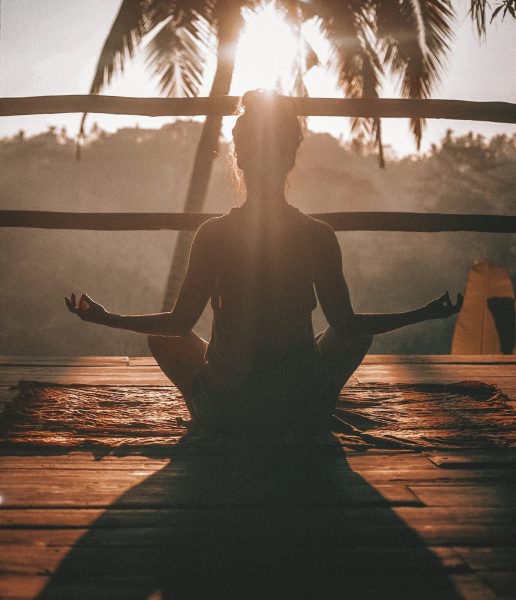
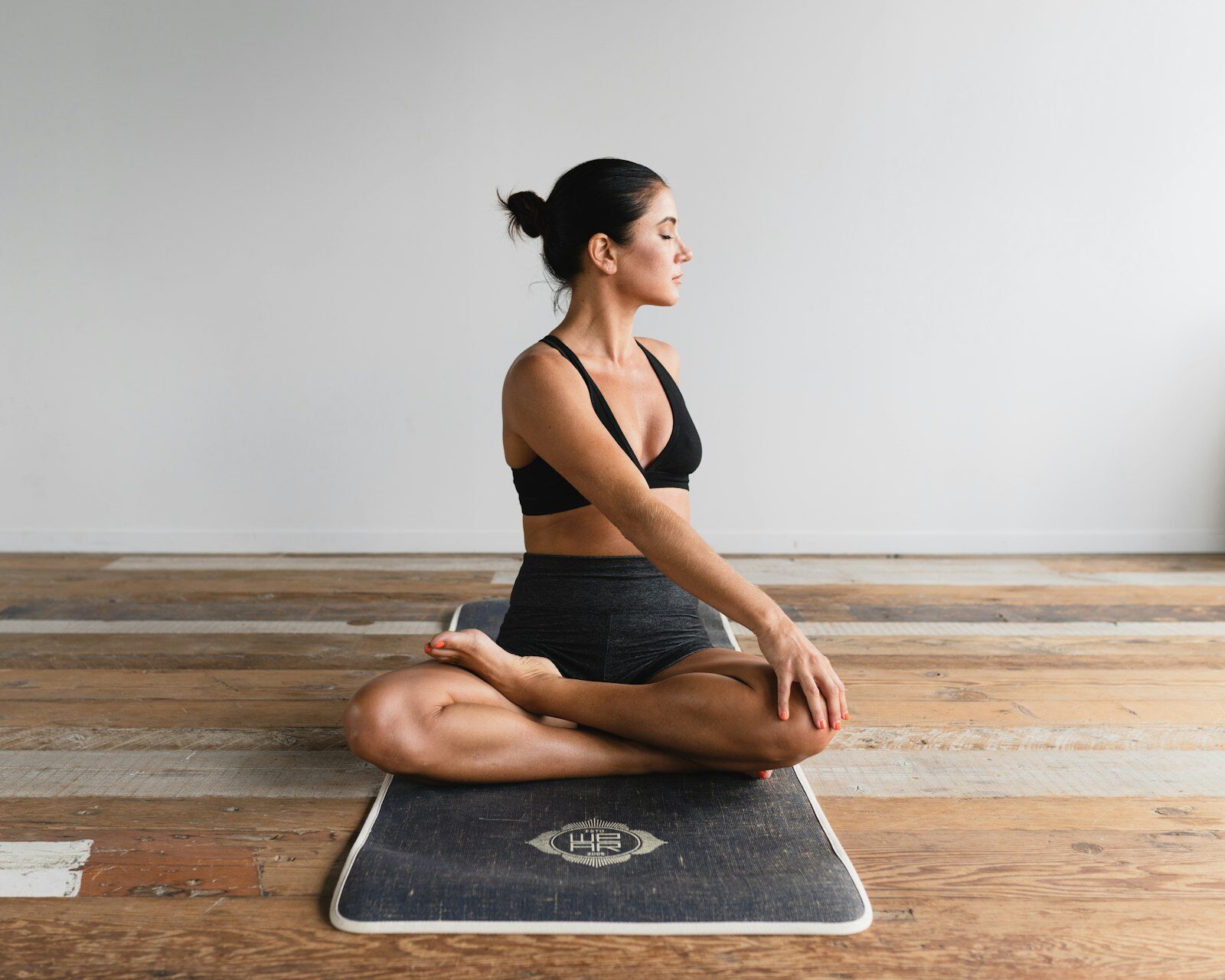
Find Your Spot: Sit comfortably in a chair with your feet flat on the floor, or on a cushion on the ground. The key is to have a straight but not stiff spine — imagine a string gently pulling the crown of your head toward the ceiling. Rest your hands on your thighs, palms down.
Set a Timer: Use your phone timer for exactly 5 minutes. This removes the mental calculation of “how long has it been?” and allows you to surrender to the practice. Choose a gentle alarm tone, not a jarring one.
The Ideal Time: While you can do this anytime you feel overwhelmed, TCM suggests it’s especially powerful between 11 am and 1 pm (the Heart time, when the Shen is most active) or in the late afternoon when the day’s stress has accumulated. Avoid doing it right before bed if you find visualization energizing — for some, the moving water can be stimulating rather than calming. If you want sleep support, try a “still lake” visualization instead.
Optional Prep: For an extra layer of cooling, sip a cup of chrysanthemum tea (菊花, jú huā) beforehand. It’s a classic TCM herb for clearing heat from the head and calming the eyes. Steep 6-8 dried flowers in a mug of hot water for 3 minutes. The slightly sweet, floral taste sets a soothing tone.
The 5-Minute Waterfall Meditation: A Step-by-Step Guide
Close your eyes after starting your timer. Take three slow, deep breaths. Inhale through your nose, letting your belly expand. Exhale through your mouth, letting your shoulders drop. Let the breath become natural and easy.
Minutes 1-2: The Setting. In your mind’s eye, picture yourself standing in a lush, green forest. The air is cool and smells of damp earth and pine. You hear the distant sound of falling water. Follow a gentle path until you come to the source: a magnificent waterfall, about 10 feet high, cascading into a deep, clear pool. The water is crystal clear and cool. Feel the fine mist on your face and hands. Watch the water fall — it is constant, powerful, and serene.
Minutes 3-4: The Descent. Now, imagine that the waterfall isn’t just outside you — it’s within you. Picture a stream of this same cool, clear water beginning at the crown of your head. As you inhale, the waterfall flows gently down. It streams over your forehead, cooling any tension there. It flows down the back of your neck, releasing tightness. It cascades down your shoulders, your arms, your chest, washing away the day’s heat and agitation. With every exhale, you release a little more stress into the pool below. The water flows steadily down through your torso, your hips, your legs, carrying all scattered thoughts and fiery emotions with it, down, down, into the deep, calm pool of your Lower Dantian (located about three finger-widths below your navel).
Minute 5: The Pool. For the final minute, rest your awareness in that lower pool. Feel the cool, still water collected there. It is deep, calm, and full of quiet energy. There is no sound but the gentle hum of the waterfall above, sustaining this peace. Breathe normally. You are not your thoughts; you are the deep, cool pool receiving the water. When your timer chimes, gently let the image fade. Wiggle your fingers and toes, take one more deep breath, and slowly open your eyes.

Beyond the Basics: Making the Practice Your Own
Once you’re comfortable with the basic script, feel free to personalize it. The goal is to create an image that feels deeply cooling and descending to you.
For the Overthinker: If your main challenge is a constant loop of thoughts, try adding a visual element. Imagine each thought as a dry leaf falling from a tree. The waterfall stream catches these leaves, swirls them gently in the current, and carries them down into the pool, where they soak and become still.
For the Anxious or Wired: Emphasize the sound of the waterfall. In your mind, let the steady, white-noise roar of the water drown out the internal chatter. You can even play a recording of a waterfall softly in the background to anchor your auditory sense. The sound is a form of “white noise” for the Shen.
For Physical Heat (Hot Flashes, Inflammation): Focus on the temperature. Imagine the water is refreshingly cool, not cold. See it turning from a warm, agitated red (representing heat) to a clear, cool blue as it flows down your body and pools in your lower abdomen.
You can also adjust the “scene.” Some people prefer a gentle rain shower falling over them, or standing under a cool, gentle stream in a meadow. The core principle is the same: a cooling, descending, flowing energy moving from head to belly.
The Science & The Tradition: Why This Works
While the TCM framework provides a beautiful map, modern psychology offers complementary insights. Visualization meditation is a form of “directed imagery,” a technique studied for its effects on the nervous system. When you vividly imagine a calming scene, your body can begin to respond as if it were real. Studies suggest this can lower cortisol levels, reduce heart rate, and activate the parasympathetic nervous system — our “rest and digest” mode.
Think of it this way: your nervous system doesn’t fully distinguish between a vividly imagined threat and a real one (hence, why a scary movie makes your heart race). The flip side is also true. By vividly imagining a profoundly safe, cool, and serene environment, you send a powerful signal to your body that it’s okay to calm down. You’re not just thinking about calm; you’re installing it in your physiology.
“The mind is everything. What you think you become.” – Often attributed to Buddha, this ancient wisdom underscores the core principle of visualization: your focused mental imagery has the power to shape your physical and emotional reality.
The waterfall combines this with the principle of embodied cognition — using the body’s sense of direction and space to influence mental state. The “downward” focus is a physical cue for your mind to release and descend from high-alert, heady thinking into grounded, present-moment awareness.
Troubleshooting: When Your Mind Won’t Cooperate
Let’s be real: your mind will wander. You’ll be mid-waterfall and suddenly remember you need to buy oat milk. This is not failure! It’s the entire point of the practice. The moment you notice you’ve wandered is a moment of mindfulness. Gently, without judgment, guide your attention back to the image of the water flowing down.
If the image is hard to hold, anchor it with a physical sensation. Place a cool, damp cloth on the back of your neck before you begin, or hold a smooth, cool stone in your hand. These tactile cues can help bring you back to the visualization when your mind drifts.
If five minutes feels too long at first, start with two. Consistency beats duration. A daily two-minute practice is far more transformative than one heroic 20-minute session every few weeks.
Common Questions
Can I do this meditation if I’m not into TCM?
Absolutely. While I frame it through a TCM lens because that’s my background, the practice itself is universal. It’s simply a focused, cooling visualization. You don’t need to believe in Qi to benefit from the calming effects of guided imagery and a downward focus. Think of the TCM terms as helpful metaphors for real physiological and psychological states.
I have a hard time visualizing. What can I do?
You’re not alone. “Aphantasia” (the inability to visualize) is more common than we think. If you can’t “see” the waterfall, engage your other senses. Listen to the sound of falling water (use a recording). Feel the cool mist on your skin by lightly misting your face with water. Imagine the sensation of cool water flowing down your body without needing a clear picture. The feeling of descending, cooling energy is what matters most.
Is there a “wrong” way to do this? Can I make myself worse?
The only “wrong” way is to force it or judge yourself for wandering thoughts. This is a gentle, nurturing practice. It’s highly unlikely to make you feel worse. However, if you have a history of trauma or severe anxiety, and deep relaxation or internal focus feels triggering, it’s best to practice with the guidance of a therapist or experienced meditation teacher. Always listen to your body. If the waterfall image feels overwhelming, switch to imagining a gentle, cool rain shower instead.
The bottom line: The 5-Minute Waterfall Meditation is a powerful, portable tool rooted in the TCM principle of using cooling, descending imagery to calm a hot, scattered mind. By dedicating just five minutes to this focused visualization, you guide your restless energy downward, soothe your Shen, and invite a deep sense of flow and clarity that you can carry with you long after you open your eyes. It’s not about emptying your mind, but about giving your mind a better place to be.
This article is for educational purposes and reflects traditional wellness perspectives. It is not a substitute for professional medical advice, diagnosis, or treatment.