
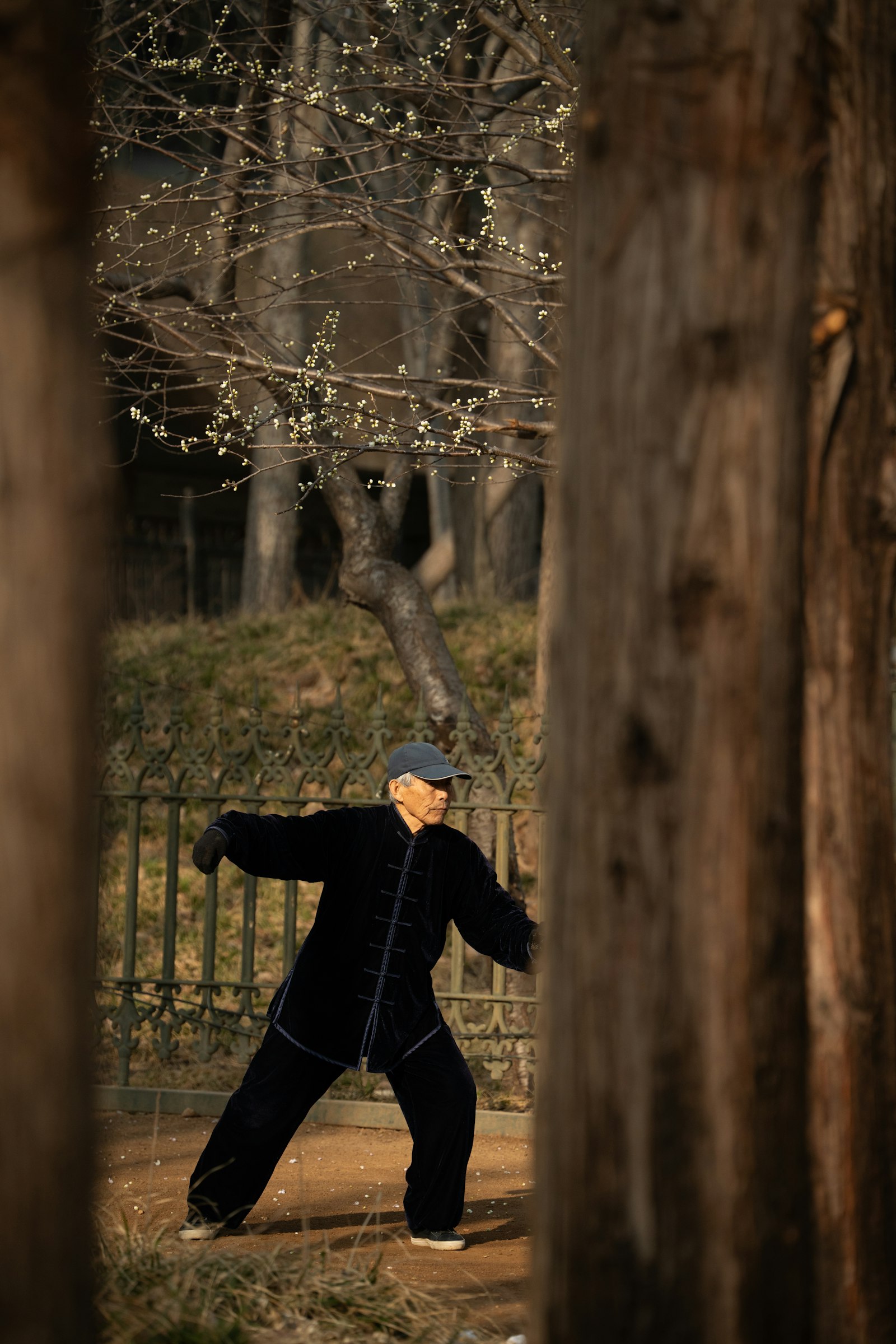
Watch a skilled tai chi practitioner and the first thing you notice isn’t the movement — it’s the breath. Slow, deep, seamless, almost invisible. The Chinese call it fù shì hūxī (腹式呼吸), “abdominal breathing,” and it’s the engine that powers every internal art from tai chi to qigong to meditation. Most adults have lost it. Relearning it is the single highest-leverage wellness skill you can acquire — and it’s free, invisible, and available right now.
What Is Abdominal Breathing?
Watch a baby breathe and you’ll see it: the belly rises on the inhale, falls on the exhale. The chest barely moves. This is abdominal, or diaphragmatic, breathing — the way humans are designed to breathe. As we grow up, stress, sitting, and self-consciousness shift our breathing upward into the chest. It becomes shallow, fast, and driven by the accessory muscles of the neck and shoulders. We literally forget how to breathe properly.
Chinese medicine identified this problem thousands of years ago and made abdominal breathing the foundation of every internal practice. The dantian — the energy center about three finger-widths below the navel — is where breath, energy, and attention converge. Breathing into the dantian is considered the single most important habit for cultivating qi, calming the mind, and regulating the nervous system.
Why It’s So Important
Modern science has confirmed what Chinese medicine always knew: how you breathe directly affects your nervous system, your heart rate, your digestion, your emotional state, and your energy levels.
| Chest Breathing (Stress Pattern) | Abdominal Breathing (Rest Pattern) |
|---|---|
| Shallow, fast, upper chest | Deep, slow, into the belly |
| Activates sympathetic nervous system (fight-or-flight) | Activates parasympathetic nervous system (rest-and-digest) |
| Raises heart rate and blood pressure | Lowers heart rate and blood pressure |
| Tenses neck and shoulder muscles | Relaxes the whole body |
| Promotes anxiety and agitation | Promotes calm and clarity |
| Shallow oxygen exchange | Full, efficient oxygen exchange |
| Compresses digestion | Gently massages the digestive organs |
Most adults are chronic chest breathers. This means most adults are living in a low-grade stress state, all day, every day, simply because of how they breathe. Reversing this is life-changing — and it’s learnable.
How to Learn Abdominal Breathing
Step 1: Lie Down and Find Your Belly Breath
Lying down removes the postural effort and makes it easiest to learn. Lie on your back, knees bent or straight. Place one hand on your chest and the other on your belly, just below your navel. Breathe naturally and notice which hand moves. If the chest hand moves more, you’re chest breathing — which is exactly what we’re going to fix.
Step 2: Direct the Breath Downward
Now, consciously breathe so that only the belly hand moves. On the inhale, let your belly expand outward, pushing the hand up. On the exhale, let the belly fall. The chest hand should stay nearly still. Don’t force or strain — imagine your lungs are a balloon filling from the bottom up. The diaphragm descends and pushes the belly out. That’s the movement you’re looking for.
Step 3: Slow It Down
Once you can breathe into your belly, gradually slow the breath. A common tai chi and qigong target is about 4–6 breaths per minute — that’s a 10–15 second breath cycle (5–7 seconds in, 5–8 seconds out). Don’t force this; let it develop naturally over weeks. The slower, deeper, and smoother the breath, the deeper the nervous system settles.
Step 4: Bring It to Standing and Movement
Once belly breathing is natural lying down, bring it to sitting, then standing, then walking, and eventually into tai chi or daily life. This is a lifetime practice. The goal isn’t to “do breathing exercises” for 10 minutes a day — it’s to reset your default breathing pattern so that abdominal breathing becomes how you breathe all the time.
The breath is the only autonomic function you can consciously control — which makes it a backdoor into your own nervous system. Use it.
A Simple Daily Practice
- Morning (5 minutes): Lie in bed and do 20 slow abdominal breaths before getting up. This sets your nervous system for the day.
- Midday (2 minutes): At your desk, close your eyes and do 10 slow belly breaths. Resets stress accumulated through the morning.
- Before sleep (5 minutes): Lying in bed, 20 slow abdominal breaths, exhaling longer than you inhale. This activates the rest-and-digest system and prepares for deep sleep.
- During movement: Whenever you walk, stretch, or practice tai chi, maintain the belly breath. Movement + breath = qigong.
How to Tell It’s Working
- You feel generally calmer and less reactive to stress
- Your resting heart rate drops (measurable within weeks)
- Your sleep deepens — especially falling asleep faster
- Your digestion improves (the gentle belly massage aids the Spleen and Stomach)
- Your hands and feet warm up (better circulation from relaxed blood vessels)
- Your shoulders and jaw feel less tense
- You can handle physical and emotional challenges with more equanimity
Common Questions
Is abdominal breathing the same as “deep breathing”?
Not quite. “Deep breathing” often means taking a big chest breath — filling the upper lungs forcefully. Abdominal breathing is about where the breath goes (the belly, via the diaphragm descending), not just how much air you move. You can breathe abdominally and gently, or abdominally and deeply. The key is the belly, not the chest.
Should my stomach go in or out on the inhale?
Out. On the inhale, the diaphragm descends and pushes the abdominal contents outward, so the belly expands. On the exhale, the diaphragm rises and the belly falls. Some advanced reverse-breathing techniques reverse this, but for everyday wellness, belly-out-on-inhale is correct and foundational.
How long until abdominal breathing becomes automatic?
With daily practice, most people find their default breathing pattern starts shifting within 2–4 weeks. Full integration — where abdominal breathing becomes unconscious — typically takes 2–3 months of consistent practice. Once it’s your default, the stress-reduction and energy benefits are permanent.
Do I need to practice tai chi to benefit?
No. Abdominal breathing stands on its own as one of the most powerful wellness practices available. Tai chi, qigong, and meditation all use it, but you can practice and benefit from it independently — sitting at your desk, lying in bed, or walking to the bus stop.
The bottom line: Abdominal breathing — slow, deep, into the belly — is the foundation of every Chinese internal practice and the single most effective free technique for regulating your nervous system. Most adults have lost it and live in low-grade stress because of it. Relearn it: lie down, hand on belly, breathe so only the belly moves, slow it to 4–6 breaths per minute, and practice daily. Within weeks, you’ll feel calmer, sleep better, digest better, and carry less tension. It’s the invisible superpower you were born with and forgot.
This article reflects traditional Chinese wellness perspectives and is for educational purposes only. If you have respiratory conditions, consult your doctor before changing your breathing practice.