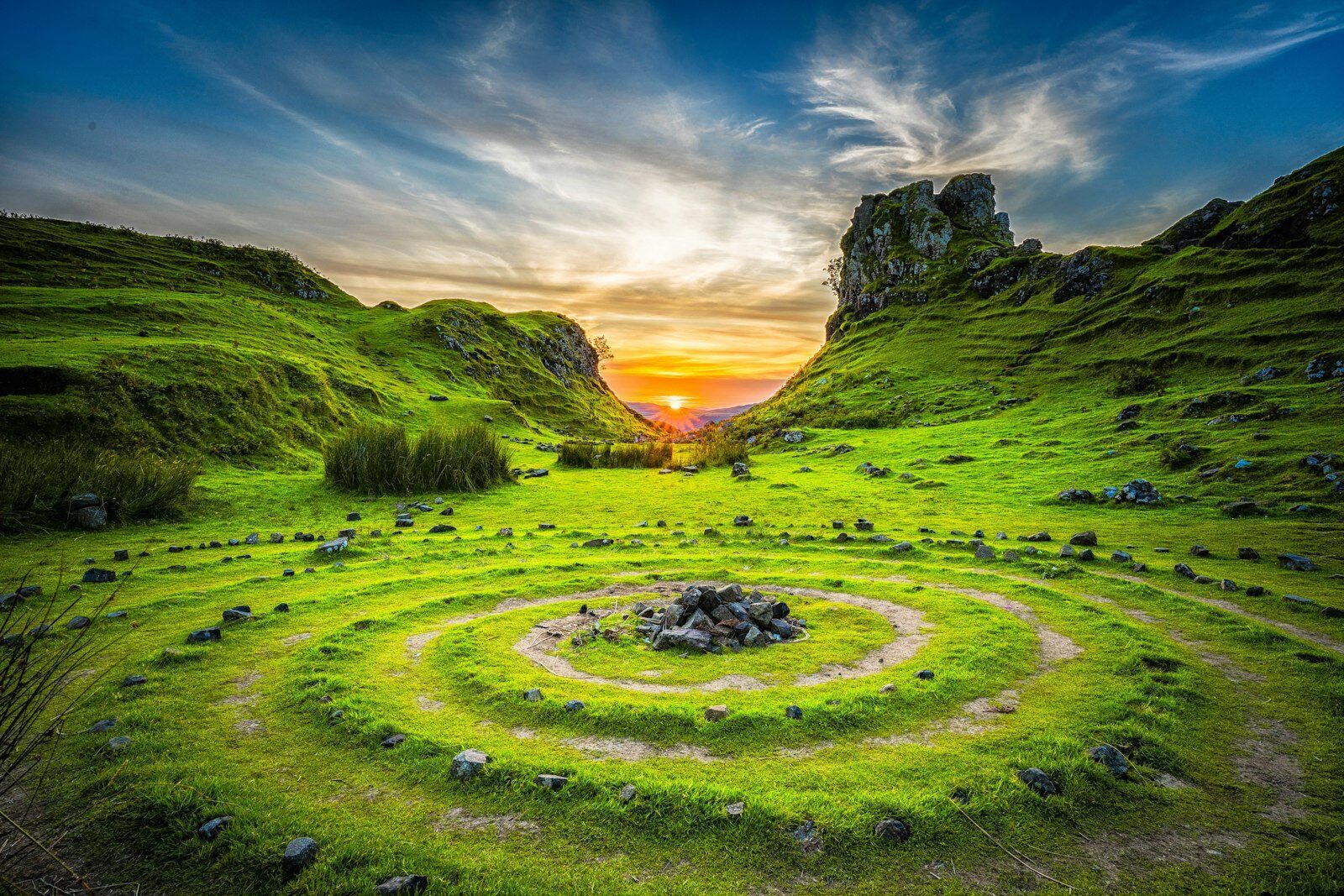
Spring arrives not just in the calendar, but in the body. You feel it as a restless energy, a desire to throw open the windows, a subtle irritability when things don’t move as quickly as you’d like. In Traditional Chinese Medicine (TCM), this is the season of the Liver, the organ system responsible for the smooth flow of Qi (vital energy) and blood. When the Liver Qi is harmonious, we feel decisive, creative, and flexible. When it’s stagnant—often after the inward, restful energy of winter—we can experience frustration, tight shoulders, headaches, and that nagging sense of being “stuck.” This is where a simple, focused practice can make all the difference. Today, we’re exploring a 5-minute spring liver meditation designed to clear that stagnation, drawing from classical principles and modern mindfulness to help you move into the season with grace.
Understanding Liver Qi Stagnation: More Than Just a Mood
In TCM, the Liver is the “General” of the body, strategizing the smooth circulation of Qi. Its nature is like a tree in spring: it wants to grow upward and outward freely. When this movement is blocked—by stress, unexpressed emotions, a sedentary lifestyle, or even dietary choices—the Qi stagnates. This isn’t a vague concept; it has tangible effects. A 2017 review in the Journal of Traditional Chinese Medicine notes that Liver Qi Stagnation is a foundational pattern linked to a wide range of modern complaints, from functional gastrointestinal disorders to mood fluctuations. The classic text, the Huangdi Neijing (Yellow Emperor’s Inner Canon), states: “The Liver stores blood and is the root of the tendons. Its flourishing is in the nails, its manifestation is in the eyes.” When its Qi is stuck, you might notice brittle nails, eye strain, or tight tendons.
My grandmother had a simple way of diagnosing it. If I was irritable and snapping at my siblings after a long winter indoors, she’d say, “Your Liver fire is rising.” Her remedy wasn’t a lecture; it was a cup of chrysanthemum tea (Chrysanthemum morifolium) and a nudge to go walk in the budding garden. The tea, cooling and gently moving, and the walk, encouraging the upward, outward movement of Qi, were her first-line interventions. This meditation is the internal equivalent of that walk—a way to gently encourage your inner spring to flow.
The 5-Minute Spring Liver Meditation: A Step-by-Step Guide
This practice combines breath, visualization, and gentle body awareness. It’s designed to be done anywhere, but ideally in the morning when the Liver’s energy is naturally rising (1-3 AM is its peak according to the organ clock, but morning is the practical time to work with it). You’ll need five quiet minutes.
- Minute 1: Arrive and Settle. Sit comfortably, spine tall but not rigid. Place your feet flat on the floor. Close your eyes or soften your gaze. Take three deep breaths: in through the nose, out through the mouth, letting go of any audible sigh on the exhale. With each exhale, consciously release the jaw, the shoulders, the belly.
- Minute 2: Connect to the Liver Area. Bring your awareness to the right side of your ribcage, beneath the diaphragm. This is where the Liver resides anatomically and energetically. Don’t force a feeling; simply notice the space. Breathe into this area, imagining you are creating more room there with each inhale.
- Minute 3: The Green Light Visualization. As you breathe, visualize a soft, spring-green light—like sunlight filtering through new leaves—gathering in this area with each inhale. This green is the color associated with the Liver in the Five Element theory. Imagine this light gently dissolving any tightness, grey, or sluggishness it encounters, like warm water melting ice.
- Minute 4: The Upward and Outward Flow. Now, on your next inhale, imagine this green light and the dissolved energy flowing upward from the Liver, through the chest, and out through the crown of your head, like a tree’s sap rising in spring. On the exhale, imagine it flowing outward through your limbs, through your fingertips and toes, like branches extending.
- Minute 5: Integration and Release. Let go of the visualization. Simply sit with the feeling of spaciousness. Place your left hand over your right ribcage (the Liver area) and your right hand over your left (the Heart area). Feel the warmth. Offer a silent intention: “May my energy flow freely. May I move through this season with flexibility and ease.” Gently open your eyes.
Why This Visualization Works: The Five Element Connection
The use of green isn’t arbitrary. In the Five Element theory—a core framework of TCM—each organ system is linked to a season, a color, a sound, and an emotion. The Liver belongs to the Wood element. Its season is spring, its color is green, its sound is shouting (or the healthy expression of anger), and its emotion is anger (when out of balance) or benevolence (when balanced). By visualizing green, we are speaking the Liver’s native language. We are using a symbolic tool to remind the organ system of its natural state: growth, expansion, and smooth flow.
A 2020 study in Complementary Therapies in Medicine explored guided imagery and found that specific, culturally resonant visualizations can significantly reduce perceived stress and improve autonomic nervous system balance. While the study wasn’t TCM-specific, it underscores the power of using meaningful imagery to influence physiological states. In this meditation, we’re not just relaxing; we’re actively guiding the body’s energy using a map that has been refined over millennia.
During my studies in Chengdu, a practitioner I apprenticed with would often say, “You don’t force the river to flow. You remove the stones.” This meditation is about identifying and gently dissolving the “stones”—the emotional tension, the physical tightness—that are blocking your Liver’s natural spring current.

Enhancing the Practice: Supporting Foods and Herbs for Spring
Meditation is a powerful internal tool, but we can support it with what we eat. Spring is a time to eat lighter, greener, and more sprouting foods that mirror the season’s energy. The goal is to gently “de-stagnate” the Liver without overstimulating it. The Shennong Bencao Jing (The Divine Farmer’s Classic of Materia Medica) classifies many green, sprouting foods as having a “floating” or ascending quality, perfect for supporting the Liver’s upward movement.
| Food/Herb | TCM Property | Spring Action & Simple Use |
|---|---|---|
| Dandelion Greens (Taraxacum mongolicum) | Bitter, cold. Clears heat, resolves toxins. | Excellent for Liver heat (irritability, red eyes). Sauté 2 cups of fresh greens with 1 clove minced garlic and 1 tsp sesame oil for 2-3 minutes. |
| Mint (Mentha haplocalyx) | Pungent, cool. Disperses Liver Qi, clears the head. | For headaches and mental fog. Steep 1 tbsp fresh leaves in hot water for 5 minutes. Drink 1-2 cups daily. |
| Sprouts (Bean, Broccoli) | Neutral to cool. Represents upward, growing energy. | Eat a handful daily to embody spring’s energy. Add to salads, stir-fries, or sandwiches. |
| Goji Berries (Lycium barbarum) | Sweet, neutral. Nourishes Liver and Kidney Yin. | For dry eyes or dizziness from Liver Yin deficiency. Add 1 tbsp to oatmeal or steep in tea. |
| Chrysanthemum Flowers (Chrysanthemum morifolium) | Sweet, bitter, slightly cold. Clears Liver, brightens eyes. | The classic spring tea. Use 4-5 flowers per cup, steep for 5-7 minutes. Add goji berries for extra benefit. |
The Physical Counterpart: Gentle Movement to Complement Stillness
Meditation clears the internal landscape, but the Liver also governs the tendons and sinews. Gentle stretching is like giving the Liver’s “tendons” a daily tune-up. You don’t need an hour-long yoga session. After your 5-minute meditation, try these two movements:
- The Side-Body Stretch: Stand tall, feet hip-width apart. Inhale and raise your right arm overhead. Exhale and lean gently to the left, creating a long stretch along your right side (the Liver/Gallbladder meridian runs here). Hold for 3-5 breaths, breathing into the stretch. Repeat on the other side. Do this 2-3 times per side.
- The Gentle Twist: Sit on the floor with legs extended. Bend your right knee and place the foot outside your left thigh. Inhale to lengthen your spine; exhale to gently twist to the right, using your left elbow against your right knee. Keep the twist gentle, focusing on lengthening the spine rather than forcing depth. Hold for 5 breaths. Repeat on the other side.
These movements directly target the areas where Liver Qi tends to stagnate: the sides of the body (ribs, flanks) and the spine. According to a 2018 study in the Journal of Bodywork and Movement Therapies, gentle spinal twisting and lateral flexion can improve parasympathetic nervous system activity, promoting a state of calm and aiding digestion—both functions of a harmonized Liver.
“The Liver is the general who plans the strategy. If the general is agitated, the entire army is in disarray. If the general is calm and clear, the plan unfolds smoothly.”
— Classical TCM Proverb
Common Questions
Can I do this meditation at other times of day or year?
Absolutely. While it’s especially potent in spring, Liver Qi stagnation can happen anytime due to stress. This 5-minute practice is an excellent “reset button” during a stressful workday or before a difficult conversation. The visualization of green light and flow is universally helpful for promoting a sense of calm and flexibility.
What if I don’t feel anything during the visualization?
That’s perfectly normal. The goal isn’t to have a dramatic, cinematic experience. It’s about gentle intention and focused awareness. Even if you just sit and breathe with the idea of “spaciousness” in your right ribcage, you are doing the practice. Consistency matters more than intensity. My teacher in Beijing said, “It’s like watering a plant. You do it regularly, and growth happens invisibly.”
Are there any contraindications for this practice?
This meditation is very gentle and generally safe for everyone. However, if you have a diagnosed liver condition (e.g., hepatitis, cirrhosis), are pregnant, or have severe mental health conditions, please consult your healthcare provider or a licensed TCM practitioner before starting any new practice. This meditation is a supportive wellness tool, not a treatment for medical conditions.
The bottom line: Spring invites us to shed stagnation and embrace flow. A simple 5-minute meditation, using the Liver’s own symbolic language of green light and upward movement, can be a powerful daily ritual to clear frustration, enhance flexibility, and align your energy with the season. Pair it with green, sprouting foods and gentle side-body stretches for a holistic approach to spring wellness that honors both ancient wisdom and modern need for practical, time-efficient self-care.
About the Author
Yu Xi Zhang grew up in a Chinese household where traditional wellness practices were part of daily life. With over 15 years of study under licensed TCM practitioners in Beijing and Chengdu, and a certification in TCM nutrition from the Beijing University of Chinese Medicine, she bridges Eastern wisdom with Western wellness in practical, actionable ways. Her writing draws from classical texts like the Huangdi Neijing and modern research to help readers live healthier, more balanced lives.
This article is for educational purposes and reflects traditional wellness perspectives. It is not a substitute for professional medical advice, diagnosis, or treatment.