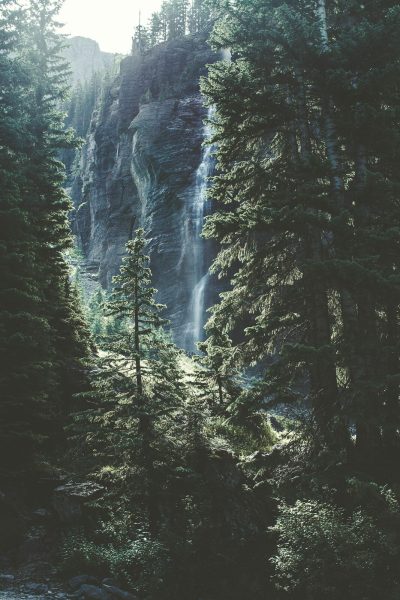
When the summer heat begins to press down, turning city sidewalks into shimmering griddles and making even the breeze feel like an open oven, our first instinct is to reach for the air conditioner’s remote. It’s a modern reflex, but it’s not the only one. For centuries, people living in tune with the seasons understood that the greatest cooling systems weren’t invented, but grown. The forest is one of them.
Summer forest bathing isn’t just a poetic idea. It’s a specific practice for absorbing the forest’s own Yin essence—its deep, quiet, cooling energy—to counterbalance the bright, active, hot Yang of the season. It’s about stepping out of the sun’s glare and into the dappled, chlorophyll-green shade, and letting the trees do what they do best: transpire not just water, but peace. If you’ve ever wondered why a walk under old oaks or pines feels so fundamentally different from a walk by a sunny beach, this article will show you why, and how to turn that feeling into a practice.
Why the Forest is Nature’s Air Conditioner
My grandmother had a saying for hot days: “Don’t fight the sun with fire. Find the tree that drinks the light.” She wasn’t being mystical; she was describing a real phenomenon. Trees are massive biological air conditioners. A single large tree can transpire hundreds of gallons of water per day. This process, called evapotranspiration, cools the air around it by as much as 9°F (5°C). It’s the same principle behind sweating. The forest floor is often 10-20°F (5-11°C) cooler than nearby paved areas. This isn’t just about shade—it’s about the active release of water vapor, which humidifies and cools the air in a way a machine simply cannot replicate.
In Traditional Chinese Medicine (TCM), this cooling, moistening quality is pure Yin. Summer is the peak of Yang—hot, expansive, and outward. We need Yang energy to be active and social, but an excess leads to heat signs: irritability, flushed skin, thirst, and restless sleep. The forest provides the perfect antidote. It’s a living Yin sanctuary. The phytoncides—volatile organic compounds released by trees—are not just antimicrobial; studies suggest they may help lower cortisol and blood pressure, inducing a state of calm alertness. You are literally bathing in the tree’s defense mechanism, and it ends up defending you from stress.
Practice 1: The 20-Minute “Green Cool” Walk
This isn’t a hike to conquer a trail. It’s a deliberate slow walk to absorb. The goal is to shift from “walking through” the forest to “walking with” it. Here is the specific protocol:
- When: Morning, between 7-10 am. This is when the forest has fully recharged its Yin energy overnight and the Yang sun is still building. Avoid the peak Yang heat of 1-3 pm.
- Where: Find a mixed woodland if possible, with deciduous trees (like oaks, maples) and evergreens (pines, firs). The variety of phytoncides is beneficial. A city park with old, large trees works too.
- How: Walk slowly for 20 minutes. Breathe normally. Every 5 minutes, stop. Close your eyes for one minute and listen. Then, open them and find one new detail in the green canopy—a specific leaf shape, a pattern of bark, a play of light.
- Key Action: Place your palm flat on the trunk of a large tree for 60 seconds. Feel the temperature difference. You are touching a cool reservoir. This is a direct transfer of Yin energy.
Practice 2: The 5-4-3-2-1 Sensory Grounding
This practice anchors you firmly in the present, pulling your overactive, heat-scattered mind (a common summer complaint) into the cool, solid reality of the forest. It’s a structured way to engage all five senses, which is more effective than just saying “be mindful.”
- 5 Things You Can See: Look for five different shades of green. Not just “green,” but the yellow-green of new growth, the blue-green of pine needles, the dark, almost-black green of deep shade.
- 4 Things You Can Feel: The rough bark under your hand, the cool air on your skin, the soft give of moss or leaf litter underfoot, the difference in air temperature between sun and shade.
- 3 Things You Can Hear: The distant bird, the closer rustle of a squirrel, the sound of your own breath.
- 2 Things You Can Smell: The rich, damp scent of earth (petrichor, even if it hasn’t rained), and the sharp, clean scent of pine or eucalyptus.
- 1 Thing You Can Taste: Bring a thermos of chrysanthemum and goji berry tea. Take one mindful sip. This tea is classically cooling in TCM, and drinking it here connects the internal remedy to the external environment.
“The clearest way into the Universe is through a forest wilderness.” — John Muir
Practice 3: Forest Breathing for Internal Cooling
The air in a forest isn’t just cleaner; it’s differently charged. It’s rich in negative ions, which are believed to increase serotonin levels, and those phytoncides we mentioned. This breathing technique helps you consciously draw that energy in. Think of it as internalizing the forest’s atmosphere.
The “Sipping the Dew” Breath:
- Stand or sit comfortably with your spine straight, as if you’re a tall, receptive tree.
- Inhale slowly and deeply through your nose for a count of 4, imagining you are sipping cool, green, dewy air. Direct the breath down into your lower abdomen (the Dantian, the body’s energetic center, located about two inches below your navel).
- Hold the breath for a count of 2, letting the coolness settle.
- Exhale even more slowly through your mouth for a count of 6, imagining you are releasing heat, agitation, and stale air as a faint, warm mist.
- Repeat for 10 cycles. You should feel a palpable sense of coolness spreading through your core, like an internal fountain being turned on.

Practice 4: The “Tree Hug” Energy Exchange
This might sound whimsical, but it’s grounded in bioenergetic principles. Trees have a very stable, low-frequency electromagnetic field. Ours is erratic, especially when stressed or overheated. Physical contact can help entrain our field to the tree’s calmer rhythm.
How to do it properly:
- Choose your tree: Look for one that feels welcoming—often an older, broad-trunked species. Oaks and beeches are particularly grounding.
- Ask permission: This isn’t superstition; it’s a mindfulness practice. Place your hand on the trunk, introduce yourself (silently is fine), and state your intention to share and receive calm energy.
- The embrace: Wrap your arms gently around the trunk, or press your back and shoulder blades against it. Rest your forehead on the bark.
- Breathe and visualize: As you breathe, visualize roots growing from the soles of your feet deep into the earth, and branches extending from your crown into the sky. Hold this for 3-5 minutes. The tree’s cool, stable Yin will feel like a balm against your summer-frayed nerves.
Practice 5: Creating a Forest Elixir to Take Home
You can bottle the essence of your practice to extend its benefits. This isn’t a literal elixir (please don’t ingest random plants), but a sensory and ritualistic one.
The Forest Infusion Steam:
- Before you leave, gather a small, clean, non-living token from the forest floor: a fallen pine needle, a dry leaf, a small piece of birch bark.
- At home, fill a large bowl with hot (not boiling) water. Drop in your forest token, a handful of fresh mint leaves (cooling), and 3-5 drops of cedarwood or pine essential oil.
- Place the bowl on a table, drape a towel over your head and the bowl, and breathe in the steam for 5-10 minutes. This acts as a mini forest bath for your respiratory system and nervous system, bringing the memory of the forest’s coolness directly to you.
Common Questions
I live in a city. Can I still practice summer forest bathing?
Absolutely. Look for large, old city parks, botanical gardens, or even tree-lined avenues. The key is density and maturity. A single, old oak tree can be your sanctuary. The practices above, especially the 5-4-3-2-1 grounding and the breathing technique, can be done anywhere there is a patch of green. Even visualizing a forest while sitting under a small tree can trigger a calming response—the brain doesn’t fully distinguish between vivid imagination and reality.
How often should I practice to feel a real difference?
For a noticeable shift in your baseline stress and heat levels, aim for one dedicated 20-30 minute session per week. If that’s not possible, try a 10-minute “micro-bath” three times a week. Consistency is more important than duration. Even five minutes of focused breathing under a tree after work can reset your nervous system. My grandmother went to the same grove of camphor trees every morning before dawn for 40 years. The ritual itself became the medicine.
Are there any risks or things to avoid?
Yes. Be aware of your environment: avoid areas with known poison ivy or oak, check for ticks afterward (wear light-colored clothing and do a tick check), and be mindful of uneven terrain. Don’t practice in extreme weather, like during a heat advisory or thunderstorm. Hydrate well before and after. The goal is coolness, not dehydration. Finally, respect the forest—stick to paths, don’t pick live plants, and leave no trace.
The bottom line: Summer forest bathing is a specific, powerful practice for using nature’s own cooling system to rebalance your body’s internal climate. By slowing down, engaging your senses, and consciously absorbing the forest’s Yin energy through walking, breathing, and even touching trees, you create a profound antidote to summer’s heat and haste. It’s free, accessible, and one of the most profound ways to align with the season’s rhythms.
This article is for educational purposes and reflects traditional wellness perspectives. It is not a substitute for professional medical advice, diagnosis, or treatment.