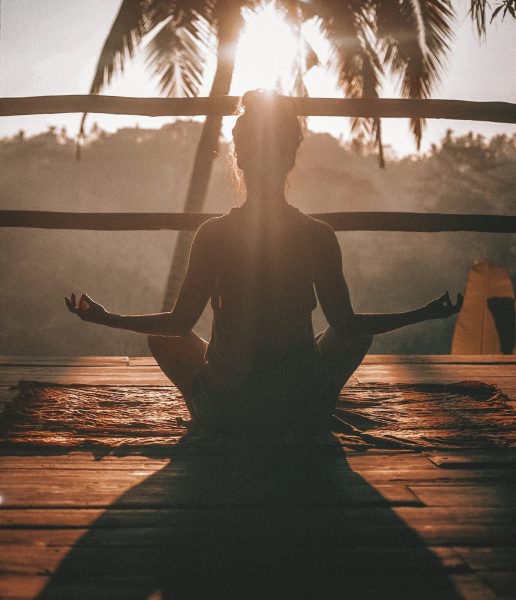
Summer is a season of outward energy. The days are long, the sun is strong, and our social calendars fill up with barbecues, beach trips, and late-night conversations on the patio. In Traditional Chinese Medicine (TCM), summer is ruled by the Fire element—a time of joy, connection, and peak vitality. But too much Fire can quickly become overwhelming. If you’ve ever felt that summer heat creeping into your mood—irritability, restlessness, that frazzled, overstimulated feeling—you’re not imagining it. Your body and mind are literally heating up. This is where the ancient wisdom of water comes in. Not just drinking it, but becoming it, for just five minutes. Today, I want to share a simple, beautiful practice from my own upbringing: a water meditation to cool your mind, calm your Fire, and restore your inner calm in the middle of summer’s blaze.
- Why Water? The TCM Philosophy of Cooling the Fire
- My Grandmother's Porcelain Bowl: A Personal Story
- The 5-Minute Water Meditation: Step-by-Step Guide
- The Science Behind the Stillness: Why This Actually Works
- When and How Often: Building the Habit
- Enhancing the Practice: Water Element Allies for Summer
- Common Pitfalls (and How to Avoid Them)
Why Water? The TCM Philosophy of Cooling the Fire
In the Five Element theory of TCM, every season is paired with an element, an organ, and an emotion. Summer is Fire. Its paired organ is the Heart, and its associated emotion is joy. A healthy Fire element means you feel socially connected, enthusiastic, and full of life. But when the Fire burns too hot—whether from the literal weather, overwork, or too much socializing—it can scorch the Heart, leading to anxiety, insomnia, irritability, and that “wired but tired” feeling we all know.
The antidote? Water.
In the Five Element cycle, Water controls Fire. Think of it like a campfire: you need the flame for warmth and light, but if it grows unchecked, you need a bucket of water to bring it back to balance. Water is associated with the Winter season, the Kidneys, and the emotion of calm, deep wisdom. When you consciously bring the quality of Water into your body and mind, you’re essentially giving your Heart a cool drink on a hot day.
“When the Fire element is in balance, the Heart is calm, the mind is clear, and joy flows freely. When it is in excess, we feel anxious, scattered, and unable to rest.” — Dr. Maoshing Ni, Tao of Wellness
This isn’t just poetic metaphor. Modern science supports the idea that visualizing cool, calming imagery can lower cortisol levels and activate the parasympathetic nervous system—your body’s “rest and digest” mode. The water meditation we’re about to explore is a bridge between ancient TCM philosophy and modern stress physiology.
My Grandmother’s Porcelain Bowl: A Personal Story
I remember summers in my grandmother’s courtyard in Suzhou. The heat was thick, the cicadas were deafening, and even the stone tiles underfoot seemed to radiate stored sunlight. After lunch, when the heat was at its peak, my grandmother would fill a large, shallow porcelain bowl with cool water from the well. She’d place a single lotus leaf on the surface and sit quietly beside it, her hands resting on her knees, eyes half-closed.
“Xiao Yu,” she’d say to me (Little Yu, her nickname for me), “when the world is too hot, you don’t fight it. You become the water.”
She’d watch the lotus leaf float, perfectly still, perfectly at ease on the water’s surface. Sometimes she’d dip her fingers in, tracing slow circles. She never explained it as “meditation” or “TCM practice.” It was just what you did when summer got too loud. Years later, studying TCM formally, I realized she was practicing a profound form of Water element meditation—cooling the Heart, grounding the mind, and restoring balance in the simplest way possible. No apps, no special equipment. Just water, presence, and five minutes.
The 5-Minute Water Meditation: Step-by-Step Guide
This practice is designed to be done anywhere—at your desk, on your porch, or in a quiet corner of your home. You don’t need a lotus leaf or a porcelain bowl (though they’re lovely if you have them). You need five minutes, a cup of cool water, and your attention.
What You’ll Need
- A clear glass or cup filled with cool (not ice-cold) water. Room temperature or slightly below is ideal—about 60-70°F (15-21°C).
- A quiet spot where you can sit comfortably for 5 minutes without interruption.
- Optional: a small bowl of water instead of a cup, and a floating object (a flower petal, a small leaf, or even a paper boat).
The Practice
Minute 1: Arrive and Observe
Sit comfortably with your feet flat on the floor. Hold the glass of water in both hands. Close your eyes for three slow breaths. Then open them and look at the water. Notice its clarity, the way light passes through it, any tiny bubbles clinging to the glass. You’re not trying to “do” anything yet. You’re just arriving, shifting your attention from the buzzing world outside to the quiet world inside.
Minute 2: Feel the Coolness
Bring your attention to the sensation of the glass against your palms. Feel the cool temperature seeping into your skin. Imagine that coolness traveling from your palms up through your arms, toward your chest. In TCM, the Heart is located in the chest, and it’s where “Heart Fire” accumulates in summer. Visualize the cool water energy gently touching your Heart center, like a cool breeze on a hot forehead.
Minute 3: Breathe with the Water
Begin to breathe slowly and deeply. On each inhale, imagine you’re breathing in cool, blue water energy. On each exhale, imagine you’re releasing heat, redness, and agitation—like steam rising off a hot sidewalk after rain. Aim for a 4-count inhale and a 6-count exhale. The longer exhale activates your vagus nerve, which tells your nervous system to calm down.
Minute 4: Become Still Water
This is the heart of the practice. Set the glass down in front of you. Place your hands on your thighs, palms down. Imagine your mind is the surface of a still pond. Each thought that arises is a pebble tossed into the water—watch the ripples, but don’t chase them. Let the ripples spread and fade. Your only job is to return to stillness. My grandmother would say, “The water always settles. You don’t have to make it settle. Just wait.”
Minute 5: Drink and Anchor
Pick up the glass. Take three slow sips of the water. With each sip, imagine you’re drinking in calm, clarity, and coolness. Feel the water traveling down your esophagus and into your stomach, spreading that cooling energy through your core. Place the glass down. Take one final deep breath. Rub your palms together gently until they’re warm, then place them over your eyes. Sit for 10 seconds. Then slowly open your eyes and return to your day.
The Science Behind the Stillness: Why This Actually Works
You might be wondering: is this just a nice visualization, or does something real happen? The answer is both. Let’s break down the mechanisms at play.
Thermoregulation and the Mind: Holding something cool and focusing on the sensation of coolness has been shown in studies to reduce subjective feelings of heat stress and lower perceived anxiety. A 2018 study in the journal Physiology & Behavior found that hand cooling (holding a cold object) reduced thermal discomfort and improved cognitive performance in hot environments. Your brain responds to the sensory input of coolness by dialing down its “threat” response to heat.
The Vagus Nerve Effect: The 4-6 breathing pattern (longer exhale) directly stimulates the vagus nerve, the longest cranial nerve in your body, running from your brainstem to your abdomen. When the vagus nerve is activated, it triggers a cascade of calming signals: heart rate decreases, blood pressure drops, digestion improves, and cortisol (the stress hormone) levels fall. This is not metaphor—it’s measurable physiology.
Attentional Shift: In mindfulness research, one of the most powerful mechanisms for reducing anxiety is simply redirecting attention from internal worry loops to external sensory input. By focusing on the visual, tactile, and temperature qualities of the water, you’re giving your “default mode network” (the brain’s worry center) a five-minute vacation. The ruminating mind quiets, not because you forced it, but because you gave it something else to attend to.

When and How Often: Building the Habit
The beauty of this practice is its simplicity. You can do it anywhere, anytime—but timing matters if you want maximum benefit.
| Time of Day | Best For | Why It Works |
|---|---|---|
| 11:00 AM – 1:00 PM | Cooling midday Heart Fire | In TCM, 11 AM–1 PM is the Heart meridian’s peak time. Fire is naturally highest. A water meditation here prevents afternoon irritability. |
| 3:00 – 5:00 PM | Recovering from overstimulation | The Small Intestine meridian (paired with the Heart) peaks from 1–3 PM, processing “input.” By 3 PM, you may feel mentally cluttered. Water clears the fog. |
| 8:00 – 10:00 PM | Preparing for sleep | The Pericardium meridian (Heart protector) peaks 7–9 PM. A water meditation here cools Heart Fire that causes insomnia and racing thoughts at bedtime. |
| Any moment of overwhelm | Immediate calming | Even 2 minutes of focused water visualization can interrupt a stress spiral. Keep a glass of water at your desk as a visual anchor. |
I recommend starting with once a day—pick the time that fits your life best. If you’re someone who struggles with summer insomnia, the evening slot is gold. If you’re an office worker who hits a wall at 3 PM, that’s your moment. Consistency matters more than perfection. Five days of imperfect 3-minute practices beats one “perfect” 20-minute session you never repeat.
Enhancing the Practice: Water Element Allies for Summer
Once you’ve established the basic 5-minute practice, you can deepen your relationship with the Water element through these supporting habits. Think of them as ways to “drink water” even when you’re not holding a glass.
Cooling Foods That Carry Water Energy
In TCM, foods are classified by their thermal nature—warming, cooling, neutral, etc. In summer, we want foods that clear Heat and nourish Yin (the cooling, moistening aspect of your body). Here are specific, actionable choices:
- Mung bean soup (绿豆汤): This is the quintessential Chinese summer remedy. Boil ½ cup dried mung beans in 6 cups of water for 40 minutes. Add a small piece of rock sugar (冰糖) if you like. Drink it lukewarm or chilled. Mung beans are classified as “cold” in TCM—they clear Summer Heat from the body and calm Heart Fire.
- Watermelon: Nature’s cooling fruit. Eat it fresh, or blend it with a squeeze of lime for a 30-second agua fresca. In TCM, watermelon is called “natural white tiger soup” (天生白虎汤) for its powerful heat-clearing ability. Limit to 1-2 cups per sitting—too much cold food can weaken digestion.
- Chrysanthemum tea (菊花茶): Steep 6-8 dried chrysanthemum flowers in hot water for 5 minutes. Add 2-3 goji berries if you have them. This tea cools the Liver and brightens the eyes—perfect for screen fatigue and summer headaches. Drink 1-2 cups daily.
- Cucumber and celery: Both are cool-natured vegetables with high water content. Slice them thin and eat raw with a splash of rice vinegar and sesame oil as a cooling side dish.
- Pear: A Yin-nourishing fruit that moistens the Lungs and calms the Heart. Slice one and simmer in water with 3 slices of fresh ginger for 15 minutes for a simple, soothing dessert.
Water Sounds as Ambient Medicine
My grandmother’s courtyard had a small stone fountain—just a trickle of water over river rocks. She said it was “decoration,” but I now know it was doing real therapeutic work. Studies in environmental psychology show that the sound of flowing water reduces cortisol levels and promotes alpha brain wave activity (the relaxed-but-alert state). Consider these options:
- A small tabletop fountain (even a $15 one works)
- A “water sounds” playlist during your 5-minute meditation (search “gentle stream” or “rain on water”)
- Opening a window near a fountain, sprinkler, or rain—if you’re lucky enough to have natural water sounds nearby
- Even a recording of ocean waves played at low volume in your workspace
The goal isn’t to drown out the world—it’s to give your nervous system a continuous, gentle reminder: you are safe, you are cool, you are at ease.
Common Pitfalls (and How to Avoid Them)
Like any practice, the water meditation has a few common traps. Here’s what to watch out for.
Pitfall 1: Making it too complicated.
You don’t need special crystals, singing bowls, or a meditation cushion. A glass of water from your kitchen tap is enough. The moment you turn this into a production, you’ve added Fire (effort, ambition, complexity) to a practice designed to reduce it. Keep it simple. Keep it cool.
Pitfall 2: Expecting instant enlightenment.
The first time you try this, your mind will wander. You’ll think about your to-do list, what to have for dinner, or whether you remembered to reply to that email. That’s not failure—that’s what minds do. The practice is in noticing the wandering and returning to the water. Each return is a repetition, like a bicep curl for your attention. Over weeks, the returns get faster, and the stillness gets deeper.
Pitfall 3: Using ice-cold water.
TCM teaches that extremes create extremes. Ice-cold water shocks the system and can actually constrict blood vessels, triggering a rebound warming effect. Room temperature or slightly cool is the sweet spot. Think of the temperature of a mountain stream in early summer—refreshing, not punishing.
Pitfall 4: Only meditating when you’re already stressed.
This is like only going to the gym when you’ve hurt your back. The real power of the water meditation is preventive—doing it daily during summer to keep your Fire element in check before it flares up. Think of it as daily maintenance, not emergency repair.
Common Questions
Can I do this meditation with tea instead of plain water?
Absolutely—just choose a cooling tea. Chrysanthemum tea, mint tea, or plain barley tea (麦茶) are excellent summer choices that align with the Water element’s cooling intention. Avoid black coffee, ginger tea, or cinnamon tea before this practice, as they’re warming and may counteract the cooling effect. The key is the temperature and the nature of the liquid: it should feel refreshing, not stimulating. If you use tea, hold the warm cup and focus on the steam rising—that rising energy is Heat leaving your body, which is a powerful visualization in itself.
I have a Yin deficiency (night sweats, hot flashes, dry skin). Is this practice safe for me?
Not only is it safe—it’s especially beneficial. In TCM, Yin deficiency means your body’s cooling, moistening reserves are depleted, which is why you experience symptoms like night sweats, hot flashes, and dry skin. The water meditation directly nourishes Yin by cultivating the mental and energetic qualities of Water: coolness, stillness, depth, and moisture. Pair it with Yin-nourishing foods like pears, black sesame seeds, goji berries, and bone broth for a more comprehensive approach. However, if your symptoms are severe or persistent, please consult a licensed TCM practitioner for a personalized treatment plan.
Can children do this practice?
Yes, and they often take to it more naturally than adults! Children don’t have the same resistance to simplicity that we do. For kids ages 4-7, simplify it to just 2 minutes: hold the glass together, watch the water, and take three slow breaths. For ages 8-12, you can teach the full 5-minute version, but consider making it playful—let them float a flower petal or small leaf in a bowl and watch it settle. My grandmother never “taught” me this practice; she just let me watch her do it, and I naturally joined in. Children learn by osmosis. If you practice in front of them, they’ll want to try it too.
The bottom line: Summer’s Fire energy is beautiful—it gives us joy, connection, and vitality. But without the balancing force of Water, it can leave us anxious, irritable, and sleepless. The 5-minute water meditation is a deceptively simple practice rooted in centuries of TCM wisdom and confirmed by modern neuroscience. All you need is a glass of cool water, five quiet minutes, and the willingness to become still. Do it daily through the summer months, pair it with cooling foods like mung bean soup and chrysanthemum tea, and watch how your relationship with the season shifts—from frazzled and overheated to calm, clear, and deeply refreshed. As my grandmother would say: “The water always settles. Just wait.”
This article is for educational purposes and reflects traditional wellness perspectives. It is not a substitute for professional medical advice, diagnosis, or treatment.