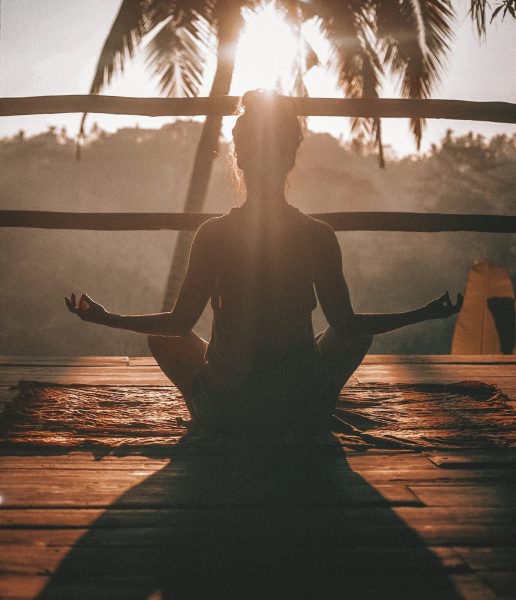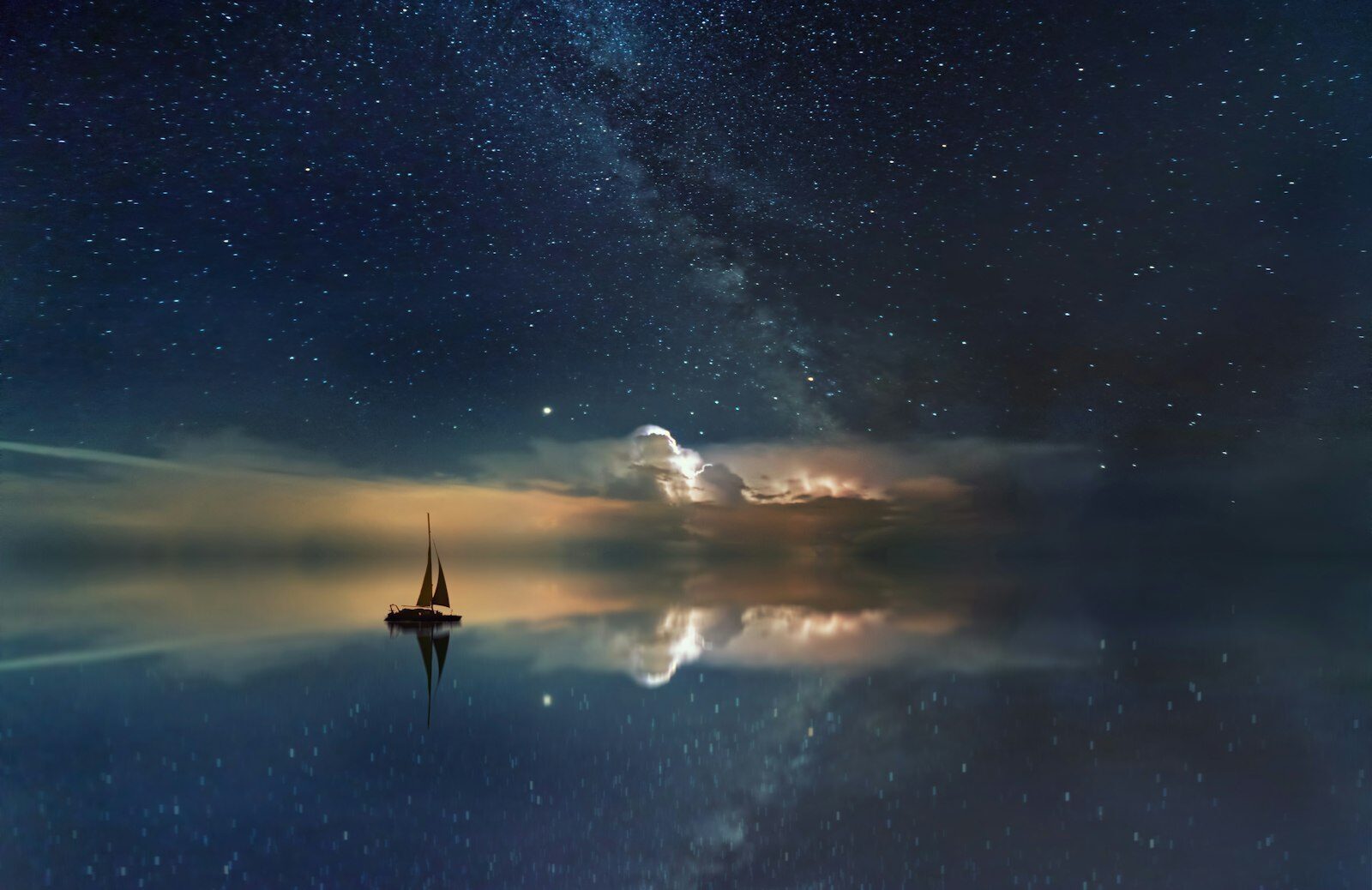
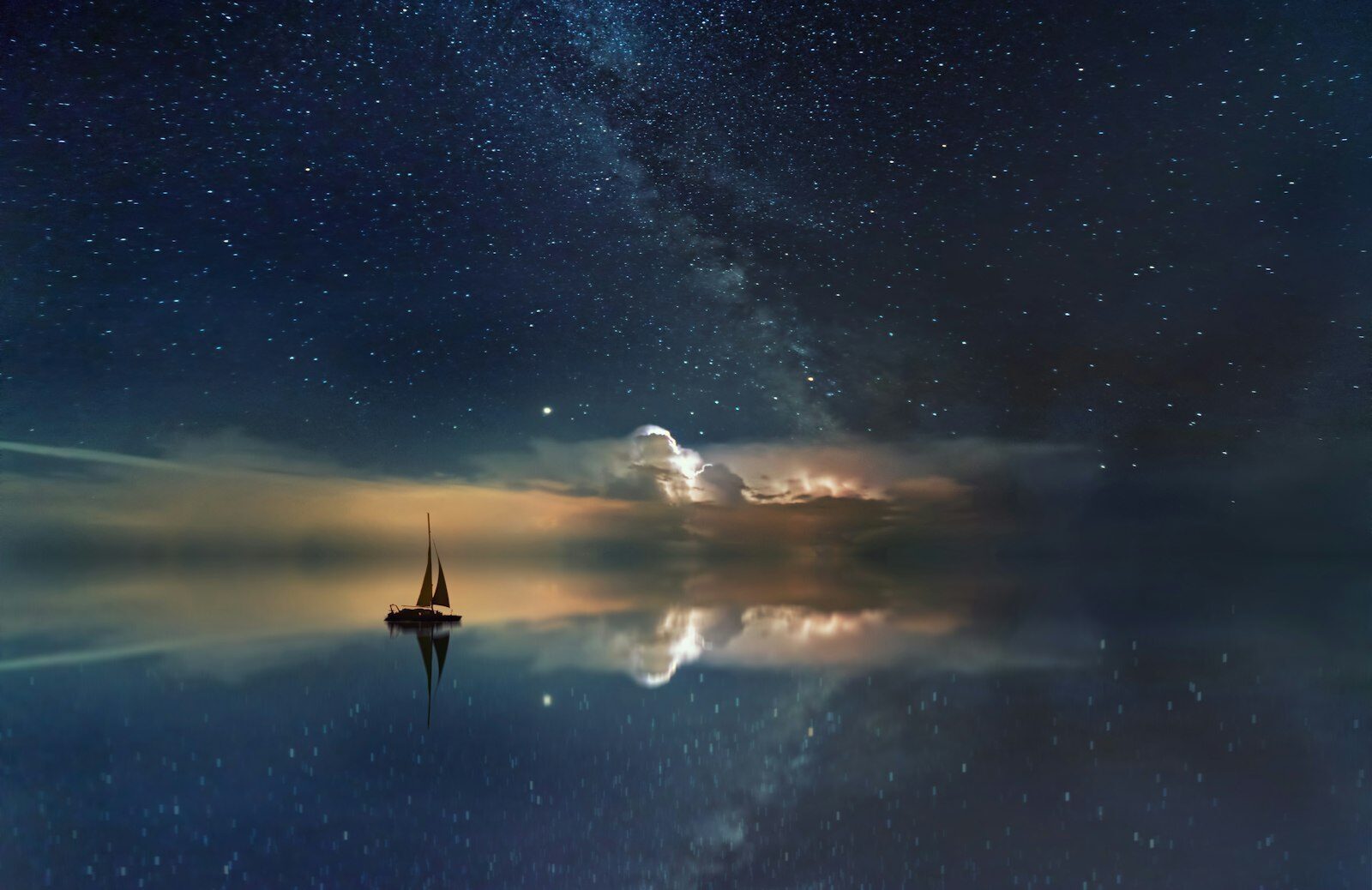
There is a specific kind of stillness that only arrives on a warm summer night. It’s not the silence of winter, which feels heavy and dormant. It’s the quiet hum of life, settled into a rhythm. The air is soft, the day’s heat finally releasing its hold, and if you step outside and look up, the sky offers something extraordinary. This is the perfect time for a practice I call the summer night sky meditation—a way of using the vast, starry canvas above us to find a matching vastness within.
My grandmother had a phrase she’d use on such evenings, usually while fanning herself on our small balcony in Nanjing. She’d say, “Tonight, the sky is deep.” It wasn’t a weather report. It was an observation about the quality of the night—a sense that the boundary between the earth and the cosmos was thin, and that our own inner world could be just as spacious. This meditation is an invitation to explore that depth, to let the scale of the universe quiet the noise of your own mind.
Why the Night Sky? The Science of Stargazing and Stillness
Looking at the night sky isn’t just poetic; it’s physiologically and psychologically powerful. When you shift your gaze from the near-field (your phone, your to-do list, the room around you) to the far-field (the stars, light-years away), something happens in your nervous system. Your visual field expands, your breathing naturally deepens, and your heart rate can begin to slow. This is a direct tap into your parasympathetic nervous system—the “rest and digest” branch—without you having to force anything.
In Traditional Chinese Medicine (TCM), this practice connects to the concept of Tian Ren He Yi (天人合一), which translates to “the unity of heaven and humanity.” It’s the foundational idea that we are not separate from nature; we are a microcosm within a macrocosm. The patterns of the stars, the cycles of the moon, the flow of the seasons—these are not just “out there.” They are mirrored in our own bodies, in the rhythm of our breath and the flow of our qi (vital energy). When we gaze at the summer sky, we are, in a sense, looking at a reflection of our own deeper order. The practice is about remembering that connection.
Modern astronomy gives this a fascinating, concrete anchor. On a clear summer night in the Northern Hemisphere, you can often see the band of the Milky Way—a river of 200-400 billion stars. Knowing that you are looking at the home galaxy of our solar system, a structure 100,000 light-years across, provides a powerful sense of perspective. Your worries, which felt so monumental an hour ago, suddenly occupy their true scale. It’s not that they disappear, but they find their proper place in a much larger story.
“The cosmos is within us. We are made of star-stuff. We are a way for the universe to know itself.” — Carl Sagan
Preparing Your Space: Creating a Personal Observatory
You don’t need a telescope or a mountain retreat. The goal is to create a simple, comfortable container for your practice. Here’s how to set up your space for a summer night sky meditation.
Location & Timing: Choose a spot with minimal light pollution—a backyard, a patio, a balcony, or a local park. The best time is after astronomical twilight (about 90 minutes after sunset), when the sky is truly dark. In summer, this is often between 10:00 PM and midnight. Check a weather app for a clear night with low cloud cover.
Comfort is Key: You’ll be lying still for 20-30 minutes. Use a reclining lawn chair, a thick blanket, or a camping mat. Have a light cover nearby—summer nights can get cool. A small pillow for your neck can make a big difference.
- Optional Enhancements:
- A warm mug of chrysanthemum and goji berry tea. In TCM, this combination is cooling and nourishing to the eyes and liver, which are associated with vision and the smooth flow of qi.
- A few drops of lavender or sandalwood essential oil on your wrists. These scents are calming and can help anchor your attention.
- A simple stargazing app on your phone (like SkyView or Star Walk). Set it to night mode (red light) so it doesn’t disrupt your night vision.
| Summer Night Sky Meditation: Quick Setup Guide | |
|---|---|
| Best Time | 10 PM – 12 AM (after astronomical twilight) |
| Ideal Location | Backyard, balcony, park with low light pollution |
| Duration | 20-30 minutes |
| Comfort Essentials | Reclining chair or mat, light blanket, neck pillow |
| Supportive Tea | Chrysanthemum & Goji Berry (1 tbsp flowers, 1 tsp berries in 2 cups hot water, steep 5 min) |
| Tech Tool | Stargazing app (set to red-light night mode) |
The Practice: A Guided Summer Night Sky Meditation
This is a simple, 5-step process. Move through it slowly. There’s no goal other than to be present.
Step 1: Arrive and Ground (3 Minutes) Sit or lie down comfortably. Feel the points of contact between your body and the support beneath you. Take three slow, deep breaths. With each exhale, feel your weight settle more fully. Let the sounds of the night—crickets, distant traffic, the wind—be the background music, not a distraction.
Step 2: Expand Your Gaze (2 Minutes)
Let your eyes soften. Instead of focusing on one star, try to take in the entire sky at once. It’s like widening a camera lens. You’re not “looking for” anything; you’re allowing the whole field of vision to come into your awareness. Notice the difference between the bright, steady planets (like Jupiter or Saturn) and the twinkling stars.
Step 3: Follow Your Breath (5 Minutes)
Now, gently bring your attention to your breath. As you inhale, imagine you are breathing in the cool, clear darkness of the space between the stars. As you exhale, imagine you are releasing any tension or thought back out into that same vast space. Your breath becomes a bridge between your small, personal world and the immense, impersonal cosmos.
Step 4: Contemplate Scale (5 Minutes)
This is where you engage the mind. Think about the light traveling from a star to your eye. That star you see might be 100 light-years away. The light hitting your retina right now began its journey 100 years ago. In that time, empires rose and fell, people were born and lived full lives. Your current worries are a single frame in this incomprehensibly long movie. Let that perspective sink in. Don’t force a feeling; just hold the fact.
Step 5: Return with Gratitude (5 Minutes)
Slowly bring your awareness back to your body. Feel the blanket, the chair, the air on your skin. Wiggle your fingers and toes. Before you open your eyes fully, take a moment to feel genuine gratitude. Gratitude for the clear night. Gratitude for your eyes that can see. Gratitude for the simple, profound fact of being a conscious creature on a planet, looking up at its home galaxy. This gratitude is not forced; it arises naturally from the sense of connection.
Deepening the Practice: Working with Qi and Constellations
Once you’re comfortable with the basic meditation, you can add a layer of traditional practice. In TCM, summer is the season of the Heart (火, Fire element), which houses the Shen (神)—the spirit, or consciousness. An overactive Shen can lead to anxiety, restlessness, and insomnia. The night sky, with its cool, expansive yin quality, is a perfect antidote to soothe the Heart fire.
Try this: As you breathe, imagine that with each inhale, you are drawing in the cool, nourishing yin energy of the night sky. Visualize it as a soft, blue-white light. With each exhale, release any excess yang heat from your chest—the feeling of irritation, pressure, or scattered thoughts. See it as a warm, red-orange mist dissolving into the darkness. You are literally balancing the cosmic energies within your own body.
You can also work with constellations. My father, an amateur astronomer, taught me to find the Summer Triangle—three bright stars (Vega, Deneb, Altair) from three different constellations. In this practice, you can use them as focal points for intention:
- Vega (in Lyra): Represents clarity. Gaze at it and silently ask, “What needs to become clear to me?”
- Deneb (in Cygnus): Represents journey and perspective. Ask, “What is the larger journey I’m on?”
- Altair (in Aquila): Represents strength and swiftness. Ask, “What action is needed now?”
Hold each question for a few breaths, then let it go. Don’t search for an answer; let it arise in its own time.
Integrating the Stillness: From the Sky Back to Earth
The real power of this practice isn’t in the 20 minutes you spend under the stars; it’s in the quality of stillness you carry back into your day. Here’s how to integrate it.
The 30-Second Sky Glance: During a stressful moment—stuck in traffic, overwhelmed at work—pause. If you’re near a window, glance up at the sky (day or night). Take one deep breath and remember the vastness you felt during your meditation. It’s a cognitive “reset” button you can press anywhere.
Nighttime Integration Ritual: After your meditation, before bed, write down one thing that felt larger than your usual worries. It could be a simple sentence: “I am one of billions of people on a tiny planet.” This anchors the perspective. Then, drink a final cup of warm water (a simple TCM habit for digestion and calm).
Share the Practice: Invite a friend or family member to join you one night. Shared silence under the stars can create a profound, wordless bond. You’re not “teaching” them; you’re creating a shared experience of wonder.
I remember one summer night in my late twenties, after a painful breakup, I dragged my mat onto the roof of my apartment building. I felt so small and hurt. As I lay there, I found Orion’s Belt. I thought about how that same pattern had been there for thousands of years, seen by countless people with their own heartbreaks and joys. My pain didn’t vanish, but it joined the river of human experience. That shift—from “my unique suffering” to “our shared condition”—brought a peace that no amount of thinking could have. That’s the gift of the practice.
Common Questions
I live in a city with a lot of light pollution. Can I still do this?
Absolutely. The essence of the practice is perspective, not perfect stargazing. Even in a city, you can see the moon, a few planets, and some of the brightest stars. The key is to use what you have. Focus on the moon instead of the Milky Way. Or, if the sky is too bright, simply contemplate the concept of the night sky above the light dome. You can even use a high-quality image or a planetarium dome for the initial practice, then go outside to feel the air and sense the space above you. The mental shift is what matters.
I get restless or bored. How do I stay focused?
This is very common, and it’s part of the practice. When restlessness arises, don’t fight it. Acknowledge it: “Ah, there is restlessness.” Then, gently return your attention to your breath or to one star. Think of your mind like a puppy on a leash—it will wander. Your job is not to scold it, but to gently guide it back, over and over. Each return is a success. You might also try a shorter practice—10 minutes is a great start. Consistency is more important than duration.
Is there a best moon phase for this practice?
Each phase offers a different energy. For deep stillness and seeing the most stars, the New Moon or Crescent Moon phase (about 1-5 days after the new moon) is ideal, as the sky is darkest. For a practice focused on release and reflection, the Waning Crescent (the last sliver before the new moon) is powerful. However, a Full Moon practice can be beautiful too, focusing on the moon’s bright, reflective light as a symbol of clarity and illumination. Don’t let the “perfect” phase stop you—any clear night is a good night.
The bottom line: The summer night sky meditation is a practice of radical perspective. By aligning your breath with the vast, slow rhythm of the cosmos, you soothe your nervous system, connect with a timeless sense of unity (Tian Ren He Yi), and shrink your worries to their proper size. You need only 20 minutes, a clear patch of sky, and the willingness to look up. In doing so, you don’t escape your life—you see it within a more magnificent frame.
This article is for educational purposes and reflects traditional wellness perspectives. It is not a substitute for professional medical advice, diagnosis, or treatment.