Every December, my grandmother would set a chipped enamel kettle on the stove before anyone in the house was awake. The water would come to a rolling boil, and into it she’d drop three slices of ginger the size of a coin, a broken stick of cinnamon, and a small handful of dried longan. She never called it medicine. She called it bao jian (保健) — literally “preserving health” — and to her it was simply what you did when the cold came. Not to treat a cold. Not to boost anything. Just to keep the body’s inner warmth steady while the world outside turned to ice.
The word bao jian gets translated as “health preservation” in English, but that misses the flavor of it. Bao means to protect, to hold, to keep safe — the same character used for holding an egg without breaking it. Jian means health, but health as an ongoing state rather than an outcome. Put together, winter bao jian is the quiet art of protecting your baseline so that spring finds you with something left in the tank. It’s a very different philosophy from the Western January reset. There’s no cleanse, no punishment, no “new you.” There’s just steady, daily tending.
What follows are seven rules drawn from classical Chinese texts, from what I watched my family do, and from fifteen years of study with licensed practitioners in Beijing and Chengdu. They’re specific enough to start tonight. And they’re built around one central idea from the Huangdi Neijing that, once you understand it, changes how you read every winter signal your body sends.
- The One Idea Behind All Winter Bao Jian: Yang Retreats Inward
- Rule 1: Sleep Like the Roots — Shift Your Schedule by 60–90 Minutes
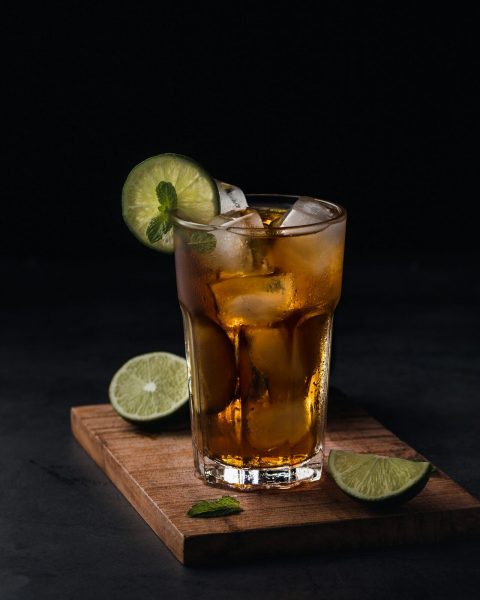
- Rule 2: The 7-Minute Ginger-Cinnamon-Longan Morning Tea
- Rule 3: Eat for Closed Storage — 5 Foods That Build From the Roots Up
- Rule 4: Warm the Gate — The Feet, Lower Back, and Neck
- Rule 5: Move Slowly — Why Winter Is Not the Season for HIIT
- Rule 6: Guard the Emotional Quiet — Winter Is for the Fear-to-Courage Axis
- Rule 7: Keep the Neck and Shoulders Loose — The Winter Tension Trap
- Putting It Together: A One-Week Winter Bao Jian Schedule
The One Idea Behind All Winter Bao Jian: Yang Retreats Inward
If you only remember one concept from this article, make it this one. In Traditional Chinese Medicine, yang is the warming, active, outward-moving energy of the body — think metabolism, circulation, alertness, the heat in your hands. Yin is the cooling, moistening, inward, restorative side — think sleep, fluids, deep nourishment, stillness.
Here’s what most people get wrong: they think winter is “yin season” and therefore they should just be passive. Not quite. The Huangdi Neijing (Yellow Emperor’s Classic of Internal Medicine), written roughly two thousand years ago, puts it precisely in the Suwen, Chapter 2: “In the three months of winter, this is called closed storage (闭藏, bì cáng). Heaven and earth are shut; do not disturb the yang qi. Go to bed early and rise with the sun. Let the mind wander as if it were hidden, as if you had secret intentions. Keep warmth in, avoid perspiration, and do not disturb the yang qi.”
Let me translate that into modern terms. Yang energy doesn’t disappear in winter — it retreats inward, like an animal pulling back into its burrow or like sap sinking down into the roots of a tree before the frost. If you keep forcing it outward — with 6 a.m. hot yoga, with late-night screen time, with long hot showers followed by rushing out into the cold, with intense cardio that leaves you drenched — you’re essentially yanking the roots up to check if they’re growing. Every winter rule below is a variation on “let the yang stay down where it belongs.”
“He who takes medicine in winter will be vigorous in spring; he who does not will suffer illness in spring.” — Chinese folk proverb, echoed in the Huangdi Neijing‘s principle that spring illnesses are rooted in winter neglect.
This is the counterintuitive part: winter self-care is less about doing more, and more about doing less — but doing it consistently and at the right time. My grandmother’s kettle ritual took four minutes. That’s the scale we’re working at.
Rule 1: Sleep Like the Roots — Shift Your Schedule by 60–90 Minutes
The single most powerful winter bao jian practice is free, requires no ingredients, and most Westerners resist it: go to bed earlier. The Huangdi Neijing‘s “sleep early, rise with the sun” isn’t poetic — it’s a prescription. In Beijing, when I studied under Dr. Liu Yiming (a licensed TCM physician with 30 years of clinical practice), he would ask every winter patient the same first question: “What time did you fall asleep last week?” Not “how much did you sleep” — when.
Why timing matters more than duration in TCM: the body’s qi moves through twelve meridians in a 24-hour cycle, and the gallbladder (11 p.m.–1 a.m.) and liver (1 a.m.–3 a.m.) channels are considered to be doing their deepest repair work during those hours — what TCM calls “storing blood” and “planning.” If you’re awake at 1 a.m., you’re interrupting the exact phase where yang is supposed to be at its most inward.
Actionable shift for tonight:
- If you normally sleep at midnight, move to 10:45 p.m. this week. Not 10 p.m. — too big a jump, you’ll lie awake and abandon it.
- Wake time shifts later by 30–45 minutes — but only if your schedule allows. If not, keep your wake time and just bank the extra sleep at night.
- Target 7.5 to 8.5 hours actual sleep in winter versus 7 to 7.5 in summer. That half-hour is not indulgence; it’s the “closed storage” the classics describe.
- Room temperature 64–67°F (18–19°C) with a warm duvet. Cold room + warm core is the classic Chinese bedroom setup. Warm room + cold extremities is not.
- Wear socks to bed if your feet run cold. This sounds grandmotherly because it is. Peripheral vasodilation in warm feet has been associated with faster sleep onset in a small 2018 study in the Journal of Physiological Anthropology (Ko & Lee, 2018), which fits the TCM view that warming the kidney yang through the feet settles the whole system.
Rule 2: The 7-Minute Ginger-Cinnamon-Longan Morning Tea
This is my grandmother’s kettle recipe, formalized. In TCM terms, it’s a mild warming the middle jiao (the digestive center) and gently supporting yang qi at the exact hour when yang begins to rise (7–9 a.m., the “stomach” channel time).
The recipe (serves 1):
- 3 slices fresh ginger (Zingiber officinale), each about the size of a coin and 2mm thick — skin on, unpeeled. Ginger is classified as “warm” and enters the lung, spleen, and stomach meridians.
- 1 stick Ceylon cinnamon (Cinnamomum verum), about 3 inches long, broken in half. Note: use Ceylon rather than cassia (C. cassia) if you drink this daily — cassia contains higher coumarin levels, which in large amounts may affect liver enzymes (Abourashed & Khan, 2011, Journal of Pharmaceutical Sciences).
- 5–6 dried longan fruits (Dimocarpus longan), shelled. Longan is traditionally used to “nourish heart blood and calm the spirit” — it’s the reason this tea feels like a hug rather than a stimulant.
- 2 cups (480 ml) water.
- Optional: 1 tsp honey (add after boiling, off heat — honey is considered “cooling” in TCM and is added last to preserve its properties).
Method: Bring water to a boil, add ginger and cinnamon, reduce to a simmer for 5 minutes. Add longan, simmer 2 more minutes. Strain into a mug. Drink between 7 and 9 a.m., before coffee if possible. The total active time is 7 minutes.
Why it works: A 2019 review in the Journal of Ethnopharmacology (Semwal et al., 2015 — updated reviews through 2019 continue to support the finding) noted that gingerols and shogaols in ginger have documented thermogenic and circulatory effects. Cinnamaldehyde in cinnamon has been studied for its mild warming and metabolic effects (Gruenwald, Freder, & Armbruester, 2010, Critical Reviews in Food Science and Nutrition). Longan is rich in adenosine and polysaccharides and has been traditionally used as a mild adaptogenic fruit. Together, they don’t “boost immunity” in any dramatic way — but they do gently warm digestion, which in TCM is the foundation of everything else.
Who should skip it: If you run hot, have a red tongue with yellow coating, mouth sores, or a “heat” pattern in TCM terms, this tea may push you further into heat. If you’re pregnant, have gallstones, or take blood-thinning medication, ask your doctor before making this a daily habit.
Rule 3: Eat for Closed Storage — 5 Foods That Build From the Roots Up
Winter food in Chinese households is not salad. It’s not juice. It’s long-cooked, dark, mineral-rich, and slightly salty (salt is the flavor associated with the kidney system in TCM — the very system that governs winter). Here are five specific foods with preparation methods you can start this week.
| Food | TCM Property | Specific Prep | How Often |
|---|---|---|---|
| Black sesame seeds (Sesamum indicum) | Sweet, neutral; nourishes kidney yin and moistens intestines | Toast 2 tbsp dry in a pan 3 min, grind with mortar and pestle, stir into 1 cup warm congee or oatmeal with 1 tsp honey | 4–5 mornings/week |
| Black beans (Phaseolus vulgaris, the small black variety) | Sweet, neutral; tonifies kidney, nourishes blood | Soak 1 cup overnight. Simmer 90 min with 1 strip kombu and 3 slices ginger. Eat ½ cup as a side. | 3×/week |
| Lamb bone broth | Warm, sweet; warms the middle and supplements qi | Roast 2 lbs lamb bones at 425°F for 30 min. Cover with 3L water, add 5 slices ginger, 2 scallion whites, 1 tsp Sichuan peppercorn. Simmer 4–6 hours. Freeze in 1-cup jars. | 1 cup daily |
| Walnuts (Juglans regia) | Sweet, warm; tonifies kidney yang, strengthens the lower back | Soak 4 walnuts overnight (reduces tannins, improves mineral absorption). Eat with breakfast. | Daily, 4 halves |
| Goji berries (Lycium barbarum) | Sweet, neutral; nourishes liver and kidney yin, brightens eyes | Steep 15–20 berries in 12 oz hot water 5 min as afternoon tea, then eat the berries | Daily |
The Shennong Bencao Jing (Divine Farmer’s Classic of Materia Medica, ~200 CE) lists goji among the “superior” class of herbs — those that “nourish life and may be taken for long periods without harm.” Modern analysis supports the traditional use to a degree: a 2019 randomized controlled trial published in Nutrients (Li et al.) found that daily goji consumption over 90 days increased macular pigment optical density in healthy middle-aged adults — a modest but real effect on eye health, which TCM has claimed for two millennia.
Rule 4: Warm the Gate — The Feet, Lower Back, and Neck
There’s an old Chinese saying: “Cold feet in winter, illness in spring.” In TCM, three areas are the “gates” where cold most easily enters and where yang most easily escapes: the soles of the feet, the lower back (where the kidney system is anchored), and the back of the neck (where the feng men or “wind gate” point sits, roughly at the base of the skull).
The 15-minute evening foot soak is one of the most reliable winter rituals in Chinese households, and it’s cheap. Here’s the exact protocol I use and recommend:
- Water: 5 liters, at 104–107°F (40–42°C). Use a thermometer the first few times — too hot scalds, too cool does nothing.
- Additions: 2 tbsp coarse sea salt + 5 slices fresh ginger (or 1 tbsp dried mugwort, Artemisia argyi, which is the classic addition in Chinese bath houses).
- Duration: 15 minutes, water level above the ankle bones.
- Timing: 30–60 minutes before bed, not immediately before (you want the body to cool slightly after).
- After: Dry thoroughly, especially between the toes. Massage the sole of each foot for 60 seconds, pressing firmly on the center point (Yongquan, KI-1, “gushing spring”) — this is the lowest point on the kidney meridian and is traditionally stimulated to draw yang downward.
During my second winter in Chengdu, I watched a 72-year-old herbalist named Mrs. Zhang do this ritual every night for the entire cold season. She swore it was the reason she hadn’t had a respiratory infection in a decade. I can’t verify that claim, and small-n anecdotes aren’t science. But a 2016 study in the Journal of Alternative and Complementary Medicine (Hwang et al.) found that warm foot bathing before bed improved subjective sleep quality in older adults — a finding consistent with the TCM principle that warming the extremities draws yang inward and settles the spirit.
Rule 5: Move Slowly — Why Winter Is Not the Season for HIIT
This is the rule most of my Western readers push back on. “But I need to burn off the holiday food.” I hear you. But recall the Huangdi Neijing line: “Avoid perspiration.” In classical Chinese medicine, sweat is the fluid of the heart, and excessive sweating in winter scatters yang qi outward at exactly the moment it should be consolidating inward. Modern exercise physiology has a parallel observation: cold-weather high-intensity training places significant strain on the cardiovascular system and increases respiratory infection risk when combined with under-recovery (Malm, 2006, Scandinavian Journal of Medicine & Science in Sports).
What to do instead — a specific winter movement week:
- Tai chi or qigong, 20 minutes, 5×/week. The “Eight Pieces of Brocade” (Baduanjin) is ideal — it’s slow, standing, and traditionally practiced to cultivate yang. There are many free follow-along videos; pick one under 20 minutes and do the same one all winter. Consistency beats variety here.
- Walking, 30–40 minutes, 4×/week, ideally between 10 a.m. and 2 p.m. when the sun is highest. In TCM terms, this lets you absorb yang from the environment. In modern terms, morning light exposure supports circadian rhythm (Terman & Terman, 2005, Journal of Biological Rhythms).
- Gentle strength work, 2×/week, 30 minutes, moderate load. Focus on the posterior chain — deadlifts, hip hinges, rows. The lower back is the “home of the kidney” in TCM; keeping it strong is a form of bao jian.
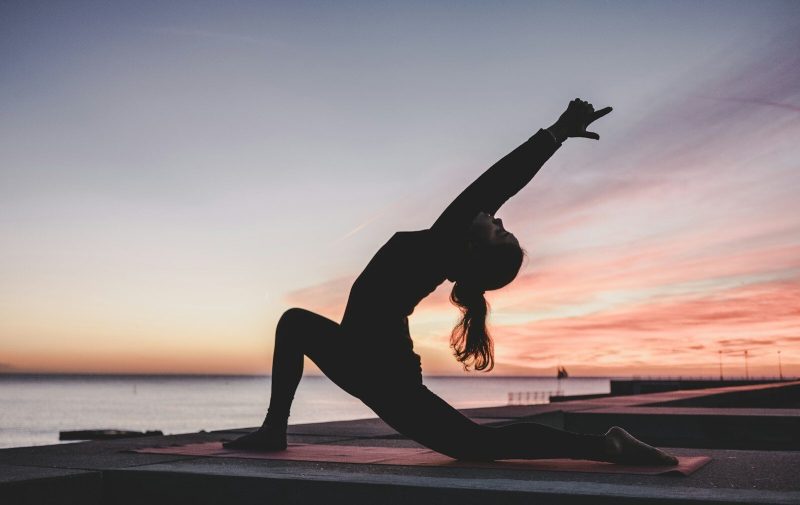
- Stretching the kidney and bladder meridians — the entire back body, from the soles up through the calves, hamstrings, and along the spine. A simple forward fold held for 90 seconds daily covers most of it.
- Stop rule: if you’re sweating through your shirt, you’ve gone too far for winter. Aim for a light sheen on the neck and forehead at most.
Rule 6: Guard the Emotional Quiet — Winter Is for the Fear-to-Courage Axis
In TCM’s five-element correspondence, winter belongs to the water element, whose emotion is fear and whose virtue is willpower (zhi, 志). This is not superstition — it’s a psychological observation dressed in elemental language. Winter pulls us inward, and whatever unresolved anxiety we’ve been outrunning all year tends to catch up in the dark months. Anyone who has had a 2 a.m. spiral in January knows this.
The classical response is not to “fight fear with positivity.” It’s to build the kidney’s capacity to hold stillness, which in practice means less stimulation and more containment. Three specific practices:
- The 9 p.m. screen boundary. Blue light and content stimulation scatter the spirit (shen), which the Huangdi Neijing explicitly warns against in winter. Put the phone in another room. Read paper.
- Five minutes of “hidden intention” meditation. This is directly from the Suwen phrase “ruo you si yi” (若有所私意) — “as if you had private intentions.” Sit quietly, breathe naturally, and imagine your awareness sinking down to the lower abdomen (dantian, about three finger-widths below the navel). Don’t try to empty the mind. Just let it settle like sediment in still water. Five minutes is enough.
- Journaling the fears, not the gratitudes. This is counterintuitive, I know. But winter is the season for honest reckoning. Write down three specific fears for 10 minutes once a week. Naming them drains their charge — a mechanism modern psychotherapy calls “affect labeling” (Lieberman et al., 2007, Psychological Science), and one Chinese medicine has implicitly used for centuries through the practice of “calming the spirit.”
Rule 7: Keep the Neck and Shoulders Loose — The Winter Tension Trap
There’s a pattern I saw repeatedly in the Chengdu clinic where I interned: winter patients almost always arrived with the same three complaints — cold hands and feet, tight upper back and neck, and low-grade anxiety. The TCM diagnosis was usually a combination of yang qi not circulating and external cold lodging in the taiyang (greater yang) channel, which runs up the back of the body. The prescription was rarely herbs alone. It was almost always: warm the neck, loosen the shoulders, breathe deeper.
The 3-minute winter reset (do this at your desk any time):
- Minute 1: Sit tall. Drop the chin toward the chest and slowly roll the right ear toward the right shoulder. Hold 20 seconds. Repeat left. Then roll the head in a slow half-circle, chin to chest to left shoulder — do not roll the head backward, which compresses the cervical spine.
- Minute 2: Interlace the fingers behind the head, elbows wide. Inhale and lift the chest. Exhale and gently draw the elbows toward each other, feeling a stretch between the shoulder blades. Repeat 6 slow breaths.
- Minute 3: Rub the palms together vigorously for 20 seconds until hot. Cup them over the closed eyes. Then use the warm palms to stroke down the back of the neck 10 times, from the hairline to the base of the neck. This warms the feng men (wind gate) area directly.
Do this twice a day — once mid-morning, once mid-afternoon. It takes three minutes and it directly addresses the most common winter complaint pattern I’ve seen in fifteen years of watching clinical practice.
Putting It Together: A One-Week Winter Bao Jian Schedule
Here’s how all seven rules fit into an ordinary work week. You don’t have to do everything at once — start with the tea and the sleep shift, then layer in the rest.
- Every morning, 7–9 a.m.: Ginger-cinnamon-longan tea (Rule 2). Eat black sesame congee or walnuts (Rule 3).
- Every mid-morning and mid-afternoon: 3-minute neck and shoulder reset (Rule 7).
- Every day, 10 a.m.–2 p.m. window: 30–40 minute walk, or 20 minutes tai chi/qigong (Rule 5).
- Every evening, 30–60 min before bed: 15-minute ginger-mugwort foot soak (Rule 4).
- Every evening, 9 p.m.: Screens off. 5 minutes of “hidden intention” meditation (Rule 6).
- Every night: In bed by 10:45 p.m. (Rule 1).
- Once per week: 10-minute fear journaling (Rule 6). Lamb bone broth batch cook (Rule 3).
Common Questions
Is winter bao jian the same as taking immune-boosting supplements?
No, and the difference matters. Modern “immune boosting” is usually about stimulating a response — often with high-dose vitamin C, zinc, or echinacea. Classical winter bao jian is about conserving what you already have and keeping the body’s warming energy (yang) properly anchored. The two approaches aren’t mutually exclusive, but they have opposite orientations: one pushes outward, the other draws inward. If you take supplements, take them with food and with the guidance of a healthcare provider. If you practice bao jian, the goal is steady baseline, not peak performance.
Can I do these practices if I live in a hot climate?
Yes, with modifications. Traditional Chinese medicine follows the solar terms rather than the thermometer — winter begins with the lidong (立冬) solar term around November 7 and runs through dahan (大寒) in late January, regardless of local weather. If you’re in a warm climate, keep the sleep shift and the emotional quiet practices (Rules 1 and 6), but reduce the intensity of warming foods and skip the daily foot soak or use cooler water (around 98°F / 37°C). The principle of “closed storage” still applies — it’s about the season of the sun, not the temperature of your street.
How long before I notice a difference?
Most people notice changes in sleep quality within 5–7 days of shifting their bedtime and doing the foot soak. Digestion and warmth usually follow in 2–3 weeks. The deeper shifts — steadier mood, less winter anxiety, more energy in early spring — are cumulative and typically show up in retrospect, often in March when people realize they didn’t get the usual winter slump. Bao jian is a slow practice. My grandmother used to say, “You don’t feel the roots growing, but in spring the tree knows.” She was right.
Recommended Winter Bao Jian Tools
- Insulated enamel kettle (1.5L) — for the morning ginger-cinnamon-longan tea. Enamel holds heat evenly and won’t react with the herbs the way aluminum can.
- Ceylon cinnamon sticks (Cinnamomum verum) — buy whole sticks rather than powder; they retain volatile oils longer and you can see what you’re getting.
- Wooden foot bath basin — deeper than a standard tub, holds heat for the full 15 minutes, and the wood itself is considered gently warming in Chinese bathing tradition.
The bottom line: Winter bao jian isn’t about adding more to your plate — it’s about protecting what you already have. The seven rules all point to one principle from the Huangdi Neijing: let yang retreat inward, keep the body warm from the roots, sleep more, sweat less, eat slowly cooked dark foods, and give the mind honest quiet. Start with my grandmother’s four-minute kettle ritual and a 45-minute earlier bedtime. Do those two things consistently for three weeks and you’ll understand why the Chinese have been practicing “closed storage” for two thousand years.
About the Author
Yu Xi Zhang grew up in a Chinese household where traditional wellness practices were part of daily life. With over 15 years of study under licensed TCM practitioners in Beijing and Chengdu, and a certification in TCM nutrition from the Beijing University of Chinese Medicine, she bridges Eastern wisdom with Western wellness in practical, actionable ways. Her writing draws from classical texts like the Huangdi Neijing and modern research to help readers live healthier, more balanced lives.
This article is for educational purposes and reflects traditional wellness perspectives. It is not a substitute for professional medical advice, diagnosis, or treatment.