Every spring, something shifts in my body before I notice it in the trees. A tightness behind the ribs. A shorter fuse with my partner over dishes. A restless energy at 3 a.m. that has nowhere to go. For years I thought I was just “seasonally moody” — until a practitioner in Chengdu pressed gently under my right ribcage and said, without any drama: “Your liver qi is stuck. It happens to half this city in March.”
She wasn’t being poetic. In Traditional Chinese Medicine (TCM), the liver is the organ system that governs the smooth flow of qi — your vital energy — through the entire body. Spring is its season. Wood is its element. Growth, expansion, upward movement — that’s the direction qi wants to travel right now. When it flows freely, you feel decisive, creative, flexible, and calm. When it dams up — because of stress, sedentary winter habits, emotional suppression, or rich food — it turns into what practitioners call liver qi stagnation, and it shows up as irritability, bloating, sighing, tight shoulders, jaw clenching, menstrual cramps, and that specific flavor of frustration where you can’t name what’s wrong but everything is annoying.
This article is a three-week ritual for unknotting that stagnation — not through willpower, but through small, specific daily actions drawn from classical TCM, modern research on the vagus nerve and stress physiology, and the kind of kitchen wisdom my grandmother practiced without calling it anything at all. We’ll go deep on one concept — the free flow of liver qi — and give you concrete foods, herbs, acupressure points, movement sequences, and emotional practices you can start today.
- What "Liver Qi Rising" Actually Means (And Why Spring Triggers It)
- The Core Principle: Move the Qi Before You Try to Fix the Emotion
- Week 1: Move the Qi — 15 Minutes a Day
- Week 2: Feed the Flow — Foods, Teas, and What to Drop
- Week 3: Unknot the Emotion — Practices for the Inner Layer
- A Word on Herbs: When Food and Practice Aren't Enough
What “Liver Qi Rising” Actually Means (And Why Spring Triggers It)
Let’s clear up a common confusion first. When TCM talks about the liver, it is not talking about the anatomical organ that filters blood. It’s talking about a functional system — a network of physiological and emotional processes that Western medicine would partly map onto the endocrine system, the autonomic nervous system, and the smooth muscle of the digestive tract. Think of it as the body’s traffic controller for movement and emotion.
The Huangdi Neijing (Yellow Emperor’s Classic of Internal Medicine, compiled roughly 2,200 years ago) says it plainly:
“The liver is the official of strategic planning; the excellence of decision-making derives from it. When the liver is in harmony, plans can be made and adjustments are timely.”
That’s from the Suwen, Chapter 8. Notice the language: strategic planning, decision-making, adjustment. The liver system is about flexible response. When it works, you bend without breaking. When it’s stuck, you either snap (anger, irritability) or freeze (depression, indecision, that “stuck” feeling).
Why Spring Is the Trigger
In the Five Phase (Wu Xing) cycle, the liver corresponds to Wood, and Wood corresponds to spring. Winter is Water — stillness, storage, inwardness. Spring is the moment Water generates Wood, and everything wants to rise. Sap in trees. Shoots in soil. Hormones in your body. The qi of the whole natural world is pushing upward and outward after months of contraction.
If your liver qi is already slightly stagnant — from a winter of sitting, eating heavy foods, sleeping too little, or holding in frustration — the seasonal surge has nowhere to go. It’s like turning up the water pressure in a garden hose with a kink in it. The pressure builds behind the kink. That’s what you feel in March and April: pressure without direction.
Modern research offers a partial parallel. A 2016 study in Chronobiology International (Fares et al.) documented seasonal variation in cortisol awakening response and autonomic tone, with measurable shifts in stress-hormone patterns during spring transition. A 2019 review in Frontiers in Psychology (Brennan et al.) found that seasonal changes in daylight exposure influence serotonin transporter availability — a plausible biological substrate for the “spring restlessness” that TCM has described for two millennia. Neither study validates qi as a substance. Both suggest the underlying phenomenon is real.
The Signs Your Liver Qi Is Stuck
Here’s a quick self-check. You don’t need all of these — three or four is telling:
- Emotional: irritability over small things, frustration that feels out of proportion, feeling “wound up” or “on edge”
- Physical: sighing frequently (your body’s instinct to move stuck qi), tightness or ache along the ribs, tension headaches at the temples
- Digestive: bloating that worsens with stress, alternating constipation and loose stools, nausea before difficult conversations
- Muscular: neck and shoulder tension that returns no matter how much you stretch, jaw clenching or teeth grinding
- For women: PMS breast tenderness, cramping that improves after the flow starts, irregular cycles
- Tongue: a slightly purplish tint to the sides of the tongue, or a thin yellow coat
The Core Principle: Move the Qi Before You Try to Fix the Emotion
This is the single most counterintuitive idea in TCM emotional work, and the one that changed my practice the most.
Western wellness culture tends to treat emotions as purely psychological — you journal, you talk it out, you reframe the thought. TCM does not disagree with any of that, but it starts one layer lower. It says: the emotion and the physical stagnation are the same phenomenon viewed from two angles. Anger is not caused by stuck liver qi, and stuck liver qi is not caused by anger. They arise together. Which means: if you move the qi physically, the emotion often softens without you having to “figure it out” at all.
My grandmother had no vocabulary for this. But every evening in spring she would stand in the courtyard, raise both arms overhead, stretch sideways left and right, and let out a long audible sigh — sometimes five or six times. I thought it was just an old-lady habit. It was, in fact, a textbook liver-soothing movement combined with a sigh, which TCM recognizes as the body’s spontaneous attempt to release chest constraint (a sign called shan xi, or frequent sighing, in the diagnostic literature).
So the ritual that follows is organized in three weeks for a reason. Week 1 moves the body. Week 2 cleans up the input — food, drink, sensory environment. Week 3 addresses the emotional layer directly, once there’s actually space to do so.
Week 1: Move the Qi — 15 Minutes a Day
The goal this week is not fitness. It’s directional movement — specifically, lateral bending, twisting of the spine, and opening of the ribcage and hip flexors, where liver constraint tends to lodge.
The Daily 15-Minute Sequence
Do this every morning before coffee, ideally between 5 and 7 a.m. (the mao hours in the Chinese clock, when the qi of the Large Intestine is active and the body is primed for release) — or whenever you can, honestly. Consistency beats timing.
- 1. Standing side stretch (3 minutes). Feet shoulder-width apart. Inhale, raise both arms overhead, interlace fingers, turn palms up. Exhale and lean 20 degrees to the left, feeling the stretch from armpit to hip. Hold 45 seconds. Return to center on an inhale. Repeat right. Do 4 rounds total.
- 2. Spinal twist with sigh (3 minutes). Stand tall. Inhale, arms out to the sides. Exhale and twist to the left from the waist, letting your right hand come to your left shoulder and your left hand swing behind you. Let out a long audible sigh — yes, out loud. Return on an inhale. Alternate sides, 8 rounds.
- 3. Liver meridian tapping (3 minutes). The liver meridian runs up the inside of the legs. Using loose fists, tap firmly from the inner ankle up to the inner groin, 20 times per leg. Then tap along the inner thigh where the meridian passes — this area is often tender in people with stagnation.
- 4. “Rooster stands on one leg” balance (3 minutes). A simplified qigong posture. Stand on your left leg, lift your right knee to hip height, arms raised like wings. Hold 30 seconds, breathing normally. Switch. Repeat 3 times per side. This engages the liver’s “planning and balance” function literally.
- 5. Three-direction stretch and sigh (3 minutes). Reach both arms overhead and sigh. Reach forward and sigh. Reach behind you (opening the chest) and sigh. Repeat 5 times.
Two Acupressure Points to Hit Every Day
These two points are the workhorses of liver qi regulation. Press each for 90 seconds, morning and evening, using firm thumb pressure with a slight circular motion.
LV3 — Taichong (Great Surge). Located on the top of the foot, in the depression between the first and second metatarsal bones, about two finger-widths up from the webbing of the toes. This is the yuan-source point of the liver meridian — the point where the organ’s essential energy gathers. A 2017 randomized controlled trial published in Journal of Alternative and Complementary Medicine (Li et al.) found that acupressure at LV3 significantly reduced self-reported anxiety scores compared to sham acupressure in a sample of 60 adults over four weeks.
LV14 — Qimen (Cycle Gate). Located directly below the nipple, in the sixth intercostal space, on the ribcage. This is the mu-front point of the liver — where the organ’s energy surfaces on the body’s front. Press gently (this area can be tender). This is the point my Chengdu practitioner pressed on that first visit.
Week 2: Feed the Flow — Foods, Teas, and What to Drop
Once the qi is moving physically, this week we stop re-stagnating it through food and drink. The principle is simple: the liver system thrives on slightly sour flavors (which gently “clamp down” and consolidate), green and sprouting foods (which carry the Wood phase’s upward energy), and bitter greens (which clear heat that builds when qi gets stuck). It struggles with heavy, greasy, excessively sweet, and heavily processed foods, and with alcohol — which in TCM is considered extremely hot and directly irritates the liver system.
Seven Liver-Friendly Foods to Add This Week
| Food | TCM Property | How to Prepare | Amount |
|---|---|---|---|
| Dandelion greens (Taraxacum mongolicum) | Bitter, cold; clears liver heat | Sauté 2 cups with garlic and a splash of rice vinegar, 3 minutes | 4–5 times this week |
| Chrysanthemum flowers (Chrysanthemum morifolium) | Sweet, bitter, cool; soothes liver, brightens eyes | Steep 8–10 dried blossoms in 8 oz water at 200°F for 5 minutes | 1 cup daily |
| Goji berries (Lycium barbarum) | Sweet, neutral; nourishes liver blood and yin | Soak 20 berries in hot water 10 minutes; eat berries and drink liquid | Daily |
| Sour plum (ume) or pickled radish | Sour; gently astringes and moves liver qi | 1 small umeboshi plum with rice, or 3 slices tsukemono pickle | Small amount with lunch |
| Beetroot | Sweet, neutral; supports blood flow | Roast 1 medium beet at 400°F, 45 min; slice with sesame oil | 3 times this week |
| Peppermint (Mentha haplocalyx, bo he) | Pungent, cool; disperses constrained qi | Steep 1 tsp dried leaf in 8 oz water, 4 minutes | 1–2 cups daily |
| Broccoli sprouts or pea shoots | Green, upward-moving; carries Wood energy | Raw, 1 large handful on top of any meal | Daily |
What to Reduce (Not Eliminate — Reduce)
I’m not going to tell you to live like a monk. But for three weeks, notice how these land in your body:
- Alcohol — Even one glass of wine can reignite liver heat. If you drink, limit to 2 servings total this week and notice your sleep and mood the next morning.
- Coffee after noon — Caffeine pushes qi upward and outward. Liver qi rising is already upward and outward. The combination creates that wired-but-tired feeling.
- Deep-fried foods — Grease creates what TCM calls phlegm-damp, which physically obstructs qi movement in the middle burner (the digestive center).
- Refined sugar — Sweet flavor in excess “attacks” the liver system through the Five Phase control cycle (Earth overacts on Wood). This is a classical principle, not a modern diet rule.
- Eating while angry or scrolling — This is the sneakiest one. The liver governs the smooth flow of qi into digestion. Eating in a state of agitation literally sends stress chemistry into the digestive process.
A Daily Spring Tea Blend
Here is a blend I make in a 16-oz mason jar every morning during spring. Combine in a tea strainer:
- 6 dried chrysanthemum blossoms (Chrysanthemum morifolium)
- 1 tsp goji berries (Lycium barbarum)
- 1 tsp dried rose buds (Rosa rugosa, mei gui hua) — moves qi and gently lifts the mood
- ½ tsp dried mint
- 1 thin slice of fresh ginger (to protect the digestion from the cooling herbs)
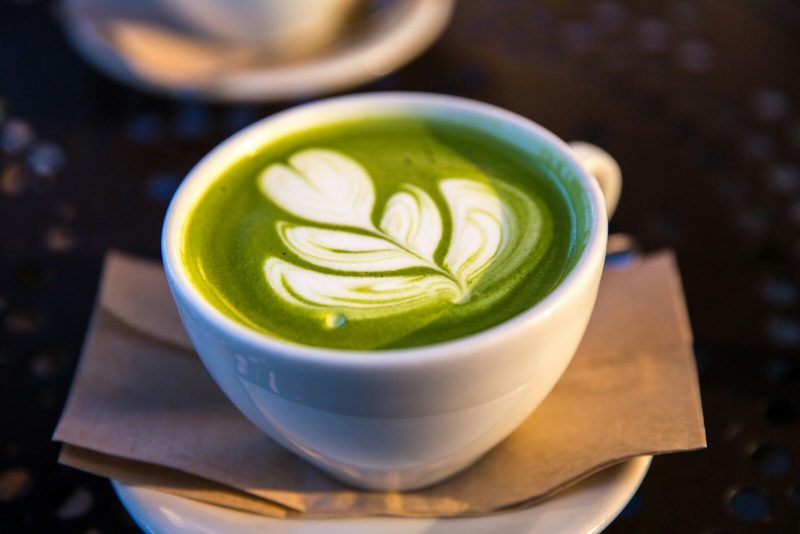
Pour 16 oz of water just off the boil over the blend. Cover. Steep 7 minutes. Sip warm between 7 and 11 a.m. This is not a strong medicinal dose — it’s a daily ritual tea. The rose buds in particular are a quiet hero: the Bencao Gangmu (Compendium of Materia Medica, Li Shizhen, 1578) notes rose as “regulating qi and blood, soothing the liver and harmonizing the stomach.”
Week 3: Unknot the Emotion — Practices for the Inner Layer
Now that the body is moving and the food is clean, we can work with the emotional layer directly. The aim this week is not to eliminate anger or frustration. Anger, in TCM, is a legitimate Wood-phase emotion — it’s the emotional equivalent of a boundary, of a “no,” of the force that pushes a sprout through soil. The problem is not anger itself. The problem is anger that has no outlet and therefore turns inward or sideways.
Practice 1: The 3-Minute “Naming the Knot” Journal
Every evening this week, before bed, write three sentences:
- “Today my body felt stuck in ______.” (Name the location: jaw, ribs, shoulders, belly.)
- “The emotion underneath was probably ______.” (Guess. You don’t have to be right.)
- “If that emotion could speak, it would say ______.”
That’s it. No analysis, no fixing. This is a somatic-emotional bridge — a practice drawn from both TCM’s long tradition of linking organ systems to emotions and from contemporary affect labeling research. A 2007 fMRI study by Lieberman et al. in Psychological Science found that simply naming an emotion reduces amygdala activation — the “name it to tame it” effect. The TCM version adds a body location, which seems to help the nervous system complete the release.
Practice 2: The Wood-Phase Sound Release
In the Liuzijue (Six Healing Sounds) qigong tradition — documented as early as the 5th century in Tao Hongjing’s Yangxing Yanming Lu — each organ system has a corresponding sound. The liver’s sound is “Xu” (pronounced “shhh”), made with the teeth gently together and the tongue touching the roof of the mouth.
Stand tall. Place both hands over your lower right ribs (over the liver area). Inhale slowly through the nose for 4 counts. As you exhale, make the sound “shhh” for 6–8 counts, imagining tension leaving the ribcage as green-gold light. Repeat 6 times. Do this in the morning and again whenever you feel frustration rising. It takes 90 seconds and it works — not magically, but because the extended exhale stimulates the vagus nerve and shifts you from sympathetic to parasympathetic tone. A 2018 study in Frontiers in Human Neuroscience (Gerritsen & Band) reviewed the physiology of slow breathing and confirmed that exhalation-focused breathing reliably increases heart-rate variability.
Practice 3: One Honest Conversation
This is the scariest one, and the most important. Liver qi stagnation is, at its root, often a communication problem — a thing that needs to be said and hasn’t been. Sometime during week three, have one honest, kind, direct conversation you’ve been avoiding. It doesn’t have to be dramatic. It can be as small as: “I’ve been feeling irritable lately and I think it’s because I need more quiet time in the mornings. Can we talk about that?”
The liver governs planning and decision-making. When you finally say the thing, you are completing the Wood phase’s job. My teacher in Beijing used to say that a single honest sentence could do more for liver qi than a month of herbs — and I’ve seen it happen.
A Word on Herbs: When Food and Practice Aren’t Enough
If your symptoms are mild to moderate, the three-week ritual above is usually sufficient. But if you’re dealing with significant PMS, chronic irritability, or stress-related digestive issues, classical herbal formulas may help — and should be prescribed by a licensed practitioner, not self-diagnosed from the internet. That said, here are the two most common formulas you might hear about, so you can have an informed conversation:
- Xiao Yao San (Free and Easy Wanderer) — First recorded in the Tai Ping Hui Min He Ji Ju Fang (1078 CE). Contains Bupleurum chinense (chai hu), Paeonia lactiflora (bai shao), Angelica sinensis (dang gui), and 5 other herbs. Traditionally used for liver qi stagnation with spleen deficiency — the classic “stressed and tired” pattern. A 2019 meta-analysis in Frontiers in Pharmacology (Zhang et al.) found evidence supporting its use for stress-related mood disturbance, while calling for larger trials.
- Jia Wei Xiao Yao San (Free and Easy Wanderer Plus) — Adds Moutan cortex (mu dan pi) and Gardenia jasminoides (zhi zi) to clear heat. For the pattern where stagnation has generated irritability, hot flashes, or a sense of internal heat.
Important: Both formulas contain herbs that can interact with medications (including SSRIs, blood thinners, and hormone therapies). Do not self-prescribe. See a licensed acupuncturist or herbalist.
Recommended Tools
- Organic chrysanthemum and rose tea blend — Look for whole dried blossoms, not cut tea bags, for better flavor and potency.
- Wooden gua sha board — For gentle scraping along the inner thigh and ribcage to move liver qi. Use light pressure with sesame oil.
- “The Web That Has No Weaver” by Ted Kaptchuk — The clearest Western-language introduction to TCM’s theoretical framework, including the Five Phase system.
Common Questions
How quickly will I notice a difference from this three-week ritual?
Most people notice a shift in physical tension within the first 4–5 days of the daily movement sequence — the sighing decreases, the shoulders drop, sleep improves. The emotional layer usually softens in week two or three, once the body is no longer holding so much constraint. Some research on qigong and breathwork suggests measurable changes in heart-rate variability within 7–10 days of consistent practice (Gerritsen & Band, 2018). That said, everyone is different. If you’ve been holding stress for years, give it more than three weeks — treat this as the beginning of a seasonal practice, not a one-time fix.
Is liver qi stagnation the same as “anger issues”?
Not at all. Liver qi stagnation is a physical-emotional pattern, not a character flaw. Many people with it are the opposite of angry on the surface — they’re people-pleasers, over-functioners, the ones who never say no. The anger sits underneath, unexpressed, and turns into tight shoulders, IBS, or PMS. Other people express it outwardly as irritability. Both are the same underlying pattern of constrained flow. TCM is remarkably non-judgmental about this — the goal is not to become a “better person,” it’s to restore smooth movement.
Can I do this ritual in other seasons, or is it spring-only?
You can absolutely use these practices year-round — the movement sequence, acupressure points, and sound release are beneficial whenever you feel stuck or irritable. However, spring is the season when they are most aligned with the body’s natural direction of qi. Think of it like swimming with the current versus against it. Doing liver-soothing practices in spring gets extra momentum from nature. Doing them in autumn or winter still works — it just requires a bit more consistency. If you’re curious about seasonal alignment more broadly, the Huangdi Neijing‘s Suwen Chapter 2 is the classical source text on living in rhythm with the four seasons.
The bottom line: Spring’s upward surge of energy is a gift — but only if your liver qi has somewhere to go. The three-week ritual works because it addresses the problem in the right order: move the body first (week 1), clean up the input (week 2), and unknot the emotion (week 3). Fifteen minutes of directional movement, a cup of chrysanthemum-rose tea, two acupressure points, and one honest conversation — that’s the whole practice. It won’t fix everything. But it will give the spring inside you somewhere to flow.
About the Author
Yu Xi Zhang grew up in a Chinese household where traditional wellness practices were part of daily life. With over 15 years of study under licensed TCM practitioners in Beijing and Chengdu, and a certification in TCM nutrition from the Beijing University of Chinese Medicine, she bridges Eastern wisdom with Western wellness in practical, actionable ways. Her writing draws from classical texts like the Huangdi Neijing and modern research to help readers live healthier, more balanced lives.
This article is for educational purposes and reflects traditional wellness perspectives. It is not a substitute for professional medical advice, diagnosis, or treatment.