My boyfriend wears shorts in December. I wear three layers indoors. We eat the same food, live in the same apartment, and our doctor says we’re both “healthy.” Chinese medicine has a much better explanation.
I have been cold for as long as I can remember. Not “oh, it’s a bit chilly” cold — the kind of cold where my fingers turn white at the tips in a heated office, where I sleep under a duvet and a fleece blanket in July, where I have been known to wear thermal underwear to a dinner party and still shiver through the appetizer course. My boyfriend, meanwhile, sleeps with one leg outside the covers like he’s auditioning for a mattress commercial. He opens windows in January. He thinks a light jacket counts as winter gear. We share a thermostat, a kitchen, a zip code — and absolutely nothing else when it comes to temperature.
Our doctor has tested us both. Thyroid: normal. Iron: normal. Blood pressure, cholesterol, vitamin D — all unremarkable. “You’re both healthy,” she said, with the cheerful finality of someone who has closed the file. But I am not healthy in the same way he is healthy. I am healthy and freezing. He is healthy and radiating heat like a human space heater. There is a difference, and Western medicine does not have a name for it.
Chinese medicine has had a name for it for two thousand years. And once I understood what that name meant, the way I thought about my body — and my permanently icy hands — changed completely.

The Ancient Text That Explained My Thermostat Wars
The Huangdi Neijing — the Yellow Emperor’s Classic of Internal Medicine — is the foundational text of Traditional Chinese Medicine. Written around 200 BCE, it’s essentially the oldest medical textbook still in active clinical use. Doctors in hospitals across China reference it today, not as a historical curiosity, but as a practical diagnostic framework. And in its pages, there is a concept that perfectly describes why my boyfriend and I can live identical lives and experience temperature in completely different ways.
The concept is body constitution (体质, tǐzhì). The idea is deceptively simple: people are not built the same. Your body has a default setting — a baseline pattern that influences everything from your digestion and energy levels to your emotional tendencies and, critically, how you experience temperature. These patterns aren’t diseases. They’re tendencies, as fundamental and as difficult to override as your height or your eye color.
In TCM, there are nine recognized body constitution types. Most people are a blend of one primary and one or more secondary types. And two of these types — Yang-Deficient and Yin-Deficient — are the reason some people are always cold and others are always hot. They are the ancient answer to the thermostat war. They are, in a very real sense, the reason I am writing this in a cardigan while my boyfriend sits next to me in a T-shirt.
You can explore the full range of nine TCM body constitutions here, but for now, let me walk you through the two types that matter most when it comes to temperature — and what to do if you recognize yourself in either one.
Yang Deficiency: The Internal Furnace on Low
If you are always cold — if your hands and feet are perpetually frigid, if you dread winter, if you wear socks to bed and still wake up with cold toes — there is a strong chance you are Yang-Deficient. I am, and recognizing this changed everything.
In TCM, Yang (阳) is the warming, activating force in your body. Think of it as your internal furnace. It’s what keeps your blood circulating, your digestion firing, your extremities warm. When Yang is strong, you generate heat naturally. Your hands are warm. Your stomach handles cold foods without complaint. You wake up energized and move through your day without needing three cups of coffee and a heated blanket.
When Yang is deficient, the furnace is running low. Your body prioritizes keeping your core organs warm — your heart, your lungs, your liver — and deprioritizes everything at the periphery. Your fingers and toes become the first casualties of an energy shortage. Your digestion slows because there isn’t enough internal heat to properly “cook” your food. Your energy dips because your body is operating in conservation mode, hoarding warmth for essential functions and leaving you feeling sluggish, heavy, and cold.
The classic symptoms of Yang deficiency include:
- Cold hands and feet, especially the extremities — the rest of your body may be fine, but your fingers and toes are always freezing
- Aversion to cold weather and cold environments — you’re the person who brings a sweater to the restaurant in summer
- Pale complexion, sometimes with a slightly bluish tint to the lips or nail beds
- Fatigue that worsens in the afternoon — that 3 PM wall where your body seems to shut down
- Loose stools or frequent digestive upset, especially after eating raw or cold foods
- Frequent urination, especially at night — your Kidney Yang isn’t strong enough to properly regulate fluid metabolism
- A low, soft voice and a tendency to prefer sitting and lying over standing and moving
- A tongue that is pale, swollen, and wet-looking, with a thin white coating — a classic TCM diagnostic sign
I had every single one of these. Every one. And I had been told by multiple doctors that they were unrelated — that my cold hands were “just circulation,” my fatigue was “probably stress,” and my frequent nighttime urination was “normal for someone who drinks a lot of water.” In TCM, they are not unrelated. They are the same story, told by different parts of the body. They are all expressions of one underlying pattern: not enough fire in the furnace.
The Kidneys (肾) are considered the root of Yang energy in TCM — the pilot light that keeps the whole system running. When Kidney Yang is weak, it’s like a boiler that can’t quite reach operating temperature. Everything downstream is affected: your digestion, your circulation, your energy, your reproductive health, even your willpower and motivation. This is why Yang-deficient people often describe themselves as “low energy” in a way that sleep doesn’t fix. It’s not that they’re tired from lack of rest — it’s that their body lacks the fundamental warmth to function at full capacity.
My boyfriend? He is the opposite. His Yang burns bright. He generates heat like a furnace. He can eat ice cream in a snowstorm and feel fine. This is not because he is “healthier” than me — it’s because his body constitution runs warm. His Yang is naturally strong. Mine is naturally low. Same apartment, same doctor, completely different internal thermostats.
Yin Deficiency: The Overheated Engine

Now here’s the part that might surprise you. The person who is always hot — the one who sleeps with the fan on in December, who kicks off the covers at 2 AM, who radiates heat like a clay oven — that person might not have “too much Yang.” They might have not enough Yin.
In TCM, Yin (阴) is the cooling, moistening, nourishing force in your body. If Yang is the fire, Yin is the water. They exist in a dynamic balance — each one restraining and supporting the other. When Yin is strong, it keeps Yang in check. The fire burns steadily, warming you without overheating you. Your skin is moist. Your sleep is deep. Your mind is calm.
When Yin is deficient, there isn’t enough water to balance the fire. The Yang isn’t necessarily excessive — but without Yin to cool it, it becomes empty heat (虚火, xū huǒ). It’s like a pot of water boiling dry on the stove: the flame hasn’t gotten bigger, but there’s no water left to absorb the heat. The result is a person who feels hot — often in specific ways and at specific times — but whose heat is a symptom of depletion, not excess.
The classic symptoms of Yin deficiency include:
- Feeling hot, especially in the afternoon and evening — a characteristic “five-palm heat” where your palms, soles of your feet, and chest feel warm to the touch
- Night sweats — waking up drenched, often around 2-4 AM
- Dry skin, dry eyes, dry mouth, dry throat — the body’s moisture is being depleted
- Insomnia or restless, dream-filled sleep — the mind can’t settle because there’s insufficient Yin to anchor it
- A red tongue with little or no coating — a key TCM diagnostic marker
- A rapid, thin pulse
- Hot flashes, especially in perimenopausal and menopausal women
- Irritability, restlessness, and a feeling of being “wired but tired”
Yin deficiency is extremely common in modern life — and modern life may be accelerating it. Late nights, chronic stress, excessive screen time, overwork, and a diet heavy in stimulants (coffee, alcohol, spicy food) all consume Yin. Think of it as running your body’s air conditioning system nonstop without ever recharging the refrigerant. Eventually, the system overheats.
My close friend Sarah is textbook Yin-Deficient. She’s the one fanning herself at dinner while I’m asking for a second blanket. She can’t sleep without the window open, even in February. She gets hot flashes at 37 — not menopausal, just constitutionally depleted. She drinks iced coffee year-round and craves cold fruit, which her body is instinctively reaching for to cool the internal heat. But the irony is that the iced coffee is further depleting her Yin, creating a cycle that’s hard to break.
The critical distinction is this: Yang deficiency is cold from lack of fire. Yin deficiency is hot from lack of water. Both are forms of imbalance. Neither is “better” or “worse.” And both have specific, actionable solutions in the TCM framework.
How to Tell Which One You Are
The easiest way to begin understanding your constitution is to pay attention to your temperature patterns — not just whether you feel hot or cold, but when and how.
You might be Yang-Deficient if:
- Your coldness is worst in your extremities — fingers, toes, nose, ears
- You feel colder in the evening and at night
- You crave warm drinks and hot food; cold drinks make you feel worse
- You have low energy that feels like a slow drain, not a sudden crash
- Your face is pale rather than flushed
- You urinate frequently, especially at night
- You prefer to curl up under blankets and avoid movement when you’re cold
You might be Yin-Deficient if:
- Your heat is worst in the afternoon and evening
- You get night sweats or wake up feeling overheated
- Your skin, mouth, or eyes tend to be dry
- You feel restless and “wired” at night, even when exhausted
- Your face tends to flush easily
- You crave cold drinks and cooling foods
- You have a sensation of heat in your palms, soles, and chest
For a more detailed assessment, I strongly recommend taking a proper body constitution evaluation. The TCM Body Type Quiz on our site walks you through the specific diagnostic questions that TCM practitioners use, and it identifies not just your primary type but any secondary tendencies as well. It takes about ten minutes and gives you a much more nuanced picture than any self-assessment could.
What to Do About It: Practical Steps for Each Type

The beauty of the TCM body constitution system is that it doesn’t just label you — it gives you a roadmap. Once you know your type, you know what to eat, how to move, when to sleep, and which daily habits will support your body’s natural balance. Here’s the practical breakdown:
If You Are Yang-Deficient (Always Cold)
Food as fuel: Your body needs warming, cooked foods. Think soups, stews, congee, roasted vegetables, and anything with ginger, cinnamon, black pepper, garlic, or turmeric. Lamb, chicken, and walnuts are considered especially warming in TCM. Avoid raw salads, iced drinks, and excessive amounts of cold fruit — these require your body to expend precious Yang energy just to bring them up to temperature. If you drink smoothies, blend warming ingredients like ginger and cinnamon into them, and let them sit at room temperature for a few minutes before drinking.
Daily habits: Warm your lower abdomen — the area around your navel — every evening. A hot water bottle, a warm compress, or moxibustion on the point called Guanyuan (CV4), located three finger-widths below your belly button, can do wonders. This is the “Sea of Qi” in TCM, the body’s core energy reservoir. Warming it directly supports Kidney Yang. Foot soaks before bed in warm water with ginger or mugwort are another simple, powerful practice. I do this nightly and it has improved both my circulation and my sleep dramatically.
Exercise: Gentle, consistent movement is better than intense, draining workouts. Tai chi, brisk walking, yoga, and swimming in warm water are ideal. High-intensity exercise can actually deplete Yang further — if you finish a workout feeling completely drained rather than energized, that’s a sign you’ve overdone it. The goal is to get your Qi moving without burning through your reserves.
Sleep: Be in bed by 10:30 PM. The hours before midnight are considered the most restorative for Yang energy in TCM. Protect your lower back and feet while sleeping — these are the areas where Yang is most vulnerable to cold invasion. A warm pair of socks and a blanket that covers your lower back can make a genuine difference.
If You Are Yin-Deficient (Always Hot)
Food as coolant: Your body needs nourishing, moistening foods. Pears, watermelon, cucumber, mung beans, tofu, sesame seeds, and duck are all considered Yin-nourishing in TCM. Cook your food, but favor gentle preparations — steaming, braising, and light stir-frying over deep-frying or heavy roasting. Drink room temperature or slightly warm water throughout the day — and yes, I know that sounds counterintuitive when you’re hot, but ice-cold drinks further deplete Yin, creating a vicious cycle.
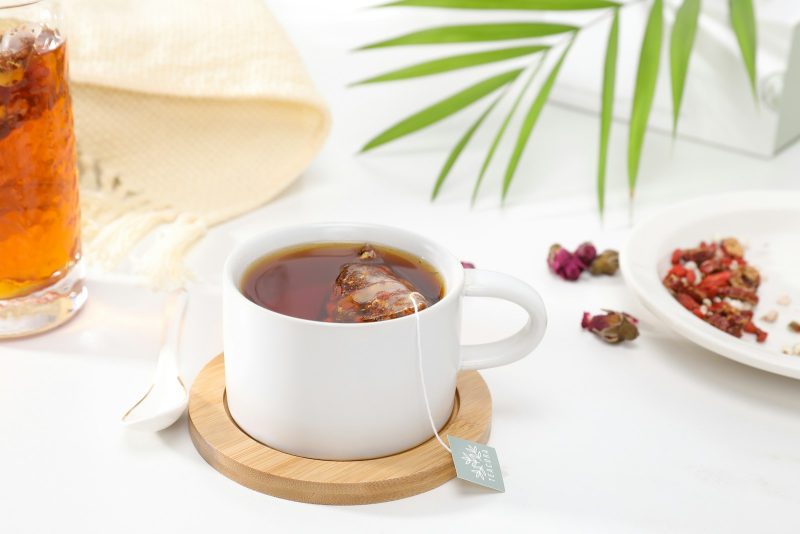
Daily habits: Reduce stimulants. Coffee, alcohol, and spicy food all consume Yin. If you can’t eliminate coffee, try replacing one cup with goji berry tea or chrysanthemum tea — both are traditionally used to nourish Yin and clear empty heat. Practice restorative activities: meditation, slow breathing exercises, gentle stretching. Your nervous system is running hot — it needs signals that it’s safe to cool down.
Exercise: Yin-deficient types do well with calming, grounding activities — yin yoga, tai chi, swimming, and walking in nature. Avoid exercising in extreme heat or late at night, both of which further deplete Yin. If you feel wired after a workout instead of pleasantly tired, you’ve pushed too hard.
Sleep: Create a cool sleeping environment. A slightly cooler room with breathable bedding supports Yin recovery during sleep. The same 10:30 PM bedtime applies — deep sleep is when the body replenishes Yin. Avoid screens for at least an hour before bed; the blue light and mental stimulation further tax an already overstimulated system.
For Both Types
Regardless of whether you run cold or hot, the TCM body constitution framework recommends constitutional awareness as a daily practice. This means paying attention to your body’s signals and responding to them rather than overriding them. If you’re Yang-Deficient and you feel cold, warm yourself — don’t push through it. If you’re Yin-Deficient and you feel overheated, cool down — don’t ignore it. Your body is communicating its needs. Learning to listen is the first step toward balance.
For a comprehensive understanding of all nine constitution types and how to care for each one, our guide to Chinese medicine body types provides a complete breakdown with food recommendations, lifestyle adjustments, and common pitfalls for each type.
Why This Matters More Than You Think
I used to think my cold hands were just a quirk — an annoying but meaningless feature of my body, like being double-jointed or having a fast metabolism. I didn’t think of it as a signal. I didn’t think of it as information.
TCM taught me that my body has been telling me something for decades, and I wasn’t listening. My cold extremities weren’t random. My afternoon fatigue wasn’t random. My loose stools, my pale face, my preference for warm drinks, my need for nine hours of sleep — none of it was random. They were all the same message, spoken in different dialects: your Yang needs support.
Understanding this didn’t just help me get warmer hands — though it did do that. It gave me a framework for making decisions about my body that actually made sense. I stopped forcing down raw kale salads because a wellness influencer said they were “superfoods.” I stopped doing high-intensity workouts that left me drained for two days. I started eating warm, cooked breakfasts. I started going to bed earlier. I started treating my body like what it is — a system with specific needs, not a machine that should perform identically to everyone else’s machine.
And the thermostat wars with my boyfriend? They haven’t exactly ended. He still opens windows in January. I still wear cardigans in July. But now we understand why. He’s not “tougher” than me. I’m not “weaker” than him. We’re different body types, with different constitutions, following different internal rules. And once you understand the rules, you can work with them instead of fighting them.
Frequently Asked Questions
Why am I always cold when everyone around me is fine?
In Traditional Chinese Medicine, persistent coldness — especially in the hands and feet — is most commonly associated with a Yang-deficient body constitution. Yang is the warming, energizing force in your body, and when it’s insufficient, your body prioritizes warming the core organs and deprioritizes the extremities. This is not a disease — it’s a constitutional tendency that has been recognized and treated in Chinese medicine for over 2,000 years. Dietary adjustments, warming therapies like moxibustion, and lifestyle changes can significantly improve your baseline warmth over time.
What is the difference between Yang deficiency and Yin deficiency?
Yang deficiency means your body lacks sufficient warming energy — you feel cold, fatigued, and your digestion is sluggish. It’s like having a furnace that can’t reach operating temperature. Yin deficiency means your body lacks sufficient cooling, nourishing fluid — you feel hot, restless, and dry. It’s like a pot boiling dry: the flame hasn’t gotten bigger, but there’s no water left to absorb the heat. Both are forms of imbalance, and both have specific dietary, lifestyle, and therapeutic approaches in TCM. Taking a body constitution quiz can help you identify which pattern applies to you.
Can I change my body constitution type?
Your primary constitution is relatively stable — it’s shaped by genetics, early life, and long-term patterns. However, it can shift gradually through sustained dietary changes, lifestyle adjustments, stress management, and aging. Many people also have secondary constitution tendencies that can become more or less prominent over time. The goal in TCM isn’t to change who you are — it’s to support your specific body type so it can function at its best. Regular reassessment every six to twelve months can help you track shifts and adjust your approach.
Are cold hands and feet a sign of a serious medical condition?
Cold extremities can occasionally indicate underlying conditions such as Raynaud’s disease, anemia, hypothyroidism, or peripheral artery disease. If your cold hands and feet are accompanied by color changes (white, blue, or red), numbness, pain, or skin sores, please consult a healthcare provider for proper evaluation. However, if medical tests come back normal and you simply “run cold,” this is very likely a constitutional pattern — Yang deficiency — that TCM has been addressing effectively for millennia. Always rule out medical causes first, then explore constitutional approaches.
How do I know my TCM body type without seeing a practitioner?
The most accessible starting point is a structured body constitution assessment based on the nine-type TCM framework. Our TCM Body Type Quiz asks specific questions about your temperature patterns, digestion, energy cycles, sleep quality, emotional tendencies, and physical characteristics — the same categories a TCM practitioner would evaluate in a clinical consultation. It takes about ten minutes and identifies both your primary and secondary constitution types, along with personalized food, lifestyle, and wellness recommendations for your specific pattern. While it’s not a substitute for a professional diagnosis, it provides a reliable starting point for understanding your body’s unique needs.
Disclaimer
This article reflects personal experience and traditional knowledge for informational and educational purposes only. It is not medical advice, diagnosis, or treatment. Cold extremities and temperature sensitivity can be symptoms of underlying medical conditions including Raynaud’s disease, anemia, hypothyroidism, and peripheral artery disease. Please consult with a qualified healthcare provider to rule out these conditions before starting any new wellness practice. TCM body constitution theory is a complementary framework and should not replace conventional medical care. Some links in this article may be affiliate links, meaning we earn a small commission if you purchase through them at no additional cost to you. We only recommend products and practices we have personally used or thoroughly researched.
About the Author
The Stilflow Team explores the intersection of ancient wellness traditions and modern living. We research, test, and write about holistic health practices — including Traditional Chinese Medicine, herbal therapy, and mind-body approaches — with a focus on what actually works for real people living busy, modern lives. Our mission is to make time-tested health wisdom accessible, practical, and honest. Follow along at thestilflow.com.
Last medically reviewed: July 2026