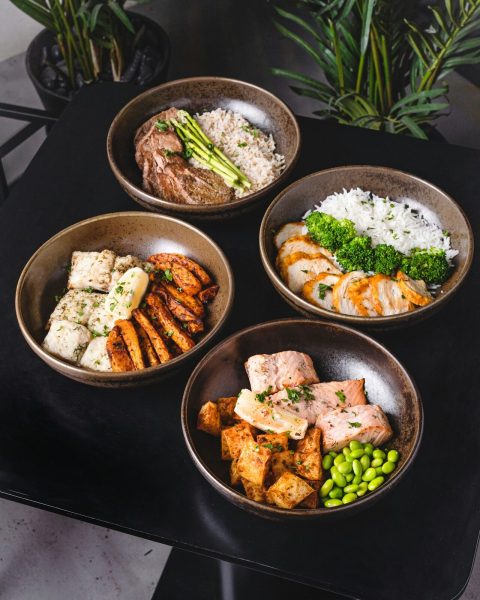
TCM dietary therapy is about eating in harmony with the season to support the dominant organ system. In autumn, we focus on foods that are moistening, slightly sweet, and white in color—as white is the color associated with the Lung and Metal element. This isn’t about sugar; it’s about the gentle, nourishing sweetness of pears, rice, and certain roots.
| Food/Herb | TCM Property | Autumn Benefit & Simple Use |
|---|---|---|
| Asian Pear (Ya Li) | Sweet, cool. Moistens Lung, clears heat. | Eat raw, or bake with a drizzle of honey for a soothing dessert. A classic remedy for autumn coughs. |
| White Wood Ear Mushroom (Tremella fuciformis) | Sweet, neutral. Nourishes yin, moistens Lung. | Simmer with red dates and goji berries in a sweet soup for a deeply hydrating tonic. |
| Lily Bulb (Bai He) | Sweet, slightly bitter, cool. Moistens Lung, calms spirit. | Add dried lily bulb to congee or soups. It’s traditionally used for dry coughs and restlessness. |
| Almonds (Bei Xing Ren – Sweet Almond) | Sweet, neutral. Stops cough, moistens Lung and Large Intestine. | Soak 10-12 almonds overnight, peel, and blend with warm water for a fresh, nourishing “almond milk.” |
| Honey (Feng Mi) | Sweet, neutral. Moistens dryness, benefits the Lung. | Stir 1 tsp into warm (not boiling) water or tea. Avoid for children under 1 and those with specific conditions. |
| Radish (White Daikon) | Sweet, acrid, cool. Descends qi, resolves phlegm. | Grate into salads or simmer in a simple miso soup to help move stagnant Lung qi downward. |
A simple, powerful autumn soup: In a pot, combine 1 peeled and diced Asian pear, a handful of dried white wood ear (soaked and torn), 6-8 dried lily bulb pieces, and 4 cups of water. Simmer gently for 45 minutes. Add a small rock sugar or a teaspoon of honey to taste. This is a classic “Lung Moistening Soup” my family would drink weekly from September through November. The ingredients work synergistically—pear for immediate moisture, wood ear for deep yin nourishment, and lily bulb to calm the spirit that can become unsettled in autumn’s shift.
Movement and Stillness: Tai Chi, Qigong, and the Autumn Breath
Vigorous exercise that leaves you breathless can actually deplete Lung qi in autumn. Instead, we turn to slow, intentional movement that emphasizes breath and expansion. Tai Chi and Qigong are perfect. The slow, flowing movements coordinate with deep diaphragmatic breathing, literally “exercising” the Lung’s bellows function and promoting the smooth flow of qi.
A specific Qigong exercise for autumn is “Lung Cleansing Qi Sound.” According to the Liu Zi Jue (Six Healing Sounds) tradition, each organ has a corresponding sound. For the Lung, it is “SI” (pronounced like “sssss” of a tire). Stand with feet shoulder-width apart. Inhale deeply, raising your arms out to the sides and up, palms facing the sky. As you exhale slowly, lower your arms while making the long, gentle “SI” sound, visualizing any sadness, grief, or dryness leaving your body with the breath. Repeat 6-9 times. A 2017 study in the Journal of Bodywork and Movement Therapies found that regular practice of Six Healing Sounds qigong was associated with reduced anxiety and improved respiratory function, highlighting its potential benefits for the Lung system.
Common Questions
Why do I get sad or nostalgic in autumn according to TCM?
In TCM, the emotion associated with the Lung and the Metal element is grief and sadness. Autumn’s contracting energy can naturally bring unresolved grief or a sense of loss to the surface. This isn’t a pathology; it’s an invitation to process and release. The practice of “letting go” is both physical and emotional. Acknowledging this seasonal emotional tendency allows you to be more compassionate with yourself and to use the practices above—especially breathing and ritual release—to navigate it with grace.
Is dry skin in autumn just a cosmetic issue?
From a TCM perspective, no. It’s a signal from your Lung system. While external moisturizers help, the root approach is internal. Focus on the moistening foods listed (pear, white wood ear, lily bulb) and ensure you’re drinking warm fluids throughout the day. The dryness indicates a potential yin or fluid deficiency that, if left unaddressed, could contribute to a dry cough or lowered immunity as winter approaches. It’s your body’s early warning system.
Can deep breathing really help my skin?
Yes, through a direct TCM mechanism. Deep, diaphragmatic breathing enhances the Lung’s dispersing and descending function. This means it helps circulate qi and fluids (including blood and lymph) to the skin’s surface, nourishing it from within and supporting the Wei Qi (defensive energy) that protects it. Shallow breathing, common when we’re stressed, impairs this dispersal, contributing to dull, dry skin. Combining deep breath with topical oils creates a powerful inside-out approach.
- Movement and Stillness: Tai Chi, Qigong, and the Autumn Breath
- The Lung: More Than an Organ, A System of Release
- The Metal Element: Understanding the Lung's Partner in Balance
- Your Skin: The Lung's Outermost Mirror
- The Art of Letting Go: A Lung-Centered Autumn Practice
- Nourishing the Lung: Foods and Herbs for Autumn Moisture
- Movement and Stillness: Tai Chi, Qigong, and the Autumn Breath
The bottom line: Autumn, through the lens of TCM, is a season of refinement and release governed by the Lung system. By honoring the connection between your skin and breath—through moistening foods, slow movement, intentional breathing, and simple rituals of letting go—you align with nature’s rhythm. This isn’t about adding more, but about supporting a natural process of clearing and protecting, allowing you to move into the deeper stillness of winter with resilience and clarity.
About the Author
Yu Xi Zhang grew up in a Chinese household where traditional wellness practices were part of daily life. With over 15 years of study under licensed TCM practitioners in Beijing and Chengdu, and a certification in TCM nutrition from the Beijing University of Chinese Medicine, she bridges Eastern wisdom with Western wellness in practical, actionable ways. Her writing draws from classical texts like the Huangdi Neijing and modern research to help readers live healthier, more balanced lives.
This article is for educational purposes and reflects traditional wellness perspectives. It is not a substitute for professional medical advice, diagnosis, or treatment.
As the air turns crisp and the leaves begin their golden descent, I find myself reaching for a soft cotton scarf—not just for warmth, but to honor a rhythm my grandmother taught me long before I could name it. In Traditional Chinese Medicine (TCM), autumn is the season of the Lung. It’s a time when nature models the art of letting go, and our bodies are uniquely poised to follow suit. But this isn’t just about breathing; it’s about the intimate connection between your skin, your breath, and your ability to release what no longer serves you. If you’ve ever felt a tightness in your chest or a sudden dryness in your skin as the seasons shift, your body might be speaking the language of autumn. Let’s explore how listening to it can become your most profound practice of the year.
The Lung: More Than an Organ, A System of Release
In Western physiology, the lungs are for gas exchange. In TCM, the Lung (capitalized to denote the entire system) is a maestro of boundaries and rhythm. It governs qi (the vital energy that animates us) and is responsible for the descending and dispersing function—the downward and outward flow of energy and fluids. Think of it as the body’s chief of protocol, ensuring energy moves correctly and that our exterior (skin and surface) is properly defended. The Huangdi Neijing, the foundational text of TCM compiled over 2,000 years ago, states: “The Lung is the master of qi. It governs the skin and the body hair.” This isn’t poetic metaphor; it’s a clinical map. When Lung qi is strong, your skin is supple, your breath is deep, and your immunity is resilient. When it’s weak, you might experience dryness, frequent colds, shallow breathing, or a lingering sense of sadness.
During my early studies in Chengdu, a wise practitioner once told me, “The Lung is like a delicate bellows. If you force it, it tears. If you neglect it, it stiffens.” This image has stayed with me. Autumn, with its dry, contracting energy, can easily cause the Lung’s “bellows” to become brittle. Our job is to keep it supple and responsive. This connection between the skin (the Lung’s outer manifestation) and breath (its primary function) is why autumn wellness is so tactile and respiratory. It’s also why practices like dry brushing, deep breathing, and specific foods become so potent this time of year.
Chat with Me, our AI wellness guide — get personalized TCM advice instantly.
The Metal Element: Understanding the Lung’s Partner in Balance
The Lung belongs to the Metal element in the Five Element theory, a core framework in TCM. Metal is about structure, boundaries, refinement, and discernment. It’s the energy of the precious metals deep within the earth, shaped with precision. In your body, this translates to the ability to take in the pure (oxygen, inspiration) and let go of the impure (carbon dioxide, grief, old patterns). The paired organ of the Lung is the Large Intestine, which handles the literal letting go of waste. This partnership is profound: emotional constipation often mirrors physical constipation. A 2018 review in the Journal of Traditional Chinese Medical Sciences notes that Lung qi deficiency is frequently observed alongside patterns of impaired elimination and skin dryness, underscoring this mind-body connection.
“The Lung and Large Intestine are like a door and its hinge. One cannot open without the other.” — Traditional TCM Saying
My grandmother embodied this principle. Every autumn, she would begin her day with a tall glass of warm water, followed by a series of gentle stretches she called “opening the chest.” She’d then spend five minutes simply breathing deeply on her balcony, regardless of the weather. “We must clear the old air to make room for the new,” she’d say. This wasn’t just ritual; it was maintenance for her Metal element. She rarely got the autumn colds that swept through our community, and her skin, even in her 70s, had a remarkable resilience. Her practice was a daily dialogue with her Lung system.
Your Skin: The Lung’s Outermost Mirror
If the Lung is the sovereign, the skin is its kingdom. TCM calls the skin’s defensive energy Wei Qi (pronounced “way chee”), which is closely related to the Lung’s dispersing function. When Lung qi is robust, Wei Qi circulates effectively, creating a protective barrier against pathogens and environmental dryness. When it’s weak, the barrier is compromised. This is why, in autumn, you might notice your skin becoming suddenly dry, itchy, or more reactive. It’s not just the lower humidity; it’s a signal that your Lung system needs support.
Research published in the Journal of Ethnopharmacology (2019) examined the traditional use of herbs like Astragalus (Huang Qi) and Glehnia root (Sha Shen) in supporting skin health and immune function. The study found that polysaccharides in these herbs may help modulate immune responses and promote moisture retention in tissues, providing a scientific basis for their centuries-old use in “nourishing the Lung and moistening dryness.” This is the TCM principle of “treating the interior to affect the exterior” in action.
Actionable Skin-Breath Connection Practice: After a warm (not hot) shower, while your skin is still slightly damp, apply a simple, fragrance-free oil like jojoba or sweet almond oil. As you do, practice “Lung Breathing”: Inhale slowly through your nose for 4 counts, feeling your belly and ribs expand. Hold for 2 counts. Exhale slowly through pursed lips for 6 counts, imagining you are releasing tension and dryness from your skin. Repeat 5 times. This combines topical nourishment with intentional breath, directly supporting the Lung’s dispersing function.

The Art of Letting Go: A Lung-Centered Autumn Practice
Autumn’s lesson is clear: to make room for spring’s new growth, we must release the old. The Lung, as the master of qi and the Metal element, is our guide in this process. This isn’t about grand gestures; it’s about daily, tangible acts of release. Think of it as energetic decluttering. Here is a simple, week-long practice to engage this process:
- Day 1-2: Release through Breath. Spend 5 minutes each morning and evening practicing “4-7-8 Breathing”: Inhale quietly through your nose for 4 seconds, hold your breath for 7 seconds, exhale completely through your mouth with a whooshing sound for 8 seconds. This technique, popularized by Dr. Andrew Weil, is said to activate the parasympathetic nervous system, promoting calm and facilitating emotional release.
- Day 3-4: Release through Skin. Use a natural bristle dry brush before your shower. Always brush toward the heart, starting at your feet and moving upward. This stimulates lymphatic flow, a key part of the Lung’s dispersing and descending function, and physically sloughs off the old to make way for the new.
- Day 5-6: Release through Environment. Choose one small area—a drawer, your desktop, a shelf. Remove items you no longer need or love. As you do, consciously breathe out and say (aloud or silently), “I am making space.” The Large Intestine, the Lung’s partner, governs literal letting go; this mirrors that process.
- Day 7: Release through Emotion. Write down one worry, resentment, or outdated belief on a piece of paper. Safely burn it in a sink or fireplace (or tear it into tiny pieces and discard it). As it disappears, take three deep Lung breaths. This ritual honors the Lung’s role in processing grief and sadness.
Nourishing the Lung: Foods and Herbs for Autumn Moisture
TCM dietary therapy is about eating in harmony with the season to support the dominant organ system. In autumn, we focus on foods that are moistening, slightly sweet, and white in color—as white is the color associated with the Lung and Metal element. This isn’t about sugar; it’s about the gentle, nourishing sweetness of pears, rice, and certain roots.
| Food/Herb | TCM Property | Autumn Benefit & Simple Use |
|---|---|---|
| Asian Pear (Ya Li) | Sweet, cool. Moistens Lung, clears heat. | Eat raw, or bake with a drizzle of honey for a soothing dessert. A classic remedy for autumn coughs. |
| White Wood Ear Mushroom (Tremella fuciformis) | Sweet, neutral. Nourishes yin, moistens Lung. | Simmer with red dates and goji berries in a sweet soup for a deeply hydrating tonic. |
| Lily Bulb (Bai He) | Sweet, slightly bitter, cool. Moistens Lung, calms spirit. | Add dried lily bulb to congee or soups. It’s traditionally used for dry coughs and restlessness. |
| Almonds (Bei Xing Ren – Sweet Almond) | Sweet, neutral. Stops cough, moistens Lung and Large Intestine. | Soak 10-12 almonds overnight, peel, and blend with warm water for a fresh, nourishing “almond milk.” |
| Honey (Feng Mi) | Sweet, neutral. Moistens dryness, benefits the Lung. | Stir 1 tsp into warm (not boiling) water or tea. Avoid for children under 1 and those with specific conditions. |
| Radish (White Daikon) | Sweet, acrid, cool. Descends qi, resolves phlegm. | Grate into salads or simmer in a simple miso soup to help move stagnant Lung qi downward. |
A simple, powerful autumn soup: In a pot, combine 1 peeled and diced Asian pear, a handful of dried white wood ear (soaked and torn), 6-8 dried lily bulb pieces, and 4 cups of water. Simmer gently for 45 minutes. Add a small rock sugar or a teaspoon of honey to taste. This is a classic “Lung Moistening Soup” my family would drink weekly from September through November. The ingredients work synergistically—pear for immediate moisture, wood ear for deep yin nourishment, and lily bulb to calm the spirit that can become unsettled in autumn’s shift.
Movement and Stillness: Tai Chi, Qigong, and the Autumn Breath
Vigorous exercise that leaves you breathless can actually deplete Lung qi in autumn. Instead, we turn to slow, intentional movement that emphasizes breath and expansion. Tai Chi and Qigong are perfect. The slow, flowing movements coordinate with deep diaphragmatic breathing, literally “exercising” the Lung’s bellows function and promoting the smooth flow of qi.
A specific Qigong exercise for autumn is “Lung Cleansing Qi Sound.” According to the Liu Zi Jue (Six Healing Sounds) tradition, each organ has a corresponding sound. For the Lung, it is “SI” (pronounced like “sssss” of a tire). Stand with feet shoulder-width apart. Inhale deeply, raising your arms out to the sides and up, palms facing the sky. As you exhale slowly, lower your arms while making the long, gentle “SI” sound, visualizing any sadness, grief, or dryness leaving your body with the breath. Repeat 6-9 times. A 2017 study in the Journal of Bodywork and Movement Therapies found that regular practice of Six Healing Sounds qigong was associated with reduced anxiety and improved respiratory function, highlighting its potential benefits for the Lung system.
Common Questions
Why do I get sad or nostalgic in autumn according to TCM?
In TCM, the emotion associated with the Lung and the Metal element is grief and sadness. Autumn’s contracting energy can naturally bring unresolved grief or a sense of loss to the surface. This isn’t a pathology; it’s an invitation to process and release. The practice of “letting go” is both physical and emotional. Acknowledging this seasonal emotional tendency allows you to be more compassionate with yourself and to use the practices above—especially breathing and ritual release—to navigate it with grace.
Is dry skin in autumn just a cosmetic issue?
From a TCM perspective, no. It’s a signal from your Lung system. While external moisturizers help, the root approach is internal. Focus on the moistening foods listed (pear, white wood ear, lily bulb) and ensure you’re drinking warm fluids throughout the day. The dryness indicates a potential yin or fluid deficiency that, if left unaddressed, could contribute to a dry cough or lowered immunity as winter approaches. It’s your body’s early warning system.
Can deep breathing really help my skin?
Yes, through a direct TCM mechanism. Deep, diaphragmatic breathing enhances the Lung’s dispersing and descending function. This means it helps circulate qi and fluids (including blood and lymph) to the skin’s surface, nourishing it from within and supporting the Wei Qi (defensive energy) that protects it. Shallow breathing, common when we’re stressed, impairs this dispersal, contributing to dull, dry skin. Combining deep breath with topical oils creates a powerful inside-out approach.
The bottom line: Autumn, through the lens of TCM, is a season of refinement and release governed by the Lung system. By honoring the connection between your skin and breath—through moistening foods, slow movement, intentional breathing, and simple rituals of letting go—you align with nature’s rhythm. This isn’t about adding more, but about supporting a natural process of clearing and protecting, allowing you to move into the deeper stillness of winter with resilience and clarity.
About the Author
Yu Xi Zhang grew up in a Chinese household where traditional wellness practices were part of daily life. With over 15 years of study under licensed TCM practitioners in Beijing and Chengdu, and a certification in TCM nutrition from the Beijing University of Chinese Medicine, she bridges Eastern wisdom with Western wellness in practical, actionable ways. Her writing draws from classical texts like the Huangdi Neijing and modern research to help readers live healthier, more balanced lives.
This article is for educational purposes and reflects traditional wellness perspectives. It is not a substitute for professional medical advice, diagnosis, or treatment.