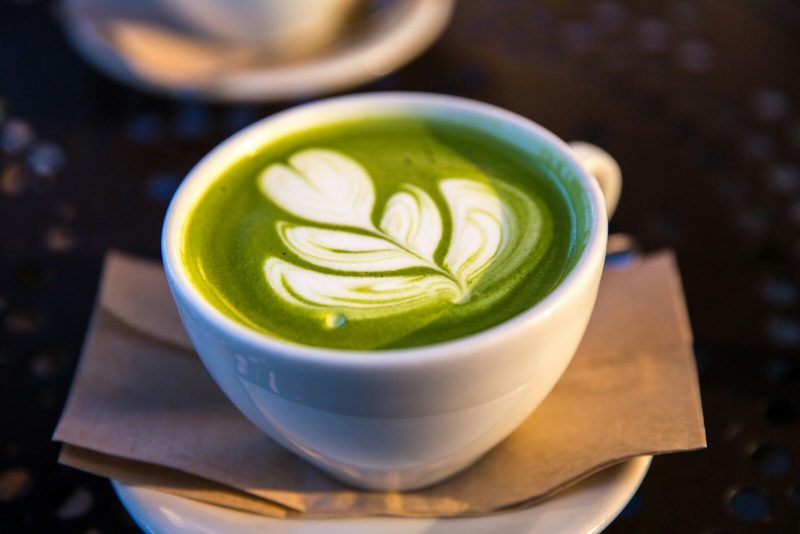
There is a particular kind of tiredness that only arrives in July. Not the good, earned tiredness after a long walk — the other kind. The kind where your body is warm, your thoughts are louder than they should be, and sleep feels like a door you keep knocking on but nobody answers. In Traditional Chinese Medicine, we have a name for this pattern, and it is not “insomnia.” It is summer heat disturbing the heart-spirit — what practitioners call re xin fan (热 心烦), heat rising to agitate the mind. And for centuries, Chinese families have met it not with sleeping pills, but with something gentler: a slow, sensory summer emotional cooling ritual performed in the last hour before bed. My grandmother called it xiang zhu ying — “enjoying the bamboo shadows.” This article will teach you how to build your own version tonight.
Why Summer Makes Emotions Boil Over
Western medicine describes this well: heat exposure raises core body temperature, disrupts slow-wave sleep, and elevates evening cortisol (Okamoto-Mizuno & Mizuno, 2012, Journal of Physiological Anthropology). But TCM adds a layer that explains the emotional texture — why summer arguments feel sharper, why patience thins at 4pm, why the mind races at midnight.
In the Huangdi Neijing (黄帝内经), the Suwen chapter on the five seasons states: “Summer corresponds to the heart; the heart stores the spirit (shen). When heat prevails, the spirit is easily disturbed.” The heart, in TCM, is not just a pump — it is the emperor of the body’s emotional kingdom. It houses shen, roughly translated as “spirit” or “consciousness.” When external heat (and internal heat from spicy food, alcohol, or emotional friction) rises too high, shen becomes restless. The mind won’t settle. Sleep becomes shallow. Emotions flare.
This is why a summer emotional cooling ritual is not a luxury — it is, in the TCM framework, a form of heat management for the nervous system. And the good news is that it takes 20–30 minutes, costs almost nothing, and starts in your kitchen.
The Deep Idea: What “Cooling” Actually Means in TCM
Before the ritual, one concept worth understanding deeply — because it changes how you use everything in this article.
In TCM, “cooling” does not mean cold temperature. A glass of ice water is physically cold but, in the TCM framework, is considered damp-generating and can actually trap heat in the middle jiao (the digestive center). Real “cooling” refers to the energetic nature of a substance or practice — its tendency to clear heat, calm the spirit, and descend rising energy. This is why a room-temperature chrysanthemum tea cools you more effectively than an iced cola. It is also why a slow exhale cools the mind faster than a cold shower.
Think of it like this: heat is movement, coolness is stillness. Anger, anxiety, racing thoughts, insomnia — all are forms of excess movement in the TCM view. Cooling is the art of reintroducing stillness. Not suppression. Not sedation. Stillness.
“Where there is stillness, heat naturally subsides. Where the spirit rests, the body follows.”
— Classical TCM principle, paraphrased from the Huangdi Neijing
My teacher in Chengdu, Dr. Liu, used to say: “You cannot fight fire with force. You fight fire by removing what it feeds on.” That single sentence rewired how I treat my own summer moods.
The 20-Minute Summer Emotional Cooling Ritual (Step by Step)
This is the ritual I use from roughly the summer solstice through early September, and that I teach in workshops. It has five stages. Do it between 8:30pm and 9:30pm — TCM considers 9pm–11pm the San Jiao (triple burner) window, ideal for transitioning the body toward rest.
Step 1 — Brew the Cooling Trio (5 minutes)
Start with a pot of tea. Not any tea — a specific trio that targets heart-heat and calms shen:
- Chrysanthemum flowers (Chrysanthemum morifolium, 杭白菊) — 6–8 dried flowers. Clears liver and lung heat, gently sedating.
- Lotus plumule (莲子心, lian zi xin) — 1–2 grams (about 15–20 tiny green seeds). Bitter, cold, and specifically drains heart-fire. This is the star ingredient.
- Fresh mint (Mentha haplocalyx, 薄荷) — 3–4 leaves, added at the end. Releases surface heat and opens the chest.
Steep the chrysanthemum and lotus plumule in 85°C water (not boiling — boiling scorches the delicate volatile oils) for 4 minutes. Add mint in the last 30 seconds. Strain into a ceramic cup. Sip slowly over the next 15 minutes.
A 2015 study in the Journal of Ethnopharmacology found that lotus plumule alkaloids (notably liensinine) demonstrated sedative and heat-clearing effects in animal models, supporting its traditional use for “restlessness with insomnia” (Chen et al., 2015). The Shennong Bencao Jing (神农本草经) lists chrysanthemum as a superior herb that “benefits the blood, quiets the spirit, and brightens the eyes.”
Step 2 — Cool the “Spirit Gate” Point (3 minutes)
While the tea steeps, find HT7 (Shenmen, 神门) — the “Spirit Gate” acupressure point. It sits on the inside of your wrist, in the small depression just below the pinky finger, at the crease.
Press with your opposite thumb for 60 seconds per wrist, using firm, steady pressure and slow circular motion. Breathe in for 4 counts, out for 6. In TCM, HT7 is the yuan-source point of the heart meridian — the door through which shen enters and leaves. Stimulating it is traditionally used for anxiety, palpitations, and insomnia. A 2019 randomized pilot study published in Frontiers in Neurology found that acupressure at HT7 was associated with improved sleep quality scores in adults with mild insomnia compared to sham acupressure (Lee et al., 2019).
Step 3 — The Bamboo Shadow Gaze (7 minutes)
This is the heart of the ritual, and the part my grandmother loved most.
Find a plant, a curtain, or any object near a window that casts a shadow in the evening light. Sit comfortably. Look at the shadow — not at the object, at the shadow. Watch it move with the breeze, with the light, with nothing at all. Do not name it. Do not think about it. Just watch.
The Chinese phrase kan zhu ying (看竹影) — “watching bamboo shadows” — has been a summer practice among scholars since the Song Dynasty. The poet Su Shi wrote about it. The point is not aesthetic. It is attentional: by giving the mind a soft, moving, non-verbal target, you interrupt the loop of rumination. Modern mindfulness research calls this “open monitoring” (Lutz et al., 2008, PLoS Biology), and it has been shown to reduce activity in the brain’s default mode network — the very network responsible for anxious, self-referential thinking.
Seven minutes is enough. If your mind wanders, that is not failure — that is the practice.

Cooling Foods to Eat (and Heat-Trap Foods to Avoid) in Summer
The ritual works better when your daytime diet supports it. In TCM, summer is the season of the fire element, and the body naturally craves foods that clear heat and generate fluids. Below is a practical guide — not a list of “superfoods,” but a table of specific, traditional ingredients with how to actually prepare them.
| Food / Herb | TCM Nature | Specific Action | How to Prepare Today |
|---|---|---|---|
| Watermelon (西瓜) | Cold, sweet | Clears summer-heat, generates fluids | 200g fresh, room temperature, 2pm–4pm |
| Mung beans (绿豆) | Cold, sweet | Clears heat, detoxifies | Simmer 50g with 1L water for 30 min, drink warm |
| Lotus root (莲藕) | Cool, sweet | Clears heat, calms irritability | Slice and simmer in soup with 3g dried lily bulb |
| Cucumber (黄瓜) | Cool, bland | Generates fluids, drains damp | Shred raw with 1 tsp rice vinegar and sesame oil |
| Green tea (绿茶) | Cool, bitter | Clears heat, lifts the spirit | 3g leaves, 80°C water, 2 minutes, before 3pm |
| Chili, garlic, lamb | Warm/hot | Warms interior — avoid in excess | Limit to 2 servings per week in high summer |
| Alcohol & fried foods | Hot, damp | Traps heat in the middle jiao | Swap for chrysanthemum tea after 8pm |
One surprising counterintuitive tip: don’t drink ice-cold water with meals. In the TCM view, and increasingly supported by Western research on gastric motility (Hu et al., 2012, Journal of Gastroenterology), cold fluids during eating slow digestion and can create damp-heat — the very pattern that leads to afternoon sluggishness and evening restlessness. Room temperature is the sweet spot.
The Emotional Half: Why Summer Anger Is Not a Character Flaw
Here is the part most wellness articles skip. Summer emotional heat is not just “stress” — it has a specific TCM pattern, and naming it changes everything.
When heart-fire rises, it shows up as irritability, impatience, sudden anger, and a feeling of being “wired but tired.” The TCM framework says the liver (which governs the smooth flow of qi) is easily constrained in summer, and constrained qi generates heat, and heat rises to the heart. The result is a person who snaps at their partner over nothing, then lies awake replaying it.
I experienced this myself during my second summer studying in Beijing. The heat was relentless — 38°C with humidity — and I noticed I was arguing with my roommate about dishes almost daily. Dr. Liu, my TCM teacher at the time, didn’t prescribe me herbs. He said: “You are not angry. You are hot. Cool the body first, then decide if you are angry.” He was right. Once I started drinking mung bean soup and doing the shadow practice at night, the arguments evaporated. The emotion hadn’t been fake — it had been amplified.
This is a liberating reframe. You are not a bad meditator, a bad partner, or a broken sleeper. You may simply be a person in a hot season with a hot heart, needing a cooling ritual.
Your Tonight Checklist
Print this, screenshot it, or write it on a sticky note. Everything here can be done tonight with items you probably already have.
- ☐ Brew chrysanthemum + lotus plumule + mint tea at 8:45pm
- ☐ Press HT7 on both wrists for 60 seconds each
- ☐ Sit with a shadow or plant for 7 minutes without a phone
- ☐ Take a lukewarm (not cold) shower — cold showers constrict the skin and trap heat
- ☐ Keep bedroom at 24–26°C if possible; use breathable cotton or linen sheets
- ☐ Do 4-7-8 breathing (inhale 4, hold 7, exhale 8) for 6 rounds before lying down
- ☐ Avoid screens after 9:30pm — blue light raises alertness and, in TCM terms, “stirs shen”
- ☐ Tomorrow: swap one iced drink for room-temperature mung bean soup
Recommended Cooling Tools
- Dried Hangzhou White Chrysanthemum (杭白菊) — Look for whole, unbroken flowers with a pale yellow center. Loose-leaf, not tea bags.
- Lotus Plumule (莲子心) — Sold as small green seeds in Chinese herbal shops. Store in an airtight glass jar away from light.
- Ceramic Cooling Tea Cup — A wide-mouthed porcelain cup (150–200ml) keeps the tea at sipping temperature longer than glass.
Common Questions
Can I do this ritual in winter?
You can adapt it, but the specific cooling herbs (chrysanthemum, lotus plumule, mint) are best reserved for warm months or for people with clear signs of heat — red face, thirst, restlessness, yellow tongue coating. In winter, swap the tea for a mild jujube (红枣) and longan (龙眼) infusion, which nourishes heart-blood instead of clearing heat. The shadow-gazing practice, however, works beautifully year-round.
Is lotus plumule safe to drink every night?
For most healthy adults, 1–2 grams per day for several weeks is generally considered within traditional usage. However, lotus plumule is bitter and cold in nature — in TCM terms, it can weaken the spleen if overused, especially in people with weak digestion, loose stools, or cold extremities. If that’s you, reduce to 3–4 nights per week. Pregnant or breastfeeding women, and anyone on sedative or blood-pressure medication, should consult a qualified practitioner before regular use.
What if I don’t have a plant or a shadow to watch?
Then use anything soft and gently moving: a candle flame (from a safe distance), steam rising from your tea, a slow-moving ceiling fan, or even the pattern of light on your wall. The principle is not bamboo — it is soft, non-verbal, gently moving attention. If all else fails, close your eyes and visualize bamboo swaying in evening wind. Visualization activates many of the same attentional networks as external observation.
The bottom line: Summer emotional heat is a real pattern — not a personal failing — and Traditional Chinese Medicine offers a practical, sensory, 20-minute response. Brew a cooling trio of chrysanthemum, lotus plumule, and mint; press the Shenmen point on both wrists; spend seven soft minutes watching shadows move; and eat heat-clearing foods like mung beans, cucumber, and lotus root while easing off chili, alcohol, and ice. Done consistently, this summer emotional cooling ritual may help settle a restless mind, cool a short temper, and make hot nights feel like invitations to rest rather than battles to endure.
About the Author
Yu Xi Zhang grew up in a Chinese household where traditional wellness practices were part of daily life. With over 15 years of study under licensed TCM practitioners in Beijing and Chengdu, and a certification in TCM nutrition from the Beijing University of Chinese Medicine, she bridges Eastern wisdom with Western wellness in practical, actionable ways. Her writing draws from classical texts like the Huangdi Neijing and modern research to help readers live healthier, more balanced lives.
This article is for educational purposes and reflects traditional wellness perspectives. It is not a substitute for professional medical advice, diagnosis, or treatment.