My doctor said my blood work was “normal.” But I was tired all the time, cold in summer, and bloated after every meal. Then I took a quiz based on a 2,000-year-old Chinese medical text — and everything finally made sense.

The Appointment That Changed Nothing
I sat in the paper-thin hospital gown, feet dangling off the exam table, waiting for the doctor to walk back in with answers. I had spent three months feeling like a car running on an empty tank — dragging myself out of bed, relying on two cups of coffee before I could form a sentence, and crashing hard by 3 p.m. every single day.
When the door finally opened, my doctor smiled the way they do when nothing is visibly wrong. “Your blood work looks great,” she said, flipping through the pages. “Thyroid is fine. Iron is fine. Cholesterol, glucose, liver function — all within normal range.”
“Then why do I feel like this?” I asked.
She paused. “Could be stress. Maybe try getting more sleep, drink more water. If it gets worse, come back in six months.”
I walked out of that office with a clean bill of health and a body that felt anything but healthy. I was bloated after nearly every meal, even “healthy” ones. My hands and feet were ice-cold even in July. I caught every cold that went around the office. And the fatigue — it wasn’t normal tiredness. It was a bone-deep exhaustion that no amount of sleep seemed to fix.
If you’ve ever been told “everything looks fine” when everything clearly doesn’t feel fine, you know exactly how maddening that moment is. Western medicine is extraordinary at detecting disease. But it has a blind spot: it’s not always great at understanding why you feel lousy when you don’t have a diagnosable condition.
That frustration led me somewhere I never expected — to a 2,000-year-old system of Chinese medicine that categorized my exact symptoms into a coherent pattern. And it started with a quiz.
What Is TCM Body Constitution — And Why Had Nobody Told Me About It?

A few weeks after that disappointing doctor’s visit, I was deep in a late-night rabbit hole — the kind where you start searching “why am I always tired” at 1 a.m. and end up somewhere completely unexpected. That’s when I stumbled across the concept of body constitution (体质, tǐzhì) in Traditional Chinese Medicine.
The idea goes back to the Huangdi Neijing (Yellow Emperor’s Classic of Internal Medicine), a foundational text of Chinese medicine written around 200 BCE. Unlike Western medicine, which tends to treat the body as a collection of independent systems — cardiology here, endocrinology there — Traditional Chinese Medicine sees the body as a whole ecosystem. And just like ecosystems, different people have different baseline conditions.
In the TCM body constitution framework, your body naturally leans toward one of nine distinct types. These aren’t diseases. They’re patterns — tendencies that shape everything from your digestion and energy levels to your emotional temperament and susceptibility to certain illnesses. Think of them as your body’s default settings.
Here’s what struck me: whereas my doctor was looking for what was wrong with me, TCM was asking a fundamentally different question — what kind of body do you have, and how can you support it?
The nine types are:
- Balanced (Pinghe) — The gold standard. Good energy, stable mood, strong digestion.
- Qi-Deficient — Low energy, frequent colds, shortness of breath, a soft voice.
- Yang-Deficient — Cold hands and feet, sensitivity to cold, fatigue, loose stools.
- Yin-Deficient — Night sweats, dry skin, hot flashes, restlessness.
- Phlegm-Damp — Overweight tendency, bloating, foggy thinking, heavy limbs.
- Damp-Heat — Oily skin, acne, bitter taste in mouth, irritability.
- Blood-Stasis — Dark complexion, varicose veins, sharp pains, dark circles under eyes.
- Qi-Stagnation — Mood swings, sighing, chest tightness, rib pain.
- Intrinsic — Allergies, sensitivity to certain foods, skin reactions.
Reading through this list, I already felt a flicker of recognition. Two types in particular jumped off the screen. But I wanted to do this properly — not by self-diagnosing off a listicle, but by taking a structured assessment. That’s when I found the TCM Body Type Quiz.
Taking the Quiz: What It Actually Asked

I’ll be honest — I went in skeptical. I’ve taken plenty of online health quizzes that asked vague questions and gave even vaguer results. But this one was different. It wasn’t asking about my favorite color or which celebrity I’d have dinner with. It was asking about specific, measurable aspects of my daily experience.
The quiz covered areas like:
- Energy patterns: When during the day did I feel most fatigued? Did I wake up tired even after a full night’s sleep?
- Temperature sensitivity: Did my hands and feet feel cold? Did I avoid cold drinks? Did I need extra layers even in warm weather?
- Digestion: Did I bloat after meals? Was my stool loose or unformed? Did certain foods make me feel heavy?
- Emotional patterns: Did I tend toward worry and overthinking? Did I feel anxious without clear cause?
- Skin and appearance: Was my skin dry or oily? Did I bruise easily? What did the underside of my tongue look like?
- Sleep quality: Did I have trouble falling asleep? Did I wake during the night? Were my dreams vivid or disturbing?
What surprised me was how specific some of the questions were. There was a question about my tongue coating. Another about whether I tended to sigh frequently. These aren’t things you’d think to connect with your health — but in TCM, they’re incredibly telling.
The entire quiz took about eight minutes. And when the results came back, I felt something I hadn’t felt in a long time at the end of a medical process: I felt seen.
My Result: Yang-Deficient with Phlegm-Dampness

My primary type was Yang-Deficient, with secondary tendencies toward Phlegm-Dampness. If you’re unfamiliar with these terms, here’s what they actually mean in plain English.
In TCM, Yang is the warming, energizing force in your body. Think of it as your internal furnace. When your Yang is strong, you feel warm, energized, and your digestion runs smoothly. When it’s deficient — as mine apparently was — it’s like having the heating system in your house set to “barely functional.” You’re cold all the time. Your metabolism slows. Your digestion becomes sluggish. Your body struggles to convert food into usable energy.
The Phlegm-Dampness component explained the bloating and the heaviness I felt after meals. In TCM, “dampness” doesn’t mean literal water — it refers to a kind of metabolic sluggishness where your body fails to properly process and transform fluids and nutrients. The result is a feeling of heaviness, fog, and congestion — both physical and mental.
Reading the detailed description of my constitution type was like reading a biography I hadn’t written. Every “weird” thing about my body — the cold extremities, the afternoon crashes, the bloating, the frequent colds, the soft belly that never seemed to get firm no matter how much I exercised — was listed right there. Not as separate, unconnected problems, but as expressions of one underlying pattern.
This was the moment that really shifted something in my thinking. Western medicine had tested each system independently and found nothing wrong. TCM looked at the whole picture and said, “Here’s the pattern. Here’s why these things are connected. And here’s what you can do about it.”
The Adjustments: What I Actually Changed
The quiz results came with personalized recommendations. I want to be clear about something: I didn’t abandon Western medicine. I didn’t throw away my vitamins or cancel my annual check-up. What I did was integrate these TCM-based suggestions into my existing routine, treating them as a complementary layer of self-care.
Here’s what I changed, organized by category. If you want the full breakdown of how TCM food therapy works for each body type, I wrote a detailed guide on TCM Food Therapy that covers this in depth.
Food as Medicine
This was the biggest shift. For Yang-deficient types, the recommendation is to favor warming, cooked foods and avoid raw, cold, or excessively cooling foods. This meant:
- I replaced my morning smoothie with congee. That cold, blended fruit-and-kale concoction I’d been drinking for years? It was practically the worst thing I could put in my body first thing in the morning. My TCM-informed breakfast became a simple rice porridge with ginger, goji berries, and a drizzle of honey.
- I started cooking my vegetables instead of eating them raw. Salads — the holy grail of “healthy eating” — were replaced with warm vegetable stir-fries, soups, and steamed dishes with ginger, garlic, and a pinch of cinnamon.
- I added warming spices to everything. Ginger became my daily companion. Cinnamon went into my oatmeal. Black pepper was freshly cracked onto every savory dish. These aren’t just flavor enhancers — in TCM, they actively support Yang energy.
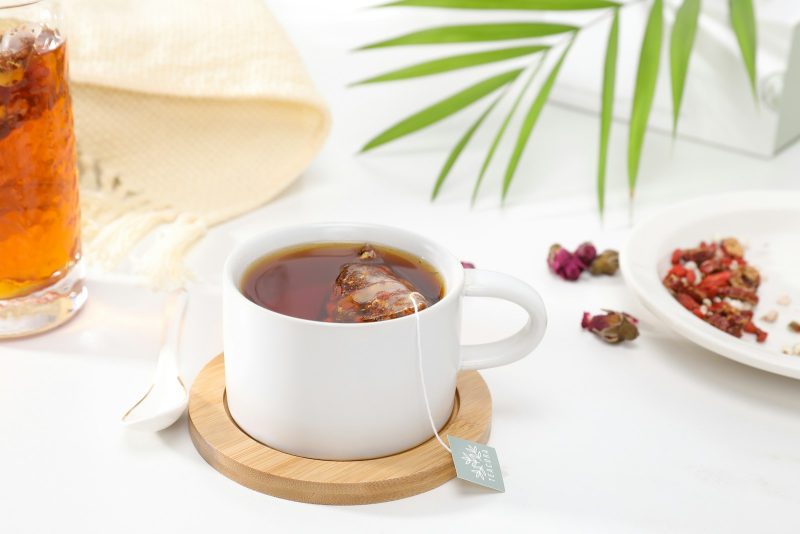
- I cut back on cold drinks. Room temperature water replaced iced beverages. Hot herbal teas — especially ginger tea and jujube date tea — became my go-to drinks throughout the day.
- I reduced “damp-producing” foods. Dairy, excessive sugar, greasy foods, and refined carbohydrates all contribute to dampness in TCM. I didn’t eliminate them entirely, but I became much more conscious of how often they appeared in my diet.
Lifestyle Shifts
The quiz also recommended lifestyle adjustments tailored to my constitution:
- Moxibustion and warm compresses. I learned about moxa (dried mugwort burned near specific acupuncture points) as a way to warm the body from the outside. At home, I started using a warm water bottle on my lower abdomen for 15 minutes before bed — a simple practice that made a noticeable difference in my digestion and sleep quality.
- Gentle exercise over intense workouts. This one was counterintuitive. I’d been doing high-intensity interval training three times a week, thinking more sweat meant more health. For Yang-deficient types, this can actually drain what little Yang energy you have. I switched to brisk walking, tai chi videos on YouTube, and yoga — and I started feeling more energized, not less.
- Earlier bedtime. The recommendation was to be asleep by 10:30 p.m. at the latest. Yang energy is restored during deep sleep, and the hours before midnight are considered especially restorative. I set a phone alarm for 10 p.m. as my “start winding down” signal.
- Abdominal self-massage. A simple clockwise massage around the navel for five minutes each morning. It sounded almost too simple to be effective, but it’s designed to stimulate digestion and move stagnant Qi. I did it while my congee was cooking.
What Actually Happened: The Results After Eight Weeks

I want to be honest here. I didn’t wake up on day three feeling like a new person. This wasn’t a dramatic, overnight transformation. It was gradual — so gradual that I almost didn’t notice it happening.
Week one and two: Mostly just adjusting to the new routine. The congee was surprisingly satisfying. I missed cold drinks more than I expected. No dramatic changes in how I felt, but I noticed I was sleeping more deeply — falling asleep faster and waking up less during the night.
Week three and four: The bloating started to ease. Not disappear, but noticeably improve. I could eat a full meal without feeling like I’d swallowed a basketball. My digestion in general felt calmer — less gurgling, less discomfort, more regularity.
Week five and six: This was when the energy shift became undeniable. I was waking up before my alarm — not wired, just naturally ready to get up. The afternoon crashes, which had been a daily feature of my life for over a year, started happening only occasionally. I caught a mild cold, but recovered in three days instead of the usual two-week slog.
Week seven and eight: My hands and feet were noticeably warmer. I know that sounds minor, but when you’ve spent years being the person who’s always cold, warm hands feel like a revelation. My mind felt clearer — the foggy, cotton-wool feeling in my head had lifted. Friends commented that I “seemed different” — more present, more energetic.
Was it a miracle cure? No. Was it a meaningful, tangible improvement in my quality of life that my doctor’s “everything looks normal” had failed to provide? Absolutely.
Why This Quiz Mattered More Than I Expected
I think what made the biggest difference wasn’t any single dietary change or lifestyle tweak. It was the framework — the understanding that my body wasn’t broken, it was just operating from a different baseline. That my symptoms weren’t random, disconnected problems but part of a coherent pattern that had been recognized and treated for two millennia.
Western medicine gave me normal lab results and a shrug. The TCM body constitution system gave me a map of my own body — one that actually corresponded to my lived experience. And that map came with practical, actionable steps I could take to support my health.
I’m not saying TCM has all the answers. I’m not saying it’s a replacement for medical care. What I’m saying is that this quiz — this ancient framework for understanding the body — gave me something I couldn’t get from my doctor: a sense of clarity about why I felt the way I did, and a clear path toward feeling better.
If you’ve been struggling with symptoms that Western medicine can’t quite explain — if you’ve been told “everything is fine” when everything clearly isn’t — I genuinely encourage you to take the quiz. It takes less than ten minutes, and you might discover something about yourself that changes the way you think about your health.
Take the Free TCM Body Type Quiz →

Frequently Asked Questions
Is the Chinese medicine body type quiz based on real science?
Yes. The quiz is based on the TCM body constitution (体质) classification system, which originates from the Huangdi Neijing, one of the foundational texts of Chinese medicine written approximately 2,000 years ago. This classification system has been studied and validated in modern Chinese medical research, including large-scale epidemiological studies conducted by institutions like Beijing University of Chinese Medicine. The questionnaire format used in the quiz mirrors standardized instruments used in Chinese clinical settings to assess body constitution.
Can my body type change over time?
Your dominant constitution is relatively stable — it’s shaped by genetics, early life, and long-term patterns. However, it can shift gradually due to significant life changes, sustained dietary modifications, chronic stress, aging, or illness. Many people also have a secondary constitution type, and the balance between primary and secondary can shift. Retaking the quiz every six to twelve months can help you track changes and adjust your self-care accordingly.
Can I have more than one body type?
Most people have a primary constitution and one or more secondary tendencies. It’s relatively rare to be purely one type. The quiz results will show your dominant type as well as any secondary patterns, which gives you a more nuanced understanding of your body’s needs. For example, my primary type is Yang-Deficient, but I also have notable Phlegm-Dampness tendencies, which shapes both my diet and lifestyle recommendations.
Should I stop seeing my doctor if I follow TCM recommendations?
Absolutely not. TCM body constitution assessment and Western medical care are not mutually exclusive — they’re complementary. Think of TCM as an additional lens for understanding your body, not a replacement for medical diagnosis and treatment. Always continue regular check-ups, screenings, and any prescribed treatments. The TCM approach is best used as a preventive and wellness framework that helps you make daily choices better suited to your body’s needs.
How is the TCM body type quiz different from an online personality quiz?
This quiz is fundamentally different from casual online quizzes. It’s based on a clinically validated framework used in Chinese medical practice for centuries. The questions are designed to identify specific physiological patterns — temperature regulation, digestive function, energy cycles, emotional tendencies, and physical characteristics — rather than psychological traits. The results map to established constitution types with documented dietary, lifestyle, and therapeutic recommendations that have been refined through generations of clinical observation.
Important Disclaimer
This article reflects my personal experience with Traditional Chinese Medicine body constitution assessment and is intended for informational and educational purposes only. It is not medical advice, diagnosis, or treatment. TCM body constitution theory is a complementary wellness framework and should not be used as a substitute for professional medical care. Always consult a qualified healthcare provider before making significant changes to your diet, exercise, or health regimen, especially if you have existing medical conditions or are taking medication. Individual results will vary, and the experiences described here are specific to my own journey.
About the Author
The Stilflow Team explores the intersection of ancient wellness traditions and modern living. We research, test, and write about holistic health practices — including Traditional Chinese Medicine, herbal therapy, and mind-body approaches — with a focus on what actually works for real people living busy, modern lives. Our mission is to make time-tested health wisdom accessible, practical, and honest. Follow along at thestilflow.com.
- The Appointment That Changed Nothing
- What Is TCM Body Constitution — And Why Had Nobody Told Me About It?
- Taking the Quiz: What It Actually Asked
- My Result: Yang-Deficient with Phlegm-Dampness
- The Adjustments: What I Actually Changed
- What Actually Happened: The Results After Eight Weeks
- Why This Quiz Mattered More Than I Expected
- Important Disclaimer
- About the Author
Last medically reviewed: July 2026