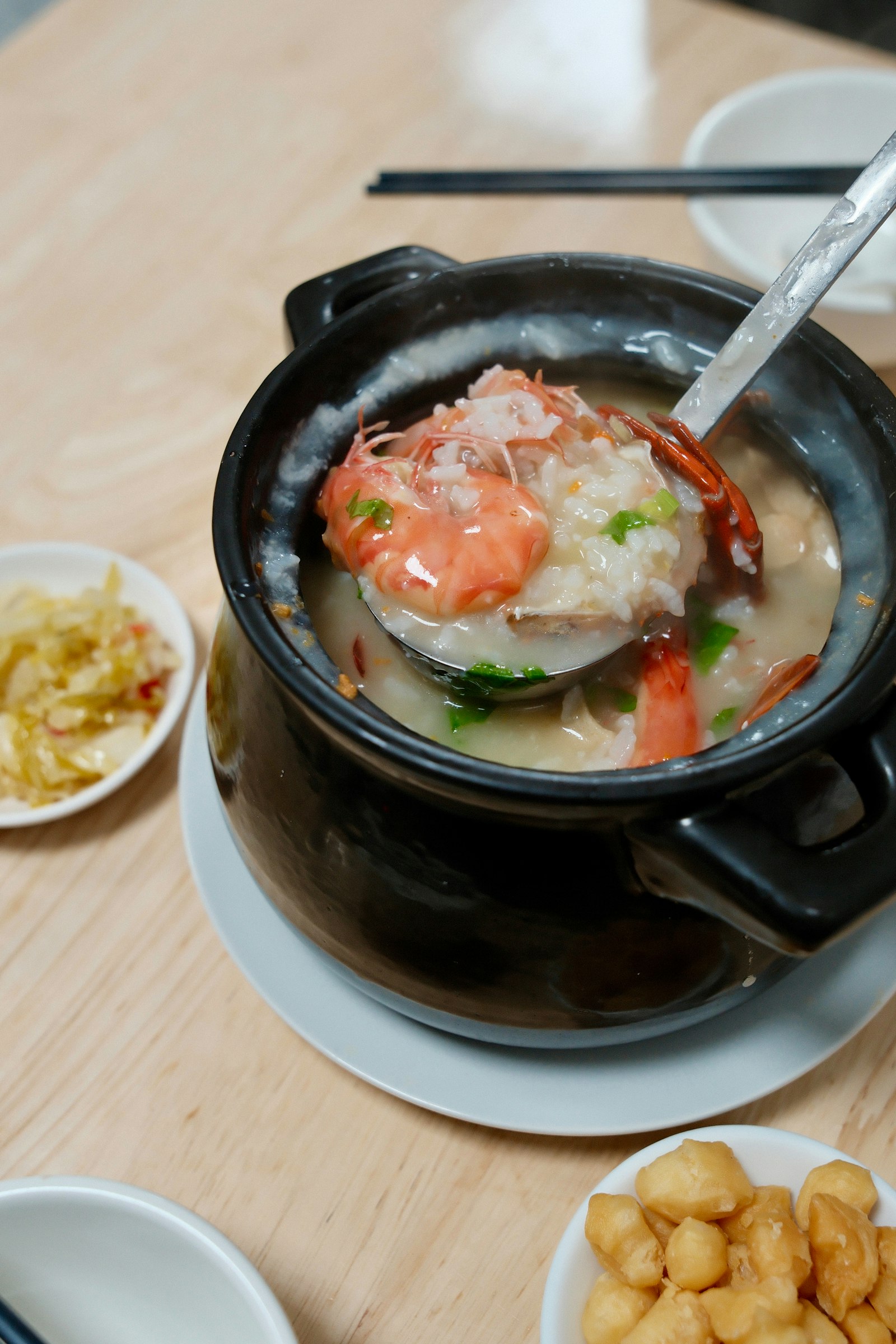
In every culture there’s a comfort food for the sick, the tired, and the recovering. In China, it’s congee (粥, zhōu) — a simple rice porridge simmered for hours until the grains dissolve into a silky, soothing, easily digested bowl. It’s the first food given to babies, the last food offered to the elderly, and the prescription for almost every digestive complaint in Chinese medicine. Boring? Hardly. Congee is one of the most sophisticated healing foods ever invented — and it costs pennies a bowl.
Why Congee Is Chinese Medicine’s #1 Healing Food
In Chinese medicine, the Spleen and Stomach are the body’s energy-production system. They take in food, extract nutrition, and distribute it as qi and blood. When they’re strong, you feel energetic and digest well. When they’re weak — from stress, cold food, irregular eating, or illness — you feel tired, bloated, and foggy.
Here’s the problem: when your digestion is weak, even healthy food becomes a burden. Raw salads, whole grains, and heavy proteins require energy to break down — energy your depleted Spleen doesn’t have. This is the trap many health-conscious people fall into: they eat “healthy” but feel worse.
Congee solves this. The long, slow cooking pre-digests the rice for you. The grains release their starches into a warm, liquid form that the Spleen can absorb with almost no effort. It’s like getting an IV of nourishment through your digestive system. This is why congee is prescribed for recovery from illness, for chronic fatigue, for weak digestion, and for anyone whose body needs deep, gentle nourishment.
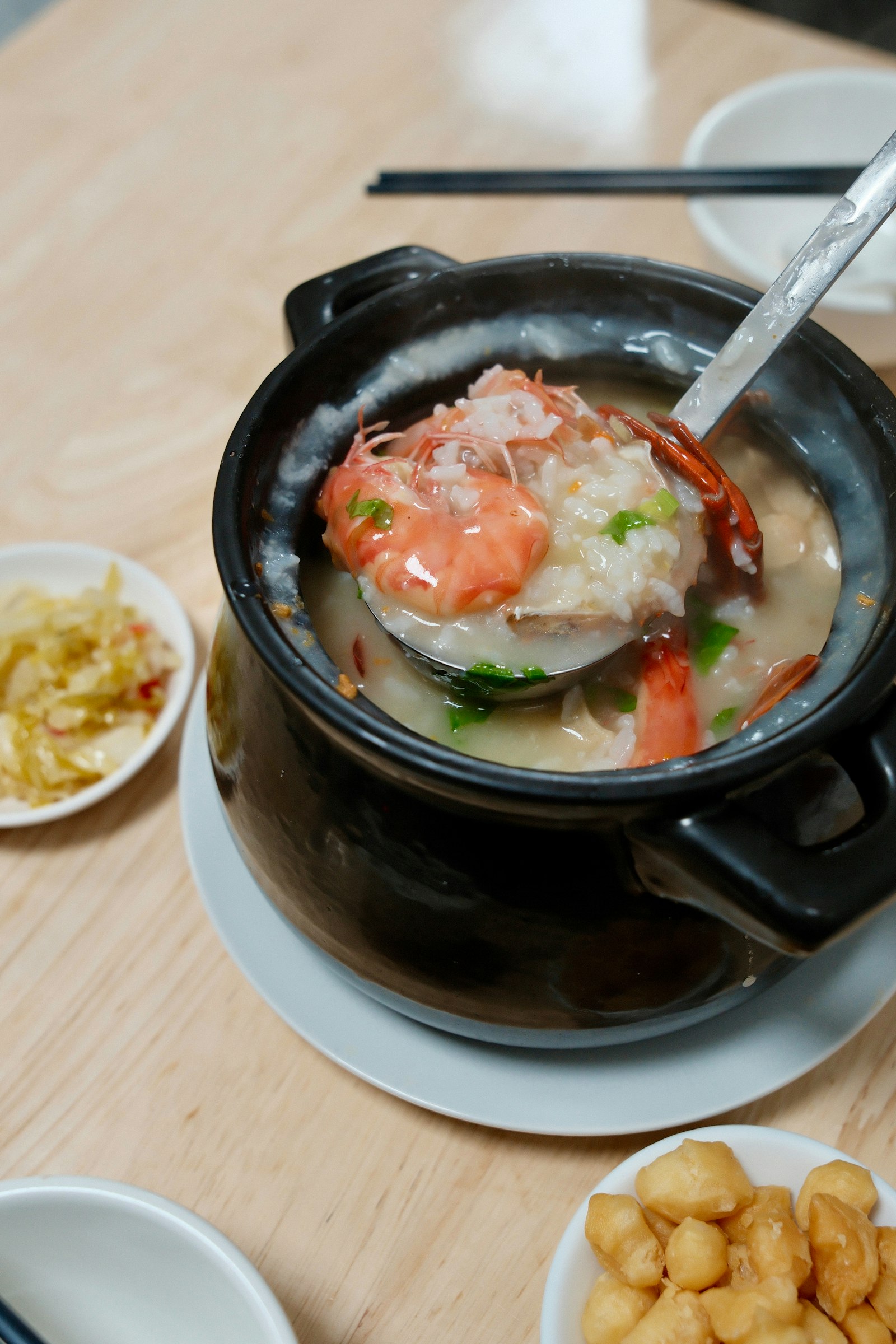
How to Make Basic Congee
- The ratio matters. Use 1 part white rice to 8–10 parts water. This seems like too much water — that’s the point.
- Rinse the rice. A cup of white rice (jasmine, long-grain, or short-grain all work), rinsed.
- Combine and bring to a boil. Rice + 8–10 cups water in a large pot. Bring to a boil.
- Simmer low and long. Reduce to the lowest possible heat. Cover, leaving the lid slightly cracked. Simmer for 1.5 to 2 hours, stirring occasionally to prevent sticking, until the rice has broken down into a smooth, porridge-like consistency.
- Season simply. A pinch of salt, a drizzle of sesame oil, a few sliced scallions. That’s it.
Alternatively, use a rice cooker or slow cooker on the porridge setting, which requires no stirring. Some people soak the rice overnight or freeze it first — both tricks help the grains break down faster. The end result should be silky and smooth, not chunky like oatmeal.
The secret of congee is patience, not ingredients. The healing happens in the hours of slow cooking that transform hard grain into liquid nourishment.
Medicinal Congee Variations
Basic congee is the canvas. By adding different ingredients, you turn it into a targeted remedy:
| Addition | Best For | How Much |
|---|---|---|
| Ginger (3 slices) | Cold-type digestion, nausea, early cold | Add at the start of cooking |
| Red dates (5–6, pitted) | Blood building, fatigue, pallor | Add at the start; eat the dates too |
| Goji berries (small handful) | Eye health, Liver/Kidney nourishment | Add in the last 10 minutes |
| Walnuts (5–6) | Kidney support, brain, winter warmth | Add at the start |
| Pumpkin or sweet potato | Spleen qi support, gentle energy | Add cubed at the start |
| Lean chicken or pork | Recovery from illness, postpartum | Add at the start; shred before serving |
| Mung beans | Clearing summer heat | Add at the start; use in summer |
| Lotus seeds | Calming, improving sleep | Add at the start |
| Cinnamon (small pinch) | Cold-type people, winter mornings | Stir in at the end |
When to Eat Congee
- For breakfast — the traditional time. Warm, easily digested, sets up your Spleen for the day. This is the single best time for regular congee eating.
- When recovering from illness — especially stomach bugs, colds, or surgery. Congee provides nutrition without digestive strain.
- When digestion is weak — bloating, loose stools, no appetite, fatigue after eating. A few days of congee-based meals can reset the Spleen.
- In winter — a warming morning congee is one of the best seasonal habits for cold-type people.
- When stressed — the warmth and simplicity are genuinely soothing, and the easy digestion doesn’t add to your body’s workload.
A Simple Healing Routine
If you have chronic weak digestion, fatigue, or are recovering from illness, try this: replace your regular breakfast with congee for two weeks. Make a batch every few days and reheat portions each morning. Add ginger and red dates for blood-building, or just keep it plain with a little salt and sesame oil. Notice your energy, digestion, and sense of inner warmth. For many people, this single habit shift produces more improvement than months of supplements.
Common Questions
Is congee just oatmeal?
No. Oatmeal is made from oats (a different grain), cooked for 5–10 minutes, and has a different nutritional profile and energetic quality. Congee is made from rice, cooked for 1–2 hours, and is far easier to digest. In Chinese medicine, congee is considered specifically nourishing for the Spleen in a way oatmeal isn’t. Both can be healthy, but they’re not interchangeable.
Is congee healthy if I’m watching carbs?
Congee is rice-based, so it’s carbohydrate-rich. However, the long cooking and high water ratio make it lower in carbohydrate density than you might think — a bowl of congee has much less actual rice than a bowl of cooked rice. For most people, a morning bowl is fine. If you have strict blood sugar concerns, consult your doctor and consider smaller portions or adding protein.
Can I make it savory or sweet?
Both are traditional. Northern Chinese congee is often savory (salt, scallions, sesame oil, soy sauce, or even pickled vegetables). Southern Chinese congee leans sweet or neutral (red dates, rock sugar, lotus seeds). Savory is better for daily eating; sweet versions are more medicinal (for blood-building or calming). Avoid making it very sweet regularly — excess sugar creates dampness.
The bottom line: Congee is Chinese medicine’s master healing food — a simple rice porridge whose hours of slow cooking transform it into the most easily digested nourishment possible. Perfect for weak digestion, fatigue, illness recovery, cold winter mornings, or anyone whose body needs deep gentle care. Learn the basic recipe, then add ginger, red dates, walnuts, or goji berries to turn it into targeted medicine. It costs almost nothing and works quietly but profoundly.
This article shares traditional perspectives and personal experience for general interest. It is not professional advice — please use your own judgment and consult a qualified professional when needed.