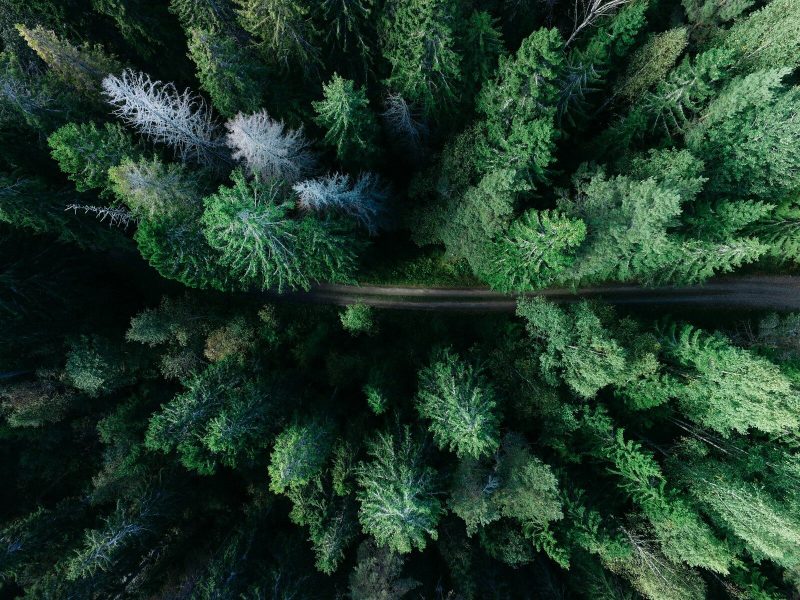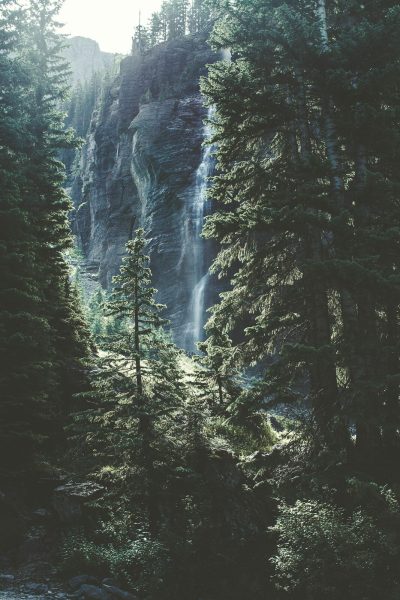
The summer heat has a way of draining us, doesn’t it? It’s not just the sweat on your brow or the need for a fan; it’s a deeper exhaustion that settles into your bones, a restless agitation that makes even the shade feel stifling. In Traditional Chinese Medicine, we’d say this is the time when external Heat invades, disrupting our inner balance and leaving our Qi, our vital energy, scattered and depleted. We instinctively seek relief in air-conditioned rooms and cold drinks, but what if the most profound cooling and restoration came not from escaping nature, but from stepping directly into its most verdant heart? This is the promise of forest bathing, a practice that offers a powerful, natural antidote to summer’s intensity.
What is Forest Bathing, Really? It’s Not a Hike.
Let’s clear up a common misconception right away. Forest bathing, or Shinrin-yoku as it’s known in its native Japan, is not about exercise, reaching a summit, or logging miles. The name itself is the key: you are not walking through the forest; you are bathing in it. You are immersing your senses in the atmosphere of the trees. The practice was formally developed in Japan in the 1980s as a response to a public health crisis of burnout and tech-related stress. The government, recognizing the profound restorative power of their forests, began prescribing time under the canopy as a preventative health measure.
Think of it this way: a hike is a workout for your body. Forest bathing is a workout for your nervous system—specifically, a workout in calming it down. It’s the practice of being present in a wild space, allowing the patterns, scents, and sounds of the forest to wash over you without agenda. You are not identifying species or taking photos for Instagram (though you might). You are simply being. This distinction is crucial, especially in summer. The goal isn’t to push through heat; it’s to find a space where the heat’s effect on your body and mind is naturally mitigated.
“In every walk with nature, one receives far more than he seeks.” — John Muir
The Summer Connection: How Forests Cool Us From the Inside Out
Why is forest bathing particularly potent in summer? The answer lies in a beautiful, natural phenomenon called evapotranspiration. Trees don’t just provide shade; they are living, breathing air conditioners. Through their leaves, they release water vapor into the air, a process that cools the surrounding environment. A mature oak can release over 40,000 gallons of water into the atmosphere in a single growing season. This creates a microclimate under the canopy that is noticeably cooler—often 5 to 10 degrees Fahrenheit (3-5°C) cooler—than the surrounding urban heat island of asphalt and concrete.
But the cooling goes deeper than the skin. From a TCM perspective, summer is ruled by the Fire element and the Heart organ system. Excess heat can lead to agitation, anxiety, and insomnia—what we call “Heart Fire flaring up.” Forest bathing directly counters this. The color green, which dominates the forest, is the color of the Wood element in TCM, which has a naturally calming, upward-and-outward growth energy that soothes the frantic, upward-rising energy of Heart Fire. The phytoncides—volatile organic compounds released by trees like pine and oak—aren’t just pleasant scents; research suggests they can lower cortisol levels, reduce blood pressure, and boost the activity of natural killer cells in our immune system. You are literally breathing in forest medicine.
Your Practical Guide to a Summer Forest Bath
Ready to try it? The beauty of this practice is its simplicity. You don’t need special gear or a remote wilderness. A city park with a good stand of mature trees will do. Here’s how to structure your session for maximum summer relief.
1. Choose Your Time & Place. For summer, the early morning (before 10 am) or the late afternoon/early evening (after 5 pm) is ideal. Avoid the peak heat of 12-3 pm. Look for a place with diverse trees—conifers like pines and cedars are high in phytoncides, while deciduous trees like maples and oaks provide deep shade. A trail near a stream or pond is a bonus; the water adds negative ions and extra cooling.
2. Disconnect to Reconnect. This is non-negotiable. Put your phone on airplane mode or, better yet, leave it in the car. The goal is to remove the digital static that constantly pulls at your attention. My grandmother used to say, “A house divided cannot stand,” and the same is true for your mind. If it’s half in the digital world and half in the forest, you’ll get neither rest nor restoration.
3. Move at a Snail’s Pace. This is the hardest part for many. Walk so slowly you feel you could be overtaken by a determined turtle. The point is not to get somewhere. The point is to notice everything along the way. A 20-minute walk might cover only 100 yards, and that’s perfect. Pause frequently. Stand still. Let the forest come to you.
4. Engage All Five Senses, One by One. This is the core of the “bath.” Consciously cycle through your senses to anchor yourself in the present moment.
- Sight: Don’t just glance—gaze. Look at the fractal patterns in the leaves, the way light filters down in shafts, the tiny ecosystem on a rotting log. Let your eyes soften.
- Sound: Close your eyes for three minutes. What do you hear? The rustle of leaves, bird calls, the buzz of insects, the distant sigh of the wind. Listen to the layers.
- Smell: This is where the phytoncides do their work. Take long, slow breaths. Can you smell damp earth? Pine resin? The sweet decay of leaf litter? Breathe it in like a tonic.
- Touch: Take off your shoes if it’s safe. Feel the cool earth, the rough bark of a pine tree, the smooth underside of a leaf. Touch everything (safely) with curiosity.
- Taste: While you shouldn’t eat random plants, you can “taste” the air. Notice the clean, mineral taste of the forest air compared to city air. Bring a thermos of cooled chrysanthemum or mint tea to sip mindfully, connecting the internal cooling to the external.

Deep Dive: The Concept of ‘Qi’ in the Forest
Let’s talk about one of the most fundamental concepts in Chinese wellness: Qi (pronounced “chee”). Often translated as “life energy” or “vital force,” Qi is the animating principle that flows through all living things—it’s the difference between a living tree and a log, between you alive and at rest versus you asleep. In TCM, our health depends on the smooth, abundant flow of Qi through pathways in our body called meridians.
Summer heat is a major disruptor of Qi. It causes Qi to rise and scatter, leaving you feeling both wired and tired—agitated yet exhausted. Forest bathing is a profound way to recharge your Qi. The forest is teeming with life force. As you walk slowly and breathe deeply, you are not just smelling scents; you are absorbing the abundant, stable, grounding Qi of the trees and the earth. The trees act as great Qi stabilizers. Their energy is rooted deep in the earth (Yin) while reaching powerfully toward the sun (Yang). By being in their presence, we borrow their equilibrium. My own teacher once told me to visualize drawing up cool, green energy from the forest floor with each inhale, and releasing my stagnant, heated, agitated energy into the soil with each exhale. This simple visualization can transform a walk into a true energetic exchange.
Maximizing the Benefits: A Summer Forest Bathing Routine
To truly harness forest bathing for summer heat relief, integrate it into a mindful routine. Don’t just do it once; make it a weekly or bi-weekly practice. Here is a sample routine you can adapt:
| Time | Activity | Purpose |
|---|---|---|
| Before You Go (Home) | Drink 8 oz of room temperature water with a squeeze of lemon and a slice of cucumber. | Hydrate with a cooling, gentle electrolyte boost. Avoid ice-cold water which can shock the system. |
| Arrival (First 10 min) | Find a comfortable spot to sit or stand. Close your eyes. Take 10 deep, slow breaths. Acknowledge you’ve left the city behind. | Transition your nervous system from sympathetic (fight/flight) to parasympathetic (rest/digest) mode. |
| Core Bath (45-60 min) | Engage in the slow walk and 5-sense immersion described above. Include at least one 10-minute period of complete stillness, either sitting or standing. | Deep sensory immersion to lower cortisol, lower core body temperature through microclimate and mental focus, and absorb phytoncides. |
| Integration (Last 15 min) | Find a sunny patch. Sit and let the dappled, filtered sunlight warm your skin gently. Reflect on one thing you saw or felt that brought you peace. | Allows for gentle vitamin D synthesis (without overheating) and helps integrate the experience into your memory. |
| Afterward (Home) | Drink a large glass of water. Take a cool (not cold) shower. Prepare a simple meal with cooling foods: a cucumber and mint salad, cold soba noodles, or a bowl of watermelon. | Completes the cooling cycle internally and externally. Nourishes the Yin (cooling, moistening) energy depleted by summer heat. |
Common Questions
Can I practice forest bathing if I don’t live near a forest?
Absolutely. The essence is mindful immersion in nature. A city park with mature trees, a botanical garden, or even a quiet tree-lined street can work. The key is to find a spot with enough tree canopy to create a sense of enclosure and to apply the same principles: move slowly, disconnect from devices, and engage your senses. Even 20 minutes in a green space has measurable benefits. My local park has a small grove of old cedars—it’s my summer sanctuary.
Is it safe to be in the forest during summer heat waves?
Safety is paramount. During extreme heat advisories (over 95°F/35°C), even forests can become dangerously hot. In such cases, shift your practice to the coolest part of the day—very early morning. Hydrate well before, during, and after. Wear lightweight, light-colored clothing and a wide-brimmed hat. Listen to your body; if you feel dizzy, nauseous, or develop a headache, find shade or air conditioning immediately. The forest is a healer, but it cannot override basic physiology. On such days, a 15-minute mindful sit under a single shade tree is wiser than a long walk.
How often should I practice forest bathing in the summer?
Consistency is more important than duration. A weekly 60-90 minute session is a wonderful goal that can yield cumulative benefits for stress reduction and immune function. However, even a 20-minute “forest pause” three times a week will make a noticeable difference in your resilience to summer heat and stress. Think of it like watering a plant—regular, moderate watering is far better than one big drenching followed by drought. Find a rhythm that fits your life and stick with it through the summer months.
The bottom line: Forest bathing is a powerful, science-backed antidote to summer’s oppressive heat and restless energy. It cools you physically through the forest’s natural microclimate and calms you mentally and emotionally through deep sensory immersion, offering a profound way to recharge your Qi and soothe your Heart Fire. By stepping into the green cathedral of the woods with intention and slowness, you access a form of natural air conditioning and stress relief that no machine can replicate. Make it a weekly ritual this summer, and discover a cooler, calmer, more resilient version of yourself.
This article is for educational purposes and reflects traditional wellness perspectives. It is not a substitute for professional medical advice, diagnosis, or treatment.