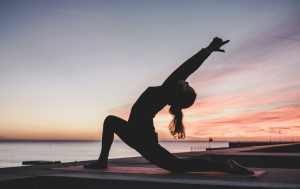
Summer is the season of the Heart. In Traditional Chinese Medicine (TCM), the Heart belongs to the Fire element, and the long, hot days of summer can easily cause that inner fire to flare up, leaving you feeling agitated, restless, or emotionally overheated. You might notice your sleep gets disturbed, your mind races, or you feel a constant, low-level irritability that you can’t quite explain. This isn’t just “being grumpy because it’s hot.” In TCM, it’s a pattern called Heart Fire rising, and it has a beautifully simple remedy: gentle, cooling movement that brings your energy down and helps you reconnect with a sense of calm spaciousness. That’s where a summer qigong practice comes in. Qigong—often translated as “working with life energy”—offers a way to harmonize your body with the rhythms of the season without breaking a sweat in the midday sun. Today, I want to share five gentle qigong moves specifically chosen to cool your Heart Fire, calm your spirit, and help you greet each summer morning with a little more ease.
Understanding Heart Fire: Why Summer Stirs Us Up
Before we move into the practice, let’s talk about what’s actually happening inside your body during summer, according to Chinese medical theory. The Heart, in TCM, is considered the “Emperor” of all organs. It houses the Shen—your spirit or consciousness—and it’s responsible for your sense of inner peace, joy, and mental clarity. When the Heart is balanced, you feel connected, calm, and genuinely happy. When it’s disturbed, you experience anxiety, insomnia, vivid or disturbing dreams, and a scattered mind.
Summer, with its blazing Yang energy, naturally amplifies the Fire element. Think of it like this: if your Heart is a campfire, winter keeps it gently smoldering, and summer throws a whole log pile onto it. A little fire is wonderful—it gives you passion, warmth, and enthusiasm. But too much fire? That’s when you get the symptoms I mentioned: the restlessness, the inability to “switch off,” the feeling of being wired but tired.
Qigong works on this pattern in two ways. First, the slow, deliberate movements encourage your Qi (life energy) to circulate smoothly rather than stagnating or rushing upward. Second, specific postures and breathing techniques can literally draw energy downward—from your head and chest into your lower abdomen, the Dantian—creating a natural cooling effect. It’s like turning down the thermostat from the inside out.
In Chinese medicine, the Heart is like a monarch who rules with calm authority. When summer’s heat invades, the monarch becomes agitated, and the whole kingdom feels the chaos. Qigong restores the monarch’s composure.
Preparing for Your Morning Practice
The best time to practice qigong in summer is early morning, ideally between 5:00 and 7:00 AM, when the air is still relatively cool and the day’s Yang energy hasn’t fully peaked. If you have access to a garden, a balcony, or a quiet park, practice outside. Being in contact with the earth—even just standing on grass in bare feet—adds a grounding, cooling quality to your session.
If you’re practicing indoors, open a window to let fresh air circulate. Wear loose, breathable clothing—nothing tight around your waist or chest. And here’s a small but meaningful detail: wear light, natural colors. In TCM, the color associated with the Heart is red, but in summer, when the Heart is already overheated, surrounding yourself with whites, blues, and soft greens has a subtle calming influence on your psyche.
Before you begin, take a moment to set an intention. It doesn’t have to be grand or spiritual. Something as simple as “I choose to be calm today” or “I allow myself to feel cool and peaceful” is perfect. This intention, spoken silently to yourself, signals to your nervous system that you’re shifting out of “doing” mode and into “being” mode.
The 5 Moves: A Complete Summer Qigong Practice
Each of the following five movements targets a different aspect of Heart Fire and overall summer wellness. Together, they form a complete sequence that takes about 15 to 20 minutes. Practice them in order, flowing gently from one to the next. Don’t rush. In qigong, slowness is not laziness—it’s precision. The slower you go, the more Qi you cultivate and the deeper the effect.
Move 1: Lifting the Sky (托天)
This classic qigong opening posture stretches the entire body, opens the chest and Heart channel, and encourages the smooth flow of Qi through the three main energy pathways. Stand with your feet shoulder-width apart, knees slightly soft, arms resting at your sides. Inhale slowly as you raise both arms in front of your body, palms facing up, fingers pointing toward each other. When your hands reach chest height, turn the palms outward and continue lifting until your arms are fully extended overhead. Feel the stretch along your sides, your ribs, your shoulders. Hold for three slow breaths, then exhale as you lower your arms gracefully back down. Repeat this three to five times.
The key here is to breathe deeply into your lower abdomen—not your chest. Chest breathing activates the sympathetic nervous system (the “fight or flight” response), which is exactly what we’re trying to calm. Abdominal breathing, by contrast, activates the parasympathetic nervous system, signaling safety and relaxation to your brain.
Move 2: Separating Heaven and Earth (天地分开)
This movement is beautiful in its simplicity and profound in its effect. It creates space between your upper and lower body, helping to balance the flow of energy between your Heart (upper) and your Kidneys (lower). In TCM, the Heart and Kidneys have a special relationship: the Heart provides Fire, and the Kidneys provide Water. When they’re in harmony, you feel centered and calm. When Heart Fire flares and Kidney Water is depleted—which is common in summer—you get that anxious, restless feeling.
Stand as before. Place both hands in front of your lower abdomen, palms facing up, fingers pointing forward. Inhale and slowly raise your left hand, palm up, while simultaneously pressing your right hand, palm down, toward the earth. Your left hand rises to the level of your forehead; your right hand descends to the level of your hip. Feel the gentle stretch through your torso. Hold for two breaths, then exhale and return both hands to the starting position. Inhale again, this time raising your right hand and pressing your left hand down. Alternate three times on each side. As you practice, imagine you are creating a spacious corridor between heaven and earth within your body—room for your spirit to settle.
Move 3: Pushing Mountains (推山)
This movement is excellent for releasing stagnant Qi from the chest—the area where Heart Fire tends to accumulate. Stand with feet shoulder-width apart, knees soft. Bring both hands up to your chest, palms facing outward, fingers pointing upward, elbows bent at shoulder height. Inhale deeply. On your exhale, press both hands forward with gentle firmness, as though you’re pushing a heavy door open. Extend your arms fully, letting the energy flow out through your palms and fingertips. Hold for a moment, then inhale and draw your hands back to your chest. Repeat five to seven times.
As you push forward, visualize releasing any frustration, anxiety, or emotional heat you’ve been carrying. You’re not forcing it out with aggression—you’re gently, firmly, lovingly letting it go. This distinction matters. Qigong is never about force. It’s about creating the conditions for energy to move naturally.
Move 4: Shaking the Tree (抖功)
If you only have time for one move in your summer qigong practice, make it this one. Shaking is one of the most effective and joyful qigong techniques for releasing tension, shaking loose stagnant energy, and resetting your nervous system. Stand with feet hip-width apart, knees slightly bent. Begin to gently bounce up and down by bending and straightening your knees. Let your whole body shake loosely—your arms, your shoulders, your jaw, even your tongue (yes, really). Let your arms hang heavy and flop naturally with the bouncing. Breathe normally. Continue for two to three minutes.
This practice is deceptively simple, but don’t underestimate it. Shaking stimulates your lymphatic system, improves circulation, and—most importantly for our purpose—releases the physical tension that holds emotional heat in your body. Many people find that after two minutes of shaking, they feel a surprising wave of calm, sometimes even laughter. That’s your body letting go of what it no longer needs.
Move 5: Gathering Qi into the Dantian (收功)
Every qigong session should end with a “closing” or “gathering” practice. This is the move that seals in the energy you’ve cultivated and grounds it in your lower Dantian—the energy center located about two inches below your navel and one-third of the way into your body. The Dantian is considered the root of your vitality, and in summer, it’s especially important to keep energy anchored here rather than floating upward toward your head and Heart.
Stand comfortably. Place both palms over your lower abdomen, one hand on top of the other (left hand on top for women, right hand on top for men—this follows the traditional Yin-Yang polarity of the body). Close your eyes. Breathe naturally and imagine a warm, golden ball of light gathering in your lower abdomen with each inhale. With each exhale, feel this ball of light growing denser, more solid, more rooted. Stay here for one to three minutes. When you’re ready, rub your palms together to generate warmth, then gently massage your face and the top of your head. Open your eyes slowly. You’re done.
How These Moves Map to Traditional Chinese Medicine
For those of you who enjoy understanding the “why” behind the practice, here’s a summary of how each movement works within the framework of TCM:
| Movement | Primary Effect | TCM Channel / Element | Best For |
|---|---|---|---|
| Lifting the Sky | Opens the chest, promotes Qi flow | Heart and Pericardium channels (Fire) | Chest tightness, shallow breathing |
| Separating Heaven and Earth | Balances Upper and Lower Burners | Heart-Kidney axis (Fire-Water) | Anxiety, restlessness, insomnia |
| Pushing Mountains | Releases stagnant Qi from the chest | Lung and Heart channels (Metal-Fire) | Emotional buildup, frustration |
| Shaking the Tree | Releases tension, stimulates lymph | Whole body, especially Liver (Wood) | Stress, physical tension, stagnation |
| Gathering Qi into the Dantian | Grounds and anchors energy | Conception Vessel, lower Dantian | Scattered mind, feeling ungrounded |
As you can see, this sequence addresses summer’s unique challenges from multiple angles—opening the chest, balancing Fire and Water, releasing stuck emotions, and grounding your energy. It’s not a random collection of exercises; it’s a thoughtfully designed sequence that follows the internal logic of Chinese medicine.
Tips for Sustaining Your Practice Through the Summer
Starting a practice is easy. Keeping it going through the sticky, sweltering weeks of July and August—that’s the real challenge. Here are a few practical tips that have helped me and many of my students stay consistent:
- Keep it short. Fifteen minutes is enough. If you tell yourself you need 45 minutes, you’ll skip it on busy mornings. A short, consistent practice beats a long, occasional one every time.
- Pair it with something you already do. Practice right after you brush your teeth, or right before your morning tea. Habit stacking makes new routines stick.
- Don’t aim for perfection. Some mornings you’ll feel spacious and serene. Other mornings you’ll feel distracted and stiff. Both are fine. The practice isn’t about achieving a state—it’s about showing up.
- Drink cooling herbal teas afterward. Chrysanthemum tea (菊花茶) and mint tea are both traditionally used to clear Heat from the Heart. Sip one after your practice as a small ritual of self-care.
- Practice with a friend or family member. Qigong in community—even a community of two—has a different quality than practicing alone. The shared energy amplifies the effect.
One more thing: be patient with yourself. In Chinese, we have a saying—”慢工出细活”—which means “slow work produces fine results.” Qigong is not a quick fix. It’s a long, gentle conversation with your body. Over weeks and months, you’ll begin to notice subtle but real changes: better sleep, a calmer mind, less reactivity to stress, and a deeper sense of being at home in your own skin. These changes don’t announce themselves with fireworks. They arrive quietly, like the dawn.
Common Questions
Can I practice these qigong moves if I’m a complete beginner?
Absolutely. These five movements were chosen specifically because they are accessible, safe, and require no prior experience. The most important thing is to move slowly, breathe deeply, and pay attention to how your body feels. If a movement causes pain (not just mild discomfort from stretching, but actual sharp or persistent pain), ease off or skip that particular move. Qigong should always feel nourishing, not punishing. If you enjoy these moves and want to go deeper, consider finding a qualified qigong teacher in your area or following along with a reputable online class. Learning in person, even just a few sessions, can make a significant difference in your understanding of the postures and breathing techniques.
How is a summer qigong practice different from practicing in other seasons?
In Traditional Chinese Medicine, each season corresponds to an element, an organ system, and a particular kind of energy. Summer corresponds to Fire, the Heart, and the emotion of Joy. A summer qigong practice therefore emphasizes cooling, grounding, and calming the Heart—whereas a winter practice might focus on nourishing Kidney energy, a spring practice on moving Liver Qi, and an autumn practice on strengthening the Lungs. The five moves I’ve shared here are specifically chosen to address summer’s unique energetic challenges. Practicing them during the summer months aligns your personal energy with the larger energy of nature, which is one of the core principles of Chinese wellness philosophy. That said, any qigong is better than no qigong, so if these moves feel good to you, there’s no harm in practicing them year-round.
I have a heart condition. Is it safe for me to practice these movements?
These gentle movements are generally considered safe for most people, including older adults and those with mild health conditions, because they involve no impact, no strain, and no extreme positions. However, if you have a diagnosed heart condition, cardiovascular disease, or any serious medical concern, please consult your physician before beginning any new movement practice. This is not a formality—it’s genuinely important. Your doctor can help you determine whether these movements are appropriate for your specific situation, and may even be supportive of gentle qigong as a complementary wellness practice. Once you have medical clearance, start slowly, listen carefully to your body, and never push through discomfort.
The bottom line: A consistent summer qigong practice of just 15 minutes each morning can help you cool Heart Fire, calm your spirit, and align your body with the natural rhythms of the season. These five gentle moves—Lifting the Sky, Separating Heaven and Earth, Pushing Mountains, Shaking the Tree, and Gathering Qi into the Dantian—offer a simple, practical, and deeply nourishing way to move through the hottest months with greater ease and inner peace. Start tomorrow morning. Your Heart will thank you.
This article is for educational purposes and reflects traditional wellness perspectives. It is not a substitute for professional medical advice, diagnosis, or treatment.