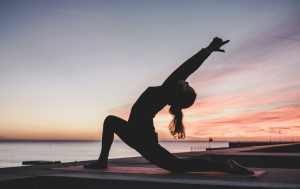
There’s a particular kind of heaviness that settles into the body during summer. Not just the sweat on your forehead or the stickiness behind your knees—it’s something deeper, a kind of internal congestion that Traditional Chinese Medicine calls “summer heat.” Your chest feels tight, your thoughts get foggy, and your sleep turns restless. In Chinese wellness culture, we say the Heart is the organ most vulnerable to summer’s fire. When the heat climbs, the Heart meridian becomes agitated, and what follows is irritability, insomnia, anxiety, and that unmistakable feeling of being overwhelmed for no clear reason. The good news? You don’t need to escape to the mountains or install a second air conditioner. A few carefully chosen stretches—slow, cooling, intentional—can help you release that trapped heat, settle your nervous system, and bring your body back to a place of quiet equilibrium. Today, I’m sharing five gentle summer cooling stretches that my grandmother would have recognized, adapted for modern life, and designed specifically to calm the Heart.
Why Summer Heat Targets the Heart
In the Five Element framework of Traditional Chinese Medicine, summer belongs to the Fire element, and the Heart is its primary organ. This isn’t metaphorical—it’s a diagnostic lens that has guided Chinese wellness practices for thousands of years. When external heat rises, the body’s internal fire can flare out of balance. You feel it as heart palpitations, sudden anxiety, a flushed face, night sweats, or that wired-but-tired sensation where you’re exhausted but can’t fall asleep.
The solution, according to this tradition, isn’t to fight fire with fire. It’s to gently open the channels that carry heat away from the Heart, encourage downward movement of energy (what we call “descending qi”), and create space for coolness to enter. Stretching is one of the simplest ways to do this because it works with fascia, breath, and circulation simultaneously. Unlike vigorous exercise, which generates more internal heat, gentle summer cooling stretches coax the body into parasympathetic mode—the rest-and-digest state where healing and temperature regulation actually happen.
“In summer, nourish the Heart with stillness. Move gently, breathe slowly, and let the heat rise out of you like steam from a cup of tea.” — Traditional Chinese wellness proverb
The Five Element Connection: Fire, Water, and Balance
Before we get into the specific stretches, it helps to understand one more piece of the puzzle: the relationship between Fire and Water. In Five Element theory, the Kidneys (Water element) naturally control the Heart (Fire element). When summer heat overwhelms the Heart, it’s often because the Kidneys are depleted—they can’t provide enough cooling, grounding energy to keep the Heart in check. This is why summer fatigue hits differently than winter fatigue. You’re not just tired; you’re depleted at a foundational level.
The stretches I’m going to share are chosen specifically because they activate both the Heart and Kidney meridians. They encourage blood flow to the lower body (grounding the heat downward), open the chest and inner arms (where the Heart meridian runs), and stimulate the deep front line of fascia that connects the feet to the throat. Think of it as creating a clear pathway for heat to exit through the soles of your feet and the crown of your head, while cool, nourishing energy rises from the earth through your legs and into your core.
This is not abstract philosophy. When you do these stretches, you will physically feel your heart rate slow, your breathing deepen, and a subtle coolness spread through your palms and feet. That’s the body’s parasympathetic nervous system engaging, and it’s the same mechanism behind why a slow walk in the shade feels more refreshing than sitting in an air-conditioned room.
Before You Begin: Setting Up Your Practice
These summer cooling stretches work best when you create the right conditions. You don’t need a yoga studio or special equipment—just a few minutes of intentional setup.
- Timing: Practice in the early morning before 9 a.m. or in the evening after 6 p.m. These are the coolest parts of the day, and in Chinese time-organ theory, the Heart meridian is most active between 11 a.m. and 1 p.m—so midday practice can actually overstimulate it.
- Location: Choose a shaded outdoor space if possible. The earth’s coolness (grass, stone, even bare soil) provides grounding energy through your feet. If you’re indoors, a tile or wood floor works better than carpet.
- Hydration: Drink a cup of room-temperature water with a few slices of cucumber or a sprig of mint about 20 minutes before you begin. Avoid ice-cold water, which shocks the digestive system and temporarily constricts the meridians.
- Clothing: Loose, breathable fabrics. Natural fibers like cotton or linen allow the skin to participate in temperature regulation. Bare feet are ideal.
- Breath focus: Throughout every stretch, breathe through your nose with a longer exhale than inhale. A simple pattern is inhale for 4 counts, exhale for 6 counts. The extended exhale activates the vagus nerve, which is your body’s main cooling and calming switch.
Hold each stretch for 90 seconds to 3 minutes. In Chinese wellness, we count in breaths rather than seconds—aim for 12 to 20 slow breaths per position. Move between stretches slowly, with a moment of stillness in between. This is not a workout. It’s a conversation with your nervous system.

The 5 Summer Cooling Stretches
1. Supported Heart Opener (Reclined Butterfly)
This is the cornerstone stretch of the entire sequence. It directly opens the chest, stretches the Heart and Pericardium meridians along the inner arms, and creates a gentle backbend that encourages energy to flow downward from the head to the sacrum.
How to do it: Place a firm pillow, folded blanket, or bolster lengthwise on the floor. Lie back so that the support runs along your spine from your mid-back to the crown of your head. Let your arms fall open to the sides, palms facing up—this is the key position for the Heart meridian, which runs along the inner arm from the armpit to the pinky finger. Bring the soles of your feet together and let your knees fall open like butterfly wings. If this is too intense for your hips, place pillows or blocks under each knee for support.
Close your eyes. Breathe slowly. Imagine your chest opening like a lotus flower, and with each exhale, a little bit of heat leaves through your sternum and dissipates into the air above you. On the inhale, imagine cool blue water rising from the earth through the soles of your feet, traveling up through your legs, and pooling gently in your lower abdomen—the area Chinese medicine calls the dantian.
Why it cools: The reclined position immediately lowers blood pressure and heart rate. The upward-facing palms signal safety to the nervous system (we instinctively curl our hands inward when stressed). The butterfly position opens the inner thigh, which is rich with blood vessels and lymph nodes—opening this area improves circulation and helps the body release excess heat through the groin and inner knee, two major exit points for the Kidney meridian.
2. Seated Forward Fold with Wrist Release
Forward folds are inherently cooling in every movement tradition—yoga, qigong, martial arts—because they bring the head below the heart and compress the abdomen, which stimulates the vagus nerve and slows the sympathetic (fight-or-flight) response. This variation adds a wrist release that specifically targets the Heart meridian’s endpoint at the inner wrist.
How to do it: Sit on the floor with your legs extended in front of you. If your hamstrings are tight, sit on a folded blanket to tilt your pelvis forward. Inhale and lengthen your spine tall. As you exhale, hinge forward from the hips—not the waist—and reach your hands toward your shins, ankles, or feet. Don’t force the stretch. Go only as far as you can while keeping your breath slow and even.
Once you’re settled in the fold, clasp your hands around the sole of one foot (or around your ankle or shin) and gently flex and extend your wrist 10 times, then circle it 10 times in each direction. You’ll feel a stretch along the inner forearm—this is the Heart meridian lighting up. Switch hands and repeat on the other side.
Why it cools: Forward folds direct blood flow toward the head and abdomen, which calms the mind and aids digestion—both of which are compromised by summer heat. The wrist mobilization opens the very end of the Heart meridian (the point called Shenmen or “Spirit Gate” is on the inner wrist crease), allowing trapped heat to release through the hands. Many people notice their palms become noticeably cooler after this stretch.
3. Standing Side Bend with Breath Cooling
This stretch opens the side body, which in Chinese medicine corresponds to the Gallbladder meridian—a channel that helps regulate the body’s thermostat and manage the transition between hot and cool states. Combined with a cooling breath technique (Sitali breath, adapted from yogic tradition but used in similar forms in Chinese breathing exercises), this move actively reduces core temperature.
How to do it: Stand with your feet hip-width apart. Raise your right arm overhead and place your left hand on your left hip. Inhale and lengthen upward through your right fingertips. Exhale and lean gently to the left, creating a long curve from your right ankle to your right fingertips. Keep both feet grounded and your hips centered—don’t let them shift to the left.
Now, for the breath: curl your tongue into a tube (if you can’t curl your tongue, simply part your lips slightly and breathe through your teeth). Inhale slowly through the curled tongue or parted teeth—you’ll feel the air cool as it enters. Close your mouth and exhale through the nose. Do 8 to 10 cooling breaths on each side. If you feel dizzy at any point, return to normal breathing.
Why it cools: The side bend stretches the intercostal muscles between the ribs, which improves lung capacity and allows deeper, slower breathing. Deeper breathing directly reduces cortisol and adrenaline—the stress hormones that generate internal heat. The Sitali breath technique has been shown in studies to reduce perceived body temperature by 1 to 2 degrees Fahrenheit almost immediately. Combined with the meridian opening of the side body, this is one of the most effective summer cooling stretches you can do standing up.
4. Child’s Pose with Wide Knees
Every Chinese grandmother knows this position. Not as “Child’s Pose”—that’s the yoga name—but as a resting posture that naturally occurs when the body is exhausted and needs to conserve energy. In qigong, this position is sometimes called “Returning to the Root” because it brings the forehead (the third eye, or yintang point) into contact with the ground, which has an immediately calming effect on the brain.
How to do it: Kneel on the floor with your knees wide apart—about mat-width or wider. Bring your big toes to touch behind you. Sit your hips back toward your heels. Walk your hands forward on the floor and lower your chest between your thighs. Rest your forehead on the ground (use a folded blanket or block if your forehead doesn’t reach). Extend your arms forward with palms down, or bring them back alongside your feet with palms up—choose whichever feels more cooling for you.
Breathe into your back body. Feel your ribcage expand with each inhale and soften with each exhale. Let gravity do the work. Stay here for 2 to 3 minutes, or longer if it feels good. When you’re ready to come out, walk your hands back slowly and sit up. Pause for a moment and notice the temperature of your forehead—many people find it feels noticeably cooler after pressing it to the ground.
Why it cools: The forehead contains the yintang point (between the eyebrows) and the Shenting point (hairline center), both of which are used in acupuncture to calm the mind and clear heat from the Heart. Pressing these points to the ground provides gentle acupressure. The wide-knee position compresses the abdomen, stimulating the vagus nerve. And the prone, enclosed shape of the posture signals profound safety to the limbic system, which is why it so reliably produces a sigh or yawn—both of which are the nervous system’s way of releasing excess energy and heat.
5. Legs Up the Wall with Palm Pressing
This is the grand finale, and it’s the one I recommend most often to friends who ask me how to sleep better in summer. In Chinese medicine, elevating the legs reverses the flow of energy—heat that has accumulated in the head and chest naturally drains downward toward the feet. It’s the same principle behind why soaking your feet in warm water before bed (paradoxically) helps cool the whole body: you’re opening the exit route for heat at the lowest point.
How to do it: Sit sideways next to a wall. Swing your legs up the wall as you lower your back to the floor. Your sitting bones should be as close to the wall as comfortable—if your hamstrings are tight, move your hips a few inches away. Rest your arms by your sides, palms up.
Now add the palm pressing: bring your palms together in front of your chest (prayer position) and press firmly for 5 seconds, then release. Repeat this press-and-release pattern 20 times. The isometric contraction of the inner arms stimulates the Heart and Pericardium meridians, and the rhythmic pressing creates a gentle pumping action that moves stagnant blood and lymph. After the 20 presses, rest your arms open again and simply breathe. Stay for 5 to 10 minutes.
Why it cools: Inverting the legs uses gravity to assist venous return—blood flows more easily back to the heart, which means the heart doesn’t have to work as hard. A heart working less hard generates less heat. The palm pressing adds a targeted meridian activation that amplifies the cooling effect. In clinical acupuncture practice, the point Laogong (PC-8), located in the center of the palm, is one of the primary points used to clear Heart fire. Pressing the palms together activates this point bilaterally.
Putting It All Together: Your Summer Cooling Routine
You don’t need to do all five stretches every time. Here’s a quick reference to help you choose based on how you’re feeling:
| How You Feel | Best Stretch | Time Needed | Key Benefit |
|---|---|---|---|
| Restless, can’t sleep | Legs Up the Wall | 10 minutes | Drains heat from head, calms Heart |
| Anxious, chest tight | Heart Opener | 3–5 minutes | Opens chest, releases Heart meridian |
| Overheated, flushed | Side Bend + Cooling Breath | 5 minutes | Actively lowers core temperature |
| Mentally foggy | Child’s Pose | 3 minutes | Calms mind via forehead acupressure |
| Tense, stiff from sitting | Forward Fold + Wrist Release | 5 minutes | Stretches hamstrings, opens Heart endpoint |
| General summer malaise | All five in sequence | 20–25 minutes | Full meridian reset and nervous system cooling |
If you’re doing the full sequence, move in the order listed. The Heart Opener opens the chest first, the Forward Fold redirects energy downward, the Side Bend adds active cooling through breath, the Child’s Pose grounds and calms, and Legs Up the Wall completes the cycle by fully inverting the energy flow. This progression mirrors the natural arc of a cooling practice: open, descend, release, ground, restore.
Common Questions
Can I do these summer cooling stretches if I’m not flexible?
Absolutely. Flexibility is not the goal here—cooling and calming are. Every stretch can be modified with props: use blocks under your knees in the butterfly pose, sit on blankets in the forward fold, rest your forehead on a pillow in child’s pose, and move your hips away from the wall in legs-up-the-wall if your hamstrings are tight. The meridian benefits occur regardless of how deep you go into the stretch. In fact, forcing depth creates tension, which generates heat—the opposite of what we want. Meet your body where it is today, and let the breath do the real work.
How often should I practice these stretches during summer?
For general maintenance during the hot months, three to four times a week is ideal. If you’re experiencing specific symptoms—insomnia, anxiety, excessive sweating, irritability—daily practice will bring faster relief. Many people find that even a single 10-minute session (just the Heart Opener and Legs Up the Wall) before bed dramatically improves summer sleep quality. Listen to your body. On the hottest days, when you feel the heat most intensely, even a 5-minute Child’s Pose with cooling breath can make a meaningful difference. Consistency matters more than duration.
Are these stretches safe during pregnancy or with medical conditions?
The stretches themselves are gentle and low-risk, but certain modifications may be needed. During pregnancy, avoid lying flat on your back after the first trimester—use an inclined bolster for the Heart Opener and Legs Up the Wall. If you have high blood pressure, skip the full inversion (Legs Up the Wall) or keep your hips well away from the wall so the elevation is minimal. For any heart condition, the wrist pressing in Legs Up the Wall should be done gently without force. As with any new physical practice, check with your healthcare provider if you have concerns, especially if you’re managing a cardiovascular or neurological condition. These stretches are meant to complement, not replace, medical care.
The bottom line: Summer heat doesn’t just affect your skin—it reaches your Heart, your sleep, and your emotional equilibrium. These five summer cooling stretches offer a practical, time-tested way to release trapped heat, calm your nervous system, and restore the balance between Fire and Water that your body craves during the hottest months. You don’t need equipment, experience, or flexibility. You just need a few quiet minutes, a willingness to breathe slowly, and the trust that your body already knows how to cool itself—it just needs you to create the conditions. Try one tonight. Your Heart will thank you.
This article is for educational purposes and reflects traditional wellness perspectives. It is not a substitute for professional medical advice, diagnosis, or treatment.