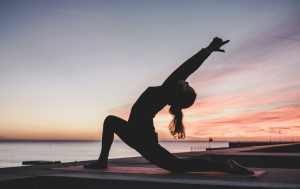
The summer heat arrives like a warm embrace — sometimes too warm, too tight, too long. If you’ve ever felt your temper flare on a scorching afternoon, noticed your heart racing at night, or simply felt drained and restless during the hottest months, Traditional Chinese Medicine (TCM) has a beautiful explanation for what you’re experiencing. It’s called “Heart Fire,” and it’s one of the most common imbalances that summer brings.
In TCM, summer belongs to the Fire element, and the Heart is the organ most closely associated with this season. When the external heat becomes excessive, it can “fan the flames” internally, leading to irritability, insomnia, anxiety, mouth ulcers, excessive sweating, and a restless mind. The good news? Qigong — the ancient practice of cultivating and balancing life-force energy — offers incredibly effective tools to cool you down from the inside out. These aren’t just poetic ideas from dusty scrolls. These are practical, body-based techniques that you can do in your living room, at your office desk, or even in a park on a lunch break.
In this guide, I’ll walk you through five specific qigong practices designed to calm Heart Fire and bring refreshing, cooling energy into your body during summer. I’ll explain the theory behind each one, give you step-by-step instructions, and share the small details that make a real difference. Think of me as your friend who grew up with a grandmother who always knew which tea to brew and which stretches to do when the weather got too hot. Let’s begin.
- Understanding Heart Fire: Why Summer Drains Us Differently
- Practice 1: The Heart-Brushing Breath (Xin Hu Xi)
- Practice 2: The Cooling Spinal Wave (Que Xi Zhu Gong)
- Practice 3: The Water Visualization Seated Meditation
- Practice 4: The Pericardium 8 Tapping Sequence
- Practice 5: The Kidney-Nourishing Standing Post (Zhan Zhuang — Wu Chi Variation)
- Your Summer Qigong Cooling Schedule: How to Put It All Together
- Supporting Your Practice: Lifestyle Tips from Chinese Medicine
Understanding Heart Fire: Why Summer Drains Us Differently
Before we dive into the practices, it helps to understand what’s actually happening in your body according to Chinese medicine. You don’t need to become a scholar — just knowing the basics will help you feel the difference when you practice.
In the Five Element framework, Fire is one of five fundamental energies that cycle through nature and our bodies. Summer is the peak of the Fire phase — everything is growing, expanding, and radiating outward. Your Heart, considered the “Emperor” of all organs in TCM, governs Fire energy. It’s responsible not just for pumping blood, but for housing your Shen (spirit or consciousness), managing your sleep, and keeping your emotions balanced.
When external heat overwhelms the body’s natural cooling mechanisms, the Heart becomes agitated. Think of it like a computer running too many programs on a hot day — eventually, the fan can’t keep up, and things start to glitch. Your body does the same: you feel anxious for no reason, your sleep becomes shallow, you snap at people more easily, and you crave cold drinks that only provide temporary relief.
“The Heart is like the sun. When it burns too brightly, the whole system overheats. Qigong teaches us how to become the gentle cloud that provides shade.”
The goal of summer qigong cooling isn’t to extinguish your Fire — you need that energy for vitality, joy, and connection. The goal is to balance it, to create a gentle flow between Fire and Water (the cooling, nourishing element associated with the Kidneys). This is where the practices below come in.
Practice 1: The Heart-Brushing Breath (Xin Hu Xi)
This is the simplest practice on the list and the one I recommend starting with. You can do it anywhere — sitting at your desk, waiting in line, or lying in bed when the heat won’t let you sleep. It directly targets Heart Fire through breath and gentle touch.
How to do it:
- Sit comfortably with your feet flat on the floor and your spine gently upright. Place both palms over the center of your chest, where your Heart sits. Feel your heartbeat under your hands.
- Inhale slowly through your nose for a count of four, imagining cool blue water flowing into your chest. As you breathe in, gently press your palms into your chest — not hard, just enough to feel the warmth of your hands.
- Exhale through slightly pursed lips (like you’re blowing on hot soup) for a count of six or eight. As you exhale, imagine the excess heat leaving your body as a warm red glow that dissipates into the air.
- On each exhale, slowly stroke your hands downward from your chest to your lower abdomen (your Dan Tian, about two inches below your navel). This guides the heat downward and grounds it.
- Repeat for 8–12 breath cycles. After the last exhale, rest your hands on your lower abdomen and take three natural breaths.
When to practice: Morning before you start your day, mid-afternoon when energy dips and irritability rises, or at bedtime if you struggle with summer insomnia.
Why it works: The pursed-lip exhale activates the parasympathetic nervous system (your “rest and digest” mode), while the downward hand movement literally helps redistribute energy from your upper body to your center. In TCM terms, you’re guiding Fire energy down to meet Water energy in the Kidneys — creating steam, not a wildfire.
Practice 2: The Cooling Spinal Wave (Que Xi Zhu Gong)
This practice is a bit more active and feels absolutely wonderful on a hot day. It works with the Du Mai (Governing Vessel), the energy channel that runs up your spine and is deeply connected to your body’s ability to regulate temperature. Think of it as turning on your internal air conditioning.
How to do it:
- Stand with your feet shoulder-width apart, knees slightly soft (not locked). Let your arms hang naturally at your sides.
- Begin by inhaling and gently tucking your tailbone under, rolling your spine upward vertebra by vertebra — as if a gentle wave is moving up your back. Your chin tucks slightly at the top, and your whole body feels like it’s rising.
- As you exhale, reverse the wave: release your neck, let your chest soften, and allow the wave to roll back down your spine, ending with a gentle release of your tailbone. Your body sinks slightly with gravity.
- Move slowly. Each wave cycle should take about 6–8 seconds. Imagine cool water rolling up and down your spine with each movement.
- Continue for 3–5 minutes. When you finish, stand still, close your eyes, and notice the tingling sensation along your spine. That’s the cooling energy circulating.
Key detail: Keep your mouth gently closed and your tongue touching the roof of your mouth (just behind your front teeth). In qigong, this connects the two main energy meridians and helps the energy flow more smoothly. It also naturally produces saliva, which TCM considers a precious cooling fluid — swallow it when it accumulates.
When to practice: Early morning outdoors is ideal (before 10 a.m.), but any time you feel stiff, overheated, or mentally foggy will work beautifully.
Practice 3: The Water Visualization Seated Meditation
This is my personal favorite for really hot days when moving feels like too much effort. It’s a guided visualization rooted in classical Chinese medicine, and it works on a surprisingly deep level. Many students tell me they feel genuinely cooler — by several degrees — after just ten minutes.
How to do it:
- Sit comfortably — on a chair, cushion, or even on the grass. Close your eyes and take three slow, deep breaths to settle in.
- Bring your attention to the center of your chest (your Heart center). Imagine a small, glowing ember there — warm, orange-red, beautiful. Acknowledge it without judgment. This is your Heart Fire, and it’s not your enemy.
- Now, shift your attention to the area just below your navel — your lower Dan Tian. Imagine a deep, still pool of cool, clear water here. See it as a mountain lake on a cool morning, blue and tranquil.
- With each inhale, imagine drawing the cool water upward through a channel in the center of your body, like a gentle fountain. The water rises toward your Heart center. With each exhale, imagine the cool water gently washing over the ember — not extinguishing it, but cooling it, softening its glow to a warm, steady golden light.
- Continue this cycle for 10–15 minutes. Let the imagery become richer: you might see steam rising as the water meets the fire, or feel the warmth in your chest gradually become comfortable and balanced.
- To close, imagine the ember and the pool merging into a single, warm-golden glow that sits comfortably in the center of your chest. Place your hands over your heart, breathe naturally for a minute, and open your eyes.
Why this works in real terms: Visualization isn’t “just imagination.” Research in psychoneuroimmunology has shown that guided imagery can measurably lower cortisol, reduce inflammation markers, and even change skin temperature. In TCM, the mind (Yi) leads the Qi — where your attention goes, your energy follows. By consistently directing cooling imagery to your Heart center, you’re actually redirecting blood flow and energy in a way that produces real physiological effects.
Practice 4: The Pericardium 8 Tapping Sequence
This one is wonderfully specific and feels immediately effective. Pericardium 8 (PC8) is one of the most important cooling points in all of Chinese medicine. It’s located in the center of your palm, right where your middle finger touches when you make a fist. In Chinese, it’s called Lao Gong — the “Palace of Toil” — and it’s a major exit point for excess heat in the body.
You’ve probably instinctively done something similar without realizing it. Have you ever pressed your cool palms against your flushed cheeks on a hot day? Or held a cold glass in both hands and felt relief spread through your whole body? That’s PC8 at work.
How to do it:
- Stand or sit comfortably. Hold both hands in front of you, palms facing each other, about six inches apart.
- Vigorously rub your palms together for 15–20 seconds, generating warmth and activating the point. Then stop and hold your palms apart again.
- Now, using the thumb of your right hand, press firmly into the center of your left palm (PC8). Press for 3 seconds, release for 1 second. Repeat 8 times.
- Switch hands and repeat on the right palm.
- Next, tap the center of each palm briskly with the opposite fist — 30 taps per hand. You should feel a pleasant, tingling heat in your palms.
- Finally, shake both hands loosely at your sides for 15 seconds, as if you’re flicking water off your fingertips. Imagine excess heat leaving through your palms and fingertips.
- Repeat the entire sequence 2–3 times.
Pro tip: If you have access to cool water, splash a little on your palms before doing the tapping sequence. The combination of the physical cooling sensation and the point activation is incredibly powerful. Some qigong masters recommend holding ice cubes briefly over PC8 during the hottest days — this isn’t traditional, but it works beautifully for modern life.
Practice 5: The Kidney-Nourishing Standing Post (Zhan Zhuang — Wu Chi Variation)
Zhan Zhuang — standing meditation — is often called the “king of qigong” because it does so much with so little visible effort. This particular variation focuses on building Kidney (Water) energy to counterbalance the excess Heart (Fire) energy of summer. It’s the most passive practice on this list, but don’t let that fool you. Five minutes of this will leave you feeling deeply refreshed.
How to do it:
- Stand with feet shoulder-width apart, toes pointing slightly outward. Bend your knees just slightly — no more than an inch of bend. Your weight should feel evenly distributed, as if you’re standing on a thick cushion of air.
- Let your arms hang naturally at your sides, fingers gently curved, shoulders completely dropped. Tuck your chin slightly, as if a string is gently pulling the crown of your head toward the sky.
- Close your eyes. Bring all of your attention to the area around your Kidneys — the lower back, roughly at waist level on either side of your spine.
- Imagine two deep wells of cool, dark water sitting in your lower back. With each breath, these wells fill a little more. Feel the coolness spreading gently through your lower back, down into your legs, and up through your abdomen.
- If your mind wanders (and it will — that’s perfectly normal), gently guide it back to the sensation of coolness in your lower back. Don’t force anything. Just stand and breathe.
- Start with 5 minutes and gradually build to 10–15 minutes as your body adapts. When you finish, walk slowly for a minute to let the energy settle.
A note on timing: In summer, the best time for this practice is either early morning (5–7 a.m., when Kidney energy naturally peaks) or evening after sunset. Avoid practicing Zhan Zhuang in the full midday sun — that would add heat rather than balance it.
Your Summer Qigong Cooling Schedule: How to Put It All Together
You don’t need to do all five practices every day. That would be overwhelming and counterproductive. Instead, I suggest choosing two or three that resonate with you and rotating them throughout the week. Here’s a simple schedule I often recommend to friends who are new to summer qigong cooling:
| Time of Day | Practice | Duration | Best For |
|---|---|---|---|
| Morning (6–8 a.m.) | Cooling Spinal Wave | 5–10 minutes | Energizing, clearing morning stiffness, setting a calm tone for the day |
| Midday (12–2 p.m.) | Pericardium 8 Tapping | 3–5 minutes | Quick heat relief during the hottest hours, especially at a desk |
| Afternoon (3–5 p.m.) | Heart-Brushing Breath | 5–8 minutes | Reducing irritability and the afternoon energy crash |
| Evening (7–9 p.m.) | Water Visualization Meditation | 10–15 minutes | Deep cooling, preparing for restful sleep |
| Weekend mornings | Kidney-Nourishing Standing Post | 10–15 minutes | Building deep reserves of cooling energy for the week ahead |
Feel free to adjust this based on your schedule and what your body tells you. The most important thing is consistency. Even five minutes a day will produce noticeable results within a week or two. Your body will start to run cooler, your emotions will feel more stable, and you’ll sleep better during those sticky summer nights.
Supporting Your Practice: Lifestyle Tips from Chinese Medicine
Qigong doesn’t exist in a vacuum. The Chinese medicine approach to summer cooling is holistic — it includes what you eat, how you move, and even how you think. Here are a few supporting habits that will amplify your qigong practice:
- Eat cooling, hydrating foods: Watermelon, cucumber, mung bean soup, bitter melon, lotus root, and green tea are all classified as “cooling” in Chinese dietary therapy. Mung bean soup in particular is a classic summer remedy — boil mung beans with a small piece of rock sugar, let it cool, and drink it throughout the day.
- Avoid excessive cold drinks and ice: This surprises many people, but very cold drinks can actually impair your Spleen‘s ability to transform fluids, leading to more internal heat in the long run. Room temperature or slightly cool water is best. Add a few slices of cucumber or mint leaves for a refreshing twist.
- Wake with the sun, rest during peak heat: Traditional Chinese wisdom says to rise early in summer and take a brief rest (even 20 minutes) during the hottest part of the afternoon. This isn’t laziness — it’s intelligent energy management.
- Keep your emotions gentle: Summer Fire doesn’t just come from the sun — it’s amplified by anger, frustration, and overstimulation. Practice patience. Reduce screen time in the evening. Spend time near water when you can — lakes, fountains, even a cool bath.
- Wear light, breathable, natural fabrics: Cotton and linen allow your skin to breathe. In TCM, the skin is considered the “third Lung” — it participates in breathing and temperature regulation. Let it do its job freely.
Common Questions
Can I practice summer qigong cooling if I have high blood pressure?
Generally, yes — and many of these practices may actually be beneficial, since calming Heart Fire can help reduce the agitation and stress that contribute to elevated blood pressure. The Heart-Brushing Breath and Water Visualization are especially gentle. However, the Pericardium 8 Tapping involves vigorous stimulation, and the Standing Post requires you to be on your feet for extended periods. If you have a cardiovascular condition, start slowly, practice for shorter durations, and — most importantly — check with your healthcare provider before adding any new wellness routine. Chinese medicine works best as a complement to, not a replacement for, professional medical care.
How long before I notice results from these practices?
Many people feel immediate relief during the practice itself — a sense of internal cooling, slower breathing, and reduced tension. That’s the acute effect, and it’s real and valuable. For deeper, more lasting shifts — better sleep throughout summer, more stable emotions, less dependence on air conditioning and cold drinks — give yourself two to three weeks of consistent practice, ideally daily. Chinese medicine works cumulatively. Each session deposits a small amount of balance into your system, and over time, those deposits add up to a genuine shift in how your body handles heat. Think of it like saving coins: one coin doesn’t change your life, but a jar full of them certainly can.
Is it safe to practice qigong outdoors in summer heat?
It depends on the intensity of the heat and the practice you choose. Early morning (before 9 a.m.) and evening (after 6 p.m.) are generally safe and ideal for outdoor practice — you get fresh air and natural light without the punishing midday sun. Avoid vigorous standing practices like Zhan Zhuang during peak heat hours (11 a.m.–3 p.m.) outdoors, as this could lead to overheating or heat exhaustion. The Pericardium 8 Tapping and Heart-Brushing Breath are gentle enough to do almost anywhere, but always listen to your body: if you feel dizzy, nauseated, or excessively sweaty, stop, move to shade, hydrate, and rest. Qigong should always leave you feeling better, not worse. Trust your body’s signals — they’re older and wiser than any instruction.
The bottom line: Summer doesn’t have to be a season of irritability, exhaustion, and sleepless nights. With these five qigong cooling practices — the Heart-Brushing Breath, the Cooling Spinal Wave, the Water Visualization Meditation, the Pericardium 8 Tapping Sequence, and the Kidney-Nourishing Standing Post — you have a complete toolkit for balancing Heart Fire and cultivating inner coolness. Start with whichever practice calls to you most, stay consistent, and let the ancient wisdom of Chinese medicine help you find your calm center even on the hottest days.
This article is for educational purposes and reflects traditional wellness perspectives. It is not a substitute for professional medical advice, diagnosis, or treatment.