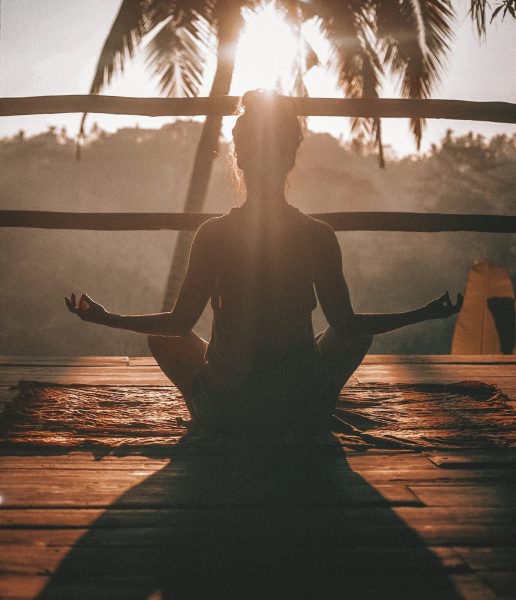
Summer is a season of fire, movement, and brilliant, expansive energy. The days are long, the world feels alive, and yet, for many of us, this outward surge can lead to a feeling of inner imbalance. We might experience restlessness, irritability, a scattered mind, or difficulty sleeping—the classic signs of “internal heat” in Traditional Chinese Medicine (TCM). While we often seek to cool down with external remedies like cold drinks or air conditioning, the most profound relief comes from cultivating a cool, calm center within ourselves. This is where the ancient practice of Qigong meditation becomes a perfect summer companion, offering a way to harmonize our internal climate with the external season.
- Why Summer is the Ideal Time for Qigong Meditation
- Preparing Your Space and Mind for Practice
- Meditation 1: The Cooling Breath of the North Wind
- Meditation 2: The Inner Smile to the Heart
- Meditation 3: The Crystal Lake Visualization
- Integrating These Practices into Your Summer Rhythm
- Beyond the Sitting: Carrying Coolness into Your Day
Why Summer is the Ideal Time for Qigong Meditation
In the Five Element theory of Chinese medicine, summer corresponds to the Fire element. The Fire element governs the Heart and Small Intestine meridians, and its emotional quality is Joy. When balanced, we feel connected, inspired, and full of healthy enthusiasm. When out of balance, the Fire can become excessive, leading to anxiety, mania, insomnia, and a feeling of being “burned out.” The goal of a summer wellness practice isn’t to extinguish this fire, but to tend to it wisely—keeping it warm and nourishing, not raging and consuming.
Qigong, which translates to “life energy cultivation,” uses gentle movements, breathing techniques, and focused intention to guide and balance our Qi (vital energy). A sitting Qigong meditation is particularly suited for the summer because it is a practice of stillness within motion. It doesn’t add more heat or agitation to the system. Instead, it gathers scattered energy, cools the mind, and nourishes the Heart, allowing us to enjoy the vibrancy of summer without being overwhelmed by it. It’s about finding the cool, deep lake of calm that exists even on the hottest day.
Preparing Your Space and Mind for Practice
Before you begin any of the meditations below, take a few moments to create a supportive environment. You don’t need a perfect, silent room—just a space where you can be undisturbed for 10-20 minutes. In the summer, practice during the cooler parts of the day: early morning or evening is ideal. Face away from direct sunlight. You may want to open a window to allow a gentle breeze, or simply imagine a cool, shaded grove in your mind.
Sit comfortably on a cushion on the floor or in a chair with your feet flat on the ground. The key is to have your spine tall but not rigid, as if a string is gently pulling the crown of your head toward the sky. Rest your hands on your thighs, palms down to ground your energy, or palms up to receive and circulate it. Close your eyes softly, or let your gaze fall to the ground a few feet in front of you. Take three slow, deep breaths: inhale through the nose, filling your belly, and exhale through the mouth, releasing any tension or anticipation.
Meditation 1: The Cooling Breath of the North Wind
This first meditation is a direct and powerful way to use the breath to cool the body and calm the mind. It’s based on the principle that our intention (Yi) guides our energy (Qi). By imagining cool energy, we can invite it into our system.
The Practice:
- Inhale slowly through your nose for a count of four. As you do, visualize drawing in cool, clear air from a snowy mountain peak or a deep, shaded forest. Imagine this coolness entering through your nostrils and flowing directly down to your lower abdomen, the area known as the Lower Dantian (about three finger-widths below your navel).
- Hold the breath gently for a count of two, allowing the cool energy to gather and condense in your Lower Dantian.
- Exhale slowly through your mouth for a count of six, as if you are gently blowing on a cup of hot tea to cool it. As you exhale, visualize any heat, agitation, or red energy leaving your body from the crown of your head and the soles of your feet, dissolving into the ground.
- Repeat this cycle for 5-10 minutes. As you become more comfortable, let go of the counting and simply focus on the feeling of coolness gathering on the inhale and heat releasing on the exhale.
“In summer, the sage nourishes the Heart and restrains joy. They do not overtax the body or mind, allowing the Qi to remain stable and the Spirit to be calm.”
— Huangdi Neijing (The Yellow Emperor’s Classic of Internal Medicine)
Meditation 2: The Inner Smile to the Heart
The “Inner Smile” is a foundational Taoist meditation that uses the power of gentle, loving attention to nourish our organs. In summer, we focus this smile on the Heart, the emperor of the Fire element. This practice doesn’t just cool; it transforms heat into radiant, joyful warmth.
The Practice:
- After settling into your sitting position, bring a genuine, soft smile to your lips. Feel the relaxation this creates in your face.
- Now, imagine gathering this smile into a point of warm, golden light in the center of your forehead, between your eyebrows. This is your “Mind’s Eye.”
- Let this smiling, golden light begin to flow downward. Guide it gently down through your face, relaxing your jaw, your tongue resting softly on the roof of your mouth. Feel it flow down your throat and into your chest, directly into your Heart.
- Visualize your heart as a radiant, glowing ember—not a blazing fire, but a steady, warm, and nourishing light. With each inhale, imagine the golden smile-light feeding this ember, making it glow a little brighter and more beautifully. With each exhale, imagine the heart radiating this gentle, joyful warmth throughout your entire body, like sunlight filtering through water.
- Stay here for as long as you like, simply basking in the feeling of a smiling, happy heart. If your mind wanders, gently guide it back with the image of the smile.
Meditation 3: The Crystal Lake Visualization
This meditation is about cultivating a profound state of mental clarity and stillness. When the mind is agitated, it’s like a muddy, churning pond. This practice helps all the sediment settle, revealing the clear, reflective nature of the mind beneath.
The Practice:
Begin by focusing on your breath, simply observing its natural rhythm without trying to change it. Once you feel settled, bring to mind the image of a mountain lake on a perfectly still summer evening. The water is deep, clear, and cool. The surface is so calm it acts like a perfect mirror, reflecting the sky, the mountains, and the trees with flawless clarity.
Now, gently shift your awareness to the center of your chest, your Heart center. Imagine that this same crystal-clear, cool lake exists right there, within you. This is the lake of your mind. For a few moments, just sit with this image. Notice its stillness, its depth, its perfect clarity.
Inevitably, thoughts will arise—a ripple on the surface of your lake. This is not a problem. Do not fight the thought or try to push it away. Simply observe it as you would a leaf falling onto the surface of the water. Watch it touch the surface, create a gentle ripple, and then… watch the ripple naturally expand and fade. Watch as the surface returns, all on its own, to perfect stillness. Do this with each thought, each feeling, each sensation. Your only task is to be the silent observer of the lake, knowing that its true nature is always calm and clear beneath the temporary ripples.
Integrating These Practices into Your Summer Rhythm
Consistency is more important than duration. It is far better to practice for 10 minutes every day than for one hour once a week. The key is to weave these moments of cool awareness into the fabric of your day. You can practice in the morning to set a calm tone, during a lunch break to reset from work stress, or in the evening to prepare for restful sleep.
Here is a simple way to think about which meditation to use and when:
| Meditation | Primary Benefit | Best For | Ideal Time |
|---|---|---|---|
| Cooling Breath | Directly reduces physical and mental heat | When you feel overheated, irritable, or have a headache | Mid-day, after being in the sun, or during a stressful moment |
| Inner Smile to the Heart | Nourishes joy, cools agitation, promotes connection | When you feel anxious, disconnected, or emotionally overwhelmed | Morning or evening for emotional balance |
| Crystal Lake | Cultivates deep mental clarity and stillness | When your mind is racing, you can’t focus, or before sleep | Evening to wind down, or anytime you need profound calm |
Remember, the goal is not to achieve a perfectly empty mind, but to cultivate a relationship with the stillness that is already there. Like learning to swim, it takes practice to feel comfortable resting in the depths of your own awareness. Be patient and kind with yourself.
Beyond the Sitting: Carrying Coolness into Your Day
The real power of these practices is revealed when you carry their essence with you. After your sitting meditation, you might notice you feel a little more spacious, a little less reactive. Try to bring that feeling into your next activity.
When you feel a surge of summer heat or frustration while stuck in traffic or in a crowded store, you can do a “micro-practice.” Simply place your tongue on the roof of your mouth, take one conscious breath, and recall the image of the cooling breath or the still lake for just five seconds. This small act can reset your entire nervous system.
Additionally, support your meditation practice with lifestyle choices that honor the Fire element. Eat cooling, hydrating foods like watermelon, cucumber, mung beans, and leafy greens. Avoid excessive spicy, greasy, or heavy foods that add to internal heat. Seek shade, wear light, natural fabrics, and allow for rest during the hottest part of the day. Your sitting practice is the anchor; these other habits are the supportive currents that make the journey smoother.
Common Questions
How long should I practice each summer qigong meditation?
Start with just 5-10 minutes per session. The quality of your attention is far more important than the quantity of time. It’s better to sit for 5 minutes with gentle focus than to sit for 30 minutes while your mind is elsewhere. As the practice becomes more familiar, you may naturally feel inclined to extend your sessions to 15 or 20 minutes. Listen to your body and your schedule—consistency is the true measure of progress.
Can I practice these qigong meditations if I have no prior experience?
Absolutely! These meditations are designed to be accessible to everyone, regardless of experience. They are based on simple, natural principles of breathing and visualization. The most important prerequisite is a willingness to be patient and curious. There is no “perfect” way to do it. If you find your mind wandering constantly, that’s normal—each time you gently guide it back, you are strengthening your mindfulness muscle. That is the practice itself.
I feel more energized than restless in summer. Are these meditations still for me?
Yes, and perhaps even more so! Healthy summer energy is a wonderful thing. The Fire element in balance is pure joy and connection. These practices aren’t about shutting down that energy, but about refining and containing it. Think of it like the difference between a wildfire and a well-tended campfire. The Crystal Lake meditation, for example, can help channel your vibrant energy into clear, focused action, preventing it from becoming scattered or overwhelming. The Inner Smile can help you connect more deeply with the joy you’re already feeling, making it more sustainable and radiant.
The bottom line: Summer’s fiery energy is a gift of vitality, but it requires mindful balance to prevent it from tipping into agitation and burnout. By incorporating simple sitting qigong meditations like the Cooling Breath, the Inner Smile to the Heart, and the Crystal Lake visualization into your routine, you can cultivate an inner oasis of coolness, clarity, and joy. These practices empower you to harmonize with the season, embracing its light and warmth while resting in the deep, still center of your own being.
This article is for educational purposes and reflects traditional wellness perspectives. It is not a substitute for professional medical advice, diagnosis, or treatment.