Summer arrives with a brilliant, beautiful intensity. The days stretch long, the garden explodes with color, and the social calendar fills with barbecues, weddings, and late-night conversations under the stars. It’s a season of joy, expansion, and outward energy. Yet, for many of us, this same vibrant energy can become overwhelming. The heat, the relentless pace, the pressure to “make the most of it”—it can leave us feeling frazzled, irritable, and mentally sunburned. In Traditional Chinese Medicine (TCM), this is understood not as a personal failing, but as a seasonal imbalance. The heart, considered the “Emperor” of our internal kingdom, is most active in summer. When the external heat stokes our internal fire too fiercely, it can manifest as anxiety, insomnia, and a scattered, restless mind.
Understanding the Heart’s “Fire” in Summer
In the elegant system of TCM, the Heart belongs to the Fire element, which governs the summer season. Its job is to house our Shen—our spirit, consciousness, and emotional clarity. When the Heart is balanced, we feel joyful, connected, and mentally clear. But when summer’s heat is excessive, it can inflame this internal fire. Think of your mind like a beautiful, still pond. A balanced summer sun warms it gently, supporting life and vitality. But a scorching, relentless sun boils the water, creating chaos, steam, and agitation. That’s what happens when Heart Fire flares up.
I remember one particularly brutal July in my early twenties. I was living in a tiny apartment, working a stressful job, and trying to keep up with a frantic social schedule. My sleep was terrible, I’d snap at loved ones over nothing, and my mind felt like a browser with 50 tabs open, all buffering. My mother, who always had a quiet wisdom, didn’t lecture me. She simply started making a cooling chrysanthemum and goji berry tea every evening and suggested I sit with her for five minutes before bed, just breathing. “Your heart is too hot,” she said simply. “We need to open the gate and let the heat out.” That was my first, unspoken introduction to the concept of the Heart Gate.
“The Heart is the sovereign of all organs and the residence of the Shen (Spirit). When the sovereign is calm, the people (other organs) are content.”
— Huangdi Neijing (The Yellow Emperor’s Classic of Internal Medicine)
The “gate” she referred to is a beautiful metaphor. In TCM, the body is seen as a landscape of energy pathways and points. The idea of “opening the Heart Gate” isn’t about a single physical location, but about creating a pathway for stagnant, overheated energy to disperse, allowing cool, calm energy to flow in. This 5-minute meditation is your key to that gate. It’s a practice of cooling the mind by connecting with the heart’s own natural, calming rhythm.
The Science of Stillness: How This Meditation Works
While the TCM framework is poetic, modern neuroscience provides a compelling parallel. When we’re stressed or overheated, our sympathetic nervous system (the “fight-or-flight” response) is dominant. Our heart rate increases, cortisol flows, and our prefrontal cortex—the part of the brain responsible for calm decision-making—goes offline. This meditation is a direct intervention.
The practice combines two powerful techniques: focused attention and rhythmic breathing. By placing your attention on the physical heart center and coordinating it with a slow, 4-4-4 breath cycle, you actively stimulate the vagus nerve. This is the main highway of the parasympathetic nervous system, the “rest-and-digest” counterpart. Stimulating the vagus nerve sends a clear signal to your brain: “We are safe. Stand down.” This lowers heart rate, reduces cortisol, and increases Heart Rate Variability (HRV), a key marker of resilience and calm.
Think of it as a manual override for your frazzled nervous system. In just five minutes, you can shift from a state of reactive heat to one of responsive cool. The table below illustrates the shift you’re creating.
| State | Body Sensation | Mind State | Heart Rate Variability (HRV) |
|---|---|---|---|
| Overheated/Agitated | Tight chest, shallow breathing, flushed skin | Racing thoughts, irritability, scattered focus | Low |
| Heart Gate Meditation | Slow, deep breaths, relaxed shoulders, steady pulse | Present, calm, clear, spacious | High |
Preparing Your Space & Mind for the Practice
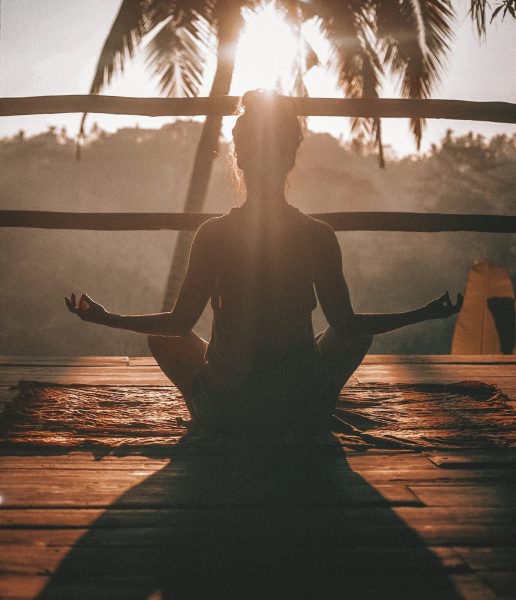
The beauty of this meditation is its simplicity. You don’t need a special cushion or a silent retreat. You can do it at your desk, in a parked car, or on a park bench. The key is intention. Take 30 seconds to prepare.
- Posture: Sit comfortably, but upright. Feel your feet flat on the floor and the crown of your head reaching gently toward the sky. Imagine a string pulling you up from the sternum, creating space in your chest for the heart to “breathe.”
- Set a Timer: Use your phone for a gentle 5-minute timer. This frees you from clock-watching.
- Optional Cooling Support: In true TCM style, enhance the practice. Before you begin, place a drop of peppermint essential oil on your palms, rub them together, and cup your hands over your nose for three deep breaths. The cool scent of mint is a direct antidote to heat in TCM.
- Internal Posture: Let go of the goal to “achieve” calm. Instead, adopt a mindset of gentle curiosity. You are simply observing the natural rhythm of your own heart and breath.
My grandmother had a saying: “You can’t force a flower to bloom; you can only provide the right conditions.” The same is true for calm. We’re not forcing stillness; we’re creating the conditions for it to arise naturally.
The 5-Minute ‘Heart Gate’ Meditation: Step-by-Step
Follow these steps slowly. There is no rush. The goal is to move with deliberate, soothing attention.
Minutes 1-2: Arrival and Grounding
Close your eyes. Take three deep, sighing breaths—inhale through the nose, exhale fully through the mouth with an audible “haaaa” sound. Let go of whatever you were just doing. Now, bring your full attention to the soles of your feet. Feel the contact with the floor. Imagine roots growing down from your feet into the cool, stable earth. This grounding is essential; it prevents the cooling energy from just floating away.
Minutes 3-4: Connecting to the Heart Center

Gently shift your attention from your feet to the center of your chest. This is your Heart Gate. Don’t strain or visualize anything complex. Simply feel the area. Notice the subtle rise and fall of your chest with each breath. If your mind wanders (and it will), gently guide it back with kindness, as you would guide a distracted puppy.
Now, begin to synchronize your breath with a silent count. Inhale through your nose for a slow count of 4. Hold the breath gently for a count of 4. Exhale slowly and completely through your nose for a count of 4. This 4-4-4 ratio is key. The hold allows the nervous system to reset; the slow exhale is the primary trigger for the relaxation response.
Minute 5: Cultivating the Cool
As you continue this rhythmic breathing, introduce a subtle visualization. On each inhale, imagine breathing in a cool, soothing light—like the color of a clear winter sky or a deep blue lake. On each exhale, imagine breathing out any heat, frustration, or mental static as a warm, grey mist. You are literally cooling the heart center with each cycle. Don’t force the image; let it arise naturally. If the color doesn’t come, just focus on the sensation of cool air entering and warm air leaving.
Chat with Me, our AI wellness guide — get personalized TCM advice instantly.
When your timer sounds, don’t jolt back to activity. Wiggle your fingers and toes. Take one more natural breath. Open your eyes slowly. Notice the quality of the silence in your mind. Carry this small pocket of stillness with you into your next activity.
Integrating Heart Gate Cooling into Your Summer Days
A 5-minute practice is powerful, but its effects multiply when woven into the fabric of your day. Here are specific ways to use this technique as a summer wellness tool:
- The Pre-Meeting Reset: Before a high-stakes Zoom call or a crowded party, take 2 minutes at your desk to do the core breathing (4-4-4) while focusing on your heart center. It’s like putting on an internal cooling vest.
- The Irritation Interrupter: Feel a flare of road rage or supermarket frustration? Instead of reacting, grip the steering wheel or cart handle and do 5 cycles of 4-4-4 breath, focusing on releasing heat on the exhale. You’ll respond from clarity, not reactivity.
- The Midday Heat Break: At 2 PM, when the sun is blazing and energy slumps, sit in a shady spot. Drink a glass of room-temperature water with a slice of cucumber. Then, do the full 5-minute meditation. It’s a far more effective pick-me-up than a sugary iced coffee, which can further agitate Heart Fire.
- The Sleep Gateway: Do this meditation in bed, lying down, as the last thing before sleep. Replace the “cool light” visualization with the image of a gentle, full moon. It signals to your body that the day’s fire is done.
The goal is to move from practicing the meditation to embodying its principle: the conscious, gentle cooling of your inner climate.
Complementary Cooling: Herbs & Foods to Support the Practice
In TCM, we always support mental and emotional practices with dietary wisdom. You wouldn’t try to cool a pot of boiling water without also turning down the stove. These are the “turn down the stove” foods and herbs for your Heart Fire:
- Drink: Chrysanthemum Tea (Ju Hua). Brew 5-6 dried flowers in a cup of hot water for 5 minutes. It’s a premier heat-clearing herb for the head and eyes. Sip it cool or at room temperature. Add 5-6 goji berries (Gou Qi Zi) for a boost of nourishing Yin.
- Eat: Bitter Melon (Ku Gua). This is the most potent cooling vegetable in the TCM pantry. Sauté thin slices with a little egg and fermented black beans. Its bitter flavor directly drains Heart Fire.
- Snack: Mung Bean Soup (Lü Dou Tang). A classic summer remedy. Simmer ½ cup of mung beans with 6 cups of water until soft (about 40 minutes). Sweeten lightly with rock sugar. Eat it warm or chilled. It clears heat from the blood and calms the spirit.
- Avoid: Excess spicy foods (chili, ginger in large amounts), grilled meats, fried foods, and excessive alcohol. These are all “hot” in nature and will fan the flames you’re trying to cool.
Common Questions
I can’t feel my heart center. What am I doing wrong?
You’re not doing anything wrong! The “heart center” is a felt sense, not a precise anatomical point. If you can’t feel it, simply place your physical hand over the center of your chest (sternum). Use the warmth and pressure of your hand as your anchor. The feeling will develop with practice. Some days it’s more subtle than others—just like the weather.
Can I do this meditation more than once a day?
Absolutely. Think of it as a tool, not a rigid prescription. On days when the heat is intense—whether from the weather, a difficult conversation, or a deadline—do it as often as you feel the need. Three times a day (morning, midday, evening) is perfectly beneficial. The 4-4-4 breath pattern is especially safe and effective for frequent use.
Is this only for summer?
While it’s perfectly tailored for summer’s Fire element, the practice of calming the mind and heart is universal. You can adapt the visualization for other seasons. In winter, imagine breathing in warm, golden light. In spring or autumn, imagine a gentle, balancing green light. The core mechanism—the focused attention and rhythmic breath—works year-round to manage stress and anxiety.
The bottom line: When summer’s vibrant energy tips into overwhelm, the 5-minute Heart Gate meditation is your portable oasis. It’s not about escaping the heat, but transforming your relationship to it. By synchronizing breath and attention, you directly cool the mind, soothe the spirit, and restore the heart’s natural clarity—anywhere, anytime. Pair it with cooling foods like chrysanthemum tea and mung beans, and you have a complete, actionable toolkit for navigating the season with grace and stillness.
This article is for educational purposes and reflects traditional wellness perspectives. It is not a substitute for professional medical advice, diagnosis, or treatment.