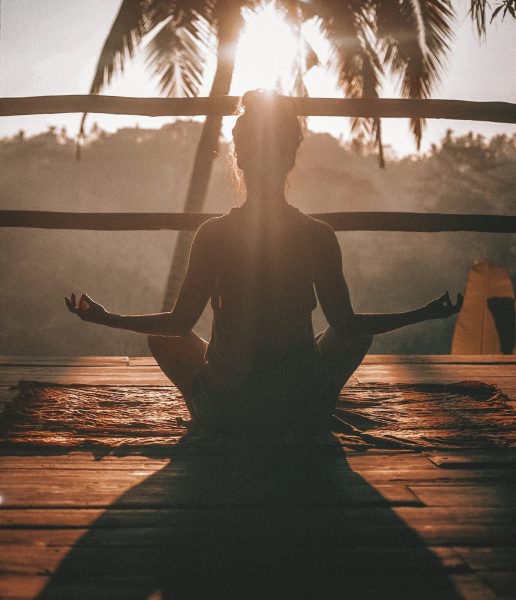
As the summer heat settles in, a familiar urge begins to build: the desire to do something. We feel the long days and bright sun as a call to action—plan the trip, host the barbecue, tackle the big project. But in Traditional Chinese Medicine (TCM), summer is a season of paradox. It is a time of maximum yang energy, of outward growth and fiery activity, yet it is precisely here that we must learn the art of inward rest. The ancient Taoist concept of wu wei—often translated as “non-action” or “effortless action”—offers us a profound summer meditation practice. This isn’t about laziness; it’s about aligning with nature’s rhythm. Think of a lotus flower: it blooms fully in the summer sun, yet its roots are anchored in cool, still water. This article is your guide to finding that same balance—how to practice wu wei meditation in summer, not by adding another task, but by mastering the sublime art of doing nothing with intention.
- What Exactly Is Wu Wei? (It's Not What You Think)
- The Summer Body-Mind: Why "Doing Nothing" Is Harder (and More Important) Now
- How to Practice Wu Wei Meditation: A Concrete Summer Guide
- The Summer Wu Wei Toolkit: Herbs, Foods, and Sensory Anchors
- When "Doing Nothing" Feels Impossible: Troubleshooting Your Practice
- Integrating Wu Wei: From Formal Practice to a Way of Living
What Exactly Is Wu Wei? (It’s Not What You Think)
Let’s start by clearing up the biggest misunderstanding. Wu wei (pronounced “woo-way”) does not mean being passive or lazy. The characters translate to “without” (wu) and “action” (wei), but the meaning is closer to “without forcing” or “without struggle.” It’s the principle of the Tao Te Ching: “The Tao does nothing, yet leaves nothing undone.” My grandmother, who grew up in a village near Hangzhou, explained it to me through water. “Watch the creek behind the house,” she’d say. “It never pushes the rock, yet over time, the rock moves. That is wu wei.” In summer, this means not fighting the heat, not pushing against the season’s natural expansion, but flowing with it. Your meditation practice isn’t about sitting still for 30 minutes despite the sweat on your brow; it’s about finding the effortless stillness that the season itself invites.
In TCM, summer corresponds to the Fire element and the heart organ system. It’s a time of joy, connection, and outward expression. But too much fire—literal and metaphorical—can lead to agitation, insomnia, and anxiety. Wu wei meditation in summer is the antidote. It’s the practice of cooling the heart, quieting the mind, and allowing your energy to circulate without force. Imagine your mind as a bustling summer festival. Wu wei is not about shutting down the festival, but about finding the quiet bench under the willow tree from which to observe the joyful chaos without getting swept up in it.
The Summer Body-Mind: Why “Doing Nothing” Is Harder (and More Important) Now
Summer’s yang energy is a double-edged sword. On one hand, we feel more social, energetic, and expansive. On the other, this outward momentum can drain our inner reserves. In TCM, the Heart (capitalized to denote the energetic system) is considered the “Emperor” of the body, housing the shen (our spirit or consciousness). A happy Heart leads to joy and calm. An overstimulated Heart leads to restlessness, vivid dreams, and a feeling of being “wired but tired.” The summer heat itself can directly agitate the Heart, leading to what we call “Heart Fire.”
This is why the simple act of doing nothing becomes a powerful medicinal practice. When you consciously choose stillness, you are not being unproductive. You are performing an act of profound self-care: you are giving your Heart a cool, quiet respite. You are allowing your qi (your vital energy) to gather and consolidate instead of being constantly scattered into the external world. It’s like taking your car out of overdrive on a hot day and letting the engine idle—it prevents overheating and preserves your fuel for the journey ahead.
How to Practice Wu Wei Meditation: A Concrete Summer Guide
This is not a formal, sit-on-a-cushion practice (unless you want it to be). The beauty of wu wei meditation is that it can be woven into the very fabric of your summer days. Here’s how to start, with specific, actionable steps you can take today.
- The 5-Minute Porch Sit: Choose a time between 1-3 PM, when the summer yang energy is at its peak. Sit on your porch, balcony, or even by an open window. Set a timer for 5 minutes. Your only task is to observe. Don’t try to clear your mind. Just watch the leaves move, listen to the birds, feel the air. If thoughts come, imagine them as clouds drifting across the sky of your awareness. Do this daily for a week.
- The Water Gazing Practice: Find a body of water—a bowl, a birdbath, a fountain, or even a glass of water held in your hands. Spend 3 minutes simply watching the surface. Notice how it reflects, how it moves with the slightest breath. Water is the element that balances Fire in the Five Element cycle. This practice directly soothes the Heart.
- The “No-Plan” Afternoon: Once a week, block off 2 hours on your weekend calendar. Label it “Wu Wei Time.” The rule: you have no agenda. You cannot work, clean, or scroll. You might end up reading a novel, taking a slow walk with no destination, or just lying in the grass. The point is to follow your spontaneous impulse, not a to-do list.
“The greatest skill is not in doing, but in allowing. The river does not push the water to the sea; it simply creates the path and lets gravity do the rest.”
The Summer Wu Wei Toolkit: Herbs, Foods, and Sensory Anchors
To support your practice of effortless action, lean on the cooling, calming gifts of the season. These are not generic tips; they are specific tools to help you embody wu wei.
Cooling Herbal Allies:
Instead of iced coffee (which can be taxing on the system), try these traditional cooling teas:
- Chrysanthemum Tea (Ju Hua): Brew 8-10 dried flowers in a cup of hot water for 5 minutes. It clears Heat from the Liver and brightens the eyes, perfect for screen fatigue. Sweeten with a touch of rock sugar or a goji berry.
- Lotus Leaf Tea (He Ye): Use 1-2 grams of dried leaf per cup. It’s mildly astringent and helps clear summer dampness, making you feel lighter. My aunt would make a big pitcher of this to sip throughout the day.
- Mint Tea (Bo He): Steep a handful of fresh mint leaves in cold water overnight in the fridge for a supremely refreshing infusion. Mint is a classic “exterior releasing” herb that clears heat from the upper body and head.
Nourishing Summer Foods (The “Do Nothing” Diet):
Favor foods that are easy to digest and require minimal cooking, aligning with the “effortless” theme.
| Food Category | Specific Examples | Why It Supports Wu Wei |
|---|---|---|
| Cooling Fruits | Watermelon (eat the white rind too!), cucumber, pear, peach | Hydrate and clear Heat directly from the Stomach and Heart. |
| Bitter Greens | Dandelion greens, arugula, endive, bitter melon (kǔ guā) | The bitter flavor drains Heart Fire. Sauté briefly with garlic or add to salads. |
| Light Soups | Mung bean soup (lǜ dòu tāng), winter melon soup with shiitake | Provide deep hydration and clear summer dampness without taxing digestion. |
| Sprouts & Shoots | Bean sprouts, pea shoots, sunflower sprouts | Represent new, gentle growth. Easy to digest and full of life force. |

When “Doing Nothing” Feels Impossible: Troubleshooting Your Practice
If your mind races the moment you try to sit still, or guilt whispers that you should be “productive,” you are not failing. This is the practice itself. Here’s how to navigate common obstacles:
Obstacle 1: The Racing Mind. Your brain is used to being in summer’s “go” mode. Don’t fight the thoughts. Instead, give them a gentle job. Try the “Cloud Labeling” technique: As a thought arises, softly label it—”planning,” “remembering,” “worrying”—and then imagine it written on a cloud that drifts across your mental sky. You are the sky, vast and unchanging; the thoughts are just weather passing through.
Obstacle 2: The Guilt of Rest. We live in a culture that glorifies busyness. Reframe your wu wei time as essential maintenance. You are not being lazy; you are actively cooling your Heart system, preventing burnout, and cultivating the calm clarity that will make your active hours more focused and joyful. My grandmother would say, “Even the busiest farmer rests at noon in July. The fields do not grow faster if he stands over them.”
Obstacle 3: Physical Discomfort from Heat. If it’s simply too hot to sit, bring your practice into water. Lie in a cool bath with a few drops of lavender or mint essential oil. Or, practice the Listening to Rain meditation: Sit in a comfortable chair with your feet in a basin of cool water. Close your eyes and listen to the sound of a rainstorm recording (or real rain!). The combination of cool water on the feet and the sound of rain is a powerful TCM method for draining Heart Fire.
Integrating Wu Wei: From Formal Practice to a Way of Living
The ultimate goal is not to have a “wu wei meditation session,” but to cultivate a wu wei summer. This means infusing the principle of effortless action into all your activities. When you eat, chew slowly and taste each bite, rather than rushing. When you walk, let your pace be dictated by your breath and the scenery, not by a fitness app. When a plan falls through, see it not as a failure but as an opening—a chance for the universe to rearrange something better.
Start a simple “Wu Wei Journal.” At the end of each day, jot down one moment where you allowed things to unfold instead of forcing them. It could be as small as taking a detour that led to a beautiful view, or as significant as letting go of a argument. This practice builds your awareness muscle, showing you that the most graceful outcomes often arise from a place of non-struggle.
Remember, wu wei is not about inaction. It is about intelligent, timely action that arises from a place of deep calm and alignment. The archer who practices wu wei does not force the arrow to hit the target; she perfects her stance, her breath, and her release, and then lets the arrow find its own path. This summer, your practice is to perfect your inner stance—cool, calm, and connected—so that when you do act, it is with the power and grace of nature itself.
Common Questions
Isn’t “doing nothing” just being lazy or unproductive?
This is the most common misconception. In the context of wu wei and summer wellness, “doing nothing” is a conscious, strategic pause. It is the difference between a phone that is off (lazy) and a phone that is in airplane mode, preserving its battery for essential functions (wu wei). Productivity culture values output. Wu wei values alignment and sustainability. By resting, you are actively preventing burnout, enhancing creativity, and ensuring that when you do act, your energy is clear and potent. It is the ultimate form of self-care and efficiency.
How is this different from mindfulness or standard meditation?
Mindfulness meditation often involves focused attention on the breath or a mantra. It is a beautiful practice of concentration. Wu wei meditation is a practice of release. The goal is not to control the mind, but to let go of the need to control anything. It is more passive, more observant. If mindfulness is gently guiding a river into a channel, wu wei is sitting on the riverbank and watching it flow where it will. Both have immense value, but wu wei is particularly suited to the summer season, teaching us to match the expansive, flowing nature of the Fire element.
I only have 10 minutes a day. Can I still practice this?
Absolutely. In fact, wu wei is perfect for short windows of time. The 5-Minute Porch Sit mentioned earlier is a perfect start. You can also practice micro-wu wei moments: for 60 seconds after turning on your computer, just sit and breathe. While waiting for the kettle to boil, watch the steam instead of picking up your phone. The practice is about quality of attention, not duration. One minute of truly letting go and observing is more powerful than 30 minutes of restless, guilty “trying to meditate.”
The bottom line: This summer, true meditation isn’t about adding another disciplined task to your list. It’s about embracing the profound wisdom of wu wei—effortless action. By practicing specific, cooling rituals like herbal teas, water gazing, and unplanned time, you align with the season’s Fire energy without getting burned. You learn to cool your Heart, quiet your mind, and discover that the deepest strength and clarity come not from pushing harder, but from knowing when—and how—to simply, gracefully, do nothing.
This article is for educational purposes and reflects traditional wellness perspectives. It is not a substitute for professional medical advice, diagnosis, or treatment.