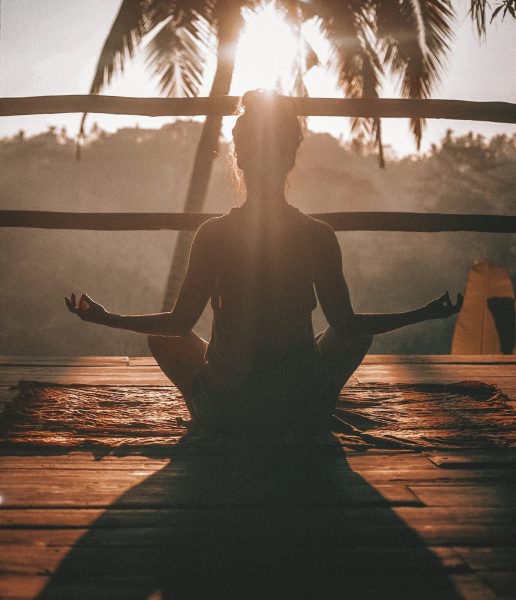
There is a particular kind of silence that only exists in the high heat of a summer afternoon. The birds have quieted, the neighborhood is still, and even the breeze seems to hold its breath. In our modern world, we often fight this stillness with air conditioning and endless activity. But in traditional Chinese philosophy, this moment is not something to escape—it is something to join. The practice of ‘Sitting with the Heat’ is a profound, ancient form of summer meditation that teaches us to align our inner temperature with the outer world, transforming summer’s intensity into a source of deep calm and clarity.
- The Wisdom of 'Ru Jing': Entering the Stillness
- Why Heat Meditation is Counterintuitively Cooling
- How to Practice: A Step-by-Step Guide to Summer Sitting
- The Summer Sitter's Toolkit: What to Have Nearby
- Beyond Sitting: Integrating Summer Stillness into Your Day
- A Quick-Reference Guide to Your Summer Meditation Practice
The Wisdom of ‘Ru Jing’: Entering the Stillness
In Chinese wellness, summer is the season of Fire. It’s a time of maximum Yang energy—expansive, bright, and outward. Our minds naturally follow suit, buzzing with plans and activity. The practice of ‘Sitting with the Heat’ is rooted in the concept of Ru Jing (入静), which translates to ‘entering stillness.’ It’s not about forcing the mind to be quiet; it’s about allowing the body’s energy to settle so profoundly that the mind has no choice but to follow. Think of it as becoming like the deep, cool earth beneath the sun-baked surface. While the top layer is hot, just a few inches down, the ground is cool and stable. Your practice is to access that cool, stable layer within yourself.
My grandfather, a practitioner of Tai Chi, would sit on a simple wooden stool on the porch every afternoon in July and August, regardless of the thermometer. He called it “chi xu jing”—waiting for the quiet. He’d say, “The heat is the world’s busy breath. You must find your own breath within it.” This wasn’t passive sweating; it was an active engagement with the season’s energy.
Why Heat Meditation is Counterintuitively Cooling
Our instinct is to blast the AC, drink icy drinks, and retreat indoors. But traditional practice suggests that constantly fighting the external environment creates internal friction. When you sit with the heat, you stop fighting. You allow your pores to open (a process TCM calls releasing the exterior), your internal heat to rise to the surface and dissipate, and your Qi (vital energy) to flow without obstruction. This process is profoundly cooling in the long run because it prevents the stagnation and irritability that comes from suppressing our natural response to the season.
A study published in the International Journal of Biometeorology found that individuals who engaged in short, mindful exposure to heat (like sitting in a warm room for 15 minutes) reported lower subjective stress levels and a quicker physiological return to baseline temperatures afterward, compared to those who immediately sought cooling. The body, when given the signal, becomes a more efficient thermostat.
“Summer is the time to nourish the Heart. The Heart is the Emperor of the body, and it loves clarity and calm. Sitting with the heat is how you bow to the Emperor.”
— Adapted from the Huangdi Neijing (The Yellow Emperor’s Classic of Internal Medicine)
How to Practice: A Step-by-Step Guide to Summer Sitting
This practice is beautifully simple, but its details matter. You don’t need any special equipment, just a willingness to be still and a timer.
1. Choose Your Time and Place: The ideal time is between 11 a.m. and 1 p.m., the period of maximum Yang energy in TCM, which corresponds to the Heart and Small Intestine meridians. Find a safe, shaded spot outdoors—a porch, a bench under a tree, or even a quiet balcony. If you must be indoors, choose a room with natural light and a window you can open slightly to let the summer air in. The key is to be where you can feel the ambient heat without being in direct, scorching sunlight.
2. Set Your Container: Set a timer for 15 minutes. This is your sacred container. Commit to staying still for this entire period. Wear light, breathable clothing—cotton or linen is perfect.
3. The Posture of Yielding: Sit comfortably on a chair, cushion, or even the ground. The posture isn’t rigid; it’s yielding. Feel your weight settling into the earth. Place your hands palms-up on your knees or thighs. This open-palm posture symbolizes receptivity, allowing heat to flow through you rather than getting trapped.
4. The Breath of Steam: Close your eyes gently. Begin to breathe naturally. On your inhale, imagine you are drawing cool, morning mist up from the earth through the soles of your feet. On your exhale, imagine you are releasing any inner tension, frustration, or heat as a wisp of steam that rises from the crown of your head and dissolves into the wide sky. Don’t force this visualization; just let it play in the background of your awareness.
5. The Anchor of Sensation: Your mind will wander. That’s okay. When it does, bring your attention back to a single, physical sensation. The best anchor for this practice is the feeling of your own heartbeat. Place your awareness gently on your pulse point at the wrist or in the center of your chest. Don’t count the beats; just feel the rhythm. This connects you directly to the Heart energy that summer nourishes.
6. Closing Gently: When the timer sounds, don’t jump up. Sit for another minute. Wiggle your fingers and toes. Take a slow sip of room temperature or slightly warm water (more on that below). Open your eyes slowly, allowing the world to come back into focus. Carry the quiet you’ve cultivated into the rest of your afternoon.

The Summer Sitter’s Toolkit: What to Have Nearby
Enhance your practice with these simple, traditional supports. Think of them as gentle allies, not necessities.
- A Thermos of Warm or Room Temperature Water: Sipping warm fluids in the heat is a classic TCM strategy. It gently warms the core, encouraging the body to cool itself through perspiration—a far more efficient cooling mechanism than shocking the system with ice. Add 2-3 slices of fresh ginger or a sprig of mint to your water for a digestive and cooling lift.
- A White Handkerchief: In traditional practice, white is the color associated with the Metal element (Autumn/Lungs), which has a clearing, descending quality. Laying a clean white cloth over your lap can be a symbolic gesture of inviting clarity and letting go of mental clutter.
- A Cooling Herb Satchel: Make a simple sachet with 1 tablespoon of dried chrysanthemum flowers (Ju Hua), 1 tablespoon of mint leaves (Bo He), and 1 tablespoon of honeysuckle flowers (Jin Yin Hua). Tie them in a small muslin bag. Hold it in your hands or place it nearby. These herbs are famous in TCM for clearing summer heat and brightening the eyes and mind. The scent alone is a meditation.
- A Small Bell or Chime: Use its sound to mark the beginning and end of your sitting. The clear tone helps transition your mind into and out of the practice space.
Beyond Sitting: Integrating Summer Stillness into Your Day
The 15-minute sitting is a training ground. The real goal is to carry its essence into your daily life. Here’s how to weave moments of summer stillness into your routine:
The 3-Breath Pause: Before you turn on the AC in your car, sit in the parked car for three slow breaths. Feel the heat. Acknowledge it. Then proceed. This micro-practice prevents the reactive shock to your system.
The Post-Meal Sit: After lunch, instead of scrolling on your phone, sit quietly for 5 minutes. Digestion requires enormous energy. Giving your body undivided stillness aids this process far more than distraction. Place a hand on your stomach and breathe deeply into that space.
The Twilight Transition: The period between 7 p.m. and 9 p.m. is the time of the Pericardium meridian in TCM, which is closely linked to the Heart. This is the perfect time for a gentle, 10-minute seated practice, perhaps with a cup of chrysanthemum and goji berry tea (10 chrysanthemum flowers and 15 goji berries steeped in hot water for 5 minutes). This helps transition your body from the day’s activity to the night’s rest, ensuring the Heart’s fire doesn’t flare into restlessness.
A Quick-Reference Guide to Your Summer Meditation Practice
Use this table to quickly align your practice with summer’s rhythms.
| Element | Summer Association | How to Honor It in Practice |
|---|---|---|
| Energy | Maximum Yang, Fire | Sit during peak Yang (11am-1pm) to harmonize, not fight, the energy. |
| Color | Red | Wear a red thread on your wrist or visualize a warm, soft red glow in your heart center to nourish Heart Qi. |
| Sound | Laughter, Joy | Begin or end your session with a gentle, quiet “ha” sound (the sound of the Heart) to release excess heat. |
| Emotion | Joy (balanced), Anxiety (excess) | If anxious, focus on your exhale, imagining you are releasing the anxious energy as steam. |
| Taste | Bitter | Drink a tea made from dried bitter melon slices (1-2 slices steeped in hot water) before or after sitting to clear heart-fire. |
| Tissue | Blood Vessels | Focus on the feeling of your pulse to connect with the Heart’s governance of the blood. |
Common Questions
Isn’t it dangerous to sit in the heat? What about heatstroke?
This is a crucial distinction. ‘Sitting with the Heat’ is not about endurance or suffering. You should never practice in direct, blazing sun, during a heatwave, or if you have a medical condition that makes you sensitive to heat. The practice is about mindful exposure in a safe, shaded, and ventilated environment for a short, set period (15-20 minutes). It’s about listening to your body. If you feel dizzy, nauseous, or overly uncomfortable, you stop immediately, move to a cooler place, and hydrate. The goal is to build a gentle relationship with heat, not to conquer it.
I live in a very humid climate. Does that change the practice?
Humidity makes the air feel heavier and can make perspiration (our natural cooling mechanism) less effective. In this case, shorten your practice to 10 minutes. Focus even more on the breath visualization, imagining the humid air as a thick, warm mist that you are slowly and patiently moving through your body and out. The principle remains the same: don’t fight the environment. Acknowledge it and find your stillness within it. You might also choose the early morning or late evening when humidity can be slightly lower.
Can I do this practice with my kids?
Absolutely, and it’s a wonderful way to teach them body awareness. Frame it as a game: “Let’s be as still and quiet as a lizard on a warm rock.” Use a much shorter timer—3 to 5 minutes for younger children. Give them a simple anchor, like feeling their belly rise and fall, or listening to the farthest sound they can hear. You can even create a simple ritual with a special “summer sitting stone” they can hold. The goal for them isn’t perfect stillness, but a playful introduction to tuning into their own bodies and the rhythm of the season.
The bottom line: Summer’s heat is not an enemy to be defeated, but a powerful teacher of presence. The ancient practice of ‘Sitting with the Heat’ is a simple, profound way to transform summer’s intensity into inner clarity. By mindfully yielding to the warmth for just 15 minutes a day, you nourish your Heart energy, cool your body more efficiently, and discover a deep, unshakeable stillness that exists even on the hottest afternoon. This summer, don’t just escape the heat—sit with it, and let it reveal your own quiet center.
This article is for educational purposes and reflects traditional wellness perspectives. It is not a substitute for professional medical advice, diagnosis, or treatment.