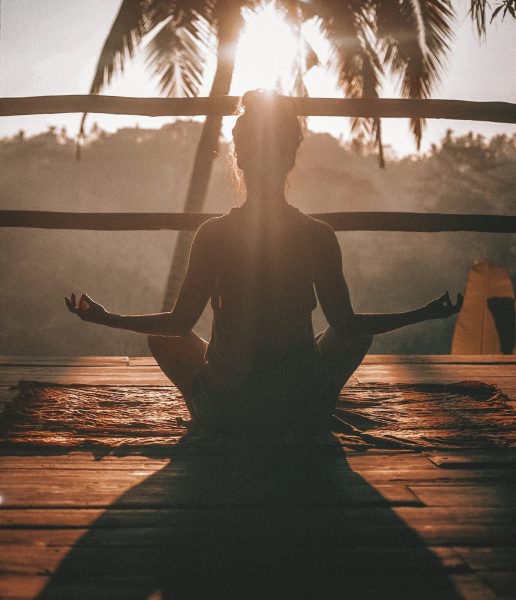
The air is thick, the sun is a heavy blanket, and even the birds seem to be moving in slow motion. Summer, in its full, blazing glory, is a season of maximum yang energy—bright, expansive, and outward. While we often celebrate this with backyard barbecues and long days at the beach, Traditional Chinese Medicine (TCM) teaches us that this outward surge of heat and activity can easily tip into imbalance. We might feel irritable, restless, or mentally scattered. Our sleep can become fitful. This is where the ancient wisdom of adaptation comes in. Instead of fighting the season’s energy, we can learn to walk with it, literally and figuratively, to cool the mind and calm the spirit.
Understanding Summer’s Energy in TCM
In the TCM framework, summer is the season of the Heart and the Small Intestine organ systems. The Heart, known as the “Emperor” of all organs, is considered the seat of our consciousness, our Shen (spirit). When summer’s blazing yang energy is in harmony, the Heart is nourished, and we feel joyful, connected, and socially vibrant. When it’s in excess, however, the Heart becomes “overheated.” This isn’t about your physical heart rate; it’s an energetic heat that manifests as anxiety, insomnia, excessive sweating, a red complexion, and a restless mind that jumps from thought to thought like a monkey.
The goal, then, is not to suppress summer’s energy but to gently guide it. We need practices that are cooling, calming, and centering. This is where a simple, mindful walk becomes a profound medicine. Walking is a gentle, rhythmic movement that doesn’t generate excessive internal heat like a hard run might. When done with intention, it becomes a moving meditation that helps to ground our scattered Shen, circulate Qi (vital energy) without agitating it, and allow the mind to settle like sediment in a still pond.
The Practice: Your 20-Minute Summer Stroll Meditation
This isn’t a hike for exercise or a power walk for errands. It’s a deliberate practice of presence. The best time is in the early morning, before 10 a.m., when the yang energy is rising but not yet at its peak, or in the evening after 5 p.m., as the day’s heat begins to wane. Find a path in a park, a quiet neighborhood street, or even a long hallway. The key is minimal interruption. Commit to 20 minutes. Here’s how to do it, step by step:
- Set Your Intention (1 minute): Stand still at your starting point. Close your eyes and take three slow, deep breaths. On your inhale, imagine drawing in cool, clear air. On your exhale, visualize releasing heat, tension, and mental chatter. Silently set an intention: “For the next 20 minutes, I am here. My only task is to walk and to notice.”
- Begin with Awareness of the Body: Start walking at a natural, unhurried pace—about 60-70% of your normal speed. Bring your awareness to the physical sensations. Feel the heel of your foot connect with the ground, then the ball, then the toes pushing off. Notice the subtle shift of weight from one leg to the other. This is your anchor.
- Engage the Senses in Sequence: After 5 minutes of body awareness, shift your focus to your senses. Spend 3-4 minutes on each:
- Sound: Let your ears open wide. Don’t label sounds as “bird” or “car.” Simply hear the symphony of vibration—near, far, high-pitched, low hum.
- Sight: Soften your gaze. Notice the play of light and shadow on the path. Observe the specific shade of green in a leaf. See without interpreting.
- Touch: Feel the breeze on your skin. Notice the temperature of the air entering your nostrils versus the air leaving. Feel the fabric of your clothes moving with you.
- The Cooling Visualization (5 minutes): This is the core TCM element. As you walk, imagine a cool, silver-blue light—like moonlight or deep, clear water—gathering with each inhale at the crown of your head. As you exhale, visualize this light flowing down through the center of your body, cooling your brain, your chest, your abdomen, and flowing down your legs into the earth. With each step, you are pressing this cool energy gently into the ground, releasing excess heat.
- Return and Integrate (2 minutes): As your walk comes to an end, return your awareness to your breath and your body. Stand still again for a few breaths. Notice how you feel compared to when you started. There’s no need to judge; just observe. Carry this sense of cool, quiet awareness with you as you continue your day.
The Deep Dive: What is Shen and Why Does it Need Cooling?
I mentioned the Shen earlier, but it’s worth understanding this concept more deeply, as it’s central to summer wellness. Think of your Shen as your inner sparkle, your consciousness, your emotional and mental luminosity. A healthy Shen means you have a clear, bright presence in your eyes, a calm mind, and a stable emotional state. It’s the difference between someone who feels “grounded” and someone who feels “scattered.”
The Heart is the home of the Shen. In summer, the Heart’s energy is naturally more active and expanded. This is why we often feel more social and outgoing. However, if we don’t provide balance, this expansion can become like a fire burning out of control. The Shen becomes agitated—it can’t rest. This is the root of that summer insomnia where your mind races at 2 a.m. or the irritability that flares up over tiny things.
The cooling visualization in your walk isn’t just a nice image. It’s a direct technique to nourish the Yin (the cooling, moistening, receptive energy) of the Heart. By imagining cool, fluid energy, you are symbolically and energetically replenishing the coolant for your Heart’s engine. My grandmother used to say, “A calm heart is a cool heart. You can’t hear the world’s music if your own drum is beating too loudly.” This practice is about quieting your own drum so you can hear the subtle rhythms of the season.

Enhancing Your Practice: Herbal and Sensory Allies
You can deepen the cooling effect of your walk by incorporating simple, traditional supports. These are not necessary, but they can transform the experience from a mental exercise into a full sensory immersion.
“The best medicine is found in the garden and on the walking path.”
Pre-Walk Tea Ritual: 20 minutes before your walk, brew a simple cooling tea. Steep 3-4 fresh mint leaves (Bo He) and a thin slice of cucumber in hot water for 5 minutes. Mint has a natural ability to disperse heat and clear the head. Sip it slowly, mindfully. The ritual itself begins to signal to your body and mind that it’s time to shift gears.
Scent as an Anchor: Carry a small bottle of peppermint or spearmint essential oil. Before you begin, place a drop on your palms, rub them together, and cup them over your nose for three breaths. The crisp scent is instantly cooling and focusing. If you smell it again during your walk, it can act as a powerful anchor to bring you back to the present moment.
Touch with Cooling Stones: For a truly grounding touch, hold a smooth, cool stone—like jade, clear quartz, or even a river rock—in your non-dominant hand as you walk. The physical sensation of coolness and weight connects you directly to the earth element, which is profoundly stabilizing when the mind feels like it’s floating away with summer winds.
Integrating the Calm: After the Walk
The practice doesn’t end when you stop walking. How you transition back into your day is crucial for carrying the benefits forward. Avoid immediately jumping into a stressful task or checking your phone. Give yourself a 5-minute buffer.
One powerful way to seal in the cool, calm energy is with a simple acupressure point. The point is called Heart 7 (Shen Men), which translates to “Spirit Gate.” It’s located on the inner wrist crease, in the little finger-side depression, just inside the tendon. Use the thumb of your opposite hand to apply gentle, steady pressure for 1-2 minutes on each wrist. This point is the master key for calming the Shen, relieving anxiety, and promoting restful sleep. It’s like closing the gate to keep the peace inside.
Follow this with a cooling, nourishing food. Watermelon is the classic summer fruit in TCM for a reason—it’s sweet, cold, and directly targets the Heart and Stomach channels to clear heat and generate fluids. Have a small bowl of cubed watermelon, or if you’re feeling creative, blend it with a few mint leaves and a squeeze of lime for a refreshing cooler.
Common Questions
Can I do this walking meditation on a treadmill indoors?
You absolutely can, though the benefits are slightly different. The connection to the earth and natural sensory input (breeze, birdsong, sunlight filtering through leaves) is a powerful component of the practice. If you must use a treadmill, enhance your environment: place a small fan to simulate a breeze, play a recording of nature sounds, and position yourself near a window with a view of greenery. The core elements—slow pace, body awareness, and the cooling visualization—remain effective anywhere.
How often should I do this practice for real benefits?
Consistency is more important than duration. A 20-minute practice done 3-4 times per week will yield more profound results than a single hour-long session once a month. Think of it as regularly cleaning and cooling a delicate instrument—your mind. In the peak of summer, aim for at least twice a week. If you’re feeling particularly agitated or sleep-deprived, increase it to daily practice for a week and observe the shift.
I feel too hot and sweaty to walk in summer. What’s the point?
This is a common and valid concern. The key is adaptation. First, choose your timing carefully—early morning or evening is non-negotiable in hot climates. Second, the goal is not exertion; it’s mindfulness. Walk slowly enough that you don’t build up a sweat. Wear light, loose clothing in natural fabrics like cotton or linen. The paradox of TCM is that by engaging in a gentle, cooling practice, you often end up feeling less bothered by the external heat because you’ve calmed your internal “fire.” The practice helps you build a tolerance and a different relationship with the season’s energy.
The bottom line: Summer’s vibrant energy is a gift, but it requires a counterbalance to prevent the mind from overheating. The Summer Stroll Meditation is a simple, potent, and free practice drawn from TCM principles that directly cools the Heart, calms the Shen, and anchors you in the present moment. By walking with intention, using sensory awareness and cooling visualization, you transform ordinary movement into a profound tool for seasonal wellness. It’s not about escaping the heat, but about finding a cool, clear pool within it.
This article is for educational purposes and reflects traditional wellness perspectives. It is not a substitute for professional medical advice, diagnosis, or treatment.