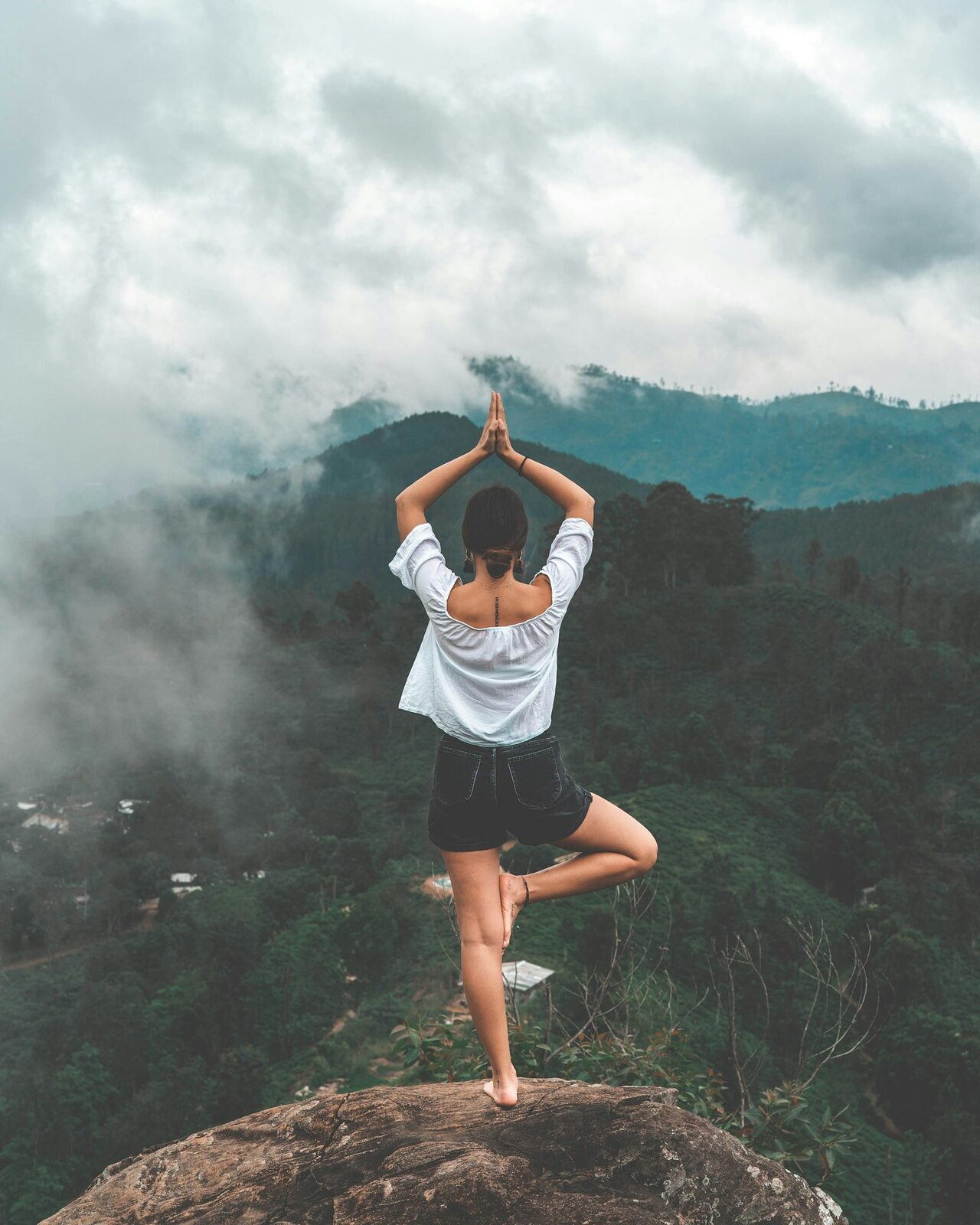
There is a specific quality to a summer afternoon that feels heavy, isn’t there? The air hangs thick, the cicadas are singing their high-pitched song, and even if you are sitting still, you can feel your heart beating a little faster than usual. In Traditional Chinese Medicine (TCM), we have a name for this: Xie Re, or pathogenic heat. Summer is the season of maximum Yang energy. It is expansive, loud, and hot. While this energy is wonderful for growth and joy, it can easily scorch us if we aren’t careful. We often think of cooling down as a physical act—jumping in a pool or drinking iced tea. But true cooling is an internal physiological shift. It involves slowing down the “engine” so the radiator doesn’t blow. This is why the most counterintuitive yet effective practice for the hottest months isn’t swimming or sprinting—it is the ancient, slow art of Tai Chi.
Why Moving Slowly in the Heat is the Ultimate “Hack”
If you have ever watched a cat on a hot day, you notice they don’t run around. They stretch, they yawn, and they move with absolute economy. My grandmother used to tell me, “When the fire outside is strong, you must cultivate the water inside.” This is the essence of Yin and Yang. Yang is fire, heat, and action; Yin is water, coolness, and stillness. Summer depletes our Yin fluids. We sweat, we get irritable, and we feel restless (what she called “Heart Fire”).
Most exercise in the West—HIIT, CrossFit, heavy cardio—is “Yang on Yang.” It generates more heat and friction. Tai Chi, however, is “Yang within Yin.” You are moving (Yang), but so slowly and mindfully that you generate deep internal circulation without spiking your cortisol or temperature. You are essentially creating a cooling mist inside your body. When you move at a glacial pace, you force your nervous system to switch from the sympathetic (fight or flight) to the parasympathetic (rest and digest). This literally cools the heart rate and lowers blood pressure.
The TCM Deep Dive: Nourishing the Heart Qi
To understand why summer Tai Chi is different from winter practice, we need to look at the Heart. In Western anatomy, the heart is a pump. In TCM, the Heart is the “Emperor” of the body, housing the Shen (Spirit/Mind). The Heart is associated with the Fire element and the summer season.
When the summer heat enters the body, it doesn’t just make us sweat; it agitates the Shen. This is why you might find it hard to sleep in July, or why you feel anxious and scattered even while on vacation. Your Heart Qi is floating upward and outward, trying to release heat. If you practice vigorous movement, you scatter that Qi even further.
The goal of summer Tai Chi is to “settle” the Qi. We want to draw that frantic energy downward, back into the Dantian (the energy center two inches below your navel). By rooting your weight into the earth with every step, you create a grounding force. Think of it like an anchor in a storm. The heat is the storm; your feet are the anchor. When you practice, visualize cool blue water rising from the earth, through the soles of your feet, and circulating up through the kidneys (the Water element) to cool the Heart.
Summer vs. Winter Practice: A Tale of Two Temperaments
You cannot practice Tai Chi the same way in December as you do in July. The rhythm of nature changes, and your practice must adapt. In winter, we want to build heat and protect the core. In summer, we want to disperse excess heat and nourish fluids.
Here is a breakdown of how to adjust your summer Tai Chi practice to match the season’s demands:
| Practice Element | Winter Approach | Summer Approach (The Cooling Method) |
|---|---|---|
| Tempo | Brisk, flowing to build warmth. | Extremely slow, pausing between movements to absorb stillness. |
| Breath | Deep, abdominal, slightly forceful. | Soft, silent, extending the exhale to release heat. |
| Focus | Expanding outward, filling the space. | Gathering inward, condensing energy to the center. |
| Time of Day | Morning (to wake up Yang). | Dusk or Dawn (avoiding the peak “Poison Hours” of 11am-1pm). |
| Visualization | Warmth, rising sun, golden light. | Cool water, deep roots, blue mist. |
The “Cloud Hands” Cooling Sequence
I want to teach you a specific sequence that I do almost every evening in July and August. It relies on the movement “Cloud Hands” (Yun Shou). This is a signature Tai Chi move that looks like you are gently washing a window or smoothing silk. It is deceptively powerful because it connects the upper and lower body while keeping the torso centered and calm.
Here is the breakdown of the practice:
- Stance: Stand with feet shoulder-width apart, knees slightly bent. Imagine you are sitting on a high stool.
- Weight Shift: Shift your weight entirely to the right leg. Your left foot should feel light enough to lift a feather.
- The Sweep: Sweep your left hand across your lower abdomen to the right hip, palm facing inward. Your right hand floats up to chest level, palm facing your face.
- The Turn: Turn your waist to the left. As your torso turns, your weight shifts to the left leg. Your hands naturally swap positions—right hand sweeps down, left hand rises.
- The Rhythm: Do this slowly. Count “one… two… three…” for every weight shift. Do not let your hands move faster than your waist.
- The Breath: Inhale as the rising hand comes up to chest level. Exhale slowly and audibly (like blowing out a candle) as the hand sweeps down.
Repeat this 20 times to the left and 20 times to the right. The continuous circular motion unblocks the San Jiao (Triple Burner) meridian, which regulates water metabolism in the body. It essentially helps your body process fluids and heat more efficiently.

Timing and Environment: The Golden Rules
When you practice matters just as much as how you practice. In TCM, the day is divided into two-hour blocks governed by organ systems. The Heart governs the time of 11:00 AM to 1:00 PM. This is when the Heart fire is at its peak. Practicing vigorous Tai Chi during this window is like throwing kerosene on a fire. You might dehydrate or become dizzy.
Similarly, 7:00 PM to 9:00 PM is the time of the Pericardium (the Heart Protector). This is the absolute best time for “Summer Tai Chi.” The heat of the day has broken, the air is cooling, and your body is naturally winding down. Practicing here allows you to flush out the stress of the day and prepare for deep, restorative sleep.
“Nature does not hurry, yet everything is accomplished.” — Lao Tzu
If you must practice in the morning, wait until after 9:00 AM when the Stomach time is active, and the sun has cleared the heavy morning dew but before the midday blaze. Always practice in the shade if outdoors. The Chinese masters say practicing under a tree is best in summer because the tree is actively photosynthesizing and releasing oxygen and “cool” energy.
Hydrating the Dantian: What to Drink Before and After
You cannot cool a car engine without coolant, and you cannot cool your body without fluids. However, in TCM, we don’t just chug ice water. Ice water shocks the Spleen and Stomach (the digestive system), stopping the transformation of fluids and actually causing bloating or dampness. We want room temperature or slightly cool fluids.
Here is a recipe for “Summer Tai Chi Tea” that I make in a large pitcher every Sunday night:
- Ingredients: 10g dried Chrysanthemum flowers (Ju Hua), 5g Goji berries (Gou Qi Zi), 1 slice of fresh ginger (to protect the stomach), and 1 rock sugar candy (optional).
- Method: Place ingredients in a thermos or large jar. Pour boiling water over them. Let it steep for 15 minutes until the water turns pale yellow.
- Serving: Drink 30 minutes before your evening practice. The Chrysanthemum clears Liver and Head heat (great for summer headaches), and the Goji nourishes the Yin fluids.
After practice, you can add a pinch of sea salt to your water. We lose electrolytes through sweat, and in TCM, salt enters the Kidney meridian, helping to hold fluids in the body so you don’t just pee everything out.
Common Questions
Is it safe to practice Tai Chi outdoors in high humidity?
Yes, but the “feel” will be different. High humidity can make the air feel stagnant, which can trap heat in the body. If you practice in high humidity, focus even more on your exhales. Visualize pushing the heavy, damp air away from you with every breath out. If the humidity feels suffocating (above 80%), practice indoors with a fan on a low setting pointed away from you—you want air circulation, not a direct wind on your skin, which can invade the joints.
I feel sleepy after summer practice. Is that normal?
Yes! This is a good sign. It means you have successfully shifted from Sympathetic (stress) to Parasympathetic (rest) dominance. The summer heat puts our bodies in a constant low-level state of agitation. When you finally slow down and cool the Heart Fire, the body realizes how tired it actually is. Listen to your body. If you feel sleepy, take a 20-minute nap or go to bed earlier that night. Your body is using that time to repair the Yin fluids depleted by the heat.
Can Tai Chi actually lower my body temperature?
Metabolically, yes. While it won’t make your skin cold to the touch, it reduces your internal metabolic heat production. High-intensity exercise generates a massive amount of mitochondrial heat. Tai Chi generates very little metabolic heat while increasing blood flow to the skin (radiant cooling). By lowering your heart rate and respiration, you stop “cooking” from the inside out.
The bottom line: Summer Tai Chi is about embracing the paradox: to cool down, you must slow down. By practicing “Cloud Hands” at dusk, drinking Chrysanthemum tea, and rooting your energy into the earth, you transform the oppressive summer heat into a practice of deep nourishment. You are not just exercising; you are storing cool reserves of energy to carry you through the season with a calm heart and a clear mind.
This article is for educational purposes and reflects traditional wellness perspectives. It is not a substitute for professional medical advice, diagnosis, or treatment.