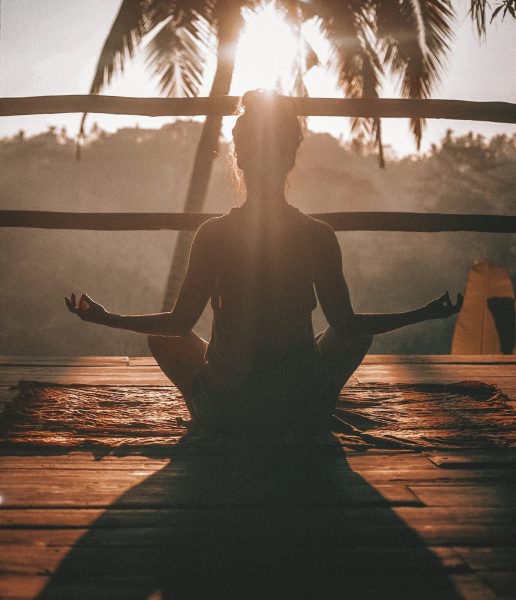
There is a particular kind of heat in July that feels like a physical weight. The air hangs still, the pavement shimmers, and the very idea of a 30-minute meditation on a cushion feels like a punishment. But what if your practice didn’t require you to be still? What if the most profound mindfulness you could access on a sweltering day happened in just five minutes, on your feet, and involved the simple act of walking to the mailbox and back? This is the essence of the 5-minute summer stroll—a mindful walking meditation designed not to add to your to-do list, but to transform a mundane moment into a portal of presence. My grandmother, who lived to 97 in the humid heart of Hunan, never sat on a cushion to meditate. Her practice was walking—slow, deliberate steps through her vegetable garden at dawn, feeling the dew on the leaves and the earth beneath her cloth shoes. “Xīn zài jiǎo xià,” she’d say. “The heart is beneath the feet.” She taught me that mindfulness isn’t an escape from the world, but a deeper immersion into it.
- Why Walking Meditation is Your Summer Secret Weapon
- The Eastern Heart of the Matter: Understanding Qi Flow
- Your 5-Minute Practice: A Step-by-Step Guide
- Summer Stroll Variations: Cooling, Grounding, and Energizing
- Beyond the 5 Minutes: Integrating Mindful Moments
- Troubleshooting Your Practice: Common Summer Hurdles
Why Walking Meditation is Your Summer Secret Weapon
When the mercury climbs, our instinct is to retreat indoors, to air conditioning and screens. We become more sedentary, more scattered. Our minds race with the heat, but our bodies stagnate. Traditional Chinese Medicine (TCM) teaches that summer is ruled by the Fire element, associated with the Heart and the emotion of joy. An excess of heat, however, can agitate the Heart, leading to restlessness, anxiety, and insomnia. This is where mindful walking becomes a powerful balancing tool. Unlike seated meditation, which can sometimes feel too internal and confronting in a heated state, walking meditation gently grounds that scattered Fire energy. The simple, rhythmic movement of your legs and feet creates a tangible connection to the Earth element, which in TCM has a stabilizing, nourishing, and cooling effect. It’s like gently pouring a stream of cool, clear water onto a crackling fire—enough to calm the flames without extinguishing the vital spark of summer vitality.
Physiologically, even a short walk increases circulation, moving stagnant lymph and helping your body regulate its internal temperature more efficiently. The focus required for mindful walking pulls your attention away from the oppressive external heat and into the intricate, fascinating landscape of your own body in motion. It’s a practice of paying attention to the sensations that are actually happening, rather than the story your mind is telling about the weather. You’re not just “taking a walk”; you’re conducting a real-time, somatic investigation into the very nature of being present in a body on a hot day.
The Eastern Heart of the Matter: Understanding Qi Flow
To truly grasp the power of this practice, we need to understand one key Eastern concept deeply: Qi (pronounced “chee”). Often translated as “life force” or “energy,” Qi is more accurately understood as a dynamic, vital substance that circulates through the body’s pathways (meridians), much like blood circulates through vessels. It is the animating force behind every physiological process—from digestion and immunity to thought and emotion. In summer, Qi naturally rises and expands, like a plant reaching for the sun. This is why we feel more social, energetic, and outward-focused. However, the intense heat can also cause Qi to become “rebellious”—rising too aggressively to the head, leading to headaches, irritability, or that feeling of being “wired but tired.”
Mindful walking meditation directly influences Qi flow. The deliberate, slow pace prevents the Qi from scattering frantically. The focus on the soles of the feet stimulates key acupuncture points (Kidney 1, or “Bubbling Spring,” in the center of the foot) that actively draw energy downward, grounding excess rising heat. The rhythmic movement of the legs gently massages the Spleen and Stomach meridians, which are crucial for digestion and the transformation of food into new Qi and Blood. In essence, you are using your own body as a tool to regulate your internal climate, ensuring your Qi flows smoothly, evenly, and in harmony with the season. It’s a far more intelligent response to summer heat than simply fighting it with more air conditioning.
Your 5-Minute Practice: A Step-by-Step Guide
This is not a long, meandering nature walk. It is a precise, time-bound container for attention. You can do this in your hallway, on a shaded patio, or on a short path from your door to a tree and back. The key is consistency and intention.
Preparation (1 minute): Choose your time. Avoid the peak heat of 11 am to 3 pm. Early morning or early evening is ideal. Stand still at your starting point. Close your eyes for 30 seconds. Take three deep breaths: inhale through your nose for a count of 4, hold for 2, exhale through your mouth for a count of 6. On each exhale, consciously release the tension in your shoulders, jaw, and belly. Open your eyes and set a simple intention: “For the next 5 minutes, my only job is to feel my feet.”
The Walk (4 minutes): Begin walking at about one-third your normal pace. This will feel absurdly slow. Good. The slowness is the point—it magnifies every sensation.
- Phase 1: The Lift (60 seconds). Focus solely on the moment your right foot begins to leave the ground. Feel the subtle shift of weight into your left foot. Notice the peeling sensation of the sole of your right foot separating from the floor or earth. Is it sticky? Easy? Where does the effort originate—in your toes, your ankle, your thigh?
- Phase 2: The Movement (60 seconds). Now, track the entire arc of your right foot as it moves through space. Feel the air on your skin. Sense the muscles in your leg coordinating. Notice the point where your foot reaches its apex and begins to descend. Then, the gentle, controlled lowering.
- Phase 3: The Placement (60 seconds). Be exquisitely present as the heel of your right foot makes first contact with the ground. Feel the transfer of weight as you roll through the foot—heel, arch, ball, toes. Imagine you are trying to feel every square inch of your sole. Then, repeat the entire sequence with your left foot.
- Phase 4: Integration (60 seconds). For the final minute, expand your awareness to include your whole body as a unified field of sensation. Feel the swing of your arms, the rotation of your hips, the breath moving in your chest, the air on your skin, all while maintaining that primary awareness of your feet touching and leaving the earth. You are not a mind having a body; you are a body being walked.
Closing (30 seconds): Come to a gentle stop. Stand still again. Place your hands over your lower abdomen (your Dantian, the body’s energy center). Take another three deep breaths, feeling the rise and fall of your belly. Notice the shift in your internal state. The heat may still be there, but your relationship to it has changed. You are no longer its victim; you are a calm observer within it.
Summer Stroll Variations: Cooling, Grounding, and Energizing
The basic practice is a foundation. Once you’re comfortable, you can adapt it to serve a specific need on a hot day.

The “Cooling Stream” Variation: This is for when you feel overheated, agitated, or have a pounding headache from the heat. As you walk, visualize that the soles of your feet are sponges. With each step, imagine they are dipping into a cool, underground stream. As you lift your foot, see it drawing up cool, blue energy from the earth. As you place it down, see that cool energy flooding upward through your legs, into your torso, and all the way to the crown of your head, washing away heat and agitation. This isn’t just imagination; it’s a focused intention that directs the Qi, and it works remarkably well to lower perceived body temperature.
The “Mountain Roots” Variation: For days when you feel scattered, anxious, or “floaty.” With each step, imagine that your feet are growing thick, strong roots down into the earth, like the roots of an ancient pine tree. Feel the stability and immovability of the earth supporting you. This powerfully enhances the grounding effect, drawing excess Fire energy down and anchoring your awareness in the present moment and your physical body.
The “Morning Dew” Variation: For gentle energizing on a sluggish, humid morning. Sync your breath with your steps. Inhale for four steps, exhale for four steps. As you inhale, imagine you are drawing in the fresh, clean energy of morning dew—light, clear, and vital. As you exhale, imagine you are releasing any heavy, damp stagnation from the body. This uses the breath to create a gentle internal circulation, perfect for overcoming that heavy, “damp heat” feeling TCM associates with humid climates.
Beyond the 5 Minutes: Integrating Mindful Moments
The true power of this practice is not in the five minutes themselves, but in the quality of attention they train. This is attention you can take with you for the rest of the hot day. When you’re waiting for the kettle to boil, instead of grabbing your phone, stand and feel the soles of your feet on the cool kitchen tile. When you’re in a long grocery store line, shift your weight subtly from foot to foot and notice the sensations. When you’re sitting at your desk, take 30 seconds to press your feet firmly into the floor and feel the support of the chair and ground beneath you.
My grandmother didn’t have a word for “mindfulness.” She had a word for “attention” (zhùyì). And she paid it in small, continuous doses throughout her day—while washing rice, hanging laundry, or walking to the market. She understood that peace isn’t found in escaping the heat of life, but in learning to move through it with a cool, steady heart. The 5-minute summer stroll is your training ground for that.
“Walk as if you are kissing the Earth with your feet.”
— Thich Nhat Hanh
Troubleshooting Your Practice: Common Summer Hurdles
Even with the best intentions, real life gets in the way. Here’s how to navigate common obstacles.
| Obstacle | TCM Perspective | Practical Solution |
|---|---|---|
| “It’s just too hot outside.” | Avoiding all heat can weaken your body’s adaptive capacity and trap Qi. | Walk at dawn (5-7 am) or dusk (7-9 pm). Walk indoors in a hallway. Do it barefoot on a grassy, shaded area—grass is naturally cooler. |
| “My mind is too busy/racing.” | Summer Fire agitates the Heart “spirit” (Shen). | Don’t fight the thoughts. Label them “thinking” and gently return to the sensation in your feet. The feet are your anchor. Use the “Cooling Stream” visualization to give your mind a specific task. |
| “I feel self-conscious walking so slowly.” | Concern for others’ opinions can be a sign of a constrained Liver Qi (Wood element). | Practice indoors first. If outside, remember: most people are absorbed in their phones and won’t notice. Your well-being is worth a moment of potential awkwardness. |
| “I only have 3 minutes.” | Consistency trumps duration. A short, focused practice nourishes Qi more than a skipped long one. | Do the 3-minute version: 30-second prep, 90 seconds focusing on the lift/movement/placement of each foot, 60-second integration, 30-second closing. It still works. |
Common Questions
Can I practice mindful walking meditation on a treadmill or while walking my dog?
You can adapt it, but the purest practice is done solo and without external distractions. A treadmill forces a set pace which can be helpful, but the moving belt removes the nuanced foot-earth interaction. Walking the dog introduces constant interruptions. The ideal is a short, dedicated 5-minute solo walk. If you must combine it, choose the first 5 minutes of a longer walk and let the dog sniff while you practice, then continue your walk normally.
Is barefoot better than wearing shoes for this practice?
Barefoot on a safe, clean, natural surface (grass, earth, cool stone) is ideal. It maximizes sensory input and directly stimulates the acupuncture points on the soles. However, in summer, surfaces can be dangerously hot. If walking barefoot is not possible or safe, wear thin-soled, flexible shoes (like minimal sneakers or cloth slippers) that allow you to feel the ground. The key is to maximize your ability to feel the subtle sensations of each phase—lift, move, place—regardless of footwear.
How is this different from just going for a walk? I already walk every day.
The difference is intention and attention. A regular walk is for transportation or exercise; the mind often wanders to problems, to-do lists, or podcasts. A mindful walking meditation is for being. You are not going somewhere; you are arriving, fully, in each step. You shift from autopilot to manual control. This engages the parasympathetic nervous system, reduces cortisol, and creates a neuroplastic change in the brain—strengthening the pathways for sustained, calm attention. The physical act is similar, but the physiological and psychological outcomes are profoundly different.
The bottom line: The 5-minute summer stroll is a radical act of self-care disguised as a simple walk. By consciously engaging your feet and your attention for just 300 seconds, you regulate your Qi, cool internal heat, ground scattered energy, and cultivate a deep, abiding presence that transforms your relationship to summer’s intensity. It’s a practice that requires no special equipment, no app, and no perfect conditions—only your willingness to feel the earth beneath you and the quiet, steady rhythm of your own two feet.
This article is for educational purposes and reflects traditional wellness perspectives. It is not a substitute for professional medical advice, diagnosis, or treatment.