There is a particular kind of heat that does not just warm your skin, but seems to settle deep in your mind. It’s the frantic, buzzy energy of mid-July, when the air feels thick, your thoughts race, and even sitting still feels like an effort. In Traditional Chinese Medicine (TCM), we call this “Summer Heat” (暑热, shǔ rè)—an external pathogen that can easily invade, leaving you feeling irritable, restless, and mentally foggy. While cold drinks and air conditioning offer temporary relief, they often just push the heat deeper, creating an imbalance. What if you could access a natural, internal air conditioner? A practice that uses the mind’s own power to create a profound sense of cool, clear calm? This is the gift of the waterfall meditation, a 5-minute practice drawn from the imagery of nature itself.
Why a Waterfall? The Taoist Science of Cooling Imagery
My grandmother, who grew up in the misty mountains of Guangdong, never spoke of “meditation” in the Western sense. But she had a phrase: “心静自然凉” (xīn jìng zìrán liáng). It translates to “when the heart is still, naturally you will be cool.” This isn’t poetic fancy; it’s a foundational Taoist principle. The mind (心, xīn, which includes both the heart and the mind in TCM) has a direct relationship with the body’s temperature. When the mind is agitated, it generates internal heat. When it is calm, it allows the body’s natural yin (cooling, receptive) energy to rise and balance the yang (active, warming) energy.
A waterfall is the perfect metaphor for this process. It is a powerful, dynamic yang force—constantly moving, loud, and strong. Yet its very action produces profound yin: the cool mist, the deep, quiet pool below, the sense of cleansing and renewal. In our practice, we don’t just imagine a static picture of a waterfall; we become the dynamic process. We use the imagery to guide our breath and our qi (vital energy) in a specific, cooling cycle.
This is more than just visualization. Studies on guided imagery show it can produce measurable physiological changes, like lowering heart rate, blood pressure, and even skin temperature. The brain, when presented with a vivid internal image, responds as if it were real. By consistently pairing a cool, flowing image with deep, diaphragmatic breathing, you are essentially training your nervous system to shift out of the stressful “fight-or-flight” (sympathetic) state and into the “rest-and-digest” (parasympathetic) state—the state where true cooling and healing happen.
Preparing Your Space for a 5-Minute Oasis
You don’t need a mountain retreat. The power of this practice is its adaptability. But a few small preparations can deepen the experience significantly. Think of it as setting the stage for your mind’s theater.
- Time: The ideal time is between 11 AM and 1 PM (the “Heart” time in the TCM organ clock, when Heart Fire is most active and prone to agitation), or anytime you feel the summer heat affecting your mood. Set a timer for 5 minutes so you can fully let go.
- Place: Find a spot where you won’t be disturbed. It could be a quiet corner of your bedroom, a shady spot in your garden, or even your office chair with the door closed. Sitting is preferable to lying down to maintain alertness.
- Props (Optional but Helpful): Consider a sprig of fresh mint, a small bowl of cool water with a few slices of cucumber, or a light, natural-fiber scarf. These are not distractions, but sensory anchors to support your imagery.
- Hydration: Have a glass of room temperature or slightly cool water (not ice-cold) ready to drink after your meditation. In TCM, drinking ice water during or immediately after a cooling practice can shock the system and congeal the heat you’re trying to release.
The 5-Minute Waterfall Meditation: A Step-by-Step Guide
This practice moves through four distinct phases. Don’t rush. Even in 5 minutes, you can journey deeply if you give each phase about 60-75 seconds.
Phase 1: Arrival & Grounding (1 minute)
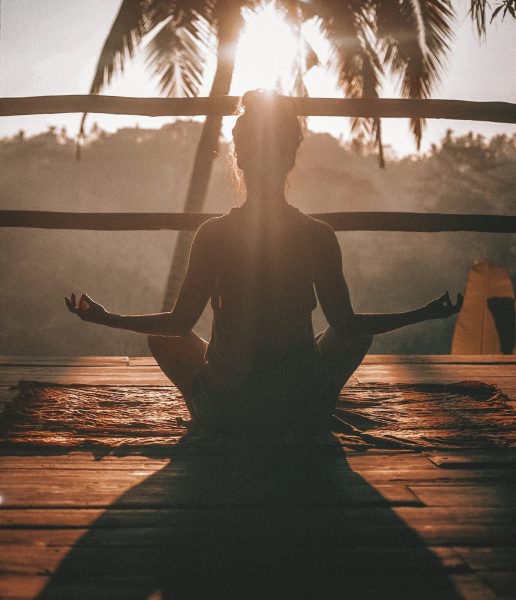
Sit comfortably with your spine tall but not rigid, like a mountain supporting the sky. Rest your hands on your thighs, palms facing down to help root your energy. Close your eyes. Take three slow, deep breaths: in through your nose for a count of 4, hold for 2, and out through your mouth for a count of 6. As you exhale, imagine any tension, haste, or frustration leaving with your breath, like dust being blown from a stone. Now, bring your attention to the space between your eyebrows, the “Third Eye.” Simply notice the rhythm of your natural breath without trying to change it.
Phase 2: Invoking the Source (1 minute)
In your mind’s eye, begin to build the scene. See a towering, ancient mountain, its peak lost in a soft, white cloud. You are standing in a lush, green valley at its base. The air is fresh and smells of pine and wet earth. Before you is a vast, calm lake, its surface like dark, clear glass. Hear the first, distant sound of water—a gentle rumble growing into a steady, powerful roar. High above, a magnificent waterfall cascades over the cliff’s edge. See the sunlight catch the water, turning it into a curtain of diamonds. This waterfall is not violent; it is majestic, full of life-giving energy.
Phase 3: Becoming the Waterfall (1.5 minutes)
This is the core of the practice. Now, shift your perspective. You are no longer watching the waterfall; you are becoming it. Feel the cool, clear water as it begins its journey at the mountain’s peak. As you inhale slowly and deeply through your nose, imagine drawing that cool, sparkling water up from the deep lake, up through the mountain’s core, to the very top. Your breath is the pump.
As you exhale slowly and smoothly through your mouth, become the cascade itself. Feel the cool, rushing water pour down from the crown of your head. It flows over your face, neck, and shoulders, carrying away all heat, irritation, and mental chatter. It streams down your chest, back, and arms, cooling your entire torso. It continues down your hips, legs, and feet, finally pouring into the deep, still pool at your feet. With each exhale, you release accumulated summer heat and mental agitation. With each inhale, you draw up fresh, clean, cooling energy.
Phase 4: Resting in the Pool (1.5 minutes)
Let the image of the cascade gently fade. Now, you are simply resting in the deep, cool pool at the base of the waterfall. The surface is calm, the water is crystal clear. You can feel the gentle vibration of the waterfall’s power, but you are immersed in perfect stillness and coolness. Any lingering thoughts are like leaves floating on the surface—they are there, but they don’t disturb the depth of the water. Rest here for several breaths. Absorb the profound sense of clarity and calm. This is the state of “心静自然凉.” When you are ready, gently bring your awareness back to your body in the chair, the feeling of your hands on your legs, the sounds of the room. Wiggle your fingers and toes, and open your eyes slowly.

Enhancing the Chill: Herbs & Foods to Support Your Practice
Meditation works from the inside out, but you can support its cooling effects from the outside in with the right foods and drinks. My grandmother would never let us practice qigong or deep breathing in the summer heat without first preparing a pot of a specific herbal tea. Here are some of the most effective and accessible options.
| Herb/Food | TCM Property | How to Use It | Best For |
|---|---|---|---|
| Chrysanthemum Flower (菊花, júhuā) | Sweet, slightly bitter, cooling. Clears Liver Heat and brightens the eyes. | Steep 8-10 dried flowers in 1 cup of hot (not boiling) water for 5 minutes. Drink 1-2 cups daily. | Eye strain, headache, irritability from heat. |
| Watermelon Rind (西瓜皮, xīguā pí) | Sweet, cooling. Clears Summer Heat and promotes fluid production. | Boil the peeled white rind (about 2 cups, chopped) in 4 cups of water for 20 minutes. Strain and drink the liquid. | Thirst, dark urine, feeling overheated. |
| Mung Bean (绿豆, lǜdòu) | Sweet, cool. Clears Heat and toxins, harmonizes the Stomach. | Simmer ½ cup of mung beans in 6 cups of water for 40 minutes until soft. Drink the broth, eat the beans. | General summer malaise, skin breakouts from heat. |
| Cucumber (黄瓜, huángguā) | Sweet, cool. Clears Heat, promotes urination, quenches thirst. | Eat raw, sliced. Or blend with mint and water for a refreshing drink. | Puffiness, fluid retention, a quick cool-down snack. |
| Lotus Leaf (荷叶, héyè) | Bitter, neutral. Clears Summer Heat and dampness, lifts the clear yang. | Steep 1 large dried leaf in a pot of hot water for 10 minutes. Has a mild, pleasant grassy taste. | Feeling heavy, foggy, or sluggish in humid heat. |
“The best doctor is your own body; the best medicine is your own food.” — Chinese Proverb
When the Heat is Emotional: Using the Waterfall for Anger & Frustration
Summer’s heat doesn’t just make us physically uncomfortable; it can flare into what TCM calls “Liver Fire Rising.” This manifests as sudden irritability, a short temper, red eyes, headaches at the temples, and even outbursts of anger. The Liver, in TCM, is the organ responsible for the smooth flow of qi and emotions. When it overheats, that flow becomes turbulent.
The waterfall meditation is a potent antidote. In the practice, when you become the cascading water flowing down from the head, you are actively guiding that rebellious Liver Fire downward, cooling it with the water’s yin nature and grounding it into the still pool (which represents the Kidney system, our foundation of cooling yin energy). The next time you feel a wave of summer frustration, try this: instead of just breathing, immediately invoke the image of the waterfall pouring down over you. It can short-circuit the anger cycle in under 60 seconds, creating space for a more measured response.
Common Questions
1. What if I can’t visualize the waterfall clearly?
No problem at all. The goal is not to have a perfect, high-definition movie in your head. It’s about the sensation and intention. If you can’t “see” the water, focus on feeling it. Imagine the sensation of cool mist on your skin. Hear the sound of rushing water—you can even play a recording of a waterfall on your phone for the first minute to help. Or focus on the physical feeling of coolness as you breathe in, and the feeling of release as you breathe out. The mind will follow the intention.
2. Can I do this meditation lying down?
You can, but with a caveat. Lying down increases the likelihood of falling asleep, especially if you’re fatigued from the heat. The practice is designed to be restorative yet alert. If you must lie down, do so on your back with your arms slightly away from your body, palms up, to maintain a sense of openness. Set a gentle alarm for 5 minutes. For best results, especially in the middle of the day, sitting upright is recommended.
3. How often should I practice? Is once a week enough?
For cumulative benefits, especially during the peak summer months, aim for daily practice. Think of it as mental hygiene—like brushing your teeth for your mind. Five minutes is very manageable. You can even break it into two 2.5-minute sessions: one in the morning to set a cool, calm tone for the day, and one in the late afternoon when energy and patience often dip. Consistency is more important than duration. Even 3-4 times a week will make a noticeable difference in your resilience to summer stress.
The bottom line: The 5-Minute Waterfall Meditation is more than a daydream; it’s a practical tool rooted in the Taoist understanding of mind-body connection. By harnessing the power of focused imagery and breath, you can actively guide your body’s energy to clear summer heat, calm emotional flare-ups, and cultivate a profound sense of inner coolness and clarity that no air conditioner can provide.
This article is for educational purposes and reflects traditional wellness perspectives. It is not a substitute for professional medical advice, diagnosis, or treatment.