Gua Sha for Jaw Tension: The 5-Minute Routine That Actually Works
You know that feeling when you wake up and your jaw already feels like it’s been clenching a fist all night? Maybe you catch yourself pressing your tongue against the roof of your mouth during meetings, or you notice your teeth are sore by the end of the day even though you haven’t eaten anything particularly chewy. Jaw tension is one of those things that creeps up on you — and once you notice it, you realize it’s been building for weeks.
I’ve been there. Years ago, before I fully committed to Traditional Chinese Medicine practices, I dealt with jaw tension so bad that my dentist started asking questions. “Are you stressed?” he asked, looking at the wear patterns on my molars. The answer was yes, but knowing that didn’t make the clenching stop.
What did help — genuinely, noticeably help — was gua sha for jaw tension. Not the trendy version you see on social media with someone gliding a stone across their cheekbones for aesthetics. I’m talking about targeted, intentional strokes that address the specific muscle groups and energy pathways connected to jaw pain. It takes five minutes, you can do it at your desk, and the relief is real.
In this guide, I’ll walk you through the five strokes that have helped me and countless others, the acupressure points Chinese medicine practitioners have relied on for centuries, and everything you need to get started safely at home.

Why Does Your Jaw Hold So Much Tension?
Your jaw is one of the most complex joints in your body. The temporomandibular joint (TMJ) allows your mouth to open, close, and shift side to side — involved in talking, eating, yawning, and swallowing thousands of times a day. The problem is that this joint is incredibly responsive to stress. When you’re anxious, your jaw muscles — particularly the masseter and temporalis — tighten up. Over time, this chronic tension leads to clicking, popping, pain when chewing, headaches, and that persistent tightness that won’t go away.
In Chinese medicine, jaw tension is often connected to Liver Qi stagnation — the body’s energy isn’t flowing smoothly, usually because of emotional stress or long periods at screens. The jaw becomes a storage site for this stuck energy. That’s why gua sha for jaw tension works so well: it physically moves stagnation and restores flow to the meridians that pass through the face and neck.
If you’re new to gua sha in general, start with our complete beginner’s guide to gua sha for technique basics and tool selection.
What You’ll Need
- A gua sha tool with both a smooth edge and a notched edge. Bian stone or buffalo horn works beautifully for jaw work. If you don’t have one yet, this high-quality gua sha stone is the one I personally use and recommend.
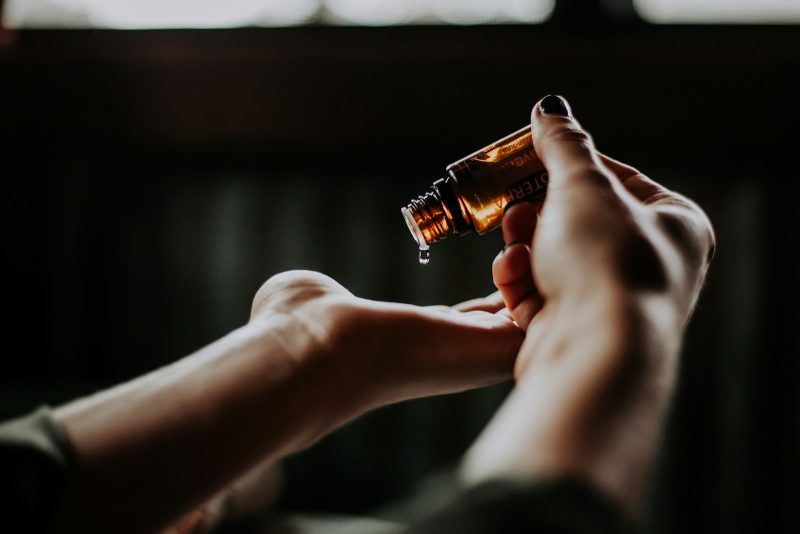
- A facial oil or balm — you need slip. Never gua sha on dry skin.
- Five minutes of uninterrupted time.
The 5-Minute Gua Sha Routine for Jaw Tension
Here’s the routine I do most evenings. Each stroke targets a specific area of tension. Move slowly — this isn’t about speed, it’s about paying attention to where your body is holding and giving it permission to let go.
Stroke 1: The Masseter Release
Location: The masseter is the thick muscle between your cheekbone and jawbone — the fleshy area you feel when you clench.
How to do it: Place the smooth edge flat against the masseter. Start at the top, just below the cheekbone, and sweep downward toward the jawline with medium pressure. Each pass should take about 5 seconds. Repeat 8-10 times per side. You’ll likely feel tenderness — that’s a good sign you’ve found the tension. In TCM, this area sits along the Stomach meridian; releasing it moves Qi stuck from overthinking and worry.
Stroke 2: The Jawline Sweep
Location: The entire jawline, from chin to ear.
How to do it: Use the notched or curved edge. Start at the center of your chin and sweep outward along the jawline toward the earlobe. Apply firm pressure — you can go harder here than on the cheek. Repeat 8-10 times per side. When you reach the ear, pause and gently press into the soft area just below the earlobe for 3-5 seconds. This releases the platysma muscle and targets the TMJ directly while encouraging lymphatic drainage.
Stroke 3: The Temporalis Drain
Location: The temples — above and slightly in front of your ears.
How to do it: Using the smooth edge, place the stone at the hairline near the temple. With light to medium pressure, sweep downward toward the ear. This is a gentler stroke — the skin here is thinner. Repeat 6-8 times per side. The temporalis connects directly to the jaw, which is why TMJ sufferers often get temple headaches. This area houses the Gallbladder meridian — releasing it eases the frustration that accompanies chronic jaw tension.
Stroke 4: The SCM Release
Location: The sternocleidomastoid — the rope-like muscle running from behind your ear to your collarbone.
How to do it: Turn your head slightly to one side. Using the smooth flat edge, start below the ear and stroke downward along the muscle toward the collarbone. Use medium-light pressure — this muscle can be surprisingly tender. Repeat 5-6 times per side. Always stroke downward, never upward on the neck. When this muscle is tight, it pulls on the jaw and skull, contributing to the forward-head posture that makes TMJ worse.
Stroke 5: The Ear Press and Drain
Location: Around the ear and the area behind it.
How to do it: Using the smaller end of your tool, gently press and hold the area just in front of the ear — right at the TMJ joint — for 5 seconds. Then sweep from behind the ear down the neck toward the collarbone. Repeat 3-4 times per side. Finish by gently massaging the earlobes with your thumb and forefinger for 10 seconds. This final stroke releases the joint capsule, stimulates lymphatic flow, and activates vagus nerve pathways that shift your nervous system into “rest and digest” mode.
- Why Does Your Jaw Hold So Much Tension?
- What You'll Need
- The 5-Minute Gua Sha Routine for Jaw Tension
- Key Acupressure Points for Jaw Tension
- When and How Often Should You Do This?
- What to Expect: The First Week
- Choosing the Right Gua Sha Tool
- Tips for Getting the Most Out of Your Routine
- A Final Thought
- Disclaimer
- About the Author
Key Acupressure Points for Jaw Tension
In Chinese medicine, we work the points along the meridians where Qi gets stuck. Press these with your gua sha tool or fingertips between strokes.
| Point Name | Location | How to Activate | What It Helps |
|---|---|---|---|
| ST 6 (Jiache) | On the masseter, one finger-width above the jawbone when teeth are clenched | Press firmly for 10-15 seconds | Direct jaw pain, toothache, difficulty opening mouth |
| ST 7 (Xiaguan) | Below the cheekbone, in front of the ear | Circular pressure for 10 seconds | TMJ clicking, lockjaw |
| LI 4 (Hegu) | Fleshy webbing between thumb and index finger | Pinch and press firmly for 15-20 seconds | General pain relief, headaches from clenching |
| GB 20 (Fengchi) | Base of the skull, in the hollow between neck muscles | Press upward toward skull for 15 seconds | Headaches, neck tension contributing to jaw tightness |
| SJ 17 (Yifeng) | Behind the earlobe, in the depression between jaw and mastoid bone | Circular pressure for 10 seconds | Jaw stiffness, tinnitus |
| LIV 3 (Taichong) | Top of the foot, between big toe and second toe | Press firmly for 20 seconds while breathing deeply | Liver Qi stagnation — the emotional root of chronic clenching |
A note on LI 4 (Hegu): this is one of the most powerful pain-relief points in the body. It works remarkably well for jaw tension because it’s on the Large Intestine meridian, which passes through the face. For more on acupressure, see our guide to acupressure points for headaches, nausea, and sleep.
When and How Often Should You Do This?
- For acute jaw pain or a TMJ flare-up: Full routine twice a day for one week. Expect significant improvement within 3-5 days.
- For chronic, low-grade tension: Once daily, ideally in the evening. This is the maintenance mode that keeps tension from building.
- For prevention: Two to three times per week if your tension is occasional.
- During a stressful period: Even a quick 60-second version — just the masseter release and jawline sweep — makes a noticeable difference.
Consistency matters more than intensity. Five minutes every day will do more than a 30-minute session once a month.
What to Expect: The First Week
Days 1-2: You’ll feel tenderness, especially on the masseter and SCM. This is your body telling you where the tension has been hiding. The soreness should feel “productive” — like after a good stretch, not sharp pain.
Days 3-4: Tenderness decreases noticeably. You might catch yourself clenching less because you’re more aware of it. Some people report better sleep — the jaw relaxation seems to signal the whole body that it’s okay to let go.
Days 5-7: This is where the real shift happens. The jaw feels looser, clicking may decrease, and you’ll think, “I haven’t clenched today.” The relief compounds — less tension means less inflammation, which means less pain.
If your pain worsens or you experience sharp, shooting pain, stop immediately and consult a healthcare professional. Gua sha should never cause acute pain.
Choosing the Right Gua Sha Tool
Not all gua sha tools are created equal for jaw work. Look for:
- Material: Bian stone is my top pick — naturally warming with excellent density for pressure control. Buffalo horn is a close second.
- Shape: You want at least two different edges — one smooth and flat for broad strokes, one notched or curved for contouring around the jawline.
- Size: A medium-sized tool (3-4 inches) gives the best control for facial work.
If you’re looking for a reliable option, this gua sha stone is what I use daily and recommend to anyone starting their practice.
Tips for Getting the Most Out of Your Routine
- Warm your tool first. Hold it in your hands for a minute or run it under warm water.
- Use enough oil. The stone should glide, not drag. If you hear squeaking, add more product.
- Breathe deeply while you work. Deep breathing activates the parasympathetic nervous system, directly countering the stress response causing your clenching.
- Pay attention to asymmetry. Most people clench more on one side. Spend extra time on the tighter side.
- Drink water afterward. Gua sha releases metabolic waste from tissues — hydration helps flush it out.
- Combine with jaw stretches. After your routine, gently open your mouth as wide as comfortable, hold 5 seconds, close slowly. Repeat 5 times.

Frequently Asked Questions
Can gua sha really help with TMJ disorder?
While gua sha is not a replacement for medical treatment of severe TMJ disorder, many people have found significant relief from the muscle tension component through regular practice. The technique releases fascial adhesions, improves blood flow to the jaw muscles, and stimulates acupressure points that Chinese medicine has used for jaw issues for over 2,000 years. If you have severe TMJ with locking or significant clicking, see a specialist first and use gua sha as a complementary practice.
Is it safe to do gua sha on the jaw if I have dental work or fillings?
Yes, generally it’s safe. Gua sha works on soft tissue and muscles outside the mouth, not on the teeth. However, if you have active dental infections, recent oral surgery, or healing implants, wait until you’ve fully recovered. If you have concerns, check with your dentist.
How much pressure should I use on the jaw area?
Start lighter than you think you need to. The jaw and face are more sensitive than body areas where traditional gua sha is performed. Medium pressure is your sweet spot for most strokes — enough to feel the muscle engaging, but not so much that you’re wincing. The SCM and neck areas should be even lighter. You can always add pressure; you can’t un-bruise.
Can I do this if I’m pregnant?
Facial gua sha is generally considered safe during pregnancy because it’s a gentle, superficial technique. However, avoid pressing LI 4 (Hegu) on the hand — this point is traditionally contraindicated during pregnancy as it’s believed to stimulate uterine contractions. When in doubt, consult your healthcare provider and a licensed acupuncturist with prenatal experience.
Why does my jaw click more after gua sha sometimes?
This can happen in the first few days and is usually not a concern. When you release tight muscles around the TMJ, the joint may move differently — the clicking can actually signal that the joint is finding a more natural range of motion. If clicking increases significantly, is accompanied by pain, or your jaw starts locking, stop and see a healthcare professional.
A Final Thought
Jaw tension is one of those things we normalize because so many people experience it. “Oh, I just clench,” we say, as if it’s a personality trait rather than a signal from our body. Your jaw is trying to tell you something — about your stress, your posture, your emotional state. In Chinese medicine, the Stomach meridian runs right through the jaw, and digestive issues and jaw tension often go hand in hand.
Gua sha for jaw tension isn’t a magic cure. It’s a practice — something you show up for consistently. But over time, it teaches you to listen to your body’s signals before they become screams. Give this routine a week. Your jaw will thank you.
Disclaimer
This article is for educational purposes only and does not constitute medical advice. Gua sha is a traditional Chinese medicine practice that many people find beneficial, but it is not a substitute for professional medical diagnosis or treatment. If you have severe TMJ disorder, persistent jaw pain, difficulty opening or closing your mouth, or any concerning symptoms, please consult a qualified healthcare professional. Individual results may vary.
About the Author
Yu Xi Zhang is a Traditional Chinese Medicine practitioner and wellness writer with over 15 years of experience in acupuncture, herbal medicine, and therapeutic bodywork. After studying at the Beijing University of Chinese Medicine and completing her clinical training, she dedicated her career to making TCM practices accessible to modern audiences. Yu Xi combines classical Chinese medicine theory with practical, everyday wellness strategies that anyone can incorporate into their daily routine. When she’s not writing or seeing patients, she’s experimenting with herbal formulas and teaching gua sha workshops. Learn more about Yu Xi’s approach to wellness.