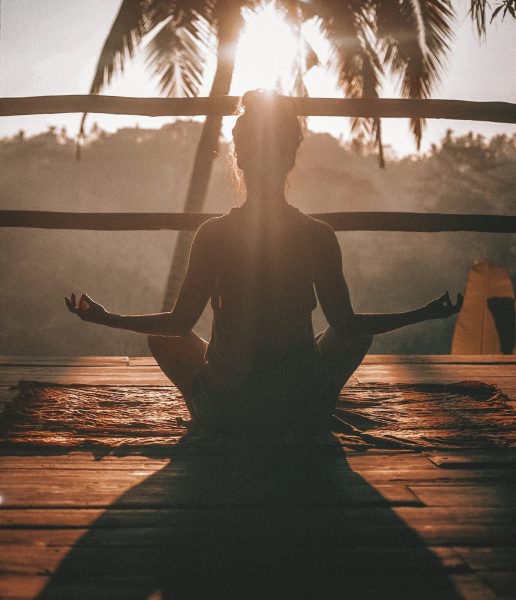
There’s a specific kind of heat that settles into your body on a late July afternoon. It’s not just the 90-degree air outside; it’s a heaviness in your limbs, a tightness in your chest, and a mind that feels like it’s been simmering in a pot all day. You might reach for another iced coffee, turn the air conditioning down another degree, or simply collapse onto the couch, feeling drained rather than relaxed. I know this feeling well. Growing up, my grandmother would watch me drag myself through the door after summer camp and say, with a knowing smile, “Your xin is too hot.” Xin (心) means “heart” in Chinese, but it encompasses the mind and spirit. She wasn’t talking about my body temperature; she was talking about the frantic, agitated state of my inner world. Her solution wasn’t more ice cream. It was to sit with her in the cool, shaded part of the garden, close my eyes, and place my hands on my lower belly. “Feel the cool earth beneath you,” she’d say. “Let the heat drain down.” This wasn’t a formal meditation; it was a simple, profound act of cooling from the inside out. That’s the essence of what we’re going to practice together: a summer cooling meditation designed to address that specific, modern, summer heat—the kind that lives in our nervous system as much as our skin. This isn’t just about feeling a bit calmer. It’s a targeted practice rooted in Traditional Chinese Medicine (TCM) to actively draw excess heat away from your head and heart, and down into the grounding, cooling center of your body.
- Why a “Cooling” Meditation? The TCM View of Summer Heat
- Preparing Your Space: More Than Just Finding a Quiet Room
- The 5-Point Summer Cooling Meditation: A Step-by-Step Guide
- The Science of Sensation: Why This Works Beyond Placebo
- Point 3: The Lower Abdomen — Activating Your Internal Coolant
- Integrating the Cool: After Your Practice & Summer Daily Support
Why a “Cooling” Meditation? The TCM View of Summer Heat
In the West, we often think of summer as purely a time of energy and activity. In TCM, summer is the season of the Fire element, associated with the Heart and Small Intestine organs. Fire brings joy, connection, and expansiveness—but too much of it, without balance, leads to Re (热), or heat. This isn’t just metaphorical. Excess summer heat in TCM can manifest as very real symptoms: irritability, insomnia, anxiety, restlessness, red face, excessive thirst, mouth sores, and even heart palpitations. Think of your body’s energy, or Qi, as a thermostat. The goal of summer isn’t to eliminate all heat—that would be impossible and unnatural. The goal is to maintain a harmonious temperature. The problem for most of us isn’t the external heat; it’s that our internal thermostat gets stuck in the “on” position. We run air conditioning externally while our nervous system stays in fight-or-flight, generating its own internal heat from stress, overwork, and endless scrolling. A cooling meditation is like manually adjusting that internal thermostat. It uses the mind’s power to direct the body’s energy, encouraging a downward flow that calms the Xin (heart-mind) and nourishes the Yin (the cooling, moistening, receptive aspect of our physiology).
“The mind is the commander, Qi is the soldier.” — Traditional Chinese Medicine Saying. Where you place your attention, your energy follows. This meditation deliberately places your attention on cooling, grounding points in your body.
This practice is particularly powerful because it works on a principle called Yin-Yang balance. Yang is the active, hot, rising energy. Yin is the quiet, cool, descending energy. Summer is peak Yang. Our meditation actively cultivates Yin within that context, creating a sanctuary of cool stillness amidst the external heat. It’s not about rejecting summer; it’s about enjoying it without getting burned out.
Preparing Your Space: More Than Just Finding a Quiet Room
The environment you create for this practice is an active ingredient in its effectiveness. You’re not just finding a place to sit; you’re crafting a sensory experience that tells your nervous system, “It’s time to cool down.” Here’s how to do it specifically:
- Temperature & Air: Ideally, find a naturally cool space—a basement, a tile-floor bathroom, or a shaded north-facing room. If you must use AC, set it to 74-76°F (23-24°C) instead of your usual arctic blast. The slight warmth prevents your pores from closing up, which can trap heat inside.
- Seating: Use a cushion on the floor (a zafu) or a firm chair. If sitting on the floor, place a folded towel or blanket under your sit bones to elevate your hips above your knees. This subtle tilt helps keep your spine straight and energy flowing downward.
- Scent: This is a powerful cue. Light a sandalwood or mint-scented candle, or use a diffuser with 2 drops of peppermint essential oil and 3 drops of lavender. These scents are considered cooling in both aromatherapy and TCM.
- Sound: Silence is ideal, but if your environment is noisy, play a track of gentle water sounds (a stream, rain, or ocean waves). Avoid birdsong or forest sounds, which can be stimulating. The water element corresponds to the Kidney organ system, which governs our deepest Yin reserves.
- Clothing: Wear loose, breathable clothing made of natural fibers—linen or cotton is best. Avoid synthetic fabrics that trap heat. Light colors (whites, blues, greens) are psychologically and energetically cooling.
My grandmother’s garden had a specific spot under a massive old oak tree where the earth was always cool, even on the hottest days. She’d say the tree was “drinking the sun” so we didn’t have to. While we can’t all have an ancient oak, we can create that same principle of refuge. Your prepared space becomes your personal cooling oasis.
The 5-Point Summer Cooling Meditation: A Step-by-Step Guide
This body scan focuses on five specific points in the body that, in TCM, are key for grounding heat and activating Yin energy. The sequence is intentional, moving from the head down to the feet, mimicking the natural downward flow of cool energy. Practice this for 15-20 minutes in the late afternoon or early evening, when summer heat peaks and begins to wane—the perfect time to reset.
Before you begin: Have a glass of room-temperature or slightly cool water nearby (not ice-cold, which shocks the system). Take 3 slow sips. Place your hands on your lower abdomen, just below your navel. This is your Dantian, your body’s energetic center and reservoir of Qi. Take 5 deep breaths: inhale through your nose for a count of 4, feeling your belly expand like a balloon; exhale through your mouth for a count of 6, feeling your belly gently contract. This longer exhale immediately activates the parasympathetic “rest and digest” nervous system.
Point 1: The Crown — Releasing Excess Heat from the Mind
Bring your attention to the very top of your head, the Baihui point, known as the “Hundred Convergences.” This is where Yang energy gathers and can get stuck, leading to a hot head, headaches, or racing thoughts. Imagine a small, radiant sun at your crown. With each inhale, visualize drawing in cool, blue-green energy from the air around you. With each exhale, imagine that heat from the sun dissolving, turning into a gentle, warm mist that begins to drift downward. Don’t force it. Simply observe the heat beginning to release. Continue for 2-3 minutes, until you feel a sense of spaciousness or lightness at the crown.
Point 2: The Throat & Chest — Soothing the Heart-Mind (Xin)
Now, let that gentle warmth from the crown begin to flow down into your throat and settle in the center of your chest, at your sternum. This area houses the Shanzhong point, the “Sea of Qi,” and is directly connected to the Heart. This is where emotional heat—agitation, anxiety, frustration—often pools. Place one hand over your heart, palm flat. Visualize a calming, liquid blue light under your palm, like cool water filling a lake. With each breath, imagine this light expanding, gently washing over any tightness or heat in your chest. Silently repeat a cooling mantra: “Let the heat soften. Let peace flow.” Spend 3-4 minutes here, feeling your heartbeat slow and steady.
The Science of Sensation: Why This Works Beyond Placebo
While the TCM framework provides a beautiful map, modern science gives us the “how” behind the “what.” This meditation isn’t just woo-woo; it’s a targeted nervous system intervention.
When you direct your attention to specific body parts (like the points in this scan), you are engaging the insular cortex, a brain region responsible for interoception—your sense of your body’s internal state. Focused attention increases blood flow and neural activity to those areas, literally changing their physiological state.
The visualization of coolness activates the same neural pathways that would fire if you were actually touching something cold. This can trigger a subtle parasympathetic response, lowering heart rate, blood pressure, and cortisol levels. The mantra repetition (“Let the heat soften”) helps to override the cognitive loops of anxiety and stress, which are themselves heat-generating processes.
Finally, the sequential downward focus is key. Anxiety and heat have a “rising” quality—they make us feel light-headed, scattered, and ungrounded. By deliberately guiding awareness down, we promote a sense of grounding and stability, engaging the lower body’s larger muscle groups and the enteric nervous system (the “gut brain”), which has a profoundly calming effect.
This table breaks down the points, their TCM significance, and the modern physiological correlate of focusing on them:
| Point (Location) | TCM Name & Function | Physiological Correlate of Focus |
|---|---|---|
| 1. Crown | Baihui (GV20). Clears the mind, lifts Yang, but can release excess heat. | Activates prefrontal cortex for executive calm; may modulate cranial blood flow. |
| 2. Chest | Shanzhong (CV17). Regulates Qi in the chest, calms the spirit (Shen). | Stimulates vagus nerve via diaphragmatic breath focus, lowering heart rate. |
| 3. Lower Abdomen | Dantian. Sea of Qi, root of vitality. | Engages enteric nervous system (gut-brain), promoting parasympathetic tone. |
| 4. Inner Ankles | Taixi (KD3). Nourishes Kidney Yin, the body’s deepest coolant. | Focus on extremities promotes peripheral vasodilation, aiding heat dissipation. |
| 5. Soles of Feet | Yongquan (KD1). “Bubbling Spring.” The ultimate grounding, heat-draining point. | Directs mental energy to the body’s base, combating “heady” anxiety; promotes stability. |

Point 3: The Lower Abdomen — Activating Your Internal Coolant
Now, let your awareness sink from your chest all the way down to your lower abdomen, your Dantian. This is the body’s energetic furnace and reservoir. In summer, we want to stoke this furnace gently, not extinguish it, but we also want to nourish its Yin aspect—the deep, cool, watery reserves. Imagine this area as a deep, cool well or a quiet pond. Place both hands on your lower belly, fingers touching. Feel the warmth of your hands and the subtle rise and fall with your breath. Visualize a soft, green light—the color of deep forest shade or a cool jade stone—filling this space with each inhale. This light is your Yin energy being cultivated. Spend 3-4 minutes here, feeling this center become a source of cool stability.
Point 4: The Inner Ankles — Nourishing Your Deep Coolant System
From your lower abdomen, let the cool green light begin to flow downward through your hips and legs, pooling at the inner ankles. Find the soft depression just behind the inner ankle bone. This is the Taixi point, the source point of the Kidney meridian. The Kidneys in TCM are the root of all Yin and Yang, and they house our deepest reserves of cooling energy. Focus your attention on both ankles simultaneously. Imagine the cool light swirling gently around these points, like a soothing balm. You might feel a subtle pulse, a gentle warmth, or simply a deep sense of relief. This point is especially nourishing for that depleted feeling after a long, hot day. Hold your focus here for 2-3 minutes.
Point 5: The Soles of the Feet — Grounding into the Cool Earth
This is the final and most powerful grounding step. Bring all your awareness down into the soles of your feet. Specifically, focus on the depression that forms when you curl your toes—the Yongquan point, or “Bubbling Spring.” This is the lowest point on the Kidney meridian, and it’s considered the primary gate for draining excess heat from the body down into the earth. Imagine your feet have roots, like the great oak tree from my grandmother’s garden. With every exhale, visualize any remaining heat in your body—your head, your chest, your belly—transforming into a dark, heavy smoke or red embers. See this heat draining down through your legs, into the soles of your feet, and out through the Yongquan points, where it is absorbed and neutralized by the cool, deep earth beneath you. Feel your feet becoming heavy, cool, and firmly planted. Spend 3-5 minutes in this visualization, until you feel a palpable sense of calm and groundedness.
Integrating the Cool: After Your Practice & Summer Daily Support
A meditation is a seed. Integration is how you water it. When you finish, don’t jump up. Sit quietly for one minute, keeping your hands on your Dantian. Notice how your body feels different—cooler, quieter, more settled. Then, slowly open your eyes. Drink the rest of your room-temperature water. For the next hour, try to maintain a sense of inner quiet. Avoid jumping into a stressful email or turning on the news. Let the coolness settle.
To extend the benefits, incorporate these “cooling allies” into your daily summer routine:
- Diet: Incorporate naturally cooling foods: cucumber, watermelon (especially the white rind), mung bean soup, bitter melon, celery, green tea, and pear. My grandmother’s secret weapon was a simple soup of winter melon (dong gua) simmered with a few goji berries and a pinch of salt. It’s like internal air conditioning.
- Hydration: Sip on room-temperature or cool (not iced) chrysanthemum tea (ju hua cha) or mint tea (bo he cha). Both are specific for clearing summer heat from the head and eyes.
- Movement: Shift intense workouts to early morning. Replace hot yoga with a gentle Yin yoga practice in the evening. Practice Tai Chi or Qigong forms that emphasize fluid, downward movements, like “Cloud Hands.”
- Acupressure: On hot days, gently massage the Yongquan point (sole of foot) for 1 minute on each side before bed. It promotes deep, cooling sleep.
Common Questions
I fell asleep during the meditation. Did I do it wrong?
Not at all! In fact, falling asleep is a sign your nervous system was deeply craving that parasympathetic shift. It means you successfully created a sense of safety and calm. The practice worked! Next time, if you want to stay awake, try practicing earlier in the day, sitting more upright (even in a chair), or focusing more intensely on the visualization at the soles of the feet, which is the most grounding point.
Can I do this meditation in winter if I feel overheated from stress or a heated office?
Absolutely. The core principle is about balancing internal heat, which can be generated by stress, anxiety, spicy food, or heated environments year-round. In winter, you might modify the visualization: imagine the coolness as a refreshing, crisp winter air rather than water or green light. The key is the downward grounding focus to the Dantian and Yongquan points, which is universally calming.
I feel dizzy when I focus on my head (Point 1). What should I do?
Listen to your body. If focusing on the crown feels activating or dizzying, simply skip it or spend only 30 seconds there. Begin the meditation at Point 2, the chest. You can also keep your eyes slightly open, gazing softly downward, which helps prevent the disorienting feeling of focusing too intensely upward. The goal is comfort, not strain.
The bottom line: Summer heat isn’t just an external condition; it’s an internal state of agitation that drains our energy and clouds our mind. This 5-point cooling meditation is a practical, root-level tool to manually adjust your internal thermostat. By systematically guiding your awareness from crown to sole and visualizing cool, grounding energy, you actively counteract the rising, frantic nature of summer heat. You cultivate the Yin within the Yang, finding stillness and refreshment not by fighting the season, but by harmonizing with it from the inside out. It’s a skill that turns the hottest days into an opportunity for deep, cooling calm.
This article is for educational purposes and reflects traditional wellness perspectives. It is not a substitute for professional medical advice, diagnosis, or treatment.