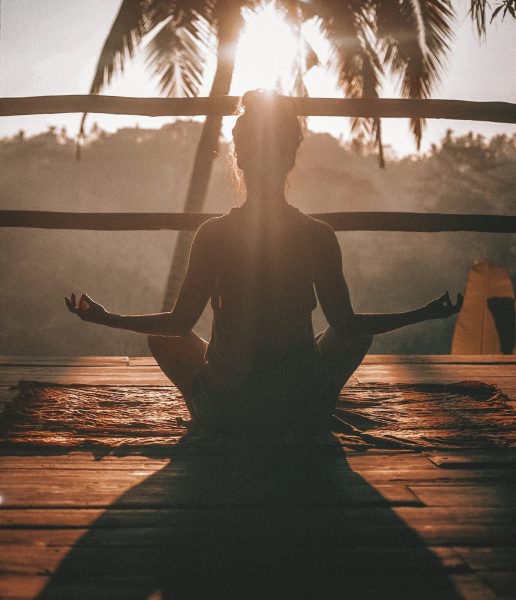
There is a particular kind of heat that settles into the bones after a long summer day. It’s not just the sun you remember, but the city pavement radiating it back at you, the air in your apartment hanging thick and still, the sheets on your bed feeling like a damp towel. By ten o’clock at night, your body is tired, but your mind is wired, your skin is sticky, and the idea of sleep feels a million miles away. I remember this feeling vividly from my childhood summers in Wuhan, one of China’s infamous “furnace cities.” The days were brutal, but my grandmother would say, “The night sky is the body’s best air conditioner, if you know how to use it.” She wasn’t talking about a fan. She was talking about a practice—a way of drawing the cool, quiet energy of the darkness into our overheated systems. This is the essence of a summer night meditation: not fighting the heat, but finding the profound, yin coolness that exists right in the heart of it.
- Why Darkness is Medicine in Summer
- The Practice: A Step-by-Step Guide to Your Night Sky Meditation
- The Science of Yin: Understanding the Dantian
- Deepening Your Practice: Foods, Herbs, and Timing
- When the Sky is Hidden: Urban and Cloudy Night Adaptations
- Integrating the Cool: Carrying the Night's Calm into Your Day
Why Darkness is Medicine in Summer
In Traditional Chinese Medicine (TCM), summer is the peak of Yang energy. It’s expansive, hot, bright, and active—like a bonfire at its brightest. But every bonfire needs the surrounding night to be seen. The darkness of the night sky represents Yin energy: cool, nourishing, receptive, and inward. The problem in our modern, artificially-lit, air-conditioned lives is that we often try to “beat” the summer heat with more Yang energy: blasting AC (which creates artificial, dry cold), drinking ice-cold drinks (which shocks the system), and staying up late with screens (which stimulates the mind). This creates internal conflict. The body is confused—is it hot or cold? Is it day or night?
A summer night meditation leverages the natural Yin of the darkness to balance the Yang of the season. It’s a form of energetic hygiene. When you sit under the night sky, or even just visualize it, you are allowing the body to attune to its natural cooling cycle. Research in chronobiology supports this: darkness triggers the release of melatonin, the hormone that not only helps us sleep but also has antioxidant and anti-inflammatory properties—literally cooling cellular activity. You are not just relaxing; you are giving your nervous system permission to switch from “fight or flight” (sympathetic) to “rest and digest” (parasympathetic), a state where the body can genuinely repair and cool down.
The Practice: A Step-by-Step Guide to Your Night Sky Meditation
This is a simple, profound practice. You don’t need any equipment, but a few small preparations can deepen the experience. The goal is to sit or lie comfortably in the dark, ideally with a view of the sky, and use your breath and imagination to cultivate coolness.
1. Preparation: Creating Your Cool Nest
Timing: The ideal time is between 9 PM and 11 PM, when the Yang energy of the day has fully subsided and the Yin of the night is fresh. Even 10-15 minutes is effective.
Location: If you have a balcony, patio, or backyard, use it. If not, sit by an open window where you can see the sky. If you can’t see the sky, that’s okay—the visualization is powerful. Just ensure you are in a dark, quiet space.
Body Prep: Take a cool (not cold) shower beforehand. Wear loose, light-colored cotton clothing. Have a light blanket nearby—you may feel cooler as you relax.
Optional Support: Place a slice of cucumber or a cool, damp cloth on your forehead. In China, we’d sometimes use a thin cloth bag filled with cooling mung beans (lu dou) as a neck pillow during these practices.
2. The Practice Itself
- Settle: Sit comfortably on a cushion or lie down on a mat. Let your hands rest gently on your lower abdomen, just below the navel. This is the Dantian, your body’s energetic “battery pack” or “sea of qi.” In summer, this area can become overheated. Your touch is a gentle anchor.
- Breathe: Close your eyes. Take 3-5 slow, deep breaths, inhaling through the nose and exhaling slowly through the mouth, as if you are blowing on a hot cup of tea. With each exhale, imagine you are releasing a little puff of steam, a little bit of the day’s heat.
- Visualize the Sky: Bring your awareness to the space above you. Picture the vast, dark night sky. See it in your mind’s eye—ink-black, deep blue-black, sprinkled with the faint, cool light of distant stars. Feel its immensity, its quiet, its profound coolness. This is not empty darkness; it is full, nourishing Yin.
- Inhale the Coolness: As you inhale slowly, imagine drawing that dark, cool, starry sky in through the crown of your head. Visualize it as a stream of liquid silver or cool moonlight, flowing down through the center of your body—down through your forehead, your throat, your chest.
- Exhale the Heat: As you exhale, imagine any residual heat, irritation, or agitation in your body—perhaps a red, prickly sensation in your chest or a buzzing in your head—dissolving and being released into the night air, where it is immediately neutralized and cooled.
- Fill the Dantian: Continue this cycle. On your next inhale, guide the stream of coolness all the way down to your lower abdomen, to the Dantian under your hands. Feel it filling and cooling your core, like a deep, dark lake forming in a valley. On each exhale, let any remaining surface heat float away.
- Rest in Coolness: After 5-10 minutes, or when you feel a sense of inner coolness and calm, stop the active visualization. Simply rest. Feel the weight of your body, the coolness of the air on your skin, the quiet hum of the night. Just be. There is nothing to do.
The Science of Yin: Understanding the Dantian
I want to focus on the Dantian, because it’s the cornerstone of this practice and a concept often glossed over. In the West, we talk a lot about the “gut brain” or the solar plexus. The Dantian (specifically the Lower Dantian, or Xià Dāntián) is similar but deeper. It’s not a physical organ, but an energetic center located about three finger-widths below your navel and one-third of the way into your body. Think of it as your personal power plant.
My grandmother used to say, “A strong Dantian is like a deep well. The surface may get hot in summer, but the water at the bottom is always cool and clear.” This is the goal of summer practices—to ensure the heat of the season doesn’t evaporate our deep reserves.
In TCM, the Dantian is where our Original Qi (Yuan Qi) resides—the foundational energy we inherit from our parents and use throughout our lives. It’s also the main storage site for Jing, our vital essence. When this center is overheated, we can experience symptoms like anxiety, insomnia, night sweats, and a feeling of being “burned out.” When it is cool and full, we feel grounded, calm, and resilient. The hands-on-belly technique is a simple biofeedback loop: your touch tells your nervous system, “Hey, pay attention here. Let’s calm and cool this center.” The visualization then directs the mind’s energy (Shen) to follow, creating a powerful mind-body effect.

Deepening Your Practice: Foods, Herbs, and Timing
A meditation practice is most powerful when supported by your daily life. Here’s how to create a “cooling ecosystem” that makes your night meditation even more effective.
The Cooling Kitchen
Certain foods have a naturally cooling thermal nature in TCM. Incorporate these into your evening meal (eaten at least 2 hours before your meditation) to prepare your body.
| Food | Form | Specific Benefit |
|---|---|---|
| Mung Beans (Lü Dou) | Mung bean soup (sweet or savory), cooled | The premier summer detoxifier in TCM. Clears heat from the blood and calms the spirit. A classic is lü dou tang. |
| Watermelon | A few slices, room temperature (not ice-cold) | Generates fluids and clears summer heat. The white rind is especially cooling—slice it and add to stir-fries. |
| Cucumber | Salad, infused water, or as a cooling snack | Clears heat, promotes urination, and quenches thirst. Easy and accessible. |
| Chrysanthemum Tea (Ju Hua) | 1-2 cups, brewed with 5-6 flowers per cup, cooled to room temp | Clears heat from the head and eyes, calms the liver. Perfect for screen-induced eye strain and headaches. |
| Lily Bulb (Bai He) | In soups or congee | Nourishes Lung Yin and calms the spirit. Excellent for dry coughs and anxiety that come with heat. |
The Evening Routine
What you do in the 90 minutes before your meditation matters. This is your “cooling down” period.
- 60-90 minutes before: Eat a light, cooling dinner (think a cucumber-mung bean salad, a piece of steamed fish with ginger, and wilted greens).
- 45 minutes before: Take a cool shower. Let the water run over the crown of your head and down your spine for 1 minute—this is like rinsing off the day’s heat.
- 30 minutes before: Dim all lights in your home. Switch to lamps or candles. Turn off all screens—TV, phone, computer. The blue light is stimulating and hot to the nervous system.
- 15 minutes before: Brew your chrysanthemum tea. Sip it slowly. Let this be a mindful act of preparation.
When the Sky is Hidden: Urban and Cloudy Night Adaptations
I live in a city now. I know that some nights, the sky is a hazy orange glow, or it’s raining, or you’re in a studio apartment with no window. This practice is still for you. The external sky is a wonderful aid, but the real “sky” is the one you create in your mind.
Find a “Darkness Anchor”: If you can’t see the stars, use a physical object to represent the night sky. A simple, smooth, dark-colored stone (like black tourmaline or hematite) held in your hand can work. Feel its cool, solid weight. It becomes your tactile connection to the vast, cool darkness. Alternatively, hang a simple, dark blue or black scarf over a lamp to create a canopy of soft, dark light above you.
Use Sound: The sound of crickets, night insects, or gentle rain can powerfully evoke the feeling of a summer night. Find a 10-minute nature soundscape. Let the sound wash over you as you begin your breathing. It acts as a sonic gateway to the state you’re trying to cultivate.
The Core Principle: Remember, you are not meditating on the sky. You are meditating with the quality the sky represents: vastness, coolness, quiet, and depth. You can access that quality anywhere, because it exists within you as well. The external practice simply helps you remember it.
Integrating the Cool: Carrying the Night’s Calm into Your Day
The real magic happens when you don’t just do the practice and then “turn it off.” You want to carry a thread of that night-sky coolness into your hot, busy day. This is the art of micro-meditation.
The 3-Breath Reset: When you feel the heat of frustration rising at work, or the irritation of a crowded commute, stop. If you can, close your eyes for 10 seconds. Take one slow breath and visualize that cool, dark stream entering the crown of your head. On the exhale, feel the heat leaving your palms and the soles of your feet. You don’t need to do the full practice. Just one conscious breath, recalling the feeling of the night, can reset your nervous system. My grandmother would do this while waiting for the bus. She’d just look up, even if the sky was a concrete ceiling, and take one deep breath. “Recharging the cool battery,” she’d call it.
Cooling Acupressure Points: Throughout the day, you can press these two points to clear heat and calm the mind:
- He Gu (LI-4): The “Joining Valley” point. In the fleshy web between your thumb and index finger. Firm pressure here for 30 seconds per hand can clear headaches and facial heat.
- Feng Chi (GB-20): The “Wind Pool” points. At the base of the skull, in the hollows on either side of the large neck muscles. Pressing upward and inward for 1 minute clears heat from the head, calms the mind, and relieves neck tension from looking at screens.
Common Questions
Is it safe to meditate outside at night?
Safety is paramount. Choose a secure, private space like a fenced backyard, a safe balcony, or a well-lit patio in a secure apartment complex. If you live in an area where being outside at night is not advisable, practice indoors by an open window. The quality of the air and the sense of connection to the outside are still beneficial. Never compromise your physical safety for a wellness practice.
What if I fall asleep during the meditation?
That’s perfectly fine, especially in the beginning. In fact, it’s a wonderful sign that your parasympathetic nervous system has engaged and your body is deeply relaxing. If you’re lying down, falling asleep is a natural outcome. If staying awake is your goal, try sitting upright on a cushion or chair. The intention is to rest in conscious relaxation, but if sleep comes, accept it as the body’s wisdom. You’ll still receive the cooling benefits.
Can I do this meditation in winter?
Absolutely, but with a slight shift in intention. In winter, the night sky is even darker and the Yin energy is at its peak. The practice would focus less on “cooling heat” and more on deep nourishment and stillness. The visualization of the dark sky would be about drawing in a deep, restorative quiet to support the body’s natural winter hibernation mode. The core principle—using the darkness to balance the season’s energy—holds true year-round.
The bottom line: The summer night sky is more than a pretty view; it’s a vast, natural pharmacy for an overheated mind and body. By spending just 10-15 minutes in conscious communion with its cool darkness—through breath, visualization, and simple presence—you can actively draw down the frantic Yang energy of the season, nourish your deep reserves of Yin, and find a profound sense of calm that carries into your waking life. It’s a free, ancient, and deeply effective way to let the night heal the day.
This article is for educational purposes and reflects traditional wellness perspectives. It is not a substitute for professional medical advice, diagnosis, or treatment.