The heat sits heavy on your shoulders like a wool blanket you can’t shrug off. Your desk fan is doing its best, but your thoughts feel slow and sticky, like honey pooling in a jar. You know you need to drink more water, maybe eat some cucumber, but what you really crave is a moment of genuine, internal cool — a deep exhale that reaches all the way down to your bones. In the Chinese wisdom tradition I grew up with, summer isn’t just a season to endure; it’s a time when the Fire element is at its peak. And the perfect antidote to Fire? Water. Not just drinking it, but visualizing it, feeling its cool, flowing energy move through you. This article will guide you through a simple, 5-minute practice I call the Waterfall Meditation, a summer meditation visualization designed to cultivate inner cool and restore your sense of calm, even on the hottest day.
Why Water is Summer’s Secret Ally
In Traditional Chinese Medicine (TCM), the five elements—Wood, Fire, Earth, Metal, and Water—are in constant dance with the seasons. Summer belongs to Fire, which governs joy, connection, and the heart. But too much Fire, like a campfire that’s grown out of control, can lead to irritability, insomnia, anxiety, and what we call “heat in the heart.” This isn’t just a metaphor; it’s a pattern we see every summer. The balancing element is Water. Water is cool, deep, nourishing, and it has the power to gently extinguish excess Fire without putting it out completely. Think of it like adding a cool mist to a steam room—not to douse the warmth, but to make it bearable and even pleasant.
My grandmother, who lived to be 97, never used air conditioning. She’d sit on her bamboo stool on the hottest afternoons with a cup of chrysanthemum tea, and she’d say, “You cool yourself from the inside first.” She wasn’t talking about iced drinks (which she believed were too shocking to the system). She was talking about the quality of her mind—still, clear, and flowing like a deep river. This practice is a direct inheritance of that wisdom. By using the image of water in meditation, you’re not just daydreaming; you’re tapping into a profound mind-body connection where the body’s physiology—heart rate, body temperature perception, stress hormones—can actually respond to the imagery.
The Ancient Art of Healing Visualization
Let’s demystify one key Eastern concept: Yi (意). This translates to “intention” or “mind-directed awareness.” In practices like qigong and meditation, Yi is the gentle conductor of your internal energy (qi). You’re not forcing or straining; you’re guiding with quiet focus. When you visualize a waterfall, you are using your Yi to invite the qualities of Water—coolness, fluidity, cleansing—into your energy field. Modern science calls this “therapeutic guided imagery,” and studies have shown it can reduce cortisol levels and lower perceived body temperature. It’s not magic; it’s a focused use of your mind’s incredible influence over your body.
“The mind is like water. When it’s turbulent, it’s difficult to see. When it’s calm, everything becomes clear.”
This practice is specifically designed for summer because it works directly with the season’s energy. You’re not fighting the heat; you’re using its opposite to find balance. The 5-minute timeframe is intentional—it’s long enough to create a physiological shift but short enough that you won’t get restless or overheat trying to “achieve” something. This is about a gentle reset, not a marathon session.
Preparing Your Space & Setting the Stage
You don’t need a mountain stream to do this. You need a quiet corner where you won’t be disturbed for 5 minutes and a little intentional setup. Preparation is part of the practice; it signals to your nervous system that a shift is coming.
- Time it Right: The ideal time is during the Zi hour (11 PM – 1 AM) or the Wu hour (11 AM – 1 PM), when yin-yang energy is most pronounced. But pragmatically, the best time is when you feel the heat most acutely—often between 2 PM and 5 PM, the “summer slump” time.
- Cool the Room: Don’t blast the AC. Instead, draw the curtains, open a window for airflow if possible, and place a bowl of cool water with a few drops of peppermint essential oil (3-4 drops) or a sprig of fresh mint near you. The scent is cooling to the senses.
- Hydrate First: Sip 8 oz of room-temperature or slightly cool (not ice-cold) water before you begin. Add a slice of cucumber or a few goji berries for a touch of traditional nourishment. You want your body subtly hydrated, not parched.
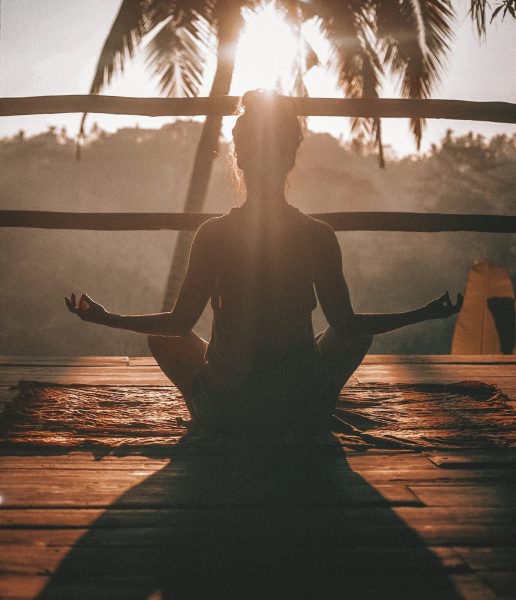
- Posture: Sit comfortably on a cushion or chair. Spine long, shoulders relaxed, hands resting palms-down on your thighs. This palm-down position is key in many cooling qigong postures—it helps draw energy downward.
The 5-Minute Waterfall Meditation: A Step-by-Step Guide
Set a timer for 5 minutes. Close your eyes. Take three slow, deep breaths—inhale through your nose for a count of 4, exhale through your mouth for a count of 6. Let the exhale be longer; it’s inherently calming.
Minutes 0-1: Arriving in the Forest. Imagine you’re standing at the edge of a lush, green forest on a warm day. The air is still. See the details: the dappled sunlight, the ferns, the moss on the stones. Feel the soft earth under your feet. Then, you hear it—a distant, gentle roar. It’s the sound of falling water. You follow the sound along a path, and with each step, the air feels a fraction cooler. Your job here is simply to notice the sensory details: the sound growing louder, the green deepening, the air freshening.
Minutes 1-3: Meeting the Waterfall. You arrive at a clearing. Before you is a magnificent waterfall, about 20 feet high, cascading into a deep, clear pool. The mist rises from the base, catching rainbow fragments of light. This is the core of the practice. Don’t just watch it. Feel it. Imagine stepping into the pool. The water is perfectly cool, not cold. It’s refreshing. Feel it on your ankles, your calves. Now, with your intention (your Yi), guide a stream of this cool, sparkling water to flow up through the soles of your feet, through your legs, and into your lower abdomen—the Dantian (丹田), the body’s energetic center located about two inches below your navel. This area is considered the “Sea of Qi.” Visualize it filling with cool, liquid calm.
Minutes 3-4: The Internal Waterfall. Now, imagine this cool water rising from your Dantian, flowing up your spine—like an internal waterfall in reverse. It flows up the central channel of your body, over your shoulders, and cascades down the front of you, like a gentle, cooling curtain of water. It flows down your arms to your fingertips, down your chest, and back into the pool at your feet, completing a circuit. With each cycle, it washes away a little more heat, a little more tension. If your mind wanders (it will!), gently bring it back to the sensation of cool water flowing. The key is the feeling, not the perfect picture.

Deepening the Practice: Sensory Anchors & Common Pitfalls
The strength of this visualization lies in engaging as many senses as possible. Your brain responds more powerfully to multi-sensory imagery. Here’s a quick reference to help you build the experience:
| Sense | What to Focus On | Why It Works |
|---|---|---|
| Sight | The color of the water (blue-green), the sparkle of mist, the movement of the cascade. | Visual detail anchors the imagination, making it feel real. |
| Sound | The constant, white-noise roar of the waterfall. The sound of a single drop. | Sound is deeply soothing to the nervous system and masks distracting thoughts. |
| Touch/Sensation | The cool temperature of the water against your skin. The gentle pressure of the flow. | This triggers the body’s thermoregulation and relaxation response. |
| Scent | The clean, ozone-like scent of water mist, mixed with green forest smells. | Smell is directly linked to the brain’s emotional center, deepening the calming effect. |
Pitfall #1: Trying Too Hard. This isn’t a concentration contest. If you can’t “see” the waterfall clearly, that’s fine. Focus on the feeling of coolness. The intention is what matters. My teacher used to say, “It’s not about the picture; it’s about the impression.”
Pitfall #2: Getting Sweaty and Giving Up. If you feel hot during the practice, that’s actually perfect. Use that sensation as your starting point. Let the cool water in your mind wash over the actual heat you feel. It’s a dialogue.
Pitfall #3: Only Doing It When You’re Miserable. The real benefit comes from daily practice, even for just 5 minutes on a mild day. It trains your nervous system to access this “cool” state more quickly when you truly need it.
Finishing & Integrating the Cool
When your timer chimes at 5 minutes, don’t just snap out of it. Let the waterfall image gently fade. Feel your body sitting in the chair, the temperature of the room. Wiggle your fingers and toes. Take a final, slow breath in, imagining you’re gathering the last wisps of cool mist, and breathe out, releasing any residual heat or agitation. Before you open your eyes, place your hands over your Dantian (lower abdomen) and feel a gentle warmth there—not heat, but a nourishing, settled glow. This is the sign of balanced qi.
Carry this feeling with you. When you step back into the heat, remember the sensation of water on your feet. You’ve just created an internal reservoir of coolness you can access with a single breath. For an extra boost, pair this practice with a cooling herbal tea afterward: chrysanthemum (ju hua) with a few goji berries (gou qi zi). It’s the classic summer combination in Chinese households for clearing heat and brightening the eyes.
Common Questions
I can’t visualize at all. Will this still work for me?
Absolutely. Think of it less as “seeing a movie” and more as “thinking about the idea of cool water.” If you can recall the feeling of jumping into a cool pool on a hot day, you can do this. Focus on the physical sensation of coolness on your skin, the sound of rushing water. Some people are more kinesthetic (feeling-based) or auditory (sound-based) than visual. Meet yourself where you are. The Yi (intention) is the active ingredient, not the HD mental image.
Is it better to do this with my eyes open or closed?
For beginners, closed eyes are strongly recommended. Closing your eyes removes about 80% of sensory input from the external world, allowing you to focus inward much more easily. It’s like turning off the lights in a room to better see a projector screen. Once you’re very familiar with the practice, you can experiment with a soft, unfocused gaze downward (called “closing the gates of the eyes” in some traditions), but start with eyes closed for the strongest effect.
Can this help with summer insomnia or anxiety?
Yes, it’s particularly suited for that. In TCM, summer insomnia and anxiety often stem from “Heart Fire” rising, which agitates the mind (Shen). This practice directly nourishes the Water element (which controls Fire) and guides energy downward. For sleep, try doing the 5-minute practice 30 minutes before bed. Imagine the waterfall not in a bright forest, but in a cool, moonlit grove. Let the cool water wash away the day’s mental chatter. Pair it with sipping a tea of sour jujube seeds (suan zao ren)—a classic TCM herb for calming the spirit and aiding sleep.
The bottom line: Summer’s heat doesn’t have to mean a frayed mind and a sticky body. By spending just 5 minutes a day with the Waterfall Meditation, you use the profound mind-body connection to cultivate a reservoir of inner cool. This practice, rooted in the principles of using Water to balance Fire, offers a practical, sensory-rich tool to calm your nervous system, clear mental fog, and restore your sense of calm—even on the hottest days. It’s not about escaping the season, but dancing with its energy in a way that leaves you refreshed, not depleted.
This article is for educational purposes and reflects traditional wellness perspectives. It is not a substitute for professional medical advice, diagnosis, or treatment.