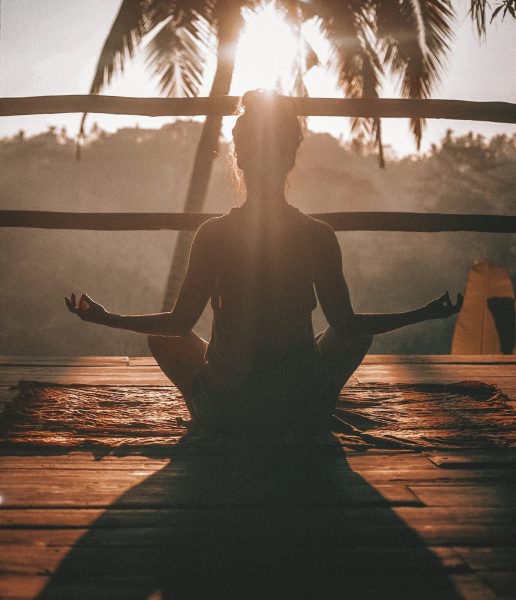
The sun is high, the air is thick, and the city hums with a restless energy. Summer is a season of vibrancy, but for many of us, that vibrancy can tip over into a feeling of being frazzled, irritable, and oddly anxious. You might feel it as a tightness in your chest, a racing mind that won’t switch off, or a general sense of being overheated from the inside out. In Traditional Chinese Medicine (TCM), this isn’t just a metaphor; it’s a literal diagnosis. The external heat of summer can invade the body, disrupt our internal balance, and stir up what we call “Heart Fire,” leading to that familiar blend of agitation and anxiety. But don’t worry—you don’t need to escape to the mountains to find relief. You can cultivate your own inner oasis with a powerful, time-tested practice: a cooling meditation for summer, rooted in TCM principles.
Understanding the Heat: Why Summer Feels So Anxious
From a TCM perspective, summer is the season of the Fire element, associated with the Heart and Small Intestine meridians. The Heart, in TCM, is considered the “Emperor” of the body, the seat of consciousness, spirit (Shen), and emotional balance. When everything is in harmony, the Fire element brings joy, laughter, and connection. But when the summer heat becomes excessive—either from the weather, diet, or our own emotional state—it can stoke the flames of Heart Fire too high.
Think of your Heart like a campfire. A well-tended campfire provides warmth, light, and a gathering place. But when you pile on too much dry wood (summer heat, spicy foods, late nights, anger), it becomes a roaring blaze. That excess heat doesn’t stay contained; it flares upward, affecting the mind and spirit. This manifests as anxiety, insomnia, restlessness, irritability, and even mouth ulcers or a red complexion. The key to managing summer anxiety isn’t to douse the fire completely—that would extinguish our vitality—but to gently cool and balance it. A cooling meditation for summer is the perfect tool for this delicate task.
The TCM Principles Behind Cooling Down
Our meditation is built on a few core TCM concepts. First is the idea of Yin and Yang. Yang represents heat, activity, and expansion (very much like summer), while Yin represents coolness, stillness, and nourishment. In summer, we need to support our Yin to counterbalance the dominant Yang heat. Second is the concept of Qi (vital energy). When we’re anxious and overheated, our Qi can become agitated and rise, creating that “heady” feeling. We want to guide it down, to ground it. Third is the role of the Kidneys. In TCM, the Kidneys are the root of our Yin energy, our deep reservoir of coolness. The meditation will help you tap into this reserve.
This practice isn’t just about imagining ice cubes. It’s a somatic (body-based) process of consciously directing your attention and breath to create a physiological shift. You are, in essence, telling your nervous system, “It’s okay to cool down now.”
Your Cooling Meditation for Summer: A Step-by-Step Guide
Find a quiet place where you can sit or lie down comfortably for 10-15 minutes. Wear loose, natural-fiber clothing. You might even place a cool, damp cloth on your forehead or wrists to enhance the sensation.
- Settle and Center: Close your eyes. Take three deep, slow breaths, inhaling through your nose and exhaling through your mouth. With each exhale, imagine you are releasing a puff of hot steam from your body. Let your shoulders drop away from your ears.
- Body Scan for Heat: Bring your awareness to your body. Scan from the top of your head down to your toes. Where do you feel heat, tension, or agitation? It might be a flushed face, a tight jaw, a churning stomach, or hot feet. Simply notice these areas without judgment. This is your starting map.
- Invoke the Cooling Breath: Now, we’ll use a specific breath. On your next inhale, breathe in slowly through your nose, imagining you are sipping cool, clean mountain air. As you exhale, gently press the tip of your tongue to the roof of your mouth (just behind the front teeth) and exhale slowly through your nose, imagining you are releasing warm, stale air from deep in your lungs. Feel the cooling sensation at the back of your throat. Repeat this for 5-7 cycles. The tongue placement helps connect the governing and conception vessels, promoting energetic flow.
- Visualize Cool, Blue Light: Continue with the cooling breath. Now, bring to mind the color of deep, clear blue—the color of a winter sky or a glacial lake. As you inhale, visualize this cool, blue light entering through the crown of your head. See it as a gentle, liquid stream. Direct this stream of blue light to the area of heat you identified earlier. Watch it wash over that area, soothing and cooling it. Feel the tension softening, the heat dissipating.
- Ground the Energy Downward: This is crucial. Imagine the blue light, now carrying away the heat and agitation, flowing downward through your body. See it moving from your chest, through your abdomen, down your legs, and out through the soles of your feet into the cool, receptive earth below. The earth can absorb and transform this excess heat. Feel yourself becoming lighter and more grounded with each exhale.
- Cultivate the Kidney Reservoir: Bring your focus to your low back, just below the waist, where your Kidneys are located. This is your body’s fundamental reservoir of Yin coolness. As you inhale, imagine drawing up cool, dark blue energy from the earth, up through your feet, and letting it pool in this area. Feel a deep, replenishing coolness building here. This is your inner wellspring.
- Seal and Rest: When you feel ready, let the visualization go. Simply sit with the sensations in your body—the coolness in your core, the calm in your mind. Take a few natural breaths. Gently wiggle your fingers and toes, and when you’re ready, open your eyes.
The Science of Why This Works
This isn’t just poetic imagery; it’s a practice that engages your parasympathetic nervous system—the “rest and digest” branch that counteracts the “fight or flight” stress response. The slow, controlled breathing lowers cortisol and heart rate. The focused visualization is a form of attention training. By directing your mind away from anxious thought loops and toward a physical sensation (coolness), you interrupt the anxiety cycle. The downward energy flow mirrors the grounding techniques used in modern psychology to manage panic. Furthermore, the tongue-on-palate gesture is a key component in practices like Qigong and certain forms of yoga, believed to help regulate energy flow.

Integrating Cooling Practices into Your Daily Summer Flow
The meditation is a powerful reset, but its effects are amplified when supported by daily habits. Think of it as part of a holistic cooling protocol. Here’s how you can weave TCM wisdom into your day:
- Dietary Adjustments: Favor cooling, hydrating foods. TCM categorizes foods by temperature. In summer, lean toward bitter greens (like dandelion and romaine), cucumber, watermelon, mung beans, pear, and mint. Minimize excessive spicy, greasy, and fried foods, which add internal heat. Drink room temperature or cool beverages, not ice-cold, as extreme cold can shock the digestive system.
- Hydration with Herbs: Sip on cooling herbal teas throughout the day. Chrysanthemum tea is a classic TCM choice for clearing heat from the head and eyes. Peppermint tea is excellent for dispersing heat and calming the mind. You can also try a simple infusion of fresh mint leaves and cucumber slices in water.
- Movement and Timing: Avoid vigorous exercise during the peak heat of the day (10 am – 4 pm). Opt for gentle, flowing movements like Tai Chi, Qigong, or Yin Yoga in the early morning or evening. These practices encourage Qi to flow smoothly rather than becoming agitated.
- Acupressure Point for Quick Relief: Locate the point called Heart 7 (Shenmen). On your inner wrist, find the crease. From the pinky side, slide your finger into the groove just inside the tendon. Apply gentle pressure with your thumb for 1-2 minutes while breathing deeply. This point calms the Heart, clears heat, and alleviates anxiety—a perfect first-aid spot during a stressful summer day.
Listening to Your Body: Signs You’re Cooling Down
As you practice, you’ll start to notice subtle shifts. These are signs that your internal balance is restoring:
| Sign of Excess Heat (Before) | Sign of Cooling Balance (After) |
|---|---|
| Racing, circular thoughts | Mind feels spacious and calm |
| Flushed face, feeling hot | Normal complexion, feeling temperate |
| Irritability, short temper | Patience, easy-going attitude |
| Restlessness, can’t sit still | Comfortable in stillness |
| Insomnia or vivid, disturbed dreams | Deeper, more restful sleep |
| Dry mouth or bitter taste | Normal, comfortable mouthfeel |
Don’t expect a dramatic, icy plunge. The change is often gradual, like the feeling of a cool breeze on a warm evening. Trust the process. Consistency is more important than intensity.
“In the stillness of cooling, we find the strength that is not aggressive, the clarity that is not harsh. This is the wisdom of summer.”
Common Questions
Can I do this cooling meditation if I don’t know anything about TCM?
Absolutely. While the meditation is inspired by TCM principles, its core mechanics—deep breathing, body scanning, and visualization—are universal mindfulness techniques. You don’t need to believe in Qi to benefit from calming your nervous system and directing your focus. Just follow the steps as a guided relaxation exercise, and let your body’s innate wisdom do the rest.
How often should I practice this cooling meditation for summer?
For best results, aim for daily practice, especially during the hottest months or when you’re feeling particularly anxious. Think of it as a daily reset for your internal thermostat. Even 10 minutes a day can make a significant difference. On very stressful days, you can do a shorter 5-minute version, focusing just on the cooling breath and the downward flow of energy.
I feel even more anxious when I try to sit still. What should I do?
This is very common, and it’s not a failure. If sitting still amplifies your anxiety, try a more active form of cooling. You can practice the cooling breath while walking slowly in a shaded area. Or, try the “downward flow” visualization while standing and gently swaying. You can also focus solely on the acupressure point Heart 7, which provides a physical anchor for your attention. The goal is to find a method that works for your nervous system, not to force a specific posture.
The bottom line: Summer anxiety is a real, physiological response to the season’s heat, understood through the ancient lens of Traditional Chinese Medicine as an imbalance of Fire and Water. By practicing this cooling meditation for summer, you engage directly with your body’s subtle energy systems, using breath and visualization to soothe Heart Fire, nourish your Yin reserves, and guide your Qi into a state of calm, grounded balance. Pair it with mindful dietary and lifestyle choices, and you can transform summer from a season of agitation into one of joyful, radiant calm.
This article is for educational purposes and reflects traditional wellness perspectives. It is not a substitute for professional medical advice, diagnosis, or treatment.