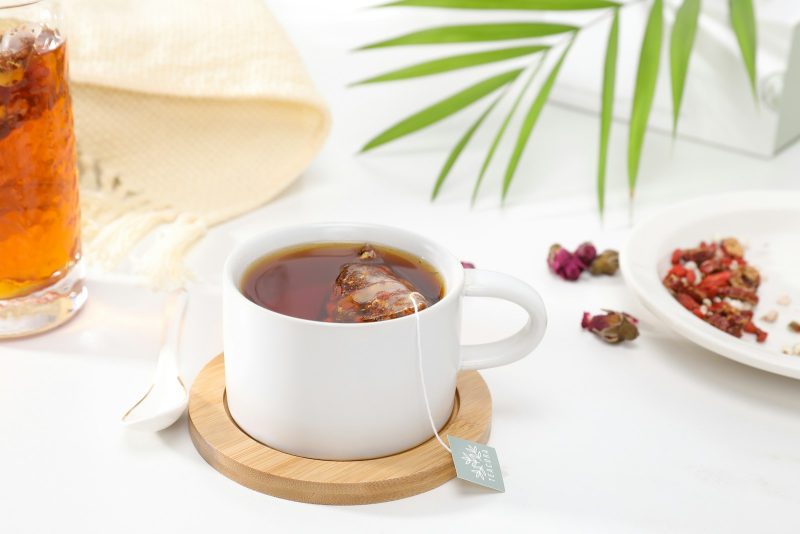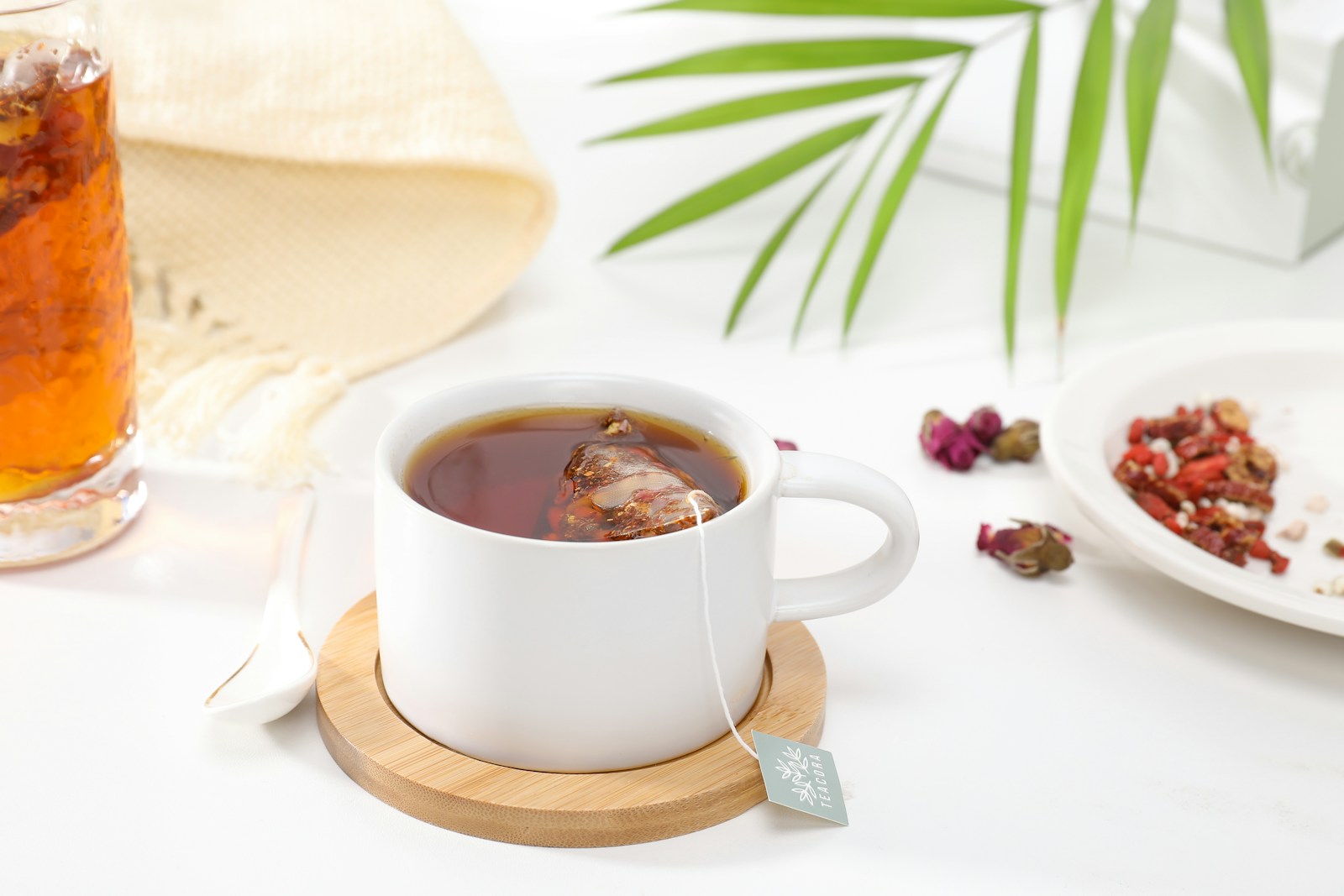
I was a three-cups-a-day coffee drinker. Then I developed acid reflux, and my Chinese mother said “I told you so.” She said it in Cantonese, which somehow made it sting more. She said it while handing me a cup of ginger tea that I absolutely did not ask for. And the worst part? She was right.
This is the story of how I replaced my beloved morning coffee with ginger tea for 30 days straight — not because I wanted to, but because my stomach staged a full rebellion and my mother’s smug face was more than I could bear. If you’ve ever wondered about ginger tea vs coffee, whether ginger tea can actually replace your morning ritual, or if Traditional Chinese Medicine has been laughing at our espresso habits all along — buckle up. This got weird.
My Coffee Habit: A Love Story (With Complications)
Let me paint you a picture. Every morning for the past eight years, I woke up and the first thing I did — before checking my phone, before saying good morning to anyone, before even fully opening my eyes — was stumble to the kitchen and make coffee. Not instant coffee. Not drip coffee. We’re talking a double shot of espresso, sometimes with oat milk, sometimes black, always strong enough to make my teeth feel fuzzy.
By 10 a.m., I’d had cup number two. By 2 p.m., cup number three. On stressful days, cup number four, which I’d justify by saying things like “it’s basically a health food” and “antioxidants, right?”
I loved everything about coffee. The ritual. The smell. The way it made me feel like a functioning member of society. I loved the café culture, the fancy beans, the burr grinder I spent too much money on. Coffee wasn’t just a beverage — it was my personality.
And then my stomach had other plans.
The Acid Reflux Wake-Up Call
It started small. A burning sensation after my morning espresso. A weird sour taste in my mouth by mid-afternoon. I ignored it for months because that’s what adults do — we ignore our bodies until they send increasingly aggressive emails.
Then one night, I woke up at 3 a.m. with what felt like a small fire burning in my chest. Not a heart attack (I checked, because I’m also a hypochondriac) — acid reflux. The kind that makes you sleep sitting up like a Victorian ghost.
I went to my GP. She asked about my diet. When I said “three to four espressos a day,” she gave me the same look my mother had been giving me for years — the one that says, “You did this to yourself.”
She prescribed omeprazole and suggested I “consider reducing caffeine intake.” I nodded, filled the prescription, and continued drinking coffee. Because I am, as my mother would say in Cantonese, m̀h sīk gām (唔識飲) — someone who doesn’t know how to consume things properly.
The Phone Call That Changed Everything
Two weeks later, I called my mother to wish her happy birthday. Big mistake. She could hear it in my voice — that slight rasp, the occasional throat-clearing. “You have shanghuo, don’t you?” she asked. Shanghuo (上火) is the Chinese concept of “internal heat” — when your body is basically running too hot, too fast, like an engine with no coolant.
“It’s just acid reflux,” I said.
“Same thing,” she said. “You’ve been burning your stomach with that bitter black water for years. Your stomach fire is out of control. Stop drinking coffee. Drink ginger tea.”
I want to be clear: I did not want to stop drinking coffee. I did not want to drink ginger tea. But I was sleeping upright, my chest burned every night, and my mother’s birthday present was a bag of dried ginger slices she’d mailed from her herbalist. The universe had spoken.
The Experiment: 30 Days of Ginger Tea Instead of Coffee
I decided to approach this like a scientist. Well, a scientist who is also deeply petty and wanted to prove his mother wrong. I set some ground rules:
- No coffee at all for 30 days — not even decaf, not even “just a small one”
- Ginger tea every morning — made fresh, first thing, replacing my usual espresso ritual
- A daily journal — tracking energy, digestion, mood, sleep, and cravings
- No other major changes — same diet, same exercise, same sleep schedule
I was going to do this properly. If ginger tea vs coffee was going to be a fair fight, I needed data.
- My Coffee Habit: A Love Story (With Complications)
- The Acid Reflux Wake-Up Call
- The Phone Call That Changed Everything
- The Experiment: 30 Days of Ginger Tea Instead of Coffee
- Week 1: The Withdrawal (Days 1-7)
- Week 2: The Adjustment (Days 8-14)
- Week 3: The Surprise (Days 15-21)
- Week 4: The Reckoning (Days 22-30)
- The TCM Perspective: Why Ginger Tea Makes Sense
- How to Make the Perfect Ginger Tea (My Daily Recipe)
- But Can Ginger Tea Really Replace Coffee? An Honest Assessment
- The Verdict: What I'm Doing Now
Week 1: The Withdrawal (Days 1-7)
I’m not going to sugarcoat this: the first week was terrible.
Day 1 started with a headache by 9 a.m. By noon, I was irritable, foggy, and seriously considering whether “ginger tea morning routine” was just something people said but never actually did. My brain felt like it was wrapped in wet cotton wool. I wrote in my journal: “Energy: 3/10. Mood: hostile. Regret: maximum.”
Day 2 was worse. The headache intensified. I was tired by 2 p.m. — not the usual afternoon slump, but a bone-deep fatigue that made me question whether I had some serious illness. I Googled “caffeine withdrawal symptoms” and discovered they peak at days 2-3. Comforting.
Day 3: I nearly caved. I was at a café with a friend, and the smell of fresh espresso almost broke me. But I held firm, ordered a ginger tea (the barista looked confused), and got through it.
By Day 5, the headache started to lift. I noticed something unexpected: I was falling asleep faster. Not dramatically, but noticeably. My usual 11:30 p.m. tossing-and-turning had been replaced by actual drowsiness by 10:45 p.m. Interesting.
By Day 7, the worst was over. My energy was still lower than my coffee-fueled baseline, but the fog was clearing. And my stomach — my poor, burned stomach — felt noticeably calmer. The burning sensation that had become my constant companion had faded to a whisper.
Week 2: The Adjustment (Days 8-14)
Something shifted during week two. The caffeine withdrawal was gone, and in its place was something I hadn’t experienced in years: stable energy.
With coffee, my mornings were a rocket launch — sharp up, then a hard crash by 11 a.m., demanding another cup. With ginger tea, the energy came on gently. Like a sunrise instead of a light switch. I wasn’t buzzing. I wasn’t crashing. I was just… awake. Functioning. It was deeply unsettling.
The digestion improvements were impossible to ignore. The bloating I’d normalized — that constant tightness after meals — started to ease. My digestion felt lighter, more efficient. I wasn’t rushing to the bathroom after my morning coffee (because, obviously, I wasn’t having one), but my overall gut comfort improved dramatically.
My journal entry from Day 10: “Energy: 7/10. Digestion: noticeably better. Mood: suspiciously positive. Still miss coffee. Mother is insufferable.”
Week 3: The Surprise (Days 15-21)
Week three is when things got interesting. I started to genuinely enjoy the ginger tea — not as a coffee substitute, but on its own terms. The warmth, the slight spice, the way it settled my stomach. I experimented with different preparations (more on that later) and found a combination I actually looked forward to each morning.
The most surprising change was mood stability. I hadn’t realized how much coffee was contributing to my anxiety until I removed it. That constant low-level hum of nervous energy — the feeling that I should be doing something, producing something, optimizing something — had quieted. I was calmer. More present. Less likely to snap at emails.
My sleep was now consistently better. I was falling asleep within 15 minutes (previously 30-45), sleeping deeper, and waking up feeling actually rested instead of immediately reaching for caffeine. It was a positive feedback loop: better sleep meant less need for caffeine, which meant better sleep.
The acid reflux was gone. Completely. No more nighttime burning. No more sour taste. No more sleeping upright like a gothic novel character.
Week 4: The Reckoning (Days 22-30)
By the final week, I had to face an uncomfortable truth: I felt better without coffee.
Not just “different.” Better. My energy was stable all day. My digestion was the best it had been in years. My anxiety had decreased noticeably. My skin even looked better — less red, less inflamed. And I was saving a fortune on oat milk lattes.
On Day 30, I sat down and compared my Day 1 journal entry to my Day 30 entry:
| Metric | Day 1 (Coffee) | Day 30 (Ginger Tea) |
|---|---|---|
| Energy stability | Peaks and crashes | Steady throughout the day |
| Digestion | Acid reflux, bloating | No reflux, minimal bloating |
| Sleep onset | 30-45 minutes | 10-15 minutes |
| Anxiety level | Constant low hum | Noticeably calmer |
| Morning mood | Zombie until coffee | Functional within 20 minutes |
| Stomach comfort | Burning, sour taste | Settled, no discomfort |
I called my mother. “You were right,” I said. There was a long pause. “Of course I was right,” she said. “I’ve been right about everything for 35 years. When are you going to listen to me about your posture?”
The TCM Perspective: Why Ginger Tea Makes Sense
Once I started feeling better, I got curious about the “why.” So I did what any recovering coffee addict would do — I called my mother’s herbalist and asked him to explain.
In Traditional Chinese Medicine, the stomach is understood as a warm organ that processes food through gentle heat. When you pour multiple cups of hot, highly acidic coffee into it every day, you’re not “waking it up” — you’re overheating it. Think of it like revving a car engine in neutral. Eventually, something breaks.
TCM describes this as “stomach fire” (胃火, wèi huǒ) — an excess of heat in the digestive system that manifests as acid reflux, bad breath, gum inflammation, and that burning sensation I knew so well. Coffee, being both bitter and acidic, fuels this fire. It gives you a short-term energy boost by borrowing from your reserves, then leaves you depleted.
Ginger (姜, jiāng), on the other hand, is warming without being overheating. It’s classified as a “warming” herb that specifically targets the stomach and spleen. It doesn’t just mask symptoms — it actually supports the digestive system’s function. In TCM terms, ginger warms the middle jiao (the digestive center), promotes the downward flow of stomach Qi (preventing reflux), and helps transform dampness (that bloated, heavy feeling).
“Coffee borrows energy from tomorrow. Ginger tea builds energy for today. That’s the fundamental difference.”
The herbalist also made a point I found fascinating: in TCM, the ideal morning beverage should be warm, not hot, and should support digestion rather than stimulate the nervous system. Ginger tea does exactly this. It gently warms the stomach, encourages peristalsis (the muscle contractions that move food through your gut), and does all of this without the cortisol spike that comes with caffeine.
Warming vs. Cooling: The Temperature Framework
TCM categorizes foods and drinks by their thermal nature — not their actual temperature, but their effect on the body:
- Hot/warming: Ginger, cinnamon, black pepper, lamb, chili — these increase circulation and metabolism
- Neutral: Rice, most grains, sweet potato — these are balanced and suitable for daily consumption
- Cool/cold: Raw vegetables, most fruits, green tea, and — notably — many of the modern foods we consume daily
Coffee is tricky. Its actual temperature is hot, but its nature is debated — some TCM practitioners classify it as “cooling” because of its bitter, draining quality. Either way, the consensus is that excessive coffee depletes the stomach’s natural warmth over time, leading to the paradox of feeling both wired and exhausted.
Ginger is unambiguously warming. It supports the body’s Yang energy — the active, warming force that keeps everything running. For someone whose stomach was “burned out” from years of coffee, ginger was essentially a gentle repair job.
How to Make the Perfect Ginger Tea (My Daily Recipe)
After 30 days of experimentation, I’ve landed on a ginger tea recipe that I actually prefer to coffee. Yes, I said it. Here’s what I do every morning:
Basic Ginger Tea (5 minutes)
- Slice fresh ginger — about a thumb-sized piece (roughly 15-20g), peeled and cut into thin slices. Don’t use powdered ginger. Trust me on this.
- Bring water to a boil — about 2 cups (500ml). Use filtered water if your tap water tastes like a swimming pool.
- Add the ginger and reduce heat — let it simmer for 10-15 minutes. Longer = stronger and spicier. I go for 12 minutes because I like a kick.
- Strain and serve — pour into your favorite mug. Add a small drizzle of raw honey if you need sweetness, but try it plain first. The natural warmth of ginger has its own subtle sweetness.
My Upgraded Morning Version
Once I got the basics down, I started adding things. Here’s my current daily recipe, which I call “The Apology to My Stomach”:
- Fresh ginger (15-20g, sliced)
- 2-3 slices of fresh turmeric (or 1/2 tsp powder) — anti-inflammatory and adds a beautiful golden color
- 1 small piece of dried red date (jujube) — adds natural sweetness and, in TCM, nourishes blood and Qi
- A tiny pinch of cinnamon — warming, aromatic, and supports blood sugar stability
- 1 teaspoon of raw honey — added after straining, never while boiling (heat destroys the beneficial enzymes)
I simmer everything except the honey for 12-15 minutes, strain it, then stir in the honey once it’s cooled slightly. The result is a golden, fragrant, slightly sweet tea that warms you from the inside without the jitters. It’s genuinely delicious.
Pro tips from my 30 days of trial and error:
- Morning is key. Drink it within 30 minutes of waking, before eating anything. This is when your stomach is most receptive to gentle warming.
- Fresh ginger beats dried. Dried ginger is more intensely warming and can be too harsh for daily use. Fresh ginger is gentler and has more of the anti-inflammatory compound gingerol.
- Don’t overdo it. One to two cups a day is plenty. More isn’t better — you can over-warm your system, which brings its own problems.
- Listen to your body. If you feel hot, sweaty, or irritable after drinking it, reduce the amount or the simmering time. TCM is all about balance, not excess.

But Can Ginger Tea Really Replace Coffee? An Honest Assessment
Let me be honest: ginger tea does not give you the same buzz as coffee. If you’re looking for that sharp, laser-focused, “I can conquer the world” feeling, ginger tea won’t deliver it. That’s caffeine. Ginger tea doesn’t have caffeine.
What ginger tea does give you is something different — and I’d argue, something better for the long term. It gives you sustained, calm energy without the crash. It supports your digestion instead of burning it out. It warms your body gently instead of spiking your cortisol. And it doesn’t turn you into a jittery mess by 3 p.m.
The comparison isn’t really ginger tea vs coffee — it’s short-term stimulation vs. long-term support. Coffee is a loan shark: it gives you energy now and takes it back with interest later. Ginger tea is a savings account: modest returns, but they compound.
Do I miss coffee? Yes. Every single day. The smell alone could bring me to my knees. But do I feel better without it? Also yes. And that’s the part that’s hard to argue with.
Frequently Asked Questions
Can ginger tea really give me the same energy as coffee?
No — and it’s not trying to. Coffee delivers caffeine, which blocks adenosine receptors in your brain and creates a feeling of alertness. Ginger tea has zero caffeine. What it does instead is support your body’s natural energy production by improving digestion and warming your metabolism. Think of it as the difference between a sugar rush and a balanced meal. The energy from ginger tea is gentler, more sustained, and doesn’t come with a crash. Most people who switch report feeling “calm energy” rather than “wired energy.”
Is it safe to drink ginger tea every day?
For most people, yes — one to two cups of fresh ginger tea daily is considered safe and beneficial. However, if you’re pregnant, on blood-thinning medication, or have gallstones, check with your doctor first. In TCM, ginger is considered a food-grade herb, meaning it’s gentle enough for daily use. The key is moderation. If you notice heartburn, mouth sores, or excessive sweating, you’re probably overdoing it. Cut back and see how you feel.
What about caffeine withdrawal? Should I quit coffee cold turkey?
I quit cold turkey because I’m dramatic and wanted clean data. In hindsight, a gradual approach would have been smarter. Consider reducing your coffee intake by one cup every 3-4 days while introducing ginger tea. Days 2-3 of caffeine withdrawal are the worst — expect headaches, fatigue, and irritability. It passes. Green tea (which has some caffeine) can be a useful bridge if you need to taper more slowly.
Can ginger tea help with acid reflux specifically?
In my experience, absolutely — but with a caveat. Ginger tea helped my acid reflux because removing coffee was the primary fix. Ginger itself supports digestion and can help with nausea and bloating, but it’s not a magic cure for GERD. If you have chronic acid reflux, see a doctor. What I can say is that switching from coffee to ginger tea removed the main trigger for my reflux, and the ginger helped settle my stomach during the transition. TCM explains this as ginger promoting the “downward flow” of stomach Qi — keeping everything moving in the right direction.
What does the research say about ginger tea vs coffee for health?
There’s actually decent science behind both. Coffee has well-documented benefits — improved cognitive function, antioxidant properties, reduced risk of certain diseases. It’s not “bad.” The problem is excess and individual sensitivity. Ginger, meanwhile, has strong evidence for anti-inflammatory effects, nausea relief, and digestive support. A 2019 review in Food Science & Nutrition confirmed ginger’s gastroprotective properties. The honest answer is: both have benefits, but ginger tea is gentler on the stomach and doesn’t carry the risk of dependency. If you can tolerate coffee without issues, there’s no reason to quit. If you can’t — ginger tea is a genuinely good alternative.
The Verdict: What I’m Doing Now
It’s been three months since the experiment ended. I’ve had exactly four cups of coffee in that time — all at social events where I didn’t want to be “the ginger tea guy.” Each time, I was reminded why I quit: the jitters, the crash, the stomach burning that evening.
My morning ginger tea routine is now non-negotiable. It’s part of who I am. I have a favorite mug for it. I buy fresh ginger in bulk. I’ve become the person I never thought I’d be — the one who talks about their “morning tea ritual” with genuine enthusiasm.
My acid reflux is gone. My energy is stable. My sleep is better. My mother is unbearably smug.
Would I recommend this experiment? Yes — with the understanding that ginger tea vs coffee isn’t really a competition. They serve different purposes. Coffee is a stimulant. Ginger tea is a digestive support. If your body is telling you that coffee isn’t working anymore — through reflux, anxiety, sleep problems, or that general feeling of being “burned out” — then ginger tea is a genuinely excellent alternative. Not because it’s trendy, but because it actually works.
And if your mother is Chinese, just listen to her from the start. You’ll save yourself a lot of suffering and a very smug phone call.
Want to learn more about how Traditional Chinese Medicine approaches everyday health? Explore our guides on understanding shanghuo (internal heat) and TCM spleen health and energy.
Disclaimer: This article is based on personal experience and Traditional Chinese Medicine principles. It is not medical advice. If you have chronic digestive issues, GERD, or are considering making significant dietary changes, please consult a qualified healthcare professional. Individual results vary. What worked for me may not work for you, and ginger tea is not a substitute for medical treatment.
About the Author: A recovering coffee addict and reluctant convert to Traditional Chinese Medicine, raised by a Cantonese mother who has never been wrong about anything, ever. When not writing about wellness experiments, he can be found in the kitchen slicing ginger and wondering where his life went.