Every time I showered at night, my Chinese mother would shake her head and say “you’re letting the cold in.” I ignored her for 30 years. Then I actually tried stopping — and my sleep improved dramatically. This is the story of how one piece of traditional Chinese medicine advice I spent decades dismissing turned out to change my nights, my mornings, and my understanding of what my body actually needs before bed.
The Shower That Started an Argument
I was fourteen the first time I remember my mother saying it. I’d just finished basketball practice, dragged myself home smelling like a high school gym floor, and headed straight for the shower. It was 9 PM. November. The kind of cold Connecticut evening that makes your breath visible the second you step outside.
I came out of the bathroom in my pajamas, towel around my neck, feeling human again. My mother was standing in the hallway with that specific expression — the one that’s half concern, half “I raised you better than this.”
“You shower at night again?”
“Mom, I’m disgusting. Of course I showered.”
“Your pores are open. The cold gets in. You’ll get sick.”
I did what every teenager does with their mother’s health advice. I filed it under “weird things parents say” alongside “don’t sleep with wet hair” and “drink hot water, not cold.” I went to bed with slightly damp hair, woke up fine the next morning, and used that as evidence that the whole thing was superstition.
This exact conversation repeated itself hundreds of times over the next sixteen years. Different apartments, different cities, different bathrooms. The pattern never changed: I’d shower at night, my mother would mention the cold, and I’d dismiss it. When I moved in with my girlfriend (now wife) at twenty-seven, the night shower became a non-negotiable part of my routine. I couldn’t imagine getting into bed without washing the day off first.
For thirty years, I was absolutely certain my mother was wrong.
What Traditional Chinese Medicine Actually Says About Showering at Night
Let me back up and explain what my mother was actually talking about, because I didn’t bother to understand it until much later. In Traditional Chinese Medicine — TCM — the concern with a shower at night isn’t about hygiene. It’s about what happens to your body’s defenses when you combine hot water, open pores, and cold air.
In TCM theory, your body is protected by what practitioners call Wei Qi (pronounced “way chee”) — roughly translated as defensive energy. Think of it as your body’s invisible shield. It circulates just beneath the surface of your skin, regulating temperature, fighting off external pathogens, and keeping you sealed from environmental threats. When your Wei Qi is strong, you’re resilient. When it’s compromised, you’re vulnerable.
Here’s the mechanism my mother was warning about: when you take a hot shower, the heat causes your pores to dilate. This is basic physiology — your body is trying to cool down, so the skin opens up. In TCM terms, your Teng Li (the interstices of the skin, essentially the gateway between your interior and the outside world) becomes loose and open. Your Wei Qi disperses outward to manage the heat.
Now you step out of the shower. Your skin is warm, your pores are wide open, and if it’s nighttime — especially in cooler months — the ambient temperature is lower than your body. In TCM, this is the textbook setup for what’s called Wind-Cold invasion.
Wind-Cold is one of the most commonly discussed pathogenic factors in Chinese medicine. It’s the TCM explanation for why you catch a cold after being exposed to drafts or sudden temperature changes. The “Wind” carries the “Cold” through your open pores and into the superficial layers of your body. You might not get sick immediately — but the theory says you’ve created a vulnerability. Over time, repeated Wind-Cold invasions can lead to chronic symptoms: stiffness in the neck and upper back, frequent colds, that persistent feeling of being slightly chilled even when the room is warm, headaches, and disrupted sleep.
My mother wasn’t making this up. She was reciting a simplified version of something that TCM practitioners have taught for literally thousands of years. The classical text Huang Di Nei Jing (The Yellow Emperor’s Classic of Internal Medicine), written over 2,000 years ago, explicitly discusses the importance of protecting the body from Wind and Cold, particularly when the pores are open.
When I finally looked this up in my late twenties — mostly to win an argument with my mother — I was annoyed to discover it wasn’t random folk superstition. It was a coherent medical framework. Whether you agree with TCM or not, the logic is internally consistent and has been practiced by hundreds of millions of people across multiple continents for centuries.
The Western Science Angle (Because I Know You’re Wondering)
I’m not going to pretend that I only needed the TCM explanation to be convinced. I’m a data person. I wanted Western evidence too. Here’s what I found when I actually looked.
The hot-shower-and-sleep connection is more nuanced than most people realize. Research published in Sleep Medicine Reviews has shown that a warm bath or shower one to two hours before bed can actually improve sleep onset — but the key is timing and temperature. The mechanism works through the body’s thermoregulation system: warm water causes blood vessels in your hands and feet to dilate, which actually helps your core body temperature drop faster afterward. A lower core temperature is one of the primary triggers for sleepiness.
So a shower can help you sleep — but there’s a catch. If the shower is too hot, too close to bedtime, and especially if you step into a cold environment afterward, the rapid temperature differential can trigger a stress response. Your sympathetic nervous system activates. Cortisol and adrenaline, the “alert” hormones, get a small but meaningful spike. Your body thinks it’s under thermal threat.
This aligns surprisingly well with the TCM concept. The “Wind-Cold invasion” maps onto a rapid thermal stress event. The “open pores” map onto vasodilation and compromised skin barrier function. Different language, similar mechanism. My mother’s warning and a sleep researcher’s concern are, in practice, describing the same problem: sudden cold exposure after heat exposure disrupts your body’s preparation for rest.
There’s also the hair issue. Going to bed with wet hair — something I did religiously for decades — has been associated with increased scalp fungal growth, pillow bacterial contamination, and in some studies, increased incidence of morning headaches. Not exactly the “Cold entering through your scalp” that TCM describes, but functionally similar: something bad happens when you sleep wet and cold.
The Experiment: What Happened When I Actually Stopped
Here’s where the story gets interesting. I didn’t stop showering at night because I was suddenly converted to TCM philosophy. I stopped because I was desperate.
At thirty-four, I was sleeping terribly. Not insomnia-level, but consistently mediocre. I’d take thirty to forty-five minutes to fall asleep. I’d wake up once or twice per night — usually around 3 AM — and lie there for twenty minutes before drifting back. I woke up groggy despite spending seven to eight hours in bed. I’d been through sleep studies, tried melatonin, experimented with magnesium, blue-light glasses, blackout curtains, white noise machines. Everything helped marginally. Nothing fixed it.
During a phone call with my mother — during which she once again mentioned the shower thing — I decided, out of pure exhaustion and frustration, to just try it. What was the worst that could happen? I’d feel dirty for a week and switch back.
I set up a simple protocol: shower in the morning instead of at night. If I absolutely needed to rinse off after a workout, I’d do it at least two hours before bed with lukewarm water, and I’d make sure my hair was completely dry before lying down. I committed to two full weeks.
Days 1-3: Felt weird. I’m someone who associates showering with “the day is over.” Without that ritual, my evenings felt incomplete. I felt slightly unclean getting into bed, even though I’d showered that morning. I slept about the same.
Days 4-7: Something shifted. I started falling asleep faster — noticeably. Instead of lying in bed running through tomorrow’s tasks, I was drifting off within fifteen minutes. I attributed this to placebo. But the pattern held.
Days 8-14: The 3 AM wake-ups disappeared. Not reduced — gone. I slept straight through the night for five consecutive nights, which hadn’t happened in over a year. My morning grogginess decreased. I woke up feeling more alert, more rested, and less dependent on my alarm.
I was genuinely annoyed. Annoyed that my mother had been right. Annoyed that I’d spent years and hundreds of dollars on sleep aids when the answer might have been as simple as moving my shower six hours earlier.
I extended the experiment to thirty days and tracked everything with my sleep app. The numbers were striking.
The 30-Day Results: Numbers Don’t Lie
I tracked four metrics every night: time to fall asleep, number of night wakings, total sleep duration, and subjective morning restfulness (rated 1-10). Here’s what changed:
- Time to fall asleep: Averaged 38 minutes before the experiment. Dropped to 17 minutes by week two. Averaged 14 minutes across the full thirty days.
- Night wakings: Averaged 1.6 per night before. Dropped to 0.3 per night — meaning I slept through the night roughly seven out of ten nights.
- Total sleep duration: Barely changed. I was averaging 7.2 hours before and 7.4 hours after. The difference wasn’t duration — it was quality.
- Morning restfulness: This was the most dramatic shift. Before: averaged 4.2 out of 10. After: averaged 7.1 out of 10. I went from waking up feeling like I needed another two hours to waking up feeling like I’d actually slept.
Was this a rigorous clinical trial? Absolutely not. Sample size of one, no control group, massive placebo potential. I’m fully aware of the limitations. But as a personal experiment, the results were too consistent and too meaningful to dismiss. Something about moving my shower to the morning genuinely improved my sleep.
But Wait — When Is It OK to Shower at Night?
I want to be careful not to turn this into a blanket rule, because life is more complicated than “never shower at night.” Even in TCM, the advice is conditional. Here’s what I’ve learned about when a shower before bed is perfectly fine — and when it might be working against you.
- You shower at least two hours before bed. This gives your pores time to close, your body temperature to normalize, and your Wei Qi (or thermoregulatory system, if you prefer) to restabilize. A 7 PM shower when you go to bed at 10 PM is very different from a 10:30 PM shower when you go to bed at 11.
- You use lukewarm water, not scalding hot. The hotter the shower, the more your pores dilate, the greater the temperature differential when you step out, and the longer your body takes to recover. A lukewarm rinse opens pores minimally.
- You dry off thoroughly — especially your hair. Going to bed with any dampness on your body or scalp is the real risk factor in TCM terms. Hair dryers exist for a reason. Use them.
- You live in a warm climate. If the ambient temperature outside and inside your home is warm, the “Cold invasion” risk drops dramatically. My mother’s warnings were specific to cold Connecticut winters, not tropical environments.
- You’ve been physically active and need to rinse off. Sleeping in sweat and grime is not a TCM recommendation. If you’ve exercised in the evening, a lukewarm rinse followed by thorough drying is absolutely fine and arguably better than marinating in your own salt all night.
- You struggle to fall asleep. If you’re lying in bed for more than thirty minutes waiting for sleep, the shower timing is worth experimenting with.
- You wake up frequently between 1-4 AM. In TCM, this timeframe is associated with Liver Qi stagnation and can be exacerbated by surface-level Cold that disrupts the body’s overnight repair processes.
- You frequently feel chilly after your shower and can’t seem to warm up. This is a direct sign that your body’s defensive response is struggling with the temperature transition.
- You get sick often — colds, sinus infections, stiff neck. TCM would say your Wei Qi is being repeatedly compromised. Western medicine might say your immune system is dealing with chronic low-grade thermal stress. Either way, it’s worth investigating.
- You go to bed with wet hair. Just stop. Seriously. This is the one piece of advice my mother gave that I now consider non-negotiable, regardless of your medical philosophy.
What I Do Now: The Compromise That Works
After the thirty-day experiment, I didn’t become a morning-shower-only purist. I found a middle ground that respects both my mother’s wisdom and my practical reality.
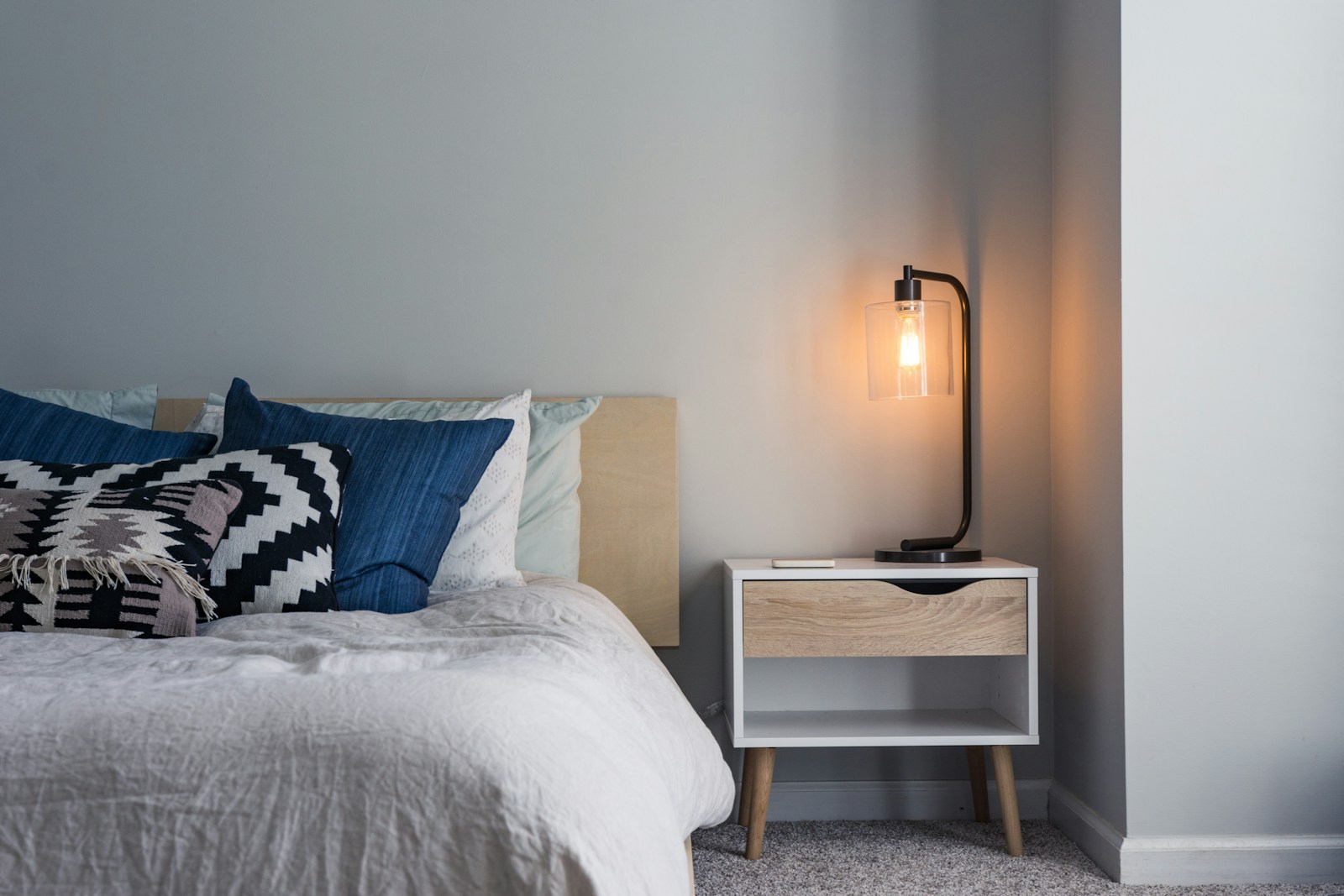
My current routine: I shower every morning — this is now my primary shower. In the evening, if I’ve exercised or just feel like I need to rinse off, I take a lukewarm (not hot) shower no later than 7:30 PM. I dry my hair completely before doing anything else. I put on warm socks immediately — another TCM recommendation that I’ve found surprisingly effective for sleep onset. My bedroom is kept at 68°F (20°C), and I make sure there are no drafts near the bed.
On nights when I skip the evening rinse entirely, I notice I fall asleep even faster. But the compromise of a lukewarm, early-evening shower with full drying keeps everyone happy — including my wife, who appreciates not sharing a bed with someone who smells like a gym.
I’ve also incorporated a few other TCM-inspired evening habits that complement the shower change. A warm foot soak before bed — I wrote about my experience with that in detail in my guide to Chinese foot soaks — has become another non-negotiable. The combination of morning showers and evening foot soaks has given me the best sleep of my adult life.
Chat with Me, our AI wellness guide — get personalized TCM advice instantly.
The Bigger Lesson: Why I Should Have Listened Sooner
I spent thirty years dismissing my mother’s advice not because I had evidence it was wrong, but because it sounded old-fashioned. The language of “letting the cold in” and “open pores” didn’t match my framework of how the world works. I needed Western validation before I’d even consider testing something that billions of people in Asia had already tested over millennia.
That’s a bias, and it’s worth examining.
TCM doesn’t always use the vocabulary of randomized controlled trials and peer-reviewed journals. But it does use the vocabulary of centuries of accumulated clinical observation, documented in texts that have been continuously refined for thousands of years. When a medical tradition spanning multiple cultures, climates, and centuries tells you that something is harmful, the appropriate response isn’t dismissal — it’s curiosity.
I’m not saying every TCM claim holds up under scrutiny. I’m saying that when my mother — who has no medical training, who learned what she knows from her mother, who learned from her mother — tells me something about my body, and that something turns out to be consistent with both a 2,000-year-old medical text and modern sleep research, I should probably listen.
I called her after my thirty-day experiment was over. I told her she’d been right about the shower. There was a long pause.
“I know,” she said. “I’ve been right about a lot of things. You’ll figure out the rest eventually.”
She’s probably right about that too. If you’re curious about other TCM practices that have survived the test of time, I’ve explored more of them in my deep dive into Chinese medicine and shower timing.
FAQ
In Traditional Chinese Medicine, showering at night — especially with hot water and in cold environments — is considered potentially harmful because it opens the pores and exposes the body to Wind-Cold invasion. The hot shower dilates pores and disperses Wei Qi (defensive energy), and subsequent cold exposure allows pathogenic Cold to enter the superficial layers of the body. However, TCM doesn’t categorically forbid night showers. The risk is significantly reduced if you shower at least two hours before bed, use lukewarm water, dry off completely (especially your hair), and keep warm afterward. The concern is primarily about timing, temperature, and post-shower exposure — not about nighttime bathing itself.
Yes, but the effect depends on timing and temperature. Research shows that a warm shower one to two hours before bed can actually improve sleep by triggering vasodilation in the extremities, which helps core body temperature drop — a key sleep onset signal. However, a very hot shower immediately before bed, followed by exposure to cool air, can trigger a sympathetic nervous system response (stress hormones) that delays sleep. Going to bed with wet hair or damp skin can also cause discomfort, temperature dysregulation, and micro-awakenings during the night. In my personal experience, moving my shower to the morning reduced my sleep onset time from 38 minutes to 14 minutes and nearly eliminated my middle-of-the-night wake-ups.
“Letting the cold in” is a colloquial way of describing Wind-Cold invasion (风寒入侵, feng hán rù qīn) in Traditional Chinese Medicine. In TCM theory, your skin has tiny openings called Teng Li (腠理) — roughly equivalent to pores and interstitial spaces. When these are open (from heat, exercise, or hot water), your Wei Qi (卫气, defensive energy) is dispersed and your body’s outer barrier is weakened. If Cold or Wind reaches the skin during this vulnerable state, it can penetrate the superficial layers and lodge there, causing symptoms like chills, stiffness, frequent colds, headaches, and disrupted sleep. The phrase “letting the cold in” describes this process in everyday language. Modern physiology would frame this as rapid thermal stress following vasodilation, triggering a cortisol response and immune modulation.
TCM generally recommends showering in the morning or early afternoon, when Yang energy is at its peak and the body is most resilient to temperature fluctuations. Morning showers align with the body’s natural Yang rising phase (roughly 6 AM to 12 PM), making it easier for the body to handle the heat-exposure-pore-opening cycle without vulnerability. If you must shower in the evening, TCM advises doing so before 7 PM, using warm (not hot) water, and ensuring complete drying before sleep. The absolute worst scenario in TCM terms is a very hot shower immediately before bed in a cold environment, with wet hair. This maximizes the Wind-Cold invasion risk and disrupts the body’s transition into Yin-dominant nighttime mode.
For most people, especially those who struggle with sleep quality, morning showers are the better choice — and this is where both TCM and modern sleep science converge. Morning showers wake you up, align with your body’s cortisol awakening response, and avoid any risk of pre-sleep thermal disruption. Night showers are fine if you exercise in the evening and need to rinse off, but should be done at least two hours before bed, with lukewarm water and thorough drying. The evidence from my own thirty-day experiment — falling asleep 63% faster, reducing night wakings by 81%, and improving morning restfulness scores from 4.2 to 7.1 out of 10 — suggests that for people with sleep difficulties, switching from night to morning showers is a simple, zero-cost intervention worth trying.
Disclaimer
This article reflects my personal experience and research, and is not medical advice. Traditional Chinese Medicine is a complex medical system with its own diagnostic framework, and the concepts discussed here are simplified for a general audience. If you have chronic sleep issues, frequent illness, or other health concerns, consult with a qualified healthcare provider — whether conventional, TCM-trained, or both — before making changes to your routine. Individual responses to lifestyle changes vary significantly. Some links in this article may be affiliate links, meaning I earn a small commission if you purchase through them at no additional cost to you. I only recommend products and practices I have personally used and believe in.
About the Author
James Chen is a health writer and first-generation Chinese-American who spent thirty years dismissing his mother’s TCM advice before finally testing it. He now documents the intersection of traditional Chinese health wisdom and modern evidence at thestillflow.com, where he explores practical, affordable approaches to wellness that don’t require supplements, gadgets, or believing everything your parents told you — just most of it.