I’m a Programmer Who Stared at Screens 12 Hours a Day — These TCM Eye Practices Saved My Vision
At 28, my eye doctor told me my vision had deteriorated significantly. At 30, I discovered Chinese medicine’s approach to eye health — and my optometrist was shocked at my next checkup.
I still remember the fluorescent lights of that optometrist’s office. The letter chart blurred into indistinct shapes as she adjusted the lens phoropter in front of my face. “Better or worse?” she asked for the fifteenth time. “Worse,” I admitted, feeling the familiar knot of dread tightening in my stomach.
I was 28 years old, a software engineer at a startup in Austin, Texas. I wrote code for roughly 12 hours a day — eight at the office, then another three or four at home on side projects. My eyes were my livelihood, and they were failing me. My prescription had changed twice in 18 months. I suffered from chronic dry eye, constant headaches, and a persistent blurriness at the edges of my vision that no amount of blinking could clear.
“You need to reduce screen time,” my optometrist said flatly.
I almost laughed. That’s like telling a chef to stop using knives. Screens weren’t optional for me — they were everything. So I did what any rational person would do: I bought the most expensive blue-light glasses Amazon sold, downloaded a screen dimmer app, and hoped for the best.
It wasn’t enough. Six months later, my prescription worsened again.
That’s when a colleague — a Chinese-born engineer on my team — noticed me rubbing my eyes during a code review. He asked what was wrong, and when I told him, he said something that changed the trajectory of my health entirely.
“In Chinese medicine, we don’t just treat the eyes. We treat the liver.”

The Discovery: What Traditional Chinese Medicine Says About Eye Health
I’ll be honest — I was skeptical. My entire career was built on logic, data, and empirical evidence. The idea that an ancient medical system could address my very modern problem seemed unlikely. But I was also desperate, and desperation has a way of opening doors that skepticism keeps shut.
Over the following weeks, I dove into Traditional Chinese Medicine (TCM) theory as if it were a new programming language I needed to master. What I found was not the mystical nonsense I’d half-expected, but a remarkably coherent system of understanding the body — one that had been refined over thousands of years of observation and practice.
The central concept that changed everything for me was this: In TCM, the liver “opens to” the eyes.
This is one of the foundational principles of Chinese medicine’s approach to eye health for screen workers. The liver, in TCM theory, is responsible for storing blood and ensuring the smooth flow of Qi (vital energy) throughout the body. The eyes are considered the external outlet of the liver’s function. When the liver is nourished and its Qi flows freely, the eyes receive adequate blood and nutrients, resulting in clear, sharp vision. When the liver is depleted or its flow is disrupted, the eyes suffer.
Think of it this way: in programming, if a function’s output is corrupted, you don’t just debug the output — you trace back to the source. TCM treats the eyes the same way. Rather than just throwing eye drops at the symptom, it addresses the root: the liver and blood quality.
This made immediate intuitive sense to me. I thought about my lifestyle: chronic stress (which TCM identifies as a primary disruptor of liver Qi flow), irregular sleep, poor diet heavy on takeout and energy drinks, and almost zero physical activity. My liver, according to this framework, was likely overwhelmed and depleted. And my eyes were the first casualty.
Liver Blood Deficiency: The Diagnosis That Explained Everything
I booked a consultation with Dr. Wei, a licensed TCM practitioner who had trained at the Beijing University of Chinese Medicine before setting up practice in the US. During my first visit, she didn’t just ask about my eyes. She asked about my sleep, my digestion, my emotional state, my menstrual cycle (or lack thereof in my case — I’m male, but she asked about my partner’s health too, because TCM looks at the whole picture of a person’s life).
She examined my tongue — it was pale and slightly swollen, with thin white coating — and took my pulse at both wrists, noting its quality with practiced fingers.
“Liver blood deficiency with some liver Qi stagnation,” she pronounced.
In TCM, liver blood deficiency means the liver doesn’t have enough blood to nourish the tissues it’s responsible for — particularly the eyes, tendons, and nails. The symptoms she listed read like a biography of my twenties:
- Dry, tired eyes that worsen throughout the day
- Blurred or declining vision
- Floaters or spots in the visual field
- Difficulty seeing in dim light (night driving had become terrifying)
- Pale complexion and brittle nails
- Dizziness upon standing quickly
- Irritability and frustration (classic liver Qi stagnation)
I had every single one. It was as if she’d read a diagnostic checklist from my life.
“The good news,” Dr. Wei said, “is that liver blood deficiency responds very well to dietary therapy and lifestyle changes. We don’t need to rely only on herbs — though they can help accelerate the process.”

The Eye-Nourishing Protocol: Foods, Herbs, and Daily Practices
Dr. Wei designed a protocol for me that combined dietary changes, specific acupressure points, and lifestyle adjustments. I committed to following it for 90 days — the minimum period she said would produce measurable results. Here’s exactly what I did.
1. Goji Berry Tea — The Cornerstone of TCM Eye Care
If there is one single food that TCM practitioners recommend for eye health above all others, it is the goji berry (Lycium barbarum), known in Chinese as gou qi zi (枸杞子). These small, red berries have been used in Chinese medicine for over 2,000 years specifically to nourish the liver and brighten the eyes.
Modern research supports this traditional use. A 2019 study published in Nutrients found that goji berry consumption increased macular pigment optical density — a key marker of eye health — in healthy adults after just 90 days. Another study in the British Journal of Nutrition demonstrated that goji berries contain high levels of zeaxanthin, a carotenoid that accumulates in the retina and protects against macular degeneration and UV damage.
My daily goji protocol:
- Morning: A small handful (about 15-20 grams) of dried goji berries soaked in warm water for 10 minutes, eaten as a snack with breakfast.
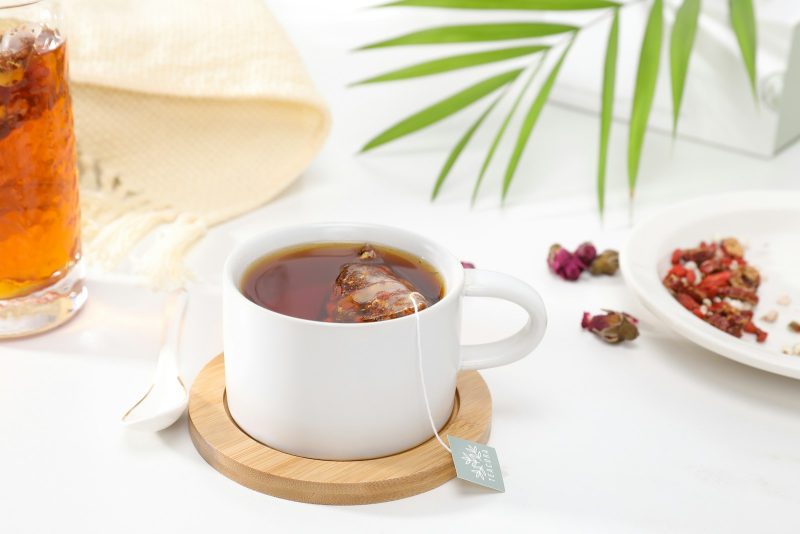
- Afternoon: Goji berry and chrysanthemum tea — I’d brew a pot of dried chrysanthemum flowers (about 8-10 flowers) with a tablespoon of goji berries, steeping for five minutes. This became my replacement for my third cup of coffee.
- Evening (twice a week): Goji berry congee — I’d add goji berries to a simple rice porridge, which is a classic TCM restorative food that’s easy on digestion.
The taste is mildly sweet and slightly tart, not unlike a raisin. I grew to genuinely enjoy it, and it became one of the easiest habits to maintain.
2. Chrysanthemum Tea — The Eye-Cooling Remedy
Chrysanthemum flowers (ju hua, 菊花) are classified in TCM as having a cool nature and sweet-bitter taste. They specifically target the liver and lung meridians, and their primary function is to “clear heat and brighten the eyes.” In TCM terms, long hours of screen use generate what practitioners call “liver fire” or “heat in the liver channel” — manifesting as red, irritated, burning eyes.
I found chrysanthemum tea to be remarkably effective for acute eye discomfort. On days when my eyes felt particularly hot and strained by 3 PM, a cup of chrysanthemum tea provided noticeable relief within 20-30 minutes. The cooling effect on my eyes was not imaginary — it was consistent enough that I began keeping a jar of dried chrysanthemum flowers at my office desk.
3. Blood-Nourishing Foods — Building the Raw Materials
Dr. Wei explained that treating eye problems through the liver meant I needed to give my liver better raw materials to work with — specifically, foods that nourish blood in TCM theory. My weekly meal prep shifted to include these staples:
- Black sesame seeds (hei zhi ma): TCM considers black sesame a premier blood and yin nourisher. I’d sprinkle toasted black sesame seeds on oatmeal, salads, and rice bowls daily. They’re also rich in calcium, iron, and vitamin E. I wrote more about the extensive benefits of black sesame in Chinese medicine in a separate article.
- Wolfberry and liver soup: Once a week, I’d prepare a traditional Chinese soup with goji berries, pork liver, and ginger. Organ meats are considered “like treats like” in TCM — eating liver nourishes your liver. I know it sounds intense if you’re not used to it, but pork liver soup with ginger is actually quite pleasant.
- Dark leafy greens: Spinach, kale, and Chinese broccoli (gai lan) are all classified as blood-nourishing in TCM. I aimed for at least two servings daily.
- Blueberries and mulberries: Both are valued in TCM for their ability to nourish liver blood. I’d add a handful to my morning oatmeal or yogurt.
- Beets and sweet potatoes: These “blood-colored” foods are considered particularly effective for building blood. I roasted beets weekly and ate sweet potatoes as a regular side dish.
4. Acupressure Points for Eye Strain Relief
This was the part of the protocol I was most skeptical about — and the part that surprised me the most with its effectiveness. Dr. Wei taught me five acupressure points specifically related to eye health. I performed this acupressure routine twice daily: once during my mid-morning break and once before bed.
Point 1: Zanzhu (BL2) — Gathering Bamboo
Location: In the hollows at the inner ends of the eyebrows, near the bridge of the nose.
Technique: Use both thumbs to press firmly inward and slightly upward. Hold for 3-5 seconds, release, repeat 10 times.
Effect: Relieves frontal headaches, eye strain, and blurred vision.
Point 2: Sizhukong (TE23) — Bamboo Gathering Hole
Location: In the hollow at the outer end of the eyebrow.
Technique: Use your index fingers to press gently in circular motions for 30 seconds on each side.
Effect: Reduces eye redness, twitching, and temporal headaches from screen use.
Point 3: Jingming (BL1) — Bright Eyes
Location: In the small hollow just inside each eye, near the bridge of the nose, between the inner corner of the eye and the nose.
Technique: Use your index fingers to press gently upward toward the brow bone. Hold for 3-5 seconds, release, repeat 10 times.
Effect: This is the single most important point for eye health in TCM. It directly influences blood flow to the eyes and is used to treat everything from myopia to cataracts in clinical practice.
Point 4: Taiyang (EX-HN5) — Temple Point
Location: In the depression about one finger-width behind the midpoint between the outer edge of the eyebrow and the outer corner of the eye.
Technique: Use your thumbs to apply steady pressure for 10 seconds, then release. Repeat 5 times.
Effect: Relieves headache, eye fatigue, and the “heavy eyelids” sensation that comes from prolonged screen use.
Point 5: Hegu (LI4) — Joining Valley
Location: In the web between the thumb and index finger, at the highest point of the muscle when the thumb and index finger are brought together.
Technique: Pinch firmly with the opposite hand’s thumb and index finger. Hold for 30-60 seconds. Repeat on both hands.
Effect: While not directly an eye point, Hegu is the master point for the face and head in TCM. It’s used to treat all conditions affecting the face, including eye problems, and it’s especially powerful when combined with the local eye points above.
I followed this routine faithfully — two minutes in the morning, two minutes at night. Within the first week, I noticed something remarkable: the chronic tension headache I’d carried behind my eyes for months began to ease. By the end of week two, my eyes felt less “gritty” at the end of the workday. It was subtle, but undeniable.

The 90-Day Results: What Actually Changed
I kept a simple log throughout the 90-day protocol, rating my eye comfort on a 1-10 scale each evening and noting any changes my optometrist could measure. Here’s what happened, week by week.
Weeks 1-2: The Adjustment Period
The first week was mostly about habit formation. Goji berries and chrysanthemum tea became part of my routine, though I wasn’t sure I felt different. By the end of week two, the chronic tension headache behind my eyes had reduced by roughly 40%. My evening eye comfort score went from a consistent 3-4 to a 5-6. Modest progress, but progress.
Weeks 3-4: The Dry Eye Breakthrough
This was when the changes became hard to ignore. The persistent dry eye that had plagued me for two years — the one that no amount of artificial tears could fix — began to noticeably improve. I found myself reaching for eye drops less and less. By the end of week four, I had gone an entire week without using artificial tears for the first time since 2022.
I attribute this directly to the dietary changes. The combination of goji berries, black sesame, and blood-nourishing foods was delivering nutrients to my eyes that they hadn’t received in years. In TCM terms, my liver blood was being replenished.
Weeks 5-8: Vision Clarity Improvements
By week six, I noticed something I initially attributed to placebo: text on my monitor seemed sharper. Not dramatically so, but enough that I caught myself thinking, “I can read that without squinting.” I hadn’t even realized how much I’d been squinting until I stopped doing it.
Week eight was when my partner pointed out something I’d missed: I had stopped complaining about eye fatigue in the evenings. For two years, I’d come home from work rubbing my eyes and groaning about how tired they were. Now, I was just… normal. I was watching TV, reading books, even scrolling my phone before bed (a habit Dr. Wei would not have approved of), and my eyes felt fine.
Weeks 9-12: The Optometrist’s Reaction
I had my next scheduled eye appointment at week 12. I walked in expecting the usual — another prescription change, another lecture about screen time. What happened instead was genuinely shocking.
My optometrist tested my vision and paused. She tested it again. Then she pulled up my records from 12 months prior and compared.
“Your prescription hasn’t changed,” she said, sounding surprised. “Actually… your left eye is slightly better. What have you been doing?”
I told her about the TCM protocol — the goji berries, the dietary changes, the acupressure. She didn’t dismiss it. Instead, she noted that the blood-nourishing approach aligned with what modern nutrition science understood about carotenoids, antioxidants, and retinal health. She couldn’t endorse TCM specifically, but she acknowledged that my eyes looked healthier during the exam — less redness, better tear film, and improved visual acuity.
“Whatever you’re doing,” she said, “keep doing it.”

My Screen Worker’s Eye Care Routine: What I Still Do Daily
The 90-day protocol was transformative, but the real test was whether I could sustain it long-term while continuing my 12-hour screen days. Two years later, here’s the streamlined routine that has kept my eyes healthy:
- Morning (before opening my laptop): A handful of goji berries soaked in warm water. Two minutes of acupressure on BL2, BL1, and LI4.
- Every 90 minutes at my desk: I use the 20-20-20 rule (every 20 minutes, look at something 20 feet away for 20 seconds) — but I’ve enhanced it with TCM: I also do a quick 30-second massage of the Jingming (BL1) points during these breaks.
- Afternoon: One cup of goji-chrysanthemum tea instead of my former third coffee. The caffeine reduction itself has probably helped — caffeine dehydrates, and TCM classifies it as “heat-generating,” which aggravates liver fire.
- Evening: Full five-point acupressure routine before bed. Five minutes total. I also try to stop all screens 45 minutes before sleep — this was the hardest habit to build, but it makes an enormous difference.
- Weekly: One liver-nourishing soup (usually goji berry with pork liver or a bone broth base with dark leafy greens).
Why I Think This Works: Bridging TCM and Modern Science
I’m a programmer, not a mystic. I needed to understand why these practices worked, not just that they worked. Here’s how I reconcile TCM eye theory with modern nutritional science:
The liver-eye connection makes biological sense. The liver is the body’s primary detoxification organ. It processes toxins, metabolizes nutrients, and produces bile. Modern research shows that liver health directly affects the quality of blood circulating through the body, including blood flowing to the tiny capillaries in the retina. Non-alcoholic fatty liver disease, for instance, has been linked to increased risk of retinal disorders. The TCM concept of “liver opens to the eyes” is a remarkably intuitive way of expressing this biological relationship.
Goji berries are nutritional powerhouses. They contain high concentrations of zeaxanthin and lutein — the two carotenoids that make up the macular pigment in your retina. These pigments act as a natural sunblock, filtering harmful blue light (exactly the kind emitted by screens) and protecting retinal cells from oxidative damage. A 2011 study in Optometry and Vision Science found that goji berry supplementation significantly increased plasma zeaxanthin levels and macular pigment density.
Acupressure improves local circulation. Applying pressure to specific points around the eyes increases blood flow to the orbital region, which delivers oxygen and nutrients to fatigued eye muscles and removes metabolic waste products. This is consistent with both TCM meridian theory and modern understanding of myofascial trigger points and circulatory physiology.
The dietary pattern is anti-inflammatory. A diet rich in berries, dark greens, seeds, and organ meats is inherently anti-inflammatory. Chronic low-grade inflammation is increasingly recognized as a contributor to eye disease, from dry eye syndrome to macular degeneration. By reducing systemic inflammation through diet, I was likely creating a better environment for my eyes to heal and function.
Mistakes I Made (So You Don’t Have To)
No protocol is perfect, and mine certainly wasn’t. Here are the errors I made along the way:
- Overdoing goji berries initially. In my enthusiasm, I ate about 50 grams on day one. This gave me mild digestive upset. Start with 15-20 grams and work up slowly.
- Skipping the acupressure. For three weeks in month two, I dropped the acupressure routine because I “felt fine.” My eye fatigue crept back within 10 days. The acupressure is not optional — it’s a critical component of the protocol.
- Buying cheap goji berries. Quality matters. I initially bought the cheapest dried goji berries on Amazon and found them to be dry, tasteless, and oddly salty. Higher-quality berries (look for plump, slightly moist ones with a vibrant red color) are more palatable and likely more nutritious.
- Not adjusting screen habits. TCM practices can compensate for some damage, but they can’t compensate for everything. I still needed to reduce screen brightness, increase text size, use proper ergonomics (monitor at eye level, arm’s length away), and take regular breaks.
FAQ: Common Questions About TCM Eye Health for Screen Workers
Can Traditional Chinese Medicine really improve screen-related eye strain?
Yes — and the evidence supports both the traditional theory and the practical outcomes. TCM addresses eye strain through a root-cause approach: nourishing liver blood, clearing liver heat, and improving circulation to the eyes through acupressure and dietary therapy. Many of the recommended foods (goji berries, chrysanthemum, dark leafy greens) contain carotenoids, antioxidants, and anti-inflammatory compounds that modern research has validated for eye health. While TCM should not replace conventional eye care, it can be a powerful complement, especially for screen workers whose eye problems stem from lifestyle factors rather than structural disease.
How long does it take to see results from TCM eye practices?
In my experience, initial relief from acute symptoms like dry eye and tension headaches came within 2-4 weeks. More significant improvements in visual clarity and sustained comfort took 8-12 weeks of consistent practice. Dr. Wei emphasized that 90 days is the minimum commitment for measurable, lasting change — this aligns with the time it takes for the body to replenish blood quality and for nutritional changes to affect retinal health. Some people report faster results, but I’d recommend planning for a full three-month protocol.
What is the best Chinese medicine food for eye health?
Goji berries (gou qi zi) are universally considered the most important TCM food for eye health. They nourish liver blood, contain high levels of zeaxanthin and lutein (the carotenoids that protect the macula), and have been used specifically for vision support in Chinese medicine for over 2,000 years. For best results, consume 15-20 grams daily — either soaked in warm water, brewed as tea with chrysanthemum flowers, or added to soups and congee. Chrysanthemum tea is the second most recommended, particularly for red, irritated, or “heaty” eyes.
Are there acupressure points that help with eye strain from computers?
Yes — the most important points are Jingming (BL1), located at the inner corner of the eye near the nose bridge; Zanzhu (BL2), at the inner end of the eyebrow; Sizhukong (TE23), at the outer end of the eyebrow; and Taiyang (EX-HN5), in the temple depression. Additionally, Hegu (LI4), the master point for the face located in the web between thumb and index finger, enhances the effects of the local eye points. Performing acupressure on these points for 2-3 minutes, twice daily, significantly reduces eye strain, improves local circulation, and relieves the tension headaches common among screen workers.
Is TCM eye care safe to combine with conventional optometry?
Absolutely — and I’d recommend it. TCM eye practices (dietary therapy, acupressure, herbal teas) are complementary approaches that work alongside conventional eye care, not replacements for it. I still see my optometrist regularly, still wear corrective lenses when needed, and still follow standard screen hygiene recommendations. The TCM protocol addressed the root-cause factors (liver blood quality, circulation, inflammation) that conventional optometry doesn’t typically treat. Always inform your eye care provider about any complementary practices you’re using, and never discontinue prescribed treatments without consulting your doctor.
Final Thoughts: An Ancient System for a Modern Problem
Two years after that first eye appointment, I’m still a programmer. I still stare at screens for 10-12 hours a day. But I’m no longer watching my vision deteriorate in slow motion. My prescription has remained stable. My dry eye is gone. My evening headaches are a memory. And I owe it to an approach I almost dismissed because it didn’t come with a prescription pad.
Traditional Chinese Medicine doesn’t ask you to abandon modern eye care. It asks you to look deeper — at the liver, at the blood, at the systemic foundations that your eyes depend on. For screen workers whose eyes are under constant, unprecedented stress, this deeper approach isn’t just helpful. It’s essential.
If you’re a programmer, a designer, a writer, or anyone who makes their living staring at glowing rectangles, I encourage you to try the protocol I’ve described. Start with the goji berries and the acupressure. Give it 90 days. Track your results. And let your next eye appointment tell the story.
Your eyes — and your liver — will thank you.
Disclaimer
This article is based on personal experience and is intended for informational and educational purposes only. It is not a substitute for professional medical advice, diagnosis, or treatment. Traditional Chinese Medicine practices described here should be used as a complement to, not a replacement for, conventional eye care. Always consult with a qualified healthcare provider — including a licensed optometrist or ophthalmologist — before making changes to your health regimen, especially if you have existing eye conditions or are taking medications. Individual results may vary.
About the Author
James Chen is a software engineer and health writer based in Austin, Texas. After experiencing significant vision decline from years of intensive screen work, he began exploring Traditional Chinese Medicine approaches to eye health. His 90-day TCM eye protocol — documented in this article — resulted in stabilized vision, eliminated chronic dry eye, and inspired a deeper study of Chinese medicine for modern wellness. James writes about the intersection of technology, traditional health practices, and evidence-based wellness at TheStilFlow. When he’s not coding or writing, he’s usually brewing goji-chrysanthemum tea.