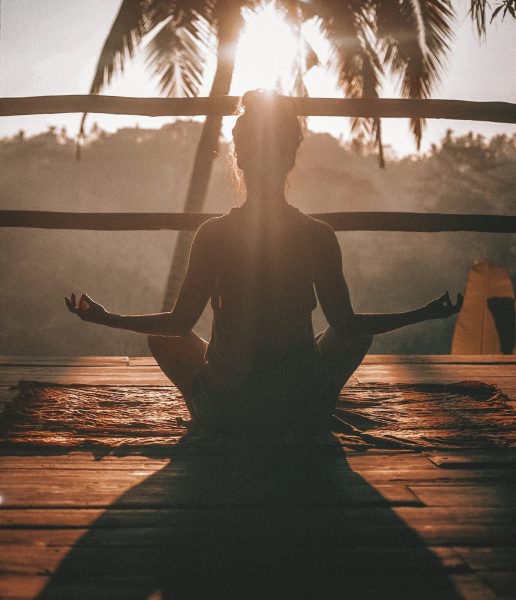
There’s a peculiar quality to the air around 3 PM on a summer afternoon. The day’s initial, fiery energy has crested and is beginning its gentle descent. The shadows lengthen, the cicadas’ chorus might soften for a moment, and a wave of heaviness can wash over you. In the Western world, we call it the “afternoon slump” and fight it with caffeine. But in the traditional view of the day’s energy cycles, this isn’t a failure of productivity—it’s a sacred, quiet hour. It’s summer’s invitation to pause, to turn inward, and to tend to the fire that governs our joy, our connection, and our very spirit: the heart.
Why 3 PM? The Energetic Clock of Summer
To understand the 3 PM meditation, we need to understand the concept of the organ clock, a foundational idea in Traditional Chinese Medicine (TCM). Imagine your body as a highly efficient, 24-hour city where different departments (your organ systems) have primary shifts. Each two-hour period of the day is governed by a specific organ, which is at its peak function and activity during that time.
The 1 PM to 3 PM window is the domain of the Heart (Xīn). In TCM, the Heart is the “Emperor” of all organs. It doesn’t just pump blood; it houses our Shen—a concept that encompasses our consciousness, our spirit, our emotional well-being, and the light in our eyes. A healthy, calm Shen means we feel mentally clear, emotionally stable, and connected to our joy. A disturbed Shen shows up as anxiety, insomnia, restlessness, or a feeling of being “scattered.”
Summer is the season of the Heart. It’s a time of maximum Yang energy, of outward expansion, social activity, and warmth. But like a bonfire that burns brightest, the Heart’s fire can easily become excessive from overwork, stress, or too much stimulation. The 3 PM meditation is the perfect practice to gently tend this fire. Instead of adding more fuel (caffeine, sugar, more tasks), you’re sitting beside the fire, ensuring it burns steadily and warmly, not out of control. My grandmother used to say, “The busiest part of the day is no reason to forget the quietest part of your heart.” She would sit with a cup of chrysanthemum tea in her courtyard, eyes closed, for ten minutes right after lunch. That was her daily reset.
The Heart is the sovereign of the organs, and the Mind is its radiance. When the sovereign is calm, the ministers obey, and the body’s natural wisdom prevails.
— Huangdi Neijing (The Yellow Emperor’s Classic of Internal Medicine)
The Science of the Slump: More Than Just Tiredness
Modern science has its own explanation for that 3 PM feeling, and it beautifully aligns with the ancient wisdom. Our circadian rhythm, the body’s internal clock, is wired for a natural dip in alertness in the early afternoon. Core body temperature slightly drops, and levels of the sleep hormone melatonin can experience a small rise. This is a biological signal for rest, a mini-version of the larger dip we feel at night.
Fighting this signal with a double espresso or a sugary snack is like yelling at your body to keep running when it’s asking for a water break. You might get a temporary jolt, but you’re creating a cascade of stress hormones (cortisol, adrenaline) and potentially spiking your blood sugar, leading to an even harder crash later. The 3 PM meditation works with this biological rhythm. By sitting quietly, you allow your nervous system to shift from the sympathetic (“fight or flight”) state of the morning’s work into the parasympathetic (“rest and digest”) state. This isn’t laziness; it’s intelligent recovery that actually improves focus, creativity, and emotional resilience for the rest of the afternoon and evening.
Your 10-Minute Summer Heart Meditation: A Step-by-Step Guide
This isn’t about achieving a blank mind. It’s about gentle, heart-centered awareness. You don’t need a special cushion or a silent room, though both are lovely. A park bench, your office chair, even your parked car can become your sanctuary.
- 1. Prepare Your Space (1 Minute): Find a place where you can sit undisturbed for 10 minutes. If possible, be near a window with natural light, or even better, sit outside in the shade. Have a glass of room-temperature or slightly warm water ready. In summer, we often crave cold drinks, but icy water can constrict the Heart’s vessels. Room temp is gentler.
- 2. Settle Your Body (2 Minutes): Sit with your feet flat on the floor, spine long but not rigid. Imagine a golden thread pulling gently from the crown of your head towards the sky. Rest your hands, palms down, on your thighs. Close your eyes or soften your gaze. Take three deep, slow breaths: in through your nose for a count of 4, hold for a count of 2, and out through your mouth for a count of 6.
- 3. Connect with the Heart Center (3 Minutes): Bring your full attention to the center of your chest. This is the location of the Shanzhong (CV-17) acupuncture point, often called the “Sea of Qi” or the “Heart Protector.” You can gently place your right hand over this area if it feels comfortable. Don’t try to force anything. Just notice. Imagine a warm, green or pink light glowing here with each inhale, and any tension or heat dissolving with each exhale.
- 4. Practice the “Summer Smile” Visualization (3 Minutes): Now, picture a gentle, kind smile—a “Summer Smile”—spreading from your heart center. Imagine this smile radiating warmth and calm light outward, softening your face, relaxing your shoulders, and flowing down your arms and legs. You are not forcing happiness; you are cultivating a state of gentle, receptive contentment. If thoughts wander, as they will, gently guide your attention back to the feeling of the smile in your heart.
- 5. Close with Gratitude (1 Minute): End your practice by acknowledging one simple, good thing from your day so far. It could be the taste of your lunch, a moment of sun on your skin, or a kind word from a colleague. Let this feeling of gratitude fill your heart space for a final moment. Then, slowly wiggle your fingers and toes, open your eyes, and take a sip of your room-temperature water.
The Summer Heart Allies: Foods and Herbs to Support Your Practice
Meditation is one pillar. Nourishment is the other. In summer, we want to eat in a way that clears heat, generates fluids, and calms the Shen. Here are your specific allies for the season.
| Summer Heart Ally | Why It Works | How to Use It |
|---|---|---|
| Bitter Melon (Kǔ Guā) | The ultimate “bitter” food for the Heart. In TCM, bitter flavors drain excess Heart fire. Modern research shows it supports healthy blood sugar. | Sauté ½ cup sliced bitter melon with a little sesame oil, garlic, and a splash of soy sauce. Or, add a few slices to a summer soup. |
| Mung Bean (Lǜ Dòu) | Cooling, sweet, and detoxifying. The classic summer food in Chinese culture to clear internal heat and summer-heat. | Make a simple Mung Bean & Lily Bulb Congee: Simmer ½ cup mung beans and ¼ cup dried lily bulb (百合, bǎi hé) in 6 cups of water for 1.5 hours until soft. Eat as a sweet or savory afternoon snack. |
| Lotus Seed (Lián Zǐ) | Nourishes the Heart and calms the Shen. A gentle, food-grade sedative for anxiety and palpitations. | Add 1 tablespoon of dried lotus seeds to your morning oatmeal or evening chamomile tea. Let them steep for 10 minutes. |
| Chrysanthemum Tea (Jú Huā Chá) | Cools the Liver and brightens the eyes (which are connected to the Liver in TCM). A perfect 3 PM drink to replace coffee. | Steep 8-10 dried chrysanthemum flowers in hot (not boiling) water for 5 minutes. Add a single goji berry or a drop of honey if desired. |
A simple Summer Heart Soother Tea for 3 PM: Steep 1 tsp dried chrysanthemum, 1 tsp dried rose buds, and 3 goji berries in a mug of hot water for 5 minutes. Roses calm the spirit and move Qi gently, while goji berries nourish Liver and Kidney Yin.

Beyond the Cushion: Weaving the Quiet Hour into Your Summer Life
The true power of this practice is in its consistency and integration. It’s not an isolated event, but a thread in the fabric of your summer days. Here are ways to make it sustainable:
- The Digital Sunset: 30 minutes before your 3 PM meditation, put your phone on “Do Not Disturb” and close your email. This is your digital sunset, allowing your mind to begin its inward journey.
- Move First: If you feel especially restless or full of that “yang” summer energy, spend 3 minutes before you sit doing some gentle movement. Try Swinging Arms: Stand with feet shoulder-width apart, relax your arms, and gently swing your torso left and right, letting your arms flop freely like noodles. This releases stagnant Qi in the chest and shoulders.
- Pair it with a Cool-Down: In extreme heat, your body needs help cooling down. After your meditation, apply a cool (not ice-cold) towel to your wrists, the back of your neck, and your forehead. These are major pulse points where blood flows close to the surface, and cooling them sends a calming signal to your entire nervous system.
- The Evening Reflection: At the end of your day, take 30 seconds to recall the feeling of your 3 PM meditation. Did it change the quality of your afternoon? Did you sleep better? This reflection reinforces the practice’s value in your mind.
Common Questions
What if I can’t meditate at exactly 3 PM?
The 1-3 PM window is ideal, but don’t let perfection be the enemy of good. If you miss it, the next best time is the early evening, before dinner (5-7 PM). This is the Heart’s “pericardium” or protector time, and a meditation then can help you release the day’s stress and transition peacefully into your personal time. The key is finding a consistent slot in the afternoon lull.
I always fall asleep. Is that okay?
Falling asleep is a sign your body is deeply exhausted and needs rest. It’s not a meditation failure, but it means you’re not practicing—you’re napping. To stay alert: 1) Sit upright in a chair, don’t lie down. 2) Meditate with your eyes half-open, gazing softly downward at a 45-degree angle. This is a traditional technique to maintain wakefulness. 3) Splash your face with cool water before you begin. If sleepiness persists for weeks, it may indicate a deeper Qi or Blood deficiency, and you should focus on improving your nighttime sleep quality first.
Can I do this meditation if I’m not “into” Eastern stuff?
Absolutely. Think of this not as a religious or spiritual practice, but as neurological hygiene and biological optimization. You are using a specific time (your body’s natural circadian dip), a specific location (your heart center, which has its own neural network), and a specific action (focused breathing and visualization) to intentionally shift your nervous system state. It’s a practical tool for stress reduction, emotional regulation, and enhanced afternoon performance. The cultural framework just gives it a beautiful, time-tested structure.
The bottom line: The 3 PM summer meditation is a profound act of working with nature—both the season outside and the circadian rhythm within. By giving yourself 10 minutes of quiet, heart-centered awareness during the day’s quiet hour, you cool excess heat, calm your spirit, and transform a slump into a source of deep, sustainable vitality. It’s the ultimate summer self-care: not doing more, but being more present.
This article is for educational purposes and reflects traditional wellness perspectives. It is not a substitute for professional medical advice, diagnosis, or treatment.