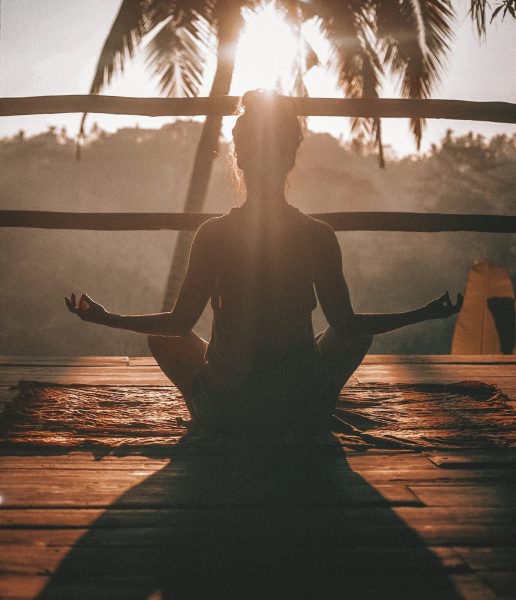
There’s a particular kind of heat that settles into a summer afternoon, isn’t there? It’s not just the temperature; it’s the weight of it. The air grows thick, the light turns syrupy, and even the birds seem to take a siesta. For many of us, this is when the day’s energy peaks and then dips. We feel it as a subtle agitation, a restlessness that makes it hard to focus, yet equally hard to truly rest. In Traditional Chinese Medicine (TCM), this is the season of maximum Yang energy—expansive, outward, and fiery. While it’s a time of growth and joy, it can also lead to internal heat, irritability, and a feeling of being scattered if we don’t consciously cultivate its opposite: Yin stillness. You don’t need an hour on a meditation cushion. You need a portable, potent pause. This is your 5-minute summer stillness meditation, a cooling practice for the busiest of days.
Why 5 Minutes is More Than Enough in the Heat
My grandmother had a saying for sweltering days: “Even the river slows down in summer.” She wasn’t just being poetic. She was observing nature’s wisdom. In the peak of summer, everything in nature seeks shade, water, and a slower pace. We, with our air-conditioned offices and relentless schedules, often fight this rhythm. We push through, fueled by iced coffee, only to crash harder later. The goal of this short meditation isn’t to achieve some deep, transcendent state (though it might happen). It’s a physiological reset. It’s about signaling to your nervous system, Hey, it’s okay. You can cool down now.
From a TCM perspective, the Heart is the organ associated with summer and the Fire element. When summer heat is excessive, it can “disturb the Heart,” leading to anxiety, insomnia, and agitation. A simple, focused practice of stillness helps to “clear Heart heat” and anchor your awareness downward, like a tree drawing water from cool soil even as its leaves bask in the sun. Five minutes is the perfect dose: long enough to shift your state, short enough to actually do.
The Core Concept: Cultivating Yin in a Yang World
Before we sit, let’s understand the principle we’re working with: Yin and Yang. In the West, we often think of these as opposites—dark and light, passive and active. But it’s more nuanced. They are complementary forces that exist in everything, including you. Yang is the heat, the activity, the midday sun. Yin is the cool, the stillness, the midnight moon. Summer is the most Yang season. Our modern lives are also profoundly Yang—always doing, achieving, consuming. The result? We become “Yang-fatigued”: burned out, yet wired.
This meditation is a deliberate act of cultivating Yin. It’s not about shutting down your Yang energy; you need that for joy and activity. It’s about creating balance. Think of it like a glass of iced lemonade on a hot day. The Yang (heat) is the sun outside. The Yin (cool) is the chilled glass, the tart lemon, the sweet sugar, the cold water. You need both to enjoy the moment. This practice is your internal glass of lemonade.
“To the mind that is still, the whole universe surrenders.”
— Lao Tzu
Your Pre-Meditation Checklist: Setting the 5-Minute Stage
You can do this anywhere—your parked car, a park bench, a quiet corner of the office—but setting the stage for 60 seconds makes the practice twice as effective. It’s like prepping a wok before stir-frying; a little prep prevents sticking.
- Find Your Spot: Seek shade or a cool indoor space. Direct sun is too stimulating for this practice.
- Hydrate First: Sip 4-6 ounces of room temperature or cool (not icy) water. This simple act already begins the cooling process from the inside.
- Wear Comfort: Loosen any tight clothing, especially around your neck, waist, and wrists. These are areas where heat can get trapped.
- Set a Timer: Use your phone, but set it for 5 minutes and place it face down so you’re not tempted to check it.
- Consider a Cooling Scent (Optional): If you have it, a single drop of peppermint or sandalwood essential oil on your wrists or temples can enhance the cooling effect. My grandmother would crush a fresh mint leaf from her garden and hold it under her nose.
The 5-Minute Summer Stillness Meditation: A Step-by-Step Guide
Find your seat. Sit comfortably with your spine straight but not stiff—imagine a string gently pulling the crown of your head toward the sky, while your sit bones root down. Rest your hands on your thighs, palms down. This is a grounding gesture.
Minute 1: The Arrival. Close your eyes or soften your gaze toward the floor. Take three slow, deep breaths. Inhale through your nose for a count of 4, feeling your belly expand. Exhale through your mouth for a count of 6, making a soft “haaa” sound like you’re fogging a mirror. On each exhale, consciously release the tension in your jaw, your shoulders, your hands. This is the transition from “doing” to “being.”
Minute 2: The Body Scan for Heat. Now, let your breath return to its natural rhythm. Bring your attention to the top of your head. Simply notice any sensation there—warmth, tingling, nothing at all. Slowly, like a gentle scanner, move your awareness down through your face, neck, shoulders, arms, torso, hips, legs, and feet. Don’t try to change anything. Just notice. Where do you feel heat? Your forehead? Your palms? Your lower back? This isn’t a judgment; it’s just data. By noticing, you create a tiny space between you and the sensation of heat.
Minutes 3 & 4: The Cooling Visualization. This is the heart of the practice. Bring your awareness back to the center of your chest, to the area around your heart (the Heart center, or Shanzhong in TCM). Imagine this center as a small, glowing ember—a gentle, warm light. Now, with each inhale, visualize drawing in cool, silvery-blue light. You might picture it as the light of the moon, or as a cool stream of water, or as the crisp air of a mountain morning. See this cool, blue light flowing into your heart center. With each exhale, see any hazy, reddish-orange heat (stress, agitation, overstimulation) being breathed out and dissolving into the air. You’re not forcing anything; you’re allowing a gentle exchange. Inhale cool blue. Exhale hazy orange. If your mind wanders, gently guide it back to this simple visualization.

Minute 5: The Return. Let the visualization fade. Bring your attention back to the physical sensations of your body in the chair, the feeling of your feet on the floor. Wiggle your toes and your fingers. Take one final, deep, cleansing breath in and out. When you’re ready, gently open your eyes. Notice how the world looks. Don’t rush to judge your experience. Just notice any shift in temperature, mood, or mental clarity.
Anchoring the Cool: Simple Follow-Up Actions
The meditation is the reset button. To make the cooling effect last, anchor it with one of these tiny, actionable steps. Choose one that feels right.
| Action | Why It Works (The TCM & Western Angle) | How-To (Specifics!) |
|---|---|---|
| Drink a Cooling Tea | Hydrates and delivers cooling herbs. Chrysanthemum (Juhua) is a classic for clearing heat from the head and eyes. Mint (Bohe) releases trapped heat from the body. | Brew 5-6 dried chrysanthemum flowers and 2-3 fresh mint leaves in 8 oz of hot water for 5 minutes. Sip warm or let cool to room temp. Avoid ice. |
| Apply Cool Water to Key Points | Cools the blood and calms the nervous system via pulse points. The Pericardium 6 point (inside wrist) is specifically for calming the Heart. | Run cool (not cold) water over your inner wrists for 30 seconds each. Or, place a cool, damp cloth on your forehead and the back of your neck. |
| Eat a “Cooling” Snack | Foods have thermal natures in TCM. Cucumber, watermelon, and pear are all classified as cooling and hydrating. | Eat 1 cup of cubed watermelon or cucumber slices. Or, slice a pear and sprinkle with a tiny pinch of pearlescent powder (pear + cinnamon) for a grounding, cooling treat. |
| Practice a 1-Minute “Sighing” Breath | Sighing is a natural physiological release valve for carbon dioxide and tension. It signals the parasympathetic nervous system to engage. | Take a normal inhale through your nose. Then, take a second, deeper sip of air in through your nose. Exhale completely with a long, audible “haaaa” sigh. Repeat 3-4 times. |
Common Questions
I couldn’t visualize the blue light. Did I do it wrong?
Not at all. The visualization is a tool, not a test. The real goal is the gentle shift of attention and intention. If visualizing color is hard, try focusing on the feeling of coolness instead. Imagine placing a cool stone on your chest, or feeling a gentle breeze from a mountain stream. Some people respond better to tactile imagination than visual. The effect is the same: you’re directing awareness to the heart center and associating it with a cooling, calming sensation. It’s the focus that matters, not the perfect picture.
Can I do this meditation at my desk at work without looking weird?
Absolutely. It’s designed for that. You can keep your eyes open, with a soft focus on a spot on your desk or the floor. The body scan and visualization are entirely internal—no one will know. The only outward sign might be that you look calmly focused, which is hardly weird. The key is to give yourself permission to pause. Set a calendar reminder for 3 PM, when the afternoon slump and heat often peak, and treat it as a non-negotiable 5-minute appointment with your well-being.
Is this only for summer? Can I do it in winter?
You can, but the intention and visualization would shift. This specific practice is tailored for the summer’s external heat and the internal agitation it can cause. In winter, the energy is Yin, and the challenge is often cold and stagnation. A winter stillness meditation might focus on cultivating inner warmth and gentle movement, like visualizing a glowing hearth in your lower abdomen (Dantian). For now, let this be your summer tool. It’s your portable shade tree.
The bottom line: Summer stillness isn’t about escaping the heat, but about creating a pocket of cool, calm awareness within it. This 5-minute meditation is a practical tool to balance the season’s intense Yang energy by cultivating Yin—cooling your internal landscape, calming your Heart, and resetting your nervous system. It’s simple, requires no special equipment, and can be the difference between a reactive, frazzled afternoon and a responsive, centered one. The universe may surrender to a still mind, but first, your busy afternoon will.
This article is for educational purposes and reflects traditional wellness perspectives. It is not a substitute for professional medical advice, diagnosis, or treatment.