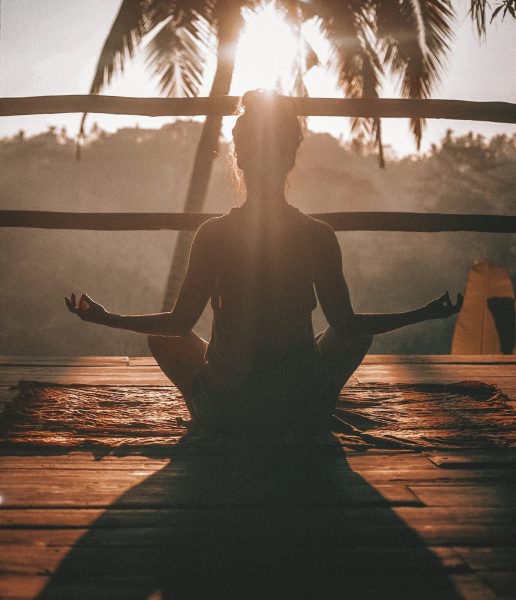
Summer has a way of making the world feel louder, brighter, and more intense. The long days, the relentless heat, the constant hum of activity—it can all build up until your mind feels like a teakettle about to whistle. In Traditional Chinese Medicine, this isn’t just a feeling; it’s a specific pattern. We call it “excess heat in the heart and mind.” The heart, in TCM, is considered the “emperor” of our emotional and mental landscape. When summer’s external heat (what we call “yang energy” at its peak) combines with our internal stress, it can agitate the heart, leading to restlessness, irritability, difficulty sleeping, and a general sense of mental overload. We often reach for cold drinks or air conditioning to counter this, which can help, but they only address the surface. They don’t gently guide that agitated, overheated energy back into a state of balance.
Why a Stroll and Not a Sprint? The Wisdom of “Yin within Yang”
Here’s a concept that might surprise you: summer, the most active, “yang” season of the year, has a hidden, cooling “yin” aspect. This is the principle of “yin within yang.” Think of a lush, green forest on a blazing day. The overall energy is hot and bright (yang), but within that forest, the shade is cool, the earth is damp, and there’s a profound stillness (yin). Our goal in a summer wellness practice isn’t to fight the heat with force (more ice, more aggressive workouts), but to find and cultivate that inner, cooling “yin” quality.
This is exactly why a slow, intentional walk is a superior meditation tool in the summer. A brisk power walk generates more internal heat. A seated meditation, while wonderful, can sometimes feel frustratingly still when your mind is buzzing. A 5-minute stroll, however, is a moving meditation. It creates a gentle rhythm that allows your mind to settle without demanding stillness. The movement itself helps circulate your qi (life force energy), preventing the stagnation that can occur from sitting in the AC all day, while the slow pace and mindful focus draw heat and agitation away from the heart-mind.
My grandmother had a saying for hot days: “Don’t just sit and simmer. Walk like you’re carrying a full bowl of water to the top.” It wasn’t about speed or destination. It was about moving with such deliberate, balanced care that the water wouldn’t spill. This is the essence of a summer walking meditation. You’re not exercising to burn calories or build endurance. You are walking to pour the “water” of your attention from your busy mind into your feet, your legs, and the ground beneath you, allowing the excess mental heat to dissipate into the earth.
Setting the Stage: Your 5-Minute Practice Blueprint
This practice is designed for maximum benefit in minimal time, making it realistic for a busy day. You don’t need a park or a trail; a sidewalk, a hallway, or even a quiet corner of your office will work. The key is intention.
- When: The ideal times are early morning (before 10 am) or late afternoon/early evening (after 5 pm), when the sun’s rays are less intense and the environmental “yang” energy is more subdued. However, any 5 minutes you can carve out will be effective.
- Where: Choose a path where you can walk safely for 5 minutes without interruption. If outdoors, seek shade or grass if possible. Indoors is perfectly fine.
- What to Wear: Comfortable shoes or bare feet on soft grass. Light, loose clothing in natural fibers like cotton or linen allows your skin to breathe, a key principle in TCM for regulating body temperature.
- Hydration: Sip a room-temperature or slightly cool (not ice-cold) herbal tea before you begin. Mint or chrysanthemum tea is perfect—they have a natural cooling effect on the body without shocking the system. My favorite summer blend is 3-4 fresh mint leaves and 5-6 dried chrysanthemum flowers steeped for 3 minutes.
The 5-Step Moving Meditation: A Step-by-Step Guide
Follow these steps in sequence. The entire practice, from start to finish, should take no more than 5 minutes.
1. The Arrival (1 minute): Stand and Ground
Find your spot. Stand with your feet hip-width apart. Close your eyes if you feel comfortable, or soften your gaze toward the ground. Take three slow, deep breaths. Inhale through your nose, letting your belly expand. Exhale through your mouth, sighing out any immediate tension. On the third exhale, consciously release the tension in your shoulders, your jaw, and the space between your eyebrows.
2. The Intention (30 seconds): Set Your Focus
With your eyes still closed or softly focused, silently set a simple intention. It’s not a goal, but a quality. Choose one of these: “I walk with ease.” “I release what is not mine.” “I connect to the cool earth.” Let this intention settle in your heart.
3. The Walk (3 minutes): Move with Awareness
Begin to walk at about one-third of your normal pace. This will feel unusually slow, and that’s the point. Bring your full attention to the physical sensations of walking. Feel the heel of your foot make contact with the ground. Feel your weight roll forward through the sole to the ball of your foot, and finally, feel the gentle push-off from your toes. Notice the subtle shift in your hips and the gentle swing of your arms. If your mind wanders to your to-do list or a worry, gently guide it back to the simple, physical mantra: “Heel, sole, toe.”
4. The Anchor (30 seconds): Engage Your Senses
Now, widen your awareness. Without breaking your slow pace, notice one thing for each sense. What do you see? (e.g., a crack in the sidewalk, the green of a leaf). What do you hear? (e.g., a distant bird, your own breath). What do you feel on your skin? (e.g., a breeze, the warmth of the sun). This pulls you firmly into the present moment, the only place where cooling, calming “yin” energy can be found.
5. The Return (30 seconds): Seal the Practice
Slowly come to a stop. Stand still again. Place one hand over your lower abdomen (the area TCM calls the “lower dantian,” our center of gravity and energy). Take three final deep breaths. With each exhale, imagine any remaining mental heat flowing down your body, through your legs, and into the earth. Open your eyes. You are refreshed, recalibrated, and ready to continue your day with a calmer mind.

Adapting Your Walk: A Guide for Different Environments
Your practice can be tailored to your surroundings. Here’s how to adapt it for maximum effectiveness:
| Environment | Focus & Adaptation | TCM Rationale |
|---|---|---|
| On a Busy Street | Focus on sound. Let the city noise wash over you like waves. Don’t engage with it, just notice it. This turns a distraction into a mindfulness anchor, preventing mental “stuckness.” | Agitated environments create “fire” energy. Observing without reacting cools the heart. |
| In a Park/Garden | Focus on sight. Gaze softly at the different shades of green. Green is the color associated with the Liver system in TCM, which governs the smooth flow of qi and emotions. Looking at green is inherently calming. | The Liver is the “mother” of the Heart. Soothing the Liver helps pacify an agitated Heart. |
| Indoors (Hallway/Home) | Focus on touch. Feel the texture of the floor through your shoes, the air moving across your hands. This is excellent for grounding when you feel “in your head” and disconnected from your body. | Directs qi downward, countering the tendency of heat (and anxiety) to rise to the head. |
| On Grass/Earth (Barefoot) | This is the ultimate practice. Focus on the connection between your feet and the earth. Imagine roots growing from your soles, drawing cool, stable energy up and circulating excess heat down. | This is a direct application of “earthing,” which is profoundly yin and cooling. It helps discharge excess yang (heat) directly. |
Beyond the Walk: Integrating the Cool-Down
The 5-minute walk is a powerful reset. To extend its benefits, weave these small, cooling habits into your day:
- The Wrist Splash: After your walk, run cool (not freezing) water over the inside of your wrists for 20-30 seconds. Major blood vessels are close to the surface here, and in TCM, the Heart and Pericardium meridians pass through this area. It’s a quick way to cool your blood and calm your heart.
- The 3:00 PM Refresher: If you feel the afternoon slump and mental heat building, repeat just the “Arrival” and “Walk” steps (3.5 minutes total) at your desk or around your office. It breaks the cycle of sedentary stress.
- The Evening Wind-Down: Use a slower, 10-minute version of this walk after dinner. It aids digestion (which is also affected by summer heat) and prepares your mind for restful sleep, helping to prevent the tossing and turning that comes from a “hot” mind.
“Walk as if you are kissing the Earth with your feet.”
— Thich Nhat Hanh
This quote captures the essence perfectly. The practice isn’t about going somewhere; it’s about arriving, fully, in your body and in the moment. It’s a gentle, loving act of self-cooling.
Common Questions
Is this a real workout? Will I still get my steps in?
This is not a cardiovascular workout, nor is it meant to be. Its purpose is entirely different: mental and energetic regulation. Think of it as a “mental cool-down” or a “nervous system reset.” You should absolutely continue your regular walks, runs, or gym sessions for fitness. The 5-minute summer stroll is a complementary practice to be done at a different time, specifically to counterbalance the mental heat and agitation that can accompany summer and our busy lives. It’s about quality of attention, not quantity of steps.
What if it’s raining or too hot to go outside?
Perfect! Both conditions offer unique benefits. A rainy day walk (with an umbrella) is incredibly potent. The sound of rain is deeply soothing, the air is naturally cooled and ionized, and walking in gentle rain is a classic practice for nourishing yin energy. If it’s dangerously hot or you prefer to stay inside, practice in your living room, down a hallway, or even in a large store. The key is the slow pace and the shift in mental focus. You can even do it in place, slowly shifting your weight from foot to foot, focusing on the heel-ball-toe sensation.
Can I listen to music or a podcast while I do this?
I strongly advise against it for this specific practice. The goal is to reduce sensory and mental input, not add more. Music or a podcast, even calming ones, keeps a part of your mind engaged with processing language or rhythm, which prevents the full, cooling “letting go” this meditation is designed to facilitate. The 5 minutes of quiet, internal focus is what allows the overheated mind to release its excess energy. Save the playlist for your regular walk.
The bottom line: In the heat of summer, a slow, mindful 5-minute walk is a powerful form of moving meditation that directly cools an agitated mind by cultivating inner “yin” balance. By focusing on the physical sensations of walking and connecting with your senses, you guide excess mental heat downward and into the earth, leaving you refreshed, grounded, and calmly centered—a perfect antidote to the season’s intensity.
This article is for educational purposes and reflects traditional wellness perspectives. It is not a substitute for professional medical advice, diagnosis, or treatment.