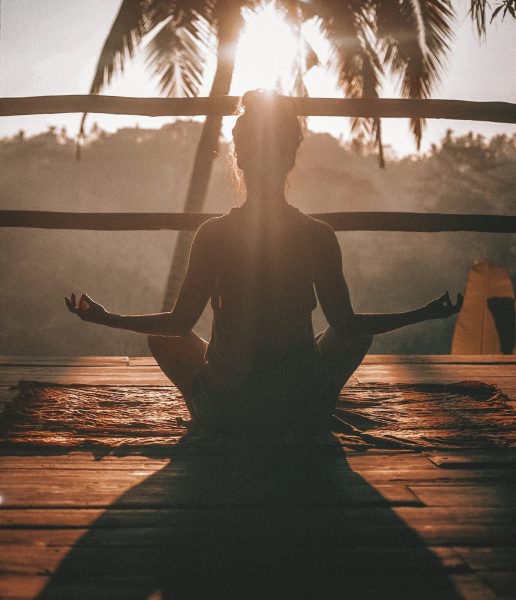
There is a specific heat that only July and August truly understand. It’s the kind that rises from the asphalt in waves, makes the air shimmer, and settles deep into your bones until you feel like you might simply evaporate. When I was a child in Guangzhou, the humidity was so thick you could almost swim through it. My grandmother, who never owned an air conditioner, had a different strategy for the heat. She didn’t fight it with force; she met it with flow. On the hottest afternoons, she’d sit by the open window with a large bowl of cool water, gently swirling her hands in it. “Don’t be a stone in the sun,” she’d tell me. “Be the stream. The stream never argues with the heat. It just keeps moving.” That simple image—becoming the stream—is the heart of the summer water meditation. It’s a five-minute practice designed to help you harness the cooling, fluid nature of water element energy to soothe your system when the world feels like a furnace.
Why Water? The Energetic Logic of Cooling Down
In Traditional Chinese Medicine (TCM), everything in nature—and in our bodies—can be understood through the lens of the Five Elements: Wood, Fire, Earth, Metal, and Water. Summer is dominated by the Fire element, which is associated with heat, expansion, and outward energy. While a healthy amount of Fire gives us joy and passion, an excess leads to irritability, inflammation, insomnia, and that feeling of being “burnt out.” The natural antidote isn’t to add more of the opposing element (Water) in a confrontational way, but to invoke its qualities within ourselves.
Water’s qualities are cool, fluid, deep, and quiet. It represents the yin within yang—the cooling, restorative force that balances the bright, active yang of summer. When you practice a water meditation, you are not just imagining a pretty picture. You are actively signaling to your nervous system to shift from a sympathetic (fight-or-flight, “hot”) state to a parasympathetic (rest-and-digest, “cool”) state. It’s a physiological nudge. Think of your body’s internal thermostat. The summer heat is cranking it up externally. This practice gives you a manual override, using the power of your mind and breath to turn it down internally.
The highest good is like water. Water gives life to the ten thousand things and does not strive.
— Lao Tzu, Tao Te Ching
Preparing Your Space: Less is More
The beauty of this practice is its simplicity. You don’t need a meditation cushion, a special app, or an hour of free time. You need five minutes and a little intention. Here’s how to set the stage for maximum cooling effect:
- Find Your Spot: Choose the coolest room in your home, or a shaded spot outdoors. If you’re at your desk, that’s fine too. The key is to minimize direct, oppressive heat.
- Hydrate First: Drink a large glass of cool (not ice-cold) water about 10 minutes before you begin. Hydration is the physical foundation of the water element. I like to add a few slices of cucumber or a sprig of mint to my glass for an extra cooling whisper.
- Optional Prop: While not essential, having a bowl of cool water nearby to dip your fingertips in can be a wonderfully tangible anchor for the practice. My grandmother’s bowl was simple white porcelain. Mine is a blue ceramic one I bought at a market.
- Dress the Part: Wear loose, light-colored, natural fabrics like cotton or linen. Let your skin breathe.
The goal is to create a small oasis of calm that supports the internal shift you’re about to make.
The 5-Minute Summer Water Meditation: A Step-by-Step Guide
Set a gentle timer for five minutes. This removes the mental burden of tracking time and allows you to fully immerse yourself in the practice.
Minute 1: Arriving and Grounding
Whether sitting or standing, feel your connection to the earth beneath you. Imagine roots growing down from the base of your spine or the soles of your feet, anchoring you deep into the cool, stable ground. Take three slow, deep breaths. Inhale through your nose for a count of four, allowing your belly to expand. Exhale through your mouth for a count of six, imagining you are releasing a plume of hot steam with each breath. Feel your shoulders drop away from your ears.
Minutes 2-3: Invoking the Stream
Now, bring your awareness to the center of your body, roughly at the level of your navel (the lower dantian in TCM, the body’s energy reservoir). Imagine a small, cool spring beginning to bubble up from this point. It’s clear, refreshing, and utterly still at first. With your next inhale, visualize this spring gently expanding, sending a slow, soothing wave of cool water down through your hips and legs, all the way to the soles of your feet, washing away any heat or tension. With your exhale, draw that cool, clean water up through your torso, spine, and neck, letting it overflow at the crown of your head like a gentle fountain, cascading back down around you. You are not just imagining water; you are feeling its cool, fluid quality permeate every cell.
If your mind wanders—and it will, likely to thoughts of work, dinner, or the heat itself—gently guide it back to the sensation of cool flow. No judgment. Just a gentle return, like redirecting a wandering stream.

Minute 4: The Deep Pool
Now, let the flowing stream settle into a deep, still pool at your center—the lower dantian. See it as a tranquil mountain lake, perfectly cool and calm. It reflects the sky above it without agitation. This is your core of quiet, your inner reservoir of yin energy. Rest your attention here. Breathe naturally, but feel each inhale gently rippling the surface of the pool, and each exhale allowing it to return to perfect stillness. This is the state of being yin within yang: active in your calm, powerful in your stillness.
Minute 5: Integrating and Returning
Begin to expand your awareness back out to your physical body. Wiggle your fingers and toes. Feel the air on your skin. Notice if the quality of the heat around you has changed in your perception. It hasn’t necessarily gotten cooler, but your relationship to it might have. You’ve built an internal coolness. Take one final, deep breath, imagining you are drawing the essence of that deep, cool pool up into your heart, sealing the calm within you. When you’re ready, open your eyes. Move slowly. Drink another sip of your cool cucumber water. Carry this feeling of fluid coolness with you into your next activity.
Beyond the Bowl: Everyday Water Integration
The true power of this practice is in its portability. You can invoke the “summer water meditation” mindset in a hundred small ways throughout a scorching day:
- The 30-Second Cool Down: At your desk, press the cool pads of your fingertips to your closed eyelids for 30 seconds. Visualize cool blue light seeping in. Breathe.
- Hydration Ritual: Turn drinking water into a mini-meditation. Take three conscious sips, imagining each one filling your internal pool.
- Visual Anchor: Keep a photo of a mountain stream, a waterfall, or the ocean as your phone or desktop background. Glance at it when you feel flustered and take one conscious breath.
- Evening Cool-Down: Before bed, place a cool, damp washcloth on your forehead and wrists for 2 minutes. Combine it with the stream visualization to wash away the day’s heat and promote restful sleep.
It’s about weaving the essence of the practice into the fabric of your day.
Complementary Practices: Foods and Herbs that Support the Water Element
Meditation is a mental practice, but we are physical beings. Supporting your body with cooling foods and herbs amplifies the effect, creating a full-spectrum approach to summer wellness. This isn’t about a restrictive diet; it’s about conscious choice.
| Category | Cooling Choices | How to Use | Why It Works (TCM Perspective) |
|---|---|---|---|
| Fruits | Watermelon, cucumber, pear, cantaloupe, citrus fruits | Eat as snacks, add to infused water, or blend into smoothies. A daily bowl of watermelon is a summer staple in southern China. | These fruits have a high water content and are energetically “cooling,” helping to clear heat and generate fluids. |
| Vegetables | Bitter melon, mung beans, celery, lettuce, summer squash | Mung bean soup is a classic summer detox remedy. Sauté bitter melon with a little garlic for a potent cooling side dish. | Bitter flavors in TCM are associated with the Fire element but, paradoxically, help drain excess heat and dampness. |
| Herbs & Teas | Chrysanthemum (Ju Hua), mint (Bo He), barley, green tea, lemon balm | Brew chrysanthemum tea (10-12 flowers per cup) and sip it cool throughout the day. Barley water is a traditional thirst-quencher. | These herbs “clear heat from the head and eyes” and soothe agitation. They work on the Liver and Lung channels to diffuse heat. |
| Flavors to Favor | Bitter, slightly sweet, sour | Use a dash of vinegar in salads, a squeeze of lemon on fish, a touch of honey in your tea. | Sour helps generate yin fluids. Bitter clears heat. Slight sweetness nourishes the Qi depleted by heat. |
A simple, powerful recipe I drink all summer: Cucumber-Mint-Chrysanthemum Infusion. Thinly slice half a cucumber and a handful of fresh mint leaves. Place them in a large pitcher with 1 tablespoon of dried chrysanthemum flowers. Fill with cool water and let it steep in the fridge for at least two hours. It’s hydration and herbal medicine in one beautiful glass.
Common Questions
Can I do this meditation if I’m not near water or don’t like visualizing?
Absolutely. The visualization is a tool, not a requirement. If imagery isn’t your strength, focus on the sensation. Instead of seeing water, feel the qualities of coolness, fluidity, and smoothness in your body. You can also focus on the physical act of breathing: imagine the air you inhale is cool and misty, and the air you exhale is warm and stale. The core principle is cultivating a cool, flowing sensation, not necessarily a picture-perfect mental movie.
I have a “cold” constitution (I’m always chilly). Should I avoid this?
Great question. This is where individual constitution matters. If you are naturally yang-deficient (cold hands and feet, prefers warm drinks, feels worse in winter), you should practice this meditation in moderation. Shorten it to 2-3 minutes, and do not use physical cold water (the bowl or washcloth). Focus instead on the stillness and clarity aspects of water, not its coldness. Visualize a calm, room-temperature lake rather than an icy stream. And always pair it with warming foods in other meals, like ginger tea or cooked root vegetables.
How is this different from just sitting in front of a fan or AC?
That’s an external solution to an internal problem. Air conditioning cools your skin but does nothing for the internal heat, agitation, and inflammation that summer can cause. In fact, it can create a confusing shock to your system. The summer water meditation is an internal thermostat. It addresses the root cause of summer discomfort: the excess yang/heat energy disrupting your body’s balance. It’s the difference between putting a bandage on a fever (AC) and taking medicine to resolve the underlying heat (meditation + cooling foods). Ideally, you can use both: use AC sparingly for physical comfort, and use this practice for deep, sustainable energetic balance.
The bottom line: The summer water meditation is a five-minute, scientifically-grounded, and traditionally-rooted tool for transforming your relationship with summer heat. By shifting from a state of reactive agitation to one of fluid, cool receptivity, you don’t just survive the summer—you learn to move with it. It’s the practice of being the stream, not the stone, allowing you to maintain your inner calm and clarity even when the world outside is shimmering with intensity.
This article is for educational purposes and reflects traditional wellness perspectives. It is not a substitute for professional medical advice, diagnosis, or treatment.