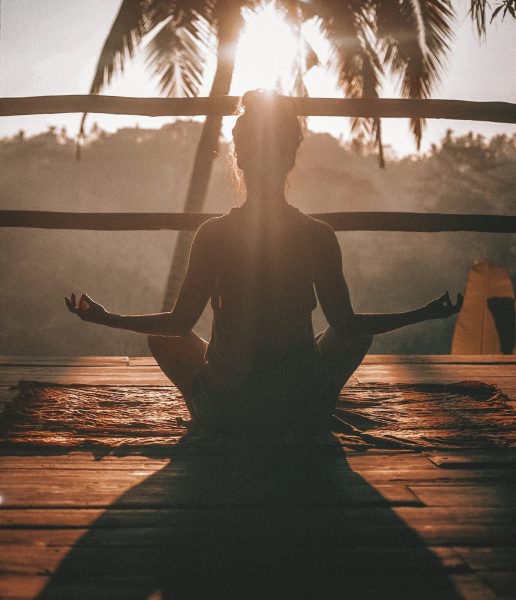
Summer hits different when you stop fighting it. The heat, the long days, the buzzing energy — most of us spend June through August in a state of low-grade resistance. We blast the air conditioning, chug iced drinks, and schedule every minute of daylight with activities. But my grandmother, who grew up in Guangzhou where summer humidity could make you feel like you were breathing through a wet towel, had a different approach. She called it “letting the river carry you,” and she spent her hottest afternoons sitting quietly under the mango tree in our backyard, fanning herself slowly with a palm leaf. She wasn’t doing nothing. She was practicing a form of meditation so subtle it looked like laziness to Western eyes. That practice has a name: wu wei meditation, and it might be the most powerful — and most misunderstood — tool in the traditional Chinese wellness toolkit.
- What Wu Wei Actually Means (And Why It's Not "Doing Nothing")
- The Science Behind Letting Go
- How to Practice Wu Wei Meditation: A Summer-Specific Guide
- Summer Wu Wei: Timing, Environment, and the Fire Element
- Common Mistakes That Turn Wu Wei Into "More Wei"
- Supporting Your Practice: Summer Herbs, Foods, and Small Rituals
- When Wu Wei Becomes Your Default Mode
What Wu Wei Actually Means (And Why It’s Not “Doing Nothing”)
Let’s clear this up right away: wu wei (pronounced “woo way”) does not mean laziness, passivity, or giving up. The characters 无为 literally translate to “without effort” or “non-doing,” but the meaning runs much deeper. Think of it like this: a skilled sailor doesn’t row against the current. She adjusts her sails to catch the wind. She’s still active, still attentive, still making decisions — but she’s working with the forces around her rather than against them. That’s wu wei.
In Traditional Chinese Medicine, summer belongs to the Fire element. It’s a time of maximum yang energy — think of the sun at its highest point, the longest days, the most outward expression of life force. Your heart, which TCM considers the emperor of your organ system, is particularly active right now. It wants to expand, connect, express joy. But here’s the paradox: if you match that outward energy with constant doing, you’ll burn out by August. The TCM classic Huangdi Neijing (The Yellow Emperor’s Classic of Internal Medicine) actually advises people to “let the heart be free” in summer — meaning don’t constrain it with over-scheduling and stress, but also don’t exhaust it with relentless activity.
This is where wu wei meditation enters the picture. It’s not about sitting cross-legged for 45 minutes trying to empty your mind. It’s about learning to recognize when you’re forcing things — when you’re rowing against the current — and gently releasing that grip. It’s the art of engaged stillness. And summer, with its natural push toward expansion, is actually the perfect season to learn this skill.
The Science Behind Letting Go
Before you dismiss this as mystical Eastern philosophy, consider what’s happening in your nervous system. When you force yourself to “meditate harder” or “relax more intensely,” you’re actually activating your sympathetic nervous system — the fight-or-flight response. Your jaw clenches. Your shoulders rise. Your body interprets your effort as tension. This is the opposite of what meditation is supposed to do.
Research from Harvard Medical School and Massachusetts General Hospital has shown that the most effective meditators aren’t the ones who try hardest. They’re the ones who develop what neuroscientists call “effortless awareness” — a state where the brain’s default mode network quiets down naturally, without brute mental force. Brain scans of experienced meditators show reduced activity in the prefrontal cortex (the planning, effortful part of the brain) during meditation, not increased activity. In other words, the science supports wu wei: less effort, more awareness.
Your body already knows how to do this. Think about the last time you were completely absorbed in watching a sunset, listening to rain, or floating in water. You weren’t trying to meditate. You were just… present. That’s wu wei. The practice is about learning to access that state intentionally, rather than waiting for it to happen by accident.
How to Practice Wu Wei Meditation: A Summer-Specific Guide
Here’s the practical part. I’m going to give you a framework you can start today — not next week, not after you buy a meditation cushion, today. And I’m going to tailor it specifically to summer, because the season’s energy actually makes this practice easier if you know how to use it.
Step 1: Choose Your “Current”
In summer, you have natural currents everywhere: the warmth of morning sun, the rhythm of cicadas, the slow movement of afternoon clouds, the cooling breeze that sometimes arrives at dusk. Pick one. Your “current” is simply something you can pay attention to without effort — something that draws your awareness naturally, the way a river draws water.
Good summer currents to choose from:
- The sound of a fan or air conditioning unit (white noise is surprisingly effective)
- The sensation of warm air on your skin while sitting in shade
- The smell of jasmine or gardenia (both bloom in summer and have calming properties in TCM)
- The taste of chilled watermelon or cucumber — really taste it, don’t just eat it
- The sight of clouds moving across the sky
Step 2: The 5-Minute “Release” Practice
Sit somewhere comfortable. Not rigid. Not on a hard floor unless that genuinely feels good to you. In summer, I like to sit in a chair on my porch, or even lie in the grass. Set a timer for 5 minutes — that’s it. Now:
- Minutes 1-2: Notice where you’re forcing. Are you forcing your eyes closed? Open them. Forcing your back straight? Slouch. Forcing yourself to focus? Let your attention wander. Forcing yourself to stop thinking? Let the thoughts float by like clouds. The goal here is to identify and release every bit of unnecessary effort.
- Minutes 3-4: Now turn your attention to your chosen “current.” Don’t stare at it. Don’t analyze it. Just let it into your awareness the way you’d let the sound of ocean waves enter your ears while lying on the beach. If your mind wanders, don’t yank it back. Just gently notice it wandered, and return to the current.
- Minute 5: Before you stand up, take three slow breaths. On each exhale, silently say the word “enough.” Not as a command. As an acknowledgment. Right now, in this moment, nothing needs to be added.
That’s the practice. Five minutes. No apps required. No special clothing. No philosophical prerequisites.
Summer Wu Wei: Timing, Environment, and the Fire Element
In TCM, summer has its own clock, and it favors certain times of day for different kinds of practice. Here’s a breakdown that respects the season’s energy:
| Time of Day | Energy | Best Wu Wei Practice | Why It Works |
|---|---|---|---|
| 5:30-7:00 AM | Gentle yang rising | Outdoor sitting — porch, garden, balcony | Cool air + birdsong = effortless sensory anchor. Heart meridian (Fire element) is beginning to activate. |
| 11:00 AM-1:00 PM | Peak yang / Heart time | Shade sitting with iced chrysanthemum tea | This is the Heart’s peak hour in TCM. Resting now prevents heart-fire excess (anxiety, insomnia, agitation). |
| 3:00-5:00 PM | Slow descent toward yin | Water-based practice — near a fountain, pool, or with a bowl of cool water | Water element balances Fire. The sound or sensation of water naturally calms without effort. |
| 7:00-8:30 PM | Yin gathering | Walking meditation — slow, aimless, 15-20 minutes | Summer sunsets are long. The fading light signals your pineal gland to begin melatonin production, supporting sleep. |
My grandmother didn’t have this table memorized, but she followed it instinctively. She’d never sit in the full midday sun — that was “fighting the fire,” she said. Instead, she’d find the shadiest spot under the mango tree, and she’d sit there from about 11:30 until 1, sometimes longer. She’d have a thermos of liang cha (cooling herbal tea) beside her, usually made with chrysanthemum flowers (10-12 blooms), goji berries (1 tablespoon), and a small piece of rock sugar. She’d sip it slowly. Sometimes she’d hum. Sometimes she’d just watch the chickens peck around the yard. She called it her “heart rest,” and she swore it was more refreshing than a nap.
She was right. In TCM, the Heart is considered the seat of consciousness — the shen, or spirit. When you overwork, overthink, or overstimulate yourself in summer, the Heart Fire rises too high. You feel it as anxiety, restlessness, insomnia, mouth ulcers, or that wired-but-tired feeling. Wu wei meditation during the Heart’s peak hours (11 AM-1 PM) directly addresses this. You’re not suppressing the Fire. You’re giving it space to express without burning out of control.

Common Mistakes That Turn Wu Wei Into “More Wei”
I see this all the time, especially with people who come to TCM from a Western wellness background. They hear about wu wei and immediately try to optimize it. They want to know the perfect duration, the ideal breathing pattern, the “best” time to practice. They turn effortless effort into… effort. Here are the traps to avoid:
“The Tao does nothing, yet nothing is left undone. If the ruler could keep to this, the ten thousand things would develop of their own accord.”
— Tao Te Ching, Chapter 37
Trap 1: Making it a performance. You don’t need to look serene. You don’t need to sit perfectly still. If you need to scratch your nose, scratch it. If a fly lands on your arm, brush it off. Wu wei isn’t about becoming a statue. It’s about not adding unnecessary tension to whatever you’re already doing.
Trap 2: Timing yourself too strictly. Yes, I gave you 5 minutes as a starting point. But if at minute 3 you feel genuinely done, stop. If at minute 5 you want to stay for 10 more minutes, stay. The clock is a suggestion, not a warden.
Trap 3: Expecting bliss. Wu wei meditation doesn’t promise euphoria. Sometimes you’ll sit down and feel… ordinary. Bored, even. That’s fine. Boredom is just your mind resisting the absence of stimulation. Sit with it. The most profound shifts often happen when nothing seems to be happening.
Trap 4: Skipping it because you’re “too busy.” This is the sneakiest trap. Summer schedules fill up fast — barbecues, vacations, kids’ camps, longer work hours. You think, “I’ll do it tomorrow when I have more time.” But wu wei isn’t something you need extra time for. You can practice it while waiting in line for ice cream, while sitting in traffic, while eating a peach. The practice is always available because it requires nothing except the willingness to stop adding effort to the present moment.
Supporting Your Practice: Summer Herbs, Foods, and Small Rituals
TCM never treats meditation as separate from daily life. Your food, your drinks, your daily rhythms — they all support (or undermine) your inner practice. Here are specific, actionable ways to support wu wei meditation through the rest of your summer routine:
Cooling Heart-Supporting Tea
Drink this 3-4 times per week, ideally between 11 AM and 3 PM. It calms Heart Fire without making you drowsy:
- Dried chrysanthemum flowers — 8-10 flowers (cooling, clears heat from the head and eyes)
- Dried rose buds — 5-6 buds (moves stagnant qi, lifts mood gently)
- Goji berries — 1 tablespoon (nourishes Heart yin, supports eyesight)
- Raw honey — 1 teaspoon, added after steeping (not during — heat destroys honey’s beneficial enzymes)
Steep everything in 16 oz of water at 180°F (not boiling — boiling makes chrysanthemum bitter) for 5-7 minutes. Sip slowly. Don’t gulp it at your desk while answering emails. That would be the opposite of wu wei.
Summer Foods That Support Effortless Awareness
Certain foods have a natural affinity for the Heart and Fire element. Incorporating them into your summer meals isn’t about restriction — it’s about alignment. Here are my favorites:
- Watermelon — Nature’s perfect summer food. It clears heat, generates fluids, and is literally shaped like a heart. Eat it fresh, not as juice (the fiber matters).
- Cucumber — Cooling, hydrating, and in TCM it benefits the Lung and Stomach, which indirectly supports the Heart by reducing internal heat.
- Mung beans — The classic TCM summer food. Cook a simple mung bean soup: 1 cup dried mung beans + 8 cups water + a few slices of fresh ginger. Simmer for 45 minutes. Add a small piece of rock sugar. Eat it warm or chilled. This is what every Chinese grandmother makes in July.
- Lotus seed — 15-20 dried lotus seeds, simmered in porridge or soup. In TCM, lotus seed specifically calms the shen (spirit) and is used for anxiety and insomnia. You can find them at any Asian grocery store.
- Bitter melon — I know, it’s an acquired taste. But bitter flavor directly clears Heart Fire. Slice it thin, blanch for 2 minutes, then stir-fry with a little garlic and soy sauce. Start with small amounts if you’re new to it.
A Tiny Bedtime Ritual
Summer evenings are long. Use that time. Before bed, try this 3-minute wu wei wind-down: soak your feet in warm (not hot) water with 5-6 drops of lavender essential oil and 2 tablespoons of Epsom salt for 10 minutes. While soaking, don’t scroll your phone. Don’t read. Just feel the warmth around your ankles. Notice the weight of your feet in the water. This is wu wei applied to a daily ritual — doing something simple with full, effortless attention.
In TCM, the Kidney meridian begins at the sole of the foot, and summer’s Fire element can drain Kidney yin if you’re not careful. Warming the feet before bed draws energy downward, away from an overactive mind, and supports deeper sleep. It’s such a small thing, but my grandmother did it every single night from May through September.
When Wu Wei Becomes Your Default Mode
Here’s what I want you to understand: wu wei meditation isn’t just a practice you do for 5 minutes on your porch. It’s a way of relating to life. And summer, with all its heat and energy and abundance, is the ideal training ground.
Start noticing where you’re forcing things in your day. Are you forcing yourself to be productive during your lunch break? (Eat the lunch. That’s enough.) Are you forcing a conversation that isn’t flowing? (Let there be silence.) Are you forcing your body to stay awake when it’s telling you to rest? (Close your eyes for 10 minutes at 3 PM — that’s not laziness, that’s wisdom.)
The beautiful thing about wu wei is that it’s self-reinforcing. The less you force, the more naturally things flow. The more things flow, the less you feel the need to force. It’s the opposite of the productivity trap, where more effort creates more problems that require more effort.
Summer will end. The Fire element will give way to the Earth element of late summer, and then to the Metal element of autumn. But the skill you develop now — the ability to stop rowing against the current, to let the river carry you — that stays. It’s the quiet power of doing less and being more. And honestly? In a world that’s constantly telling you to optimize, hustle, and push harder, sitting under a tree and doing nothing might be the most radical thing you do all summer.
My grandmother lived to 94. She never went to a gym. She never took supplements. She never read a self-help book. But every afternoon, without fail, she sat under that mango tree with her tea and her palm-leaf fan, and she let the world carry her for a while. I think she knew something we’re only now beginning to understand.
Common Questions
Is wu wei meditation the same as mindfulness meditation?
They’re related but distinct. Mindfulness meditation typically involves actively directing your attention to a specific anchor — your breath, a body scan, a mantra. It’s a more structured practice. Wu wei meditation is about releasing effort entirely. You’re not directing attention anywhere; you’re letting attention settle naturally, the way sediment settles in a glass of water when you stop stirring it. Mindfulness says, “Pay attention to your breath.” Wu wei says, “Stop trying so hard, and notice what your attention does on its own.” Many experienced meditators find that wu wei becomes their natural evolution after years of more structured practice.
I can’t stop my thoughts. Am I doing it wrong?
No, and here’s the key: wu wei meditation doesn’t ask you to stop thoughts. It asks you to stop engaging with thoughts forcefully. Thoughts will arise — that’s what minds do. But in wu wei practice, you don’t grab them, analyze them, push them away, or judge yourself for having them. You let them pass through like wind through an open window. If you notice you’ve been caught up in a thought for 30 seconds, that’s fine. The moment you notice is the moment you’re already back. No force needed. The thoughts aren’t the problem. The fighting with them is.
Can I practice wu wei meditation in air conditioning, or does it need to be outdoors?
You can practice anywhere, but summer offers outdoor advantages that are worth using when possible. Natural sensory inputs — birdsong, breeze, sunlight filtering through leaves — give your awareness something effortless to rest on. Air conditioning creates white noise, which works, but it lacks the organic variability that keeps your attention gently engaged without effort. That said, if it’s 100°F and dangerously humid, stay inside. Wu wei is about working with reality, not against it. Sit by a window if you can. If you can’t, the sound of a fan or the feeling of cool air on your skin works just fine. The practice adapts to you, not the other way around.
The bottom line: Wu wei meditation isn’t about achieving a special state — it’s about releasing the unnecessary effort that separates you from the state you’re already in. Summer’s Fire element makes this practice especially potent: the season’s outward energy creates a natural contrast that helps you notice where you’re forcing, and the long, warm days give you more opportunities to stop, sit, and let the river carry you. Start with 5 minutes today. Choose a natural anchor — sunlight, a breeze, the taste of watermelon — and simply stop adding effort to the present moment. That’s it. That’s the whole practice. And it might just change how you relate to every season that follows.
This article is for educational purposes and reflects traditional wellness perspectives. It is not a substitute for professional medical advice, diagnosis, or treatment.