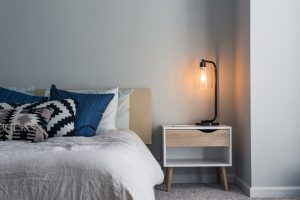
Summer nights hold a particular kind of restlessness. The sun lingers until nearly nine, the air stays thick with warmth, and your body hums with the day’s residual energy long after you’ve turned off your laptop. In Traditional Chinese Medicine, this is the season of the Fire element—a time of outward expression, social connection, and vibrant yang energy. But when that yang doesn’t settle properly at night, it’s like trying to sleep with a campfire still crackling in your chest. You toss, your mind races, and you wake feeling like you barely rested at all.
That’s why a deliberate evening wind-down routine isn’t a luxury in summer—it’s a necessity. My grandmother, who grew up in Guangzhou where summer heat is a living presence, had a saying: “Shuì qián sān fēn zhōng, shèng guò sān fēn zhōng.” The three minutes before sleep matter more than the three minutes after waking. She didn’t mean three literal minutes, of course. She meant that the quality of your transition into sleep determines the quality of everything that follows. This article will give you a simple, five-minute TCM-inspired routine to make that transition count—even on the hottest, most restless nights.
Why Summer Nights Are Different (And Harder)
From a TCM perspective, summer is ruled by Fire, which governs the Heart and Small Intestine meridians. The Heart, in this system, isn’t just a pump—it’s the “Emperor” of your organs, the seat of your shen (your spirit, consciousness, and emotional clarity). When Fire energy is balanced, you feel joyful, connected, and socially warm. When it’s excessive or agitated, your shen becomes disturbed—leading to anxiety, insomnia, vivid dreams, and a general feeling of being “wired but tired.”
The problem is that modern summer living supercharges this Fire element. We stay up later because the sun is out. We eat more cold, raw foods (salads, ice cream, iced drinks) which, while cooling in the moment, can damage the Spleen’s ability to transform and transport fluids—leading to internal dampness that paradoxically makes you feel hotter and more sluggish. And we’re often more socially active, which, while nourishing, can deplete Heart yin if we don’t balance it with quiet recovery.
The key concept to understand here is yin-yang balance in the daily cycle. Yang energy peaks at noon and should naturally begin to recede after sunset, allowing yin energy (cool, quiet, receptive) to rise and guide you into sleep. In summer, yang is so strong it resists this receding. Your evening routine’s job is to gently but firmly help yang descend and yin ascend—like coaxing a stubborn tide back out to sea.
The 5-Minute Evening Wind-Down Routine: Step by Step
This routine is designed to be done in the 30-60 minutes before you intend to sleep. It requires no special equipment—just your body, a few kitchen staples, and five minutes of quiet attention. The goal is to signal to your entire system: the day is done, it’s safe to rest now.
Minute 1: The Cooling Foot Soak
This might sound counterintuitive—soaking your feet in warm water to cool down? In TCM, the feet are a crucial exit point for heat. When you soak them in warm (not hot) water, it draws excess heat downward and out through the soles, a process called “yǐn huǒ guī yuán” (guiding fire back to its source). My grandmother would add a handful of dried chrysanthemum flowers (jú huā) and a few slices of ginger to her foot bath in summer. The chrysanthemum clears heat from the Liver and eyes, while the ginger prevents the water from being too cooling, which could shock the system.
How to do it:
- Fill a basin with warm water (around 100-104°F / 38-40°C—pleasantly warm, not scalding).
- Add 1 tablespoon of dried chrysanthemum flowers (available at any Asian grocery store or online) and 2-3 thin slices of fresh ginger.
- Soak your feet for just 3-5 minutes. You’re not trying to stew them—just create a gentle downward pull.
- While soaking, close your eyes and take three slow breaths, exhaling longer than you inhale.
This simple act shifts your nervous system from sympathetic (fight-or-flight) to parasympathetic (rest-and-digest) dominance within minutes.
Minute 2: The “Three Gates” Self-Massage
In TCM, there are three key acupuncture points—sometimes called the “Three Gates”—that are powerful for calming the mind and settling the shen. Massaging them before bed is like giving your nervous system a gentle lullaby.
1. Shen Men (HT7) – “Spirit Gate”
This point is on the wrist crease, on the pinky side, in the small depression just inside the tendon. It’s the master point for calming the Heart and quieting anxiety. Use your thumb to apply firm, circular pressure for about 30 seconds on each wrist. You’ll feel a slight tenderness—that’s the qi responding.
2. Nei Guan (PC6) – “Inner Gate”
Two finger-widths up from the wrist crease, between the two tendons on the inner forearm. This point regulates the Heart and Pericardium, relieves anxiety, and is famously used for nausea—but it’s equally powerful for emotional turbulence. Massage for 30 seconds on each side.
3. Tai Chong (LR3) – “Great Surge”
On the top of the foot, in the depression where the big toe and second toe bones meet. This is the master point for moving stagnant Liver qi—which, in summer, often manifests as irritability, frustration, or that “tired but can’t sleep” feeling. Press firmly for 30 seconds on each foot. If you only have time for one point, make it this one.
“The body is like a garden. You can’t force the flowers to bloom at night—you can only create the conditions for rest, and trust the rhythm.”
— My grandmother, on patience and sleep
Minute 3: The Cooling Breath
This breathing technique, called “Sī” breath (pronounced “suh”), is one of the six healing sounds from classical qigong practice. Each sound corresponds to an organ—Sī is the sound of the Lungs, and it has a cooling, cleansing effect on both the Lungs and the Heart. In summer, when Heart fire is high, this breath is like opening a window in a stuffy room.
How to do it:
- Sit comfortably with your spine tall. Rest your hands on your thighs.
- Inhale slowly through your nose for a count of 4, imagining cool, clear air filling your chest.
- As you exhale, shape your mouth into a gentle smile (lips slightly parted, teeth lightly together) and whisper the sound “Sī…” on a long, slow exhale (count of 6-8).
- As you exhale, visualize any heat, frustration, or mental chatter leaving your body as a warm, red mist dissolving into cool air.
- Repeat 6 times. That’s it—about 60 seconds.
The first time I tried this, I felt slightly silly. By the third repetition, I noticed my shoulders had dropped two inches and my jaw had unclenched. By the sixth, my mind felt noticeably quieter. It’s deceptively powerful.
The Herbal Allies: What to Sip (And What to Skip)
A warm drink before bed is a cornerstone of evening wind-down in many cultures, but in summer, the choice matters more than usual. You want something that calms the Heart, clears residual heat, and nourishes yin—without being too stimulating or too cold.
My top three summer evening teas:
- Chrysanthemum & Goji Berry Tea (Jú huā gǒu qǐ chá): Use 5-6 dried chrysanthemum flowers and 10-12 dried goji berries. Steep in hot (not boiling) water for 5 minutes. This clears Liver and Heart heat, nourishes yin, and is mildly sweet without any sugar. My family drinks this almost every summer evening.
- Sour Jujube Seed Tea (Suān zǎo rén chá): Use 10 grams of crushed sour jujube seeds (available at TCM pharmacies or online). Simmer in 2 cups of water for 15 minutes, strain. This is the classic TCM remedy for insomnia—it nourishes Heart blood and calms the shen. It has a mild, slightly nutty flavor.
- Lotus Plumule Tea (Lián xīn chá): Use 2-3 grams of lotus plumules (the tiny green sprouts inside lotus seeds). Steep in hot water for 10 minutes. This is intensely bitter—think of it as the TCM equivalent of an espresso shot for clearing Heart fire. Add a teaspoon of honey if needed. Not for everyone, but remarkably effective for that “heart racing at bedtime” feeling.
What to skip after 7 PM:
- Iced anything: Cold contracts. It congeals fluids and qi, making it harder for yang to descend. Room temperature is as cold as you should go.
- Coffee and strong black tea: Obvious, but worth stating. Even if you think you’re “used to it,” caffeine disrupts the Heart-kidney axis that governs sleep cycles.
- Heavy, greasy snacks: That late-night bowl of fried noodles taxes the Spleen, creating dampness and heat that will keep you tossing.

Minute 4: The Abdominal Palming
This is the quietest, most nurturing part of the routine—and the one people tend to skip because it seems too simple to work. Trust me: it works.
Lie on your back in bed. Rub your palms together vigorously for 10-15 seconds until they feel warm. Then place your warm palms flat on your lower abdomen, just below your navel—over the area TCM calls the dān tián (elixir field), the energetic center of your body. Breathe naturally and let the warmth seep inward.
After about 30 seconds, begin to make slow, clockwise circles with your palms—gentle, not pressing hard. The clockwise direction follows the natural path of your large intestine and helps move qi downward. Do this for about 60 seconds. You’re not trying to digest food—you’re trying to tell your body: everything is handled, we can let go now.
In Chinese medicine, the lower abdomen is where your yuan qi (source qi) resides. By warming it with your palms, you’re nurturing your deepest reserves—like putting a gentle ember to bed for the night. This is especially important in summer, when we tend to deplete our yin fluids through sweating and overactivity.
Minute 5: The Single-Point Focus
The final minute is a micro-meditation—but don’t let that word intimidate you. This isn’t about achieving enlightenment. It’s about giving your mind a single, soft place to land so it stops bouncing around like a pinball.
With your palms still resting on your abdomen, bring your awareness to the center of your palms—where they contact your body. Feel the warmth. Feel the subtle rise and fall of your breath. If thoughts arise (and they will), simply notice them and gently return your attention to the warmth under your palms.
This isn’t about stopping thoughts. It’s about choosing where to place your attention. In TCM, the Heart houses the shen, and the shen needs an anchor—otherwise it wanders, like a restless emperor pacing his palace. Your palms on your abdomen become that anchor.
After about 60 seconds, let your hands fall naturally to your sides. You should feel noticeably calmer, slightly drowsy, and ready for sleep to take you.
Quick Reference: Your 5-Minute Summer Wind-Down
Here’s the entire routine at a glance. Print this out or save it to your phone for the first week until it becomes second nature.
| Minute | Practice | Key Action | TCM Purpose |
|---|---|---|---|
| 1 | Cooling Foot Soak | Soak feet in warm water with chrysanthemum & ginger (3-5 min) | Draw heat downward, shift to parasympathetic |
| 2 | Three Gates Massage | Massage HT7, PC6, LR3 (30 sec each point) | Calm Heart, move Liver qi, quiet shen |
| 3 | Cooling “Sī” Breath | 6 repetitions of the Lung healing sound | Clear Heart fire, cool the system |
| 4 | Abdominal Palming | Warm palms on lower abdomen, gentle clockwise circles | Nourish yuan qi, settle the shen |
| 5 | Single-Point Focus | Rest attention on warmth of palms on abdomen | Anchor the shen, invite sleep |
Common Questions
What if I don’t have time for the foot soak?
The foot soak is the most effective single step, so I’d prioritize it—but if you truly only have two minutes, do the Three Gates massage (Minute 2) and the abdominal palming (Minute 4). Those two alone will cover about 70% of the benefit. The massage calms the upper body and the palming settles the lower body, creating a full-system shift. If you have three minutes, add the Sī breath. Think of the routine as modular: every minute helps, and you can scale up or down based on your evening.
Can I do this routine with air conditioning on?
Absolutely—in fact, I recommend it on very hot nights. The goal is to cool your internal heat, not to suffer through external heat. Set your AC to a comfortable sleeping temperature (most sleep experts suggest 65-68°F / 18-20°C). The foot soak will still work because it’s about the contrast and the downward movement of qi, not about the room temperature. Just make sure you’re not creating a drastic temperature shock—don’t go from a 95°F balcony directly into a 65°F bedroom without giving your body a few minutes to adjust.
Is it okay to do this routine every night, or should I take breaks?
You can do this every single night without any concern—none of these practices are depleting or overly stimulating. In fact, consistency is where the magic happens. After about two weeks of nightly practice, your body will start to anticipate the wind-down. You’ll notice that your shoulders start to relax as soon as you fill the foot basin, or that your breathing naturally deepens when you lie down. That’s your nervous system learning the pattern. My grandmother did her version of this routine every night for decades, and she slept like a stone until her eighties. The body loves ritual—it finds safety in repetition.
The bottom line: Summer’s vibrant yang energy is a gift—it fuels our adventures, creativity, and social connection. But it needs an equally strong yin counterbalance at night to restore what the day spends. This five-minute routine—foot soak, point massage, cooling breath, abdominal palming, and single-point focus—is your nightly invitation to that balance. It’s not about perfection. It’s about giving your body a clear, consistent signal that the day is complete, and that rest is not just allowed, but honored. Start tonight. Your Heart—and your sleep—will thank you.
This article is for educational purposes and reflects traditional wellness perspectives. It is not a substitute for professional medical advice, diagnosis, or treatment.