There is a particular kind of stillness that only exists in the heart of summer. It’s not the quiet of a winter morning, but a heavy, buzzing silence that presses down on your shoulders and makes the air feel like warm syrup. In Traditional Chinese Medicine (TCM), we don’t fight this heat with frantic activity or aggressive air conditioning. We match it. We match it with a practice so simple it barely looks like a practice at all: walking as if you have nowhere to go. This is the Summer Slow Walk, a technique to harvest the expansive energy of the season without burning out, moving from the frantic “doing” of the modern world into the profound “being” of ancient wisdom.
The Physics of Heat: Why Summer Demands Slowness
In the West, we often view summer as a time for maximization—longer days mean more hours to work and play. In TCM, summer is governed by the Fire Element. Imagine a campfire. When the fire is burning high and bright, it provides light and warmth. But if you throw too much wood on it, or fan it too aggressively, it rages out of control, consuming everything in its path. Your body’s energy (Qi) behaves the same way. Summer is naturally a time of Yang (expansive, hot, active energy). If you remain hyperactive, you deplete your internal reserves—what we call Yin (cooling, moistening, deep energy).
My grandmother, who lived to a sharp-minded 94 in the humid summers of Hunan, used to tell me, “You cannot scoop water with a frantic hand; you must let the cup fill itself.” She was talking about energy conservation. When the external environment is hot, your pores open to release heat (we call this “releasing the exterior”). This means your defensive energy is less concentrated, leaving you vulnerable to fatigue. A Summer Slow Walk is about pacing your internal metabolism to match the sluggish rhythm of the afternoon sun.
“Nature does not hurry, yet everything is accomplished.” — Lao Tzu
The Mechanics of the “Xing-Zou” (Walking Walk)
The practice I recommend isn’t a hike, and it certainly isn’t a power walk. It is a specific form of moving meditation often practiced in qigong circles. The goal is to lower your center of gravity and synchronize your breath with your movement. It is about feeling the weight of your body transfer from the heel to the toe.
To do this correctly, you need to check your ego at the door. You will look slow. You will feel slow. But internally, you are cultivating immense clarity. Here is the step-by-step method I use when the July heat becomes oppressive:
- Time it right: Do not walk between 11:00 AM and 3:00 PM. This is the peak of Yang energy. Walk between 6:00 PM and 7:30 PM when the sun is setting, or early morning before 8:00 AM.
- Set your tempo: Inhale for 4 steps. Exhale for 4 steps. If you find yourself breathing faster, slow your legs down. The legs must obey the lungs, not the other way around.
- The “Empty” Mind: Focus on the sensation of the breeze on your skin or the sound of insects. When a stressful thought arises, do not push it away. Acknowledge it, and then visualize it melting into the pavement like an ice cube.
- Duration: 20 minutes is the sweet spot. Less than 15 minutes doesn’t allow the Qi to settle; more than 30 minutes can become taxing in high humidity.
Hydration: The TCM Way
One of the biggest mistakes Westerners make in summer is drinking ice water. It shocks the system. In TCM, the Spleen and Stomach (your digestive system) operate best at a warm temperature. Dumping ice into them is like pouring cold water into a hot engine; it creates “dampness,” leading to bloating, brain fog, and fatigue.
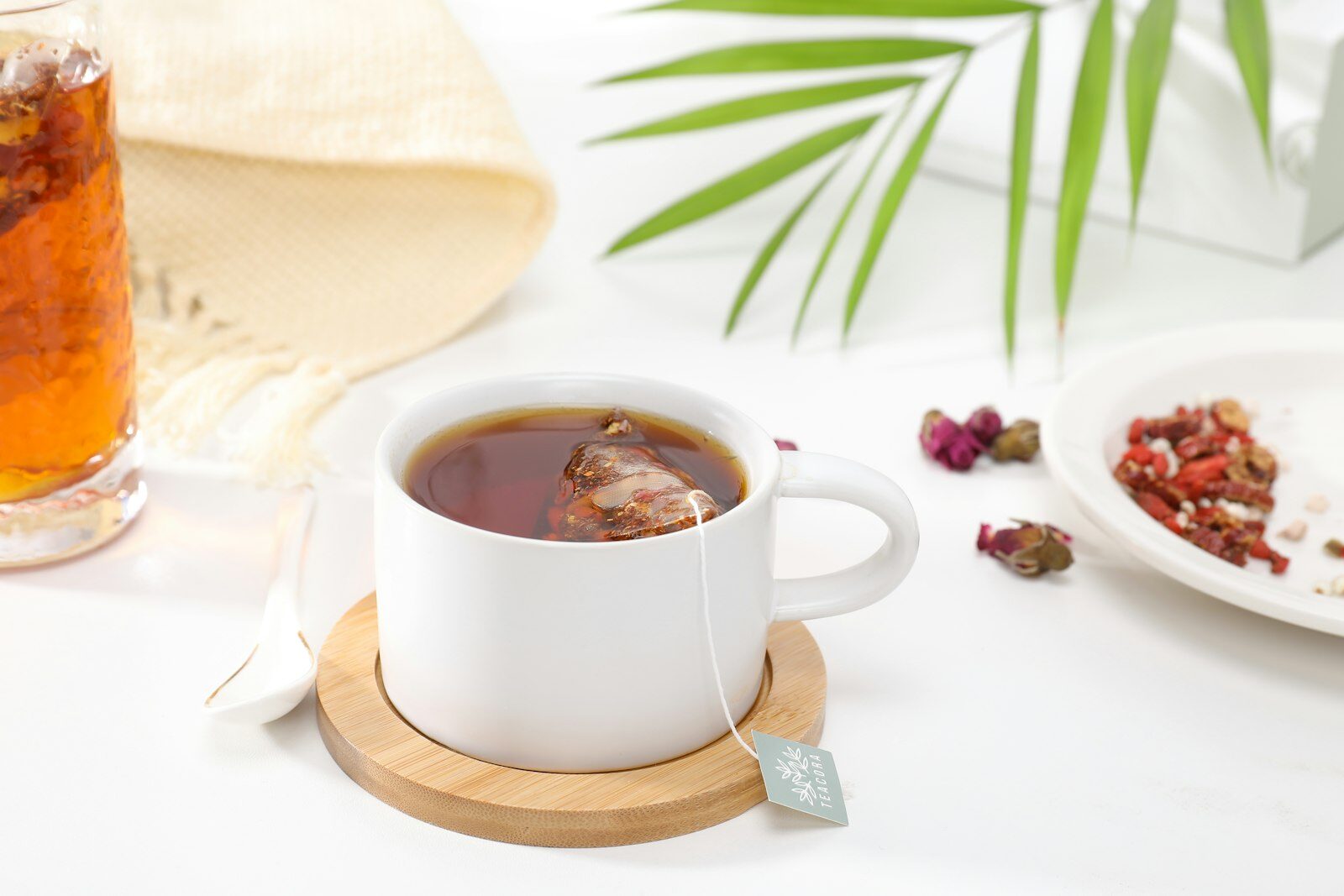
Before and after your slow walk, you need specific hydration. I want you to try a Chrysanthemum & Goji Cooler. This is a staple in my house every summer. It cools the Liver (which gets overheated by stress and anger) and brightens the eyes.
The Recipe: Steep 10 grams of dried yellow Chrysanthemum flowers (Ju Hua) and a small handful of Goji berries in hot water for 10 minutes. Let it cool to room temperature. Do not add sugar; the Goji berries provide a faint, earthy sweetness. Carry this in a thermos.

The Emotional Landscape: Taming the Fire
In TCM, the Fire Element is associated with the emotion of Joy. While joy is wonderful, an imbalance in the Fire Element leads to anxiety, mania, and insomnia. It’s the feeling of having too many browser tabs open in your brain. The Summer Slow Walk is designed to close those tabs.
I remember a client, Sarah, a high-powered executive who loved high-intensity interval training (HIIT). She came to me in August complaining of heart palpitations and inability to sleep. She thought she needed to “burn off” her stress. I told her she needed to smother it instead. I forbade HIIT for two weeks and prescribed the Slow Walk. By week two, her palpitations stopped. She realized that her nervous system didn’t need a fight; it needed a lullaby.
When you walk slowly, you activate the parasympathetic nervous system—the “rest and digest” mode. This is scientifically proven to lower cortisol. But from an energetic perspective, you are allowing the heat in your chest (Heart Fire) to descend down into your lower abdomen (Kidney Water), creating a state of balance.
Nourishment After the Walk
After a slow summer walk, your digestion is primed. You don’t want a heavy meal, but you need something to replenish fluids and Qi. Here is a simple, actionable guide for post-walk nourishment based on the time of day.
| Time of Walk | Ideal Food/Snack | Why (TCM Logic) |
|---|---|---|
| Morning (6-8 AM) | Warm congee with mung beans | Mung beans (Lu Dou) are the “ginseng” of summer—they specifically clear heat and toxins. |
| Evening (6-8 PM) | Cold cucumber soup or watermelon slices | Cucumber and watermelon are cooling but hydrating; perfect to settle the Fire Element before bed. |
| Late Night (Post-7 PM) | A few walnuts or a pear | Pears moisten the Lungs (which dry out in summer AC); walnuts ground the spirit. |
Troubleshooting: What If I Feel Sluggish?
It is very common to feel “heavy” or “damp” in summer. This is the TCM concept of Dampness—when humidity overwhelms your body’s ability to process fluids. If you start your slow walk and feel like your limbs are heavy, or your mind is foggy, you need to adjust your practice.
First, look at your tongue. If it has a thick white or yellow coating, you have dampness. In this case, shorten your walk to 15 minutes and focus on lifting your feet slightly higher than normal—imagine you are stepping over small puddles. This stimulates the Spleen meridian on the inner leg.
Second, incorporate aromatherapy. Carry a small vial of peppermint or eucalyptus oil. Inhale deeply once every 5 minutes. These scents “open the orifices” in TCM, cutting through mental fog instantly.
Finally, consider your footwear. Ditch the heavy running shoes. Wear thin-soled canvas shoes or even sandals (if the ground is safe). You want to feel the “Qi” of the earth. In summer, the earth is actually cooler a few inches below the surface; thin soles help you tap into that cooling frequency.
Integrating the Practice into Modern Life
You might be thinking, “I have a job, kids, and a commute. I can’t walk like a monk for 20 minutes a day.” I hear you. The beauty of the Summer Slow Walk is that it doesn’t require a special park. You can do it in your office hallway, your backyard, or even while walking to your car.
The key is the intention. You are reclaiming those minutes. If you have a 15-minute break at work, use 10 minutes for the slow walk and 5 minutes for hydration. Do not look at your phone. The blue light from the screen acts like a stimulant, adding more “Fire” to your system.
Think of this practice as a “micro-vacation.” You are stepping out of the linear timeline of deadlines and stepping into the cyclical time of nature. It’s a rebellion against the hustle culture that tells us we must always be producing. Sometimes, the most productive thing you can do is walk slowly enough to notice a flower blooming.
Common Questions
Can I do the Summer Slow Walk on a treadmill?
Technically, yes, but it is not ideal. TCM emphasizes connecting with nature (Tian Ren He Yi—the unity of heaven and human). A treadmill moves you; walking outside requires you to move. The sensory input of fresh air, natural light, and the ground beneath your feet is part of the medicine. If you must use a treadmill, set the speed to 1.5 to 2.0 mph and open a window.
What if it’s raining? Should I skip it?
Light summer rain is actually considered a blessing in TCM—it clears the “stagnant” heat in the air. If it is a gentle warm rain, grab an umbrella and walk! The sound of rain is incredibly grounding for the nervous system. However, avoid heavy thunderstorms or cold winds, which can allow “external pathogenic factors” to enter the body.
I feel anxious, not calm, when I slow down. What should I do?
This is very common. It means your nervous system is addicted to the “fight or flight” mode. Start with a “transition ritual.” Before you begin your walk, stand still for 60 seconds and place your hands on your lower abdomen (the Dantian). Breathe into your hands. Tell your body, “We are safe.” Then, start walking at a “normal” pace for the first 5 minutes, gradually slowing down to the “slow walk” pace over the next 5 minutes. This gradual deceleration is less shocking to the system.
The bottom line: The Summer Slow Walk is not about exercise; it is about energetic conservation. By matching your internal rhythm to the heavy, expansive energy of summer, you prevent burnout, cool your Fire Element, and cultivate a profound sense of presence. It is the art of doing less to achieve more.
This article is for educational purposes and reflects traditional wellness perspectives. It is not a substitute for professional medical advice, diagnosis, or treatment.