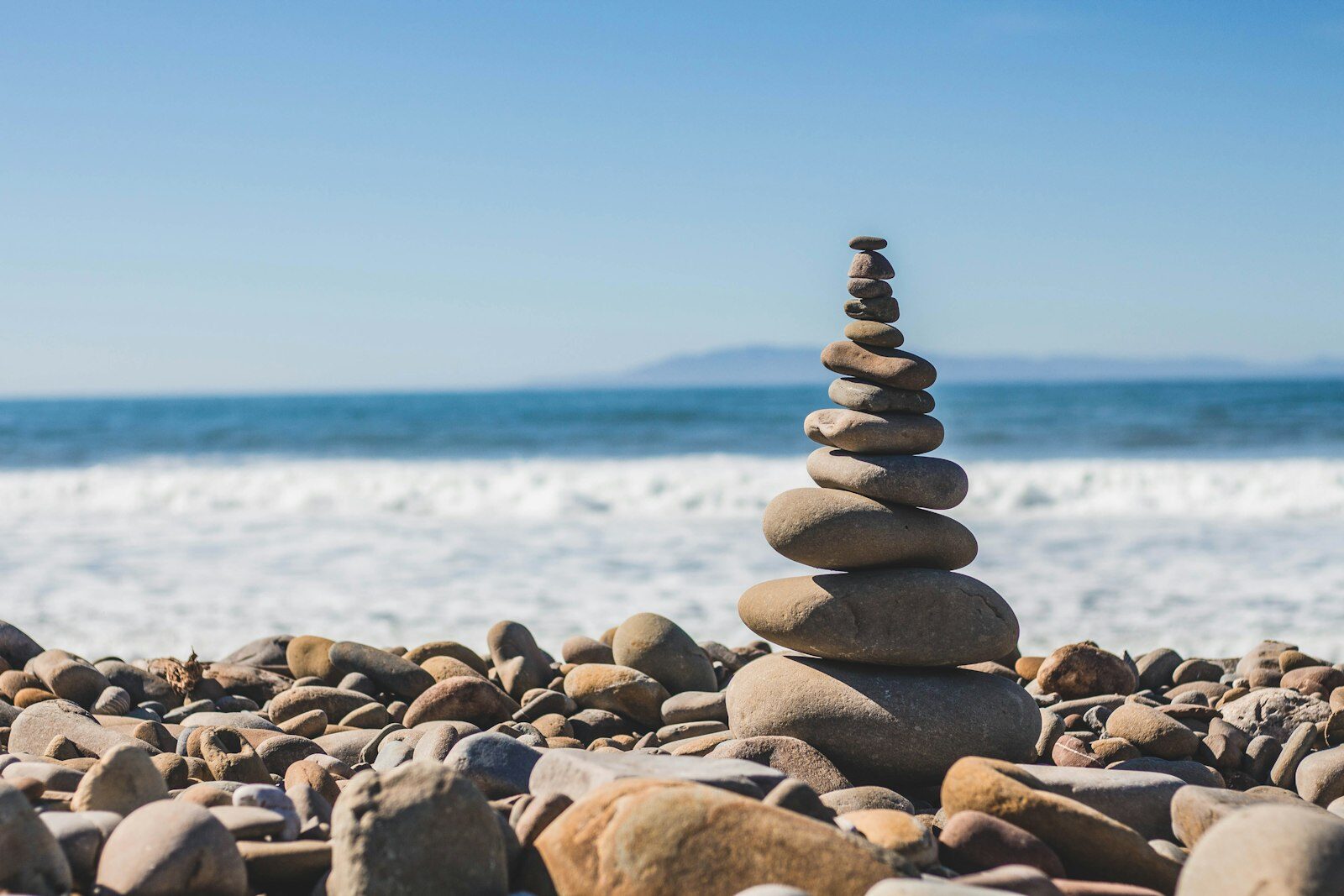
If you’ve spent any time exploring traditional Chinese wellness, you’ve probably stumbled upon these three mysterious words: Jing, Qi, and Shen. They sound like characters from a martial arts novel, but they’re actually the foundational pillars of Chinese medicine—a map of how your energy works from the deepest level of your physical body to the highest reaches of your consciousness. Think of them as the operating system of your being: Jing is the hardware, Qi is the electricity, and Shen is the glowing screen that displays everything you think, feel, and experience. Understanding these three treasures isn’t just an intellectual exercise; it’s a practical tool for figuring out why you feel tired, scattered, or disconnected—and what you can actually do about it. So, let’s pour some tea and dive in.
- 1. The Three Treasures: A Quick Overview
- 2. Jing (精): Your Constitutional Battery Pack
- 3. Qi (氣): The Energy You Live On Every Day
- 4. Shen (神): The Radiance of Your Spirit
- 5. How the Three Treasures Interact: The Candle Model
- 6. Practical Daily Rituals for All Three Treasures
- 7. Common Questions About Jing, Qi, and Shen
1. The Three Treasures: A Quick Overview
In Chinese medicine, the Three Treasures (三寶, Sān Bǎo) are considered the fundamental energies that sustain all life. They aren’t separate systems—they’re deeply interconnected, like a candle flame. The wick (Jing) supports the flame (Qi), which produces the light (Shen). If you burn through your wick too fast, the flame sputters and the light dims. If you have a strong wick but no flame, there’s no light at all. It’s a beautifully simple model for understanding why balance matters.
My grandmother had a saying when someone looked exhausted: “Your lamp is running low on oil.” She wasn’t talking about sleep—she was talking about Jing. That deep, constitutional energy you’re born with. It’s the reason some people seem to have an endless well of vitality while others are constantly running on fumes. The Three Treasures framework helps us see where our energy is leaking, where it’s stagnating, and where we might need to refuel.
| Treasure | Chinese Character | What It Represents | Analogy |
|---|---|---|---|
| Jing | 精 | Essence, constitutional energy, deep reserves | The battery |
| Qi | 氣 | Vital life force, daily energy, functional power | The electricity |
| Shen | 神 | Spirit, consciousness, emotional-spiritual radiance | The light |
This table gives you the snapshot, but each treasure has layers. Let’s unpack them one by one, starting with the deepest layer—Jing.
2. Jing (精): Your Constitutional Battery Pack
Jing is the most mysterious and misunderstood of the three treasures. In English, it’s often translated as “essence” or “ancestral energy,” but those words feel too abstract. Here’s a more concrete way to think about it: Jing is the battery you were born with. It’s stored in your kidneys (in Chinese medicine, the kidneys are the root of all Yin and Yang in the body), and it determines your baseline constitution—your bone density, your fertility, your aging process, and that indefinable quality of “stamina” some people seem to have from birth.
There are two types of Jing:
- Prenatal Jing (先天之精): This is what you inherited from your parents at conception. You can’t replenish it—it’s a finite resource. Think of it like a trust fund: you can spend it wisely or blow through it, but you can’t add more.
- Postnatal Jing (後天之精): This is what you build through food, rest, and lifestyle. It’s your earned income. The good news is, you can grow this one substantially.
When someone in my family said a baby was “born with strong Jing,” they meant the child came into the world with robust energy—thick hair, strong bones, bright eyes. My great-uncle, who lived to 94 without ever visiting a hospital, was considered to have exceptional prenatal Jing. But even he was careful. He ate black sesame seeds every morning, slept before 10 PM, and never overexerted himself. He understood that strong Jing requires protection.
Signs Your Jing Is Depleted
Jing depletion doesn’t happen overnight—it’s a slow burn. Watch for these signals:
- Premature graying or hair loss before age 40
- Lower back pain or weak knees (the kidneys “rule” the lower back and knees)
- Chronic fatigue that sleep doesn’t fix
- Reproductive issues or early menopause
- Feeling “older than your age”
- Dental problems or brittle bones
How to Protect and Nourish Your Jing
You can’t refill the prenatal Jing tank, but you can slow the drain and build postnatal reserves. Here’s how:
- Eat black foods: In Chinese nutrition, black nourishes the kidneys. Add 1 tablespoon of black sesame seeds to your morning oatmeal, cook with black beans, or sip on a mulberry (桑葚) tea.
- Sleep before 11 PM: The hours between 11 PM and 1 AM are when the gallbladder meridian (paired with the liver) begins its restoration cycle. Getting to bed by 10:30 PM protects deep reserves.
- Reduce excessive activity: This includes overwork, over-exercise, and excessive sexual activity—traditional texts are explicit about this. Moderation is the guardian of Jing.
- Take He Shou Wu (何首烏): This legendary root (Polygonum multiflorum) has been used for over 1,000 years to nourish Jing and restore hair color. Consult a qualified herbalist for proper dosage—it typically ranges from 6-12 grams in decoction.
- Practice standing meditation (站樁, Zhàn Zhuāng): Just 10 minutes daily of standing with knees slightly bent, arms held as if hugging a tree. This simple posture builds kidney Qi and conserves Jing.
3. Qi (氣): The Energy You Live On Every Day
If Jing is your trust fund, Qi is your paycheck. It’s the energy you generate and spend every single day—through breathing, eating, thinking, moving, and digesting. Qi is the most talked-about concept in Chinese medicine, and also the most misunderstood. It’s not some mystical force floating around in the ether. It’s the very real, very tangible energy that lets your heart beat, your lungs breathe, your stomach digest, and your brain think.
Qi has several functions in the body:
- Transformation: Turning food into usable energy and waste
- Transportation: Moving blood, fluids, and nutrients through the body
- Warming: Maintaining body temperature and metabolic heat
- Protection: Defending against external pathogens (your immune system)
- Containment: Keeping organs in place and blood in vessels
When Qi is strong, you feel energized, your digestion works smoothly, your immune system is robust, and you can handle stress without collapsing. When Qi is weak, everything slows down—digestion becomes sluggish, you catch every cold that goes around, you feel cold and tired, and even simple tasks feel like climbing a mountain.
“Qi is the commander of blood. When Qi moves, blood follows. When Qi stagnates, blood congeals.” — Huangdi Neijing (Yellow Emperor’s Classic of Internal Medicine)
This ancient quote reveals something profound: Qi isn’t just about energy levels. It’s about movement. Stagnant Qi leads to pain, stiffness, emotional frustration, and eventually disease. This is why practices like Tai Chi, qigong, and even brisk walking are so central to Chinese wellness—they keep Qi flowing.
How to Build and Balance Your Qi
Qi is renewable, which is the good news. You generate it daily through food and breath. Here’s how to optimize both:
- Eat warm, cooked foods: Your spleen (the organ that extracts Qi from food) prefers warmth. A bowl of congee (rice porridge) with ginger and a soft egg in the morning generates far more usable Qi than a cold smoothie.
- Breathe with your diaphragm: Place your hand on your belly. When you inhale, your belly should expand. When you exhale, it should contract. Do this for 5 minutes, 3 times a day. Deep diaphragmatic breathing generates more Qi than shallow chest breathing.
- Sip warm water throughout the day: Cold drinks shock the digestive system and weaken Qi transformation. Keep a thermos of warm (not hot) water nearby and sip every 20-30 minutes.
- Move for 30 minutes daily: Not intense exercise—moderate movement. A 30-minute walk, 20 minutes of Tai Chi, or 15 minutes of gentle qigong. The goal is to move Qi without depleting it.
- Cook with Qi-boosting herbs: Add 3-5 slices of astragalus root (黃芪, Huáng Qí) to your chicken soup. This herb has been used for over 2,000 years to strengthen Qi and boost immunity. Also try 6-9 grams of codonopsis root (黨參) in broths.
4. Shen (神): The Radiance of Your Spirit
Shen is the treasure most Westerners have never heard of, but it might be the most important one for modern life. Shen translates loosely as “spirit,” but a better way to understand it is as the light in your eyes. You know that quality some people have—a brightness, a warmth, a sense of presence and clarity that draws you in? That’s Shen. It’s the difference between someone who is merely alive and someone who is truly living.
In Chinese medicine, Shen resides in the heart (not the emotional heart, but the energetic heart system, which includes the mind and consciousness). When Shen is strong, you have mental clarity, emotional stability, good sleep, sharp memory, and a sense of inner peace. When Shen is disturbed—by stress, trauma, excessive stimulants, or emotional upheaval—you experience anxiety, insomnia, restlessness, poor concentration, and a feeling of being “scattered” or ungrounded.
My mother used to say, “Your Shen is in your eyes.” If someone had dull, glazed, or restless eyes, she’d say their Shen was disturbed. It wasn’t a judgment—it was an observation. And she was right. In Chinese medicine, the eyes are considered the outward expression of Shen. Bright, clear, focused eyes indicate healthy Shen. Dull, vacant, or darting eyes suggest the spirit needs attention.
How to Calm and Brighten Your Shen
Shen nourishment is different from Qi and Jing nourishment. It’s less about food and herbs, and more about emotional and spiritual practices:
- Sleep in complete darkness: Even a small amount of light disrupts Shen. Use blackout curtains, remove all electronics from your bedroom, and cover any standby lights. This single change can transform your sleep quality within 3-5 nights.
- Practice 10 minutes of quiet sitting before bed: Not meditation—just sitting. No phone, no book, no TV. Let your mind settle naturally. This “non-doing” is powerful Shen medicine.
- Drink jujube (紅棗) and longan (桂圓) tea: Simmer 5 dried jujube dates and 8-10 longan fruits in 2 cups of water for 20 minutes. This sweet, calming tea nourishes heart blood and settles Shen. Drink it 1 hour before bed.
- Limit screen time after 8 PM: The constant stimulation of screens scatters Shen. Set a digital sunset and stick to it for at least 5 nights a week.
- Connect with nature: Even 15 minutes in a park or garden can settle scattered Shen. The Chinese concept of “forest bathing” (森林浴) isn’t about exercise—it’s about letting nature absorb your mental static.
5. How the Three Treasures Interact: The Candle Model
The Three Treasures don’t exist in isolation—they form a dynamic, interdependent system. Understanding their relationships is the key to practical application.
Jing produces Qi. When your deep reserves are strong, you generate daily energy more efficiently. Think of it like a battery with high capacity—it charges quickly and holds power longer. This is why people with strong constitutional Jing seem to bounce back from illness faster and have more consistent energy throughout the day.
Qi nourishes Shen. When your daily energy is balanced and flowing, your mind is clear and your spirit is calm. This is why exhaustion leads to anxiety—when Qi is depleted, Shen becomes disturbed. It’s also why a good meal and a brisk walk can suddenly make problems feel more manageable.
Shen governs Jing and Qi. This is the surprising one. Your mental and emotional state actually influences how efficiently you use your Jing and Qi. Chronic stress, unresolved trauma, and emotional turbulence burn through reserves faster. Conversely, a calm, focused mind conserves energy and even promotes healing. This is why meditation isn’t just a “nice to have”—it’s a core health practice.

The candle model is useful here. The wick (Jing) supports the flame (Qi), which produces the light (Shen). If you blow too hard on the flame (excessive stress, overwork, stimulants), the light flickers wildly (anxiety, insomnia). If the wick is short (depleted Jing), the flame burns weakly and the light is dim (chronic fatigue, premature aging). The goal is a steady flame, a protected wick, and a clear, bright light.
6. Practical Daily Rituals for All Three Treasures
Now that you understand the theory, let’s make it real. Here’s a simple daily routine that nourishes all three treasures simultaneously:
| Time | Practice | Treasure Nourished | Specific Action |
|---|---|---|---|
| 6:30 AM | Gentle stretching | Qi | 5 minutes of arm swings and torso rotations |
| 7:00 AM | Warm breakfast | Qi + Jing | Congee with 1 tbsp black sesame seeds and 3 sliced jujube dates |
| 12:00 PM | Mindful eating | Qi + Shen | No screens during lunch. Chew each bite 20-30 times. |
| 3:00 PM | Diaphragmatic breathing | Qi + Shen | 5 minutes of belly breathing at your desk |
| 6:00 PM | Walk in nature | Qi + Shen | 15-minute walk in a park or garden |
| 8:00 PM | Digital sunset | Shen | All screens off. Switch to reading or gentle music. |
| 9:30 PM | Shen-calming tea | Shen + Jing | Jujube-longan tea (recipe above) |
| 10:00 PM | Sleep | Jing + Qi + Shen | In complete darkness, before 10:30 PM |
This isn’t about perfection—it’s about consistency. If you can do even half of these practices most days, you’ll notice a real difference in your energy, clarity, and emotional balance within 2-3 weeks. Start with the ones that feel most natural and build from there.
7. Common Questions About Jing, Qi, and Shen
Can I restore depleted Jing?
You can’t restore prenatal Jing—the trust fund is what it is. But you can dramatically slow its depletion and build strong postnatal Jing through consistent habits. Focus on kidney-nourishing foods (black sesame, walnuts, goji berries, bone broth), adequate sleep (before 11 PM), and avoiding excessive stimulants and overwork. With 6-12 months of dedicated practice, many people see improvements in hair quality, back strength, and reproductive health—signs that postnatal reserves are building.
How do I know which treasure is most depleted?
Pay attention to your primary symptoms. If your main issue is physical fatigue, weakness, or reproductive concerns, Jing is likely involved. If it’s daytime tiredness, poor digestion, frequent illness, or feeling cold, Qi is probably weak. If it’s anxiety, insomnia, brain fog, or emotional instability, Shen is disturbed. In reality, most people have imbalances in multiple treasures, but identifying the primary one helps you prioritize your practices.
Is meditation really necessary, or can I just focus on food and herbs?
Food and herbs nourish Qi and Jing effectively, but Shen requires mental-emotional practices. In Chinese medicine, the mind is considered the “emperor” of the body—if the emperor is chaotic, the whole kingdom suffers. Even 5 minutes of quiet sitting daily makes a measurable difference. If formal meditation feels intimidating, start with this: sit comfortably, close your eyes, and simply notice your breath for 5 minutes. That’s it. No technique, no mantra, no goal. Just sitting with awareness. Your Shen will thank you.
The bottom line: Jing, Qi, and Shen are not abstract philosophical concepts—they’re practical frameworks for understanding your energy at every level. Jing is your constitutional battery, Qi is your daily fuel, and Shen is the light that shines when the other two are balanced. By eating warming foods, breathing deeply, sleeping before 11 PM, and spending 10 quiet minutes each evening, you can nourish all three treasures and build a foundation for lasting vitality. Start with one practice today—your body, mind, and spirit will notice.
This article is for educational purposes and reflects traditional wellness perspectives. It is not a substitute for professional medical advice, diagnosis, or treatment.