There’s a particular kind of frustration that comes with lying in bed on a sweltering summer night, the sheets tangled around your legs, your skin damp, and your mind racing with the kind of restless energy that only heat can conjure. You kick off the covers, then pull them back on. You flip your pillow to the cool side — twice. You check the thermostat. It’s 78°F, and the air conditioner is doing its best, but somehow your body still feels like a furnace. Sound familiar? If you’ve ever struggled to fall asleep or stay asleep during the hottest months of the year, you’re not alone. Millions of people around the world experience this same seasonal sleep disruption, and while modern solutions like blackout curtains and cooling mattress toppers certainly help, there’s an older, deeper wisdom worth exploring — one rooted in Traditional Chinese Medicine (TCM) and its centuries-old understanding of how our bodies interact with the rhythms of nature.
- 1. Shift Your Evening Meal to Cool the Body from Within
- 2. Cool Your Extremities: The TCM Secret to Faster Sleep Onset
- 3. Align Your Schedule with the Summer Clock
- 4. Choose Cooling Herbs and Teas That Calm the Heart Spirit
- 5. Create a Cool, Dark, and Energetically Calm Sleep Environment
- Bonus: Acupressure Points for Summer Sleeplessness
In TCM, summer isn’t just a season — it’s an energy. It corresponds to the Fire element, the Heart organ system, and a quality of Yang energy that is expansive, active, and outward-moving. That’s wonderful when you’re hiking at dawn or enjoying a long evening with friends, but it becomes a real problem when that same Yang energy refuses to settle down at bedtime. Good summer sleep hygiene, through a TCM lens, is about working with the season’s energy, not against it. It’s about gently guiding that Fire back inward, cooling the body from the inside out, and creating the conditions for deep, restorative rest even when the thermometer says otherwise. In this article, we’ll walk through five practical, TCM-inspired habits that can transform your summer nights from restless to restful. These aren’t exotic or complicated — they’re simple, actionable shifts that anyone can weave into their daily routine.
1. Shift Your Evening Meal to Cool the Body from Within
One of the most overlooked factors in summer sleep hygiene is what — and when — you eat in the hours before bed. In TCM, food isn’t just fuel; it’s medicine, and every food has a thermal nature that affects your body’s internal temperature. During summer, the instinct is often to reach for cold drinks and ice cream, but TCM takes a more nuanced approach. The goal isn’t to shock the system with cold; it’s to gently clear excess Heat and nourish Yin — the cooling, moistening, restful energy that your body needs to fall asleep.
A traditional Chinese summer dinner might look something like this: a light cucumber and tofu salad dressed with rice vinegar, a bowl of mung bean soup (a classic Heat-clearing remedy that Chinese families have made for generations), and steamed greens with a drizzle of sesame oil. These foods are considered “cooling” in TCM — not because they’re served cold, but because their energetic nature helps reduce internal Heat and calm the spirit. Contrast this with a heavy, spicy bowl of chili or a thick steak with roasted potatoes, both of which generate significant internal Heat and can leave you tossing and turning for hours.
Timing matters too. TCM practitioners have long advised eating dinner at least three hours before sleep. This gives your Spleen and Stomach — the organs responsible for digestion in TCM — time to process the meal before you lie down. When digestion is still active, it generates warmth and Qi movement that can interfere with the body’s natural descent into rest. Think of it this way: your body can either focus on digesting dinner or on falling asleep, but it struggles to do both well at the same time. Aim to finish your last substantial meal by 6:30 or 7:00 PM if you’re planning to sleep by 10:00.
2. Cool Your Extremities: The TCM Secret to Faster Sleep Onset
Here’s something interesting that modern sleep science has confirmed but TCM understood centuries ago: the temperature of your hands and feet plays a huge role in how quickly you fall asleep. When blood vessels in your extremities dilate — a process called vasodilation — heat radiates away from your core and out through your hands and feet. This drop in core body temperature is one of the strongest biological signals for sleep onset. In TCM terms, this is the Yang energy retreating inward and the Yin energy rising to create the cool, calm conditions necessary for rest.
“In summer, we nourish the Yang on the outside but protect the Yin on the inside. The key to good sleep is keeping the interior cool and calm, even as the world outside blazes.” — Classical TCM teaching
You can actively support this process with a simple technique that has been practiced in Chinese households for ages: soaking your feet in warm (not hot) water for 15–20 minutes before bed. I know — warm water in summer sounds counterintuitive. But here’s the logic: warm water draws blood flow to the feet and opens the pores, and when you dry off and get into bed, those dilated blood vessels release heat rapidly, cooling your core temperature much faster than if you’d skipped the soak. It’s the same reason a warm bath before bed promotes sleepiness — the rapid cooling afterward triggers drowsiness.
If a full foot soak feels like too much on a hot night, even a simpler version works. Try running cool (not ice-cold) water over your wrists and the backs of your neck for a minute or two before getting into bed. These are areas where blood vessels are close to the surface, and cooling them provides immediate relief. Some people also find it helpful to keep a small bowl of cool water by the bed to dip their feet in if they wake up overheated in the middle of the night.
3. Align Your Schedule with the Summer Clock
Traditional Chinese Medicine is deeply seasonal in its lifestyle recommendations, and summer sleep hygiene is no exception. The ancient text Huangdi Neijing (The Yellow Emperor’s Classic of Internal Medicine), which has guided Chinese health practices for over two thousand years, offers surprisingly specific advice for summer living:
“In the three months of summer, be prosperous in the night and rise early. Do not tire of the sun. Let the mind have no anger.”
“Be prosperous in the night” means staying up a little later than you would in winter — perhaps until 10:30 or 11:00 PM — and “rise early” means waking with the sun, around 5:30 or 6:00 AM. This schedule aligns your personal rhythm with the longer daylight hours and the season’s more active Yang energy. In practice, this means your sleep window might be slightly shorter in summer (6.5 to 7.5 hours rather than the 8 or 9 you might need in winter), and that’s perfectly fine — as long as the sleep you get is high-quality.
The critical piece here is consistency. TCM places enormous emphasis on regularity. Your body’s internal clock — what we now call the circadian rhythm — thrives on predictability. Going to bed and waking up at roughly the same time every day, even on weekends, stabilizes your Qi and Blood cycles and helps your organs function at their optimal times. The Heart, which governs sleep and houses the Shen (spirit) in TCM, is especially sensitive to schedule disruption. Erratic bedtimes scatter the Shen, leading to racing thoughts, vivid dreams, and that frustrating feeling of being “tired but wired.”
Here’s a practical framework to consider:
- 6:00 AM — Wake up. Open the curtains. Let natural light signal to your body that the day has begun.
- 12:00–1:00 PM — Take a short nap if you feel tired. In TCM, this is the peak of the Heart meridian, and a 20–30 minute rest nourishes the Heart and supports evening sleep. Don’t nap longer than 30 minutes, or you risk entering deep sleep and waking up groggy.
- 6:00–6:30 PM — Finish dinner. This gives your digestion ample time before bed.
- 9:00 PM — Begin winding down. Dim the lights, put away screens, and start your pre-sleep routine.
- 10:30–11:00 PM — Lights out. This is late enough to honor the summer’s active energy but early enough to get sufficient rest before dawn.
4. Choose Cooling Herbs and Teas That Calm the Heart Spirit
If you’ve ever walked into a traditional Chinese herbal shop in summer, you’ve likely noticed the abundance of chrysanthemum, lotus leaf, and honeysuckle on display. These aren’t decorative — they’re functional herbs that Chinese families have brewed into teas and soups for centuries to combat summer Heat and promote restful sleep. The TCM approach to herbal support for sleep in summer focuses on clearing Heat, nourishing Yin, and calming the Shen (the spirit or consciousness that resides in the Heart).
One of the simplest and most accessible options is sour jujube seed tea (suan zao ren cha). Suan zao ren is one of the most respected sleep herbs in the Chinese pharmacopoeia. It nourishes the Heart Blood, calms the spirit, and is especially helpful for people who lie in bed with a racing mind but no physical discomfort. You can find it at most Asian grocery stores or herbal shops. To prepare, simmer about 15 grams of the seeds in two cups of water for 15–20 minutes, strain, and sip about an hour before bed. The taste is mild and slightly sweet — nothing intimidating.
Another excellent summer option is chrysanthemum and goji berry tea (ju hua gou qi cha). Chrysanthemum clears Heat, especially from the head and eyes (think of it as the herbal equivalent of a cool compress for your brain), while goji berries nourish Yin and Blood. Together, they make a beautifully balanced summer evening tea that cools without being too cold, calms without being sedating, and tastes light and floral. Simply steep 8–10 dried chrysanthemum flowers and a small pinch of goji berries in hot water for five minutes.
For those who prefer something even simpler, lotus leaf tea (he ye cha) is a wonderful single-herb option. Lotus leaf clears summer Heat, lifts the clear Yang to the head (helping you feel alert during the day but calm at night), and has the added benefit of supporting healthy fluid metabolism — important in humid climates where dampness can compound the discomfort of heat.
Here’s a quick comparison of these three popular TCM summer sleep teas:
| Tea | Key Benefit | Taste Profile | Best For | When to Drink |
|---|---|---|---|---|
| Sour Jujube Seed (Suan Zao Ren) | Nourishes Heart Blood, calms Shen | Mild, slightly sweet | Racing thoughts, difficulty falling asleep | 1 hour before bed |
| Chrysanthemum + Goji (Ju Hua Gou Qi) | Clears Heat, nourishes Yin | Light, floral | Eye strain, irritability, mild restlessness | Early evening (7–8 PM) |
| Lotus Leaf (He Ye) | Clears summer Heat, resolves dampness | Earthy, clean | Humid climates, feeling heavy or sluggish | Afternoon or early evening |
5. Create a Cool, Dark, and Energetically Calm Sleep Environment
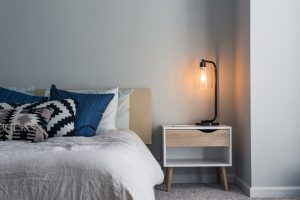
In TCM, the space where you sleep isn’t just a bedroom — it’s a container for your Yin energy. Just as a well keeps water cool and protected underground, your bedroom should be the coolest, darkest, and most still room in your home during summer. This isn’t just about physical comfort (though that matters enormously); it’s about creating an environment that signals to your Shen that it’s safe to rest.
Let’s start with the basics. Modern sleep science and TCM agree on the fundamentals: your bedroom should be dark, quiet, and cool. The ideal temperature for sleep is between 60–67°F (15–19°C), which can be challenging in summer without air conditioning. If you don’t have AC, a fan placed near an open window can create airflow that significantly reduces the perceived temperature. In traditional Chinese homes, bamboo mats were (and still are) used on beds during summer — bamboo naturally stays cool to the touch and doesn’t trap heat the way synthetic fabrics do. If you can find a bamboo or rush mat, it’s a beautifully simple upgrade for summer sleep.
Beyond temperature, consider the energetic quality of your space. TCM practitioners often recommend removing clutter from the bedroom, particularly from under the bed and around the nightstands. Clutter is thought to stagnate Qi, and stagnant Qi generates Heat — exactly what you’re trying to avoid. Keep the room simple, clean, and breathable. Open the windows in the early morning to let in fresh air, then close them and draw the curtains before the midday heat arrives. This creates a pocket of cool, shaded air that lingers through the afternoon and evening.

Scent is another powerful and often underutilized tool. In Chinese culture, certain fragrances are believed to calm the Heart and settle the Shen. Lavender is the most widely recognized in the West, and it does align with TCM principles — it’s cooling, calming, and moves Qi gently. But consider also gardenia (zhi zi), which is a classic Heat-clearing herb in TCM, or chrysanthemum essential oil, which carries the same cooling, head-clearing properties as the tea. A few drops on your pillow or in a diffuser can create an olfactory cue that tells your nervous system it’s time to wind down. Keep the scent light, though — in summer, heavy or warming scents like cinnamon or clove can be overstimulating.
Bonus: Acupressure Points for Summer Sleeplessness
No TCM-inspired sleep article would be complete without mentioning acupressure — the practice of applying pressure to specific points on the body to move Qi and restore balance. While acupuncture requires a trained practitioner, acupressure is something you can do yourself at home, in bed, with nothing but your own hands. For summer sleep issues, three points are especially helpful:
- Heart 7 (Shenmen) — Located on the inner wrist crease, on the little-finger side of the tendon. This is the primary point for calming the Shen, easing anxiety, and promoting sleep. Press gently with your thumb for 1–2 minutes on each wrist while breathing slowly.
- Pericardium 6 (Neiguan) — About two inches above the wrist crease, between the two tendons on the inner forearm. This point regulates the Heart, calms the mind, and relieves the sense of fullness or heat in the chest that often accompanies summer insomnia.
- Kidney 1 (Yongquan) — On the sole of the foot, in the depression formed when you curl your toes. This is the most grounding point in the body — it draws excess Yang energy downward from the head and into the earth, which is exactly what you need when your mind is buzzing and your body is hot. Press firmly for 2–3 minutes on each foot before settling into bed.
These three points form a simple routine that takes less than ten minutes. Start with Heart 7, move to Pericardium 6, and finish with Kidney 1. The order matters — you’re calming the Heart first, then regulating the flow around it, then anchoring everything downward. Many people find that just one or two nights of this practice creates a noticeable difference in how quickly they fall asleep and how deeply they rest.
Common Questions
Is it okay to sleep with a fan on all night according to TCM?
TCM practitioners generally advise against pointing a fan directly at your body while you sleep, as the constant airflow can allow what’s called “Wind” — a pathogenic factor — to enter through the open pores of your skin, potentially leading to neck stiffness, headaches, or even a mild cold upon waking. However, this doesn’t mean you have to suffer in the heat. A good compromise is to aim the fan toward the wall or ceiling so it circulates air in the room without blowing directly on you. You can also set it on a timer to turn off after you’ve fallen asleep, when your body has already cooled and your pores have begun to close naturally.
Can drinking cold water before bed help me sleep in summer?
While it’s tempting to chug ice water when you’re overheated, TCM cautions against it, especially close to bedtime. Extremely cold beverages constrict the Stomach and impair digestion, which can create discomfort and actually generate more internal Heat as your body works harder to warm the cold water to its core temperature. Instead, opt for room-temperature water or one of the cooling herbal teas mentioned above. If you do want something cooler, slightly chilled is fine — just avoid ice-cold drinks in the hour before sleep. Your Stomach will thank you, and your sleep will be more peaceful for it.
How long does it take to see results from these TCM sleep habits?
Most people notice a difference within the first three to five days of consistently practicing even two or three of these habits. Acupressure tends to have an immediate calming effect on the first night, while dietary changes and schedule adjustments may take a few days to show measurable results. The herbal teas often fall somewhere in between — many people report sleeping more deeply after their first or second cup, though the full benefits build over a couple of weeks of regular use. The key word is consistency. TCM works by gently nudging your body back toward balance, and that process rewards repetition. Pick the habits that feel most natural and sustainable for you, and commit to them for at least two weeks before evaluating the results.
The bottom line: Summer sleeplessness is a real and common struggle, but it’s one that Traditional Chinese Medicine has been addressing for thousands of years with remarkable practicality. By adjusting your evening meals to clear internal Heat, cooling your extremities to support the natural sleep-onset process, aligning your schedule with the season’s rhythms, incorporating calming herbal teas, and creating an energetically cool bedroom environment, you give your body the tools it needs to rest deeply — even on the hottest nights. You don’t need to overhaul your entire life. Start with one or two habits, notice how your body responds, and build from there. The wisdom is already there, waiting for you to use it.
This article is for educational purposes and reflects traditional wellness perspectives. It is not a substitute for professional medical advice, diagnosis, or treatment.