There’s a particular kind of exhaustion that only a hot summer night can deliver. You lie in bed, the fan humming uselessly, the sheets twisted around your legs like a warm cocoon you never asked for. Your mind is tired, your body is tired, but the heat keeps you hovering in that frustrating space between wakefulness and sleep. If this sounds familiar, you’re not alone. Across cultures and continents, summer sleep challenges are universal — but the solutions don’t have to be complicated. In traditional Chinese wellness philosophy, we say “顺时而养” (shùn shí ér yǎng), which means “nourish yourself according to the season.” Summer is a time of outward energy, long days, and bright nights. Your sleep rituals should adapt to match. This guide offers five cooling, grounding habits rooted in both ancient wisdom and modern sleep science to help you reclaim your rest during the warmest months of the year.
- 1. Cool Your Body Before You Cool Your Room
- 2. Eat (and Drink) for Sleep, Not Just for Taste
- 3. Create a "Cool Cocoon" — Rethink Your Sleep Environment
- 4. Align Your Schedule with the Summer Sun
- 5. Build an Evening Wind-Down That Actually Works
- 6. When the Heat Wins: Emergency Strategies for Unbearable Nights
- 7. The Bigger Picture: Summer as a Season of Balance
1. Cool Your Body Before You Cool Your Room
Most people’s first instinct on a hot night is to crank the air conditioning or point a fan directly at their face. And while room temperature certainly matters — sleep researchers consistently recommend a bedroom environment between 60–67°F (15–19°C) — the real secret starts with your body, not your thermostat. In Traditional Chinese Medicine (TCM), summer is associated with the fire element, and excess heat can accumulate in the body, particularly in the heart and small intestine meridians. This internal heat often manifests as restlessness, irritability, and — you guessed it — difficulty falling asleep.
One of the most effective pre-sleep cooling practices is a lukewarm foot soak about 60 to 90 minutes before bed. This might sound counterintuitive — why warm your feet when you’re already hot? Here’s the science: a lukewarm foot bath (around 95–100°F or 35–38°C) actually helps your core body temperature drop. It does this by drawing blood flow to your extremities, which then dissipates heat more efficiently. Think of it as opening the windows of your body to let the warmth escape. Add a handful of dried chrysanthemum flowers or a few drops of peppermint essential oil to the water for an extra cooling effect. In Chinese households, this is a common summer evening practice, especially for children who struggle to settle down on warm nights.
Another body-cooling technique worth trying is the “cooling breath” — known in yogic traditions as shitali pranayama but also practiced in various forms in Chinese qigong. Simply curl your tongue into a tube (or, if you can’t curl your tongue, press it gently against the roof of your mouth), inhale slowly through your mouth for 4 counts, then close your mouth and exhale through your nose for 8 counts. Repeat this for 5–10 cycles. The incoming air passes over the moist surface of your tongue and creates a natural cooling sensation. It’s subtle, but it works — and it doubles as a calming breath exercise that signals your nervous system to shift into rest mode.
2. Eat (and Drink) for Sleep, Not Just for Taste
Summer brings an abundance of delicious food and drink — cold beers on patios, late-night barbecues, sugary iced coffees at 4 PM. And while these pleasures are part of what makes the season wonderful, they can quietly sabotage your sleep if you’re not mindful about timing and choice. The good news is that summer also offers some of the best natural sleep-supporting foods, many of which are staples in Chinese wellness kitchens.
Let’s start with what to embrace. Mung bean soup (绿豆汤, lǜ dòu tāng) is a classic Chinese summer remedy for internal heat. It’s mildly sweet, deeply hydrating, and genuinely cooling according to TCM food therapy. Drinking a small bowl of chilled mung bean soup an hour or two before bed can help reduce that “wired but tired” feeling that hot weather sometimes brings. Similarly, foods like bitter melon, watermelon (in moderation, as it’s very hydrating but can cause bloating if eaten too close to bedtime), cucumber, and lotus seed porridge are all traditionally used to calm the heart fire and promote restful sleep.
Now, here’s a practical framework for your summer evening eating:
- Finish your last substantial meal at least 3 hours before bed. Digestion generates heat — literally. Eating a heavy meal late at night forces your body to work when it should be winding down.
- Limit alcohol after 6 PM. Yes, a glass of wine feels relaxing, but alcohol fragments sleep architecture, suppresses REM sleep, and can cause night sweats — all of which are worse in summer heat.
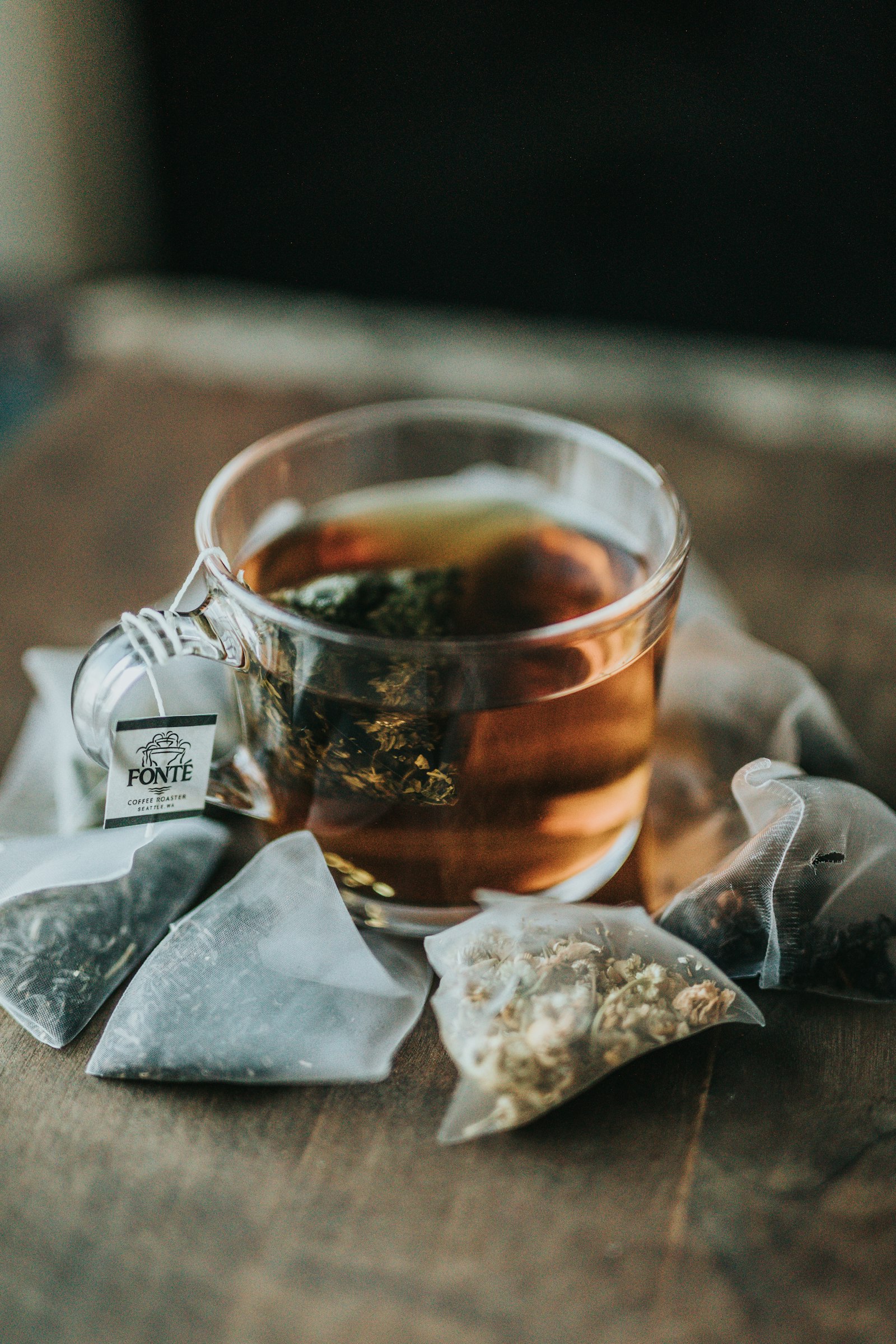
- Swap afternoon coffee for chrysanthemum tea. Chrysanthemum (菊花, jú huā) is cooling in nature and caffeine-free. It’s one of the most popular summer teas in China for good reason.
- Try a small handful of walnuts or pumpkin seeds before bed. Both contain magnesium and tryptophan, which support melatonin production. In TCM, walnuts are also considered beneficial for kidney yin — the cooling, nourishing aspect of your body’s energy.
- Avoid spicy, greasy, and very salty foods in the evening. These are all considered “warming” or “drying” in Chinese food therapy and can exacerbate summer heat in the body.
“In summer, the heart is most active, and the kidneys need support. Cooling foods, bitter flavors, and moderate portions are the foundation of summer wellness — and summer sleep.”
This quote from a traditional Chinese wellness text captures the essence of seasonal eating. The bitter flavor, in particular, is associated with the heart and fire element in TCM. Bitter greens like dandelion, chicory, and arugula in a light evening salad can be a surprisingly effective sleep aid — they cool the system and support digestion without weighing you down.
3. Create a “Cool Cocoon” — Rethink Your Sleep Environment
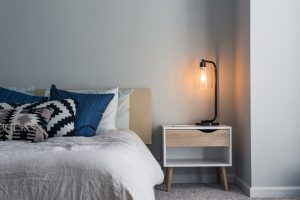
Your bedroom should feel like a retreat from the heat, not an extension of it. But creating a genuinely cool sleep environment goes beyond just adjusting the thermostat. It involves thinking holistically about the materials around you, the air quality, and the sensory cues your brain associates with rest. In Chinese culture, the concept of feng shui (风水) isn’t just about aesthetics — it’s about creating harmony between your environment and your body’s needs. In summer, that harmony means prioritizing airflow, reducing clutter (which traps heat and energy), and choosing materials that breathe.
Start with your bedding. Cotton percale sheets are your best friend in summer — they’re crisp, breathable, and wick moisture better than sateen or jersey knit. If you haven’t already, consider switching to a lightweight bamboo or linen duvet cover. These natural fibers allow air to circulate and prevent that sticky, trapped-heat feeling. For your mattress, if you tend to sleep hot, look into a cooling mattress topper made from gel-infused memory foam or natural latex. And here’s a trick that’s been passed down in Chinese families for generations: keep a spare pillowcase in the refrigerator during the day and swap it onto your pillow at night. It sounds simple because it is — and it works beautifully for the first 30 minutes of sleep, which is often the hardest window on a hot night.
Airflow is equally important. If you don’t have air conditioning, or if you prefer not to use it, position a fan to create a cross-breeze by placing one fan facing inward on the cooler side of your home and one facing outward on the opposite side. This pulls cooler evening air through your space. A bowl of ice placed in front of a fan can create a makeshift air-cooling effect that’s surprisingly effective. And don’t underestimate the power of a slightly damp washcloth draped over the fan’s guard — the evaporation creates a gentle, cool mist.
Lighting matters too. Summer evenings are long and bright, and your body’s melatonin production is directly suppressed by light exposure. Invest in blackout curtains or, at minimum, a good sleep mask. Dim your lights starting two hours before bed — switch from overhead fluorescents to warm, low lamps. In Chinese households, it’s common to use amber-toned night lights in the bedroom during summer, which provide just enough visibility without disrupting circadian rhythms.
4. Align Your Schedule with the Summer Sun
Here’s something that might surprise you: one of the most impactful things you can do for your summer sleep has nothing to do with what happens at night. It’s about what you do during the day — and specifically, how you align your daily rhythm with the longer daylight hours. The ancient Chinese medical text Huangdi Neijing (Yellow Emperor’s Classic of Internal Medicine) advises: “夏三月,此谓蕃秀…夜卧早起” — “In the three summer months…go to bed late and rise early.” Now, “late” in this context doesn’t mean midnight. It means adjusting your schedule slightly — perhaps going to bed 30–60 minutes later than you would in winter and waking slightly earlier — to match the natural light cycle.
Modern sleep science supports this wisdom. Your circadian clock is regulated primarily by light exposure. In summer, the sun sets later and rises earlier, and fighting against this natural rhythm by trying to force yourself to sleep at a winter bedtime can actually backfire, leaving you lying in bed frustrated while it’s still light outside. Instead, consider a gentle seasonal shift:
| Season | Suggested Bedtime | Suggested Wake Time | Total Sleep Target |
|---|---|---|---|
| Winter | 9:30–10:30 PM | 6:30–7:30 AM | 8–9 hours |
| Spring | 10:00–11:00 PM | 6:00–7:00 AM | 7.5–8.5 hours |
| Summer | 10:30–11:30 PM | 5:30–6:30 AM | 7–8 hours |
| Autumn | 10:00–11:00 PM | 6:00–7:00 AM | 7.5–8.5 hours |
These are guidelines, not rigid rules. The key takeaway is that flexibility matters. Listen to your body’s signals rather than clinging to a fixed schedule that may not serve you in the longer, brighter days of summer.
Morning sunlight exposure is another powerful tool. Getting 15–20 minutes of natural light within the first hour of waking helps anchor your circadian clock, making it easier for your body to produce melatonin at the right time in the evening. Take your morning tea or coffee outside. Eat breakfast by a window. Walk to the corner store instead of driving. These small habits have an outsized impact on your ability to fall asleep when bedtime arrives — even on the hottest nights.
And if you find yourself drowsy in the early afternoon — which is completely normal, especially in summer — a short nap of 15–20 minutes before 3 PM can be restorative without interfering with nighttime sleep. In many Chinese and other Asian cultures, the midday nap (午休, wǔ xiū) is not laziness; it’s wisdom. It respects the natural dip in alertness that occurs after lunch and helps you avoid the crash-and-cranky cycle that leads to poor sleep later.
5. Build an Evening Wind-Down That Actually Works
You’ve cooled your body. You’ve eaten well. Your bedroom is a sanctuary. Your schedule is aligned with the sun. Now comes the final piece: a consistent, intentional wind-down routine that tells your nervous system, “It’s time to rest.” This is where summer sleep hygiene becomes deeply personal — and deeply powerful.
The biggest saboteur of summer sleep isn’t the heat. It’s stimulation. Summer social life tends to run late — barbecues, outdoor movies, rooftop gatherings, vacations where routines dissolve. All of this is wonderful and nourishing in its own way, but it can leave your brain buzzing when you finally hit the pillow. The solution isn’t to skip the fun. It’s to build a 30–60 minute buffer zone between “active” life and sleep — a transition ritual that’s consistent enough to become automatic.
Here’s a sample summer wind-down sequence that draws on both Chinese wellness traditions and contemporary sleep research:
- 9:30 PM — Digital sunset. Put your phone in another room. Turn off the TV. If you need to check anything, do it now, then let it go. The blue light from screens suppresses melatonin, but it’s the content — news, social media, work emails — that really keeps your mind wired.
- 9:45 PM — Gentle self-massage. In TCM, massaging specific acupressure points before bed can calm the mind and cool the body. Focus on Yongquan (涌泉, KD1) — the depression on the sole of your foot, about one-third of the way from the base of your toes — and Shenmen (神门, HT7) — the small crease on the inner wrist, in line with the pinky finger. Use gentle, circular pressure for 1–2 minutes on each point. Apply a drop of lavender or chamomile oil for added relaxation.
- 10:00 PM — Light reading or journaling. Choose something calming — fiction, poetry, a gratitude journal. Avoid self-help or productivity content, which can trigger planning mode in your brain.
- 10:20 PM — Cooling breath or body scan. Lie in bed and do the cooling breath exercise described earlier, or try a simple body scan: start at the top of your head and slowly move your attention down through each part of your body, consciously releasing tension as you go. By the time you reach your toes, many people are already halfway to sleep.
- 10:30 PM — Lights out. Trust the ritual. Trust your body. Let go.
The magic isn’t in any single element — it’s in the repetition. When you do the same sequence night after night, your brain learns to associate these cues with sleep. Over time, the wind-down itself becomes a form of sleep medicine. You’ll find yourself yawning before you even reach the acupressure step.
6. When the Heat Wins: Emergency Strategies for Unbearable Nights
Let’s be honest. Some summer nights are just brutally hot, and no amount of chrysanthemum tea or acupressure will make it comfortable. When the heat is truly oppressive — during a heatwave, in a home without air conditioning, or while traveling — you need practical, immediate strategies. Here are a few that have stood the test of time and temperature:
- The Egyptian method: Dampen a flat cotton sheet or large towel in cool water, wring it out thoroughly, and use it as a top sheet. The evaporation will keep you cool for hours. Place a dry towel underneath to protect the mattress.
- Cold compress pulse points: Wrap a few ice cubes in a thin cloth and place them on your wrists, neck, ankles, and behind your knees. These are areas where blood vessels are close to the skin’s surface, and cooling them can lower your overall body temperature quickly.
- Sleep on the floor: If your bedroom is upstairs or gets direct afternoon sun, consider sleeping on the lowest level of your home. Heat rises, and the floor can be significantly cooler. A thin mat or tatami-style sleeping surface is traditional in many Asian cultures for exactly this reason.
- Freeze your sheets: Place your fitted sheet and pillowcase in a plastic bag and put them in the freezer for 30 minutes before bed. It’s a short-lived effect, but it can help you fall asleep during the most difficult first phase.
- Wear minimal, loose clothing: A light cotton tank top and shorts — or nothing at all — allows your skin to breathe and sweat to evaporate naturally. Tight or synthetic fabrics trap heat and moisture.
And remember: it’s okay to have a bad night. One night of poor sleep won’t ruin your health. What matters is the overall pattern. If you’re consistently struggling despite trying these strategies, it may be worth consulting a sleep specialist or a TCM practitioner who can assess whether there’s an underlying imbalance — such as yin deficiency or liver heat — that needs to be addressed.
7. The Bigger Picture: Summer as a Season of Balance
In Chinese philosophy, summer is the peak of yang energy — maximum light, maximum activity, maximum outward expansion. It’s a beautiful and vibrant time, but it demands a counterbalance. If you burn too brightly without rest, you’ll deplete your reserves by autumn. Sleep isn’t just recovery; it’s preservation of your deepest vitality, what TCM calls yin — the quiet, nourishing, cooling energy that sustains you through the active seasons.
Think of your summer sleep practice not as a chore or a medical necessity, but as an act of self-respect. You’re honoring the season by acknowledging its intensity and giving yourself permission to slow down when the sun goes down. You’re choosing to be present with your body’s needs rather than overriding them with another hour of screen time or another social commitment.
Start small. Pick one habit from this list — maybe the foot soak, maybe the digital sunset, maybe the mung bean soup — and try it for a week. Notice how you feel. Then add another. Over the course of a summer, these small rituals can transform not just your sleep, but your relationship with the season itself. You’ll stop dreading hot nights and start appreciating them as invitations to slow down, breathe deeply, and rest well.
Common Questions
Is it better to sleep with a fan on or off during summer?
A fan can be very helpful, but how you use it matters. A fan that blows directly on your face all night can dry out your skin, eyes, and nasal passages, and in Traditional Chinese Medicine, this constant exposure to moving air is believed to allow “wind” to enter the body, potentially causing stiffness or headaches. A better approach is to point the fan toward a wall or use it to circulate air around the room rather than directly at your body. Oscillating fans are generally gentler than stationary ones. If you’re using air conditioning, keep it at a moderate temperature (around 75–78°F or 24–26°C) and use the fan to distribute the cool air evenly. The goal is gentle, consistent airflow — not a wind tunnel.
Can certain foods really help me sleep better in summer?
Absolutely, though the effect is more about creating the right internal conditions for sleep than directly knocking you out. Foods that are cooling in nature — according to both TCM food therapy and modern nutrition — can help lower core body temperature, reduce inflammation, and support the production of sleep-regulating hormones. Mung beans, bitter melon, chrysanthemum tea, tart cherry juice (a natural source of melatonin), kiwifruit (which studies have shown may improve sleep onset and duration), and magnesium-rich foods like pumpkin seeds and leafy greens are all excellent choices. The key is to eat them earlier in the evening, not right before bed, so your body has time to digest without generating excess heat.
How long does it take for summer sleep rituals to show results?
It varies from person to person, but most people notice a difference within 5–10 days of consistent practice. Some habits — like the cooling breath or the frozen pillowcase — can provide immediate relief on the first night. Others, like adjusting your sleep schedule or building a wind-down routine, take a bit longer because they’re training your circadian rhythm and nervous system to respond to new cues. The important thing is consistency. Doing these rituals sporadically won’t create the same neurological and physiological adaptations as doing them every night. Think of it like watering a plant — one good watering won’t make it thrive, but steady, regular care will. Give yourself at least two weeks before deciding whether a habit is working for you.
The bottom line: Summer sleep hygiene is about working with the season, not against it. By cooling your body mindfully, eating with the season, optimizing your sleep environment, aligning your schedule with natural light, and building a consistent wind-down ritual, you give yourself the best possible chance at deep, restorative rest — even on the hottest nights. Start with one change, stay consistent, and let the rest unfold naturally.
This article shares traditional perspectives and personal experience for general interest. It is not professional advice — please use your own judgment and consult a qualified professional when needed.