The air changes first. You feel it on your morning walk—that subtle shift from summer’s humid embrace to something sharper, cleaner, and undeniably dry. Leaves begin to crisp at the edges, just like your skin might. In Traditional Chinese Medicine (TCM), this isn’t just a change in weather; it’s a shift in the very energy that surrounds and enters us. Autumn is ruled by the Metal element, and its primary pathogenic factor is dryness (燥, zào). This dryness has a particular affinity for the Lung and Large Intestine organ systems, which govern our skin, immunity, and the rhythm of our breath. Understanding this connection is the first step to moving through the season not in resistance, but in graceful, nourishing harmony.
What is “Autumn Dryness” in TCM? More Than Just Dry Skin
In Western terms, we might blame low humidity for our chapped lips and staticky hair. TCM sees a deeper pattern. The Huangdi Neijing (Yellow Emperor’s Classic of Internal Medicine), the foundational text written over 2,000 years ago, states: “秋伤于湿,冬生咳嗽”—which can be interpreted as autumn’s damage from dryness leading to winter’s cough. This highlights a core TCM principle: imbalances in one season can manifest as illness in the next.
Dryness (燥邪, zào xié) is a yang pathogen that consumes yin fluids. Think of yin as the body’s coolant, lubricant, and moisturizing system. When dryness invades, it parches this system. The Lungs, considered the “tender organ” (娇脏, jiāo zàng), are most vulnerable. They loathe dryness and love moisture. The Lungs govern the skin and body hair (皮毛, pí máo), control the Wei Qi (defensive energy, our immune system), and facilitate the downward and dispersing of fluids. When dryness attacks the Lungs, you may experience:
- Dry, itchy, or lackluster skin
- Dry, sore throat, especially in the morning
- A dry, non-productive cough
- Constipation or dry stools (the Large Intestine is the Lungs’ paired organ)
- A slight fever, headache, or feeling of being mildly “wired”
- Cracked lips, a dry nose, or even nosebleeds
My teacher in Chengdu once compared the Lungs to a delicate silk paper window screen. In summer, the humid air keeps it supple. Come autumn, the dry wind can make it brittle and prone to tearing. Our job, he said, is to gently mist that screen from the inside out. This is the essence of nourishing Yin and moistening Dryness (滋阴润燥, zī yīn rùn zào).
The Lungs & Skin Connection: Why Autumn Hits Your Face First
This organ-skin relationship is one of TCM’s most elegant and practical concepts. The Lungs are the master of Qi and respiration, but they also control the pores and the distribution of Wei Qi (defensive energy) across the skin’s surface. When Lung Qi is strong and fluids are ample, the skin is lustrous, pores open and close appropriately, and we resist pathogens. When dryness weakens the Lungs, the skin becomes the first battlefield.
A 2017 review in the Journal of Ethnopharmacology noted that many classical TCM formulas for “lung-yin deficiency with dryness” contain herbs with demonstrated moisturizing and anti-inflammatory effects on skin tissue (Li et al., 2017). This shows the direct link between internal moistening and external skin health.
I remember my grandmother’s autumn ritual. Every evening, she’d simmer a simple soup of Asian pear (Pyrus pyrifolia) and almonds. “The pear is for the lungs,” she’d say, “the almond for the bowels. They are partners.” She intuitively understood the Lung-Large Intestine relationship. When one is dry, the other often follows. This is why constipation is so common in autumn—it’s not just about fiber; it’s about systemic moisture.

Nourishing from Within: The Top 10 Moistening Foods for Autumn
The first line of defense is your diet. In TCM nutrition, we don’t just count calories; we consider a food’s energetic nature (cooling, warming) and its flavor (sour, bitter, sweet, pungent, salty), which directs its action in the body. For autumn dryness, we favor foods that are cool or neutral in nature and sweet in flavor, as the sweet flavor nourishes and harmonizes, while coolness counteracts the dryness’s slight heat.
Here is a daily actionable list. Aim to include at least 2-3 of these in your meals each day.
Moistening Food Guide
| Food | TCM Name | Best For | Simple Preparation |
|---|---|---|---|
| Asian Pear | Li (梨) | Dry cough, thirst, skin | Eat raw, or core and steam with a tsp of honey for 15 min. |
| White Fungus (Tremella) | Bái Mù’ěr (白木耳) | Deep lung & skin moisture | Soak, then simmer with goji berries and rock sugar for 1 hour to make a sweet soup. |
| Lily Bulb | Bǎi Hé (百合) | Dry cough, anxiety, insomnia | Add dried bulbs to soups or congee in the last 20 min of cooking. |
| Honey | Fēng Mì (蜂蜜) | Constipation, dry throat | Stir 1 tbsp into warm (not hot) water or tea. Never cook honey. |
| Sesame Seeds (Black) | Hēi Zhīma (黑芝麻) | Dry skin, hair, constipation | Toast lightly and sprinkle on oatmeal, or blend into tahini-like paste. |
| Sweet Potato | Hóng Shǔ (红薯) | Digestive dryness, energy | Bake whole at 400°F (200°C) for 45 min. Eat with a pat of ghee. |
| Almonds (Sweet) | Xiǎng Rén (杏仁) | Cough, bowel dryness | Soak overnight, peel, and blend with water for fresh almond milk. |
| Persimmon | Shì (柿) | Lung heat, thirst | Eat ripe and fresh (in moderation, 1-2 per day). Not for very cold digestion. |
| Soy Milk | Dòujiāng (豆浆) | Overall fluid nourishment | Make from soaked beans, or choose unsweetened. Warm gently with ginger. |
| Spinach | Bō Cài (菠菜) | Dry stools, thirst | Blanch quickly and dress with sesame oil and a pinch of salt. |
“上燥治气,下燥治血” — “For dryness above, treat the Qi; for dryness below, treat the Blood.”
— Classical TCM Saying
This proverb guides treatment. Dryness affecting the Lungs, throat, and skin (above) is addressed by moistening Lung Qi with foods like pear and lily bulb. Dryness affecting the intestines and causing constipation (below) is addressed by nourishing Blood and Yin with black sesame, honey, and spinach.
The Autumn Pantry: 3 Healing Teas & Soups You Can Make Today
Drinking plain water isn’t always enough. TCM believes fluids must be “transformed” by the Spleen and Lungs to be utilized. Warm, cooked liquids are easier to assimilate. Here are three recipes from my own kitchen.
1. Five-Element Autumn Tea
Purpose: Gently moistens the Lungs, calms the mind, and supports immunity.
Ingredients: 1 dried chrysanthemum flower (Jú Huā), 5 goji berries (Gǒuqǐ), 1 thin slice of fresh ginger, 3 dried red dates (Hóng Zǎo, pitted), 1 tsp of honey.
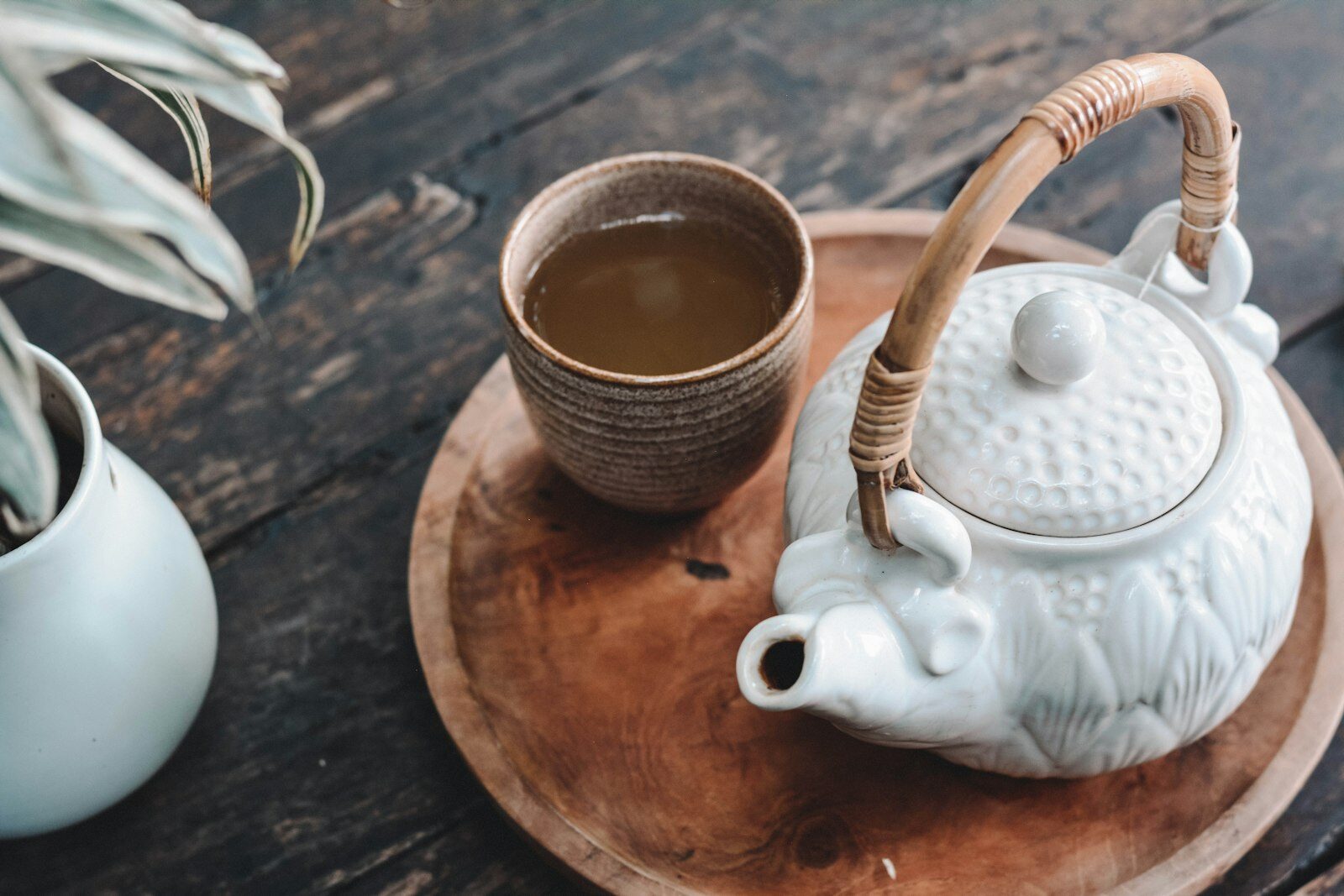
Method: Place all ingredients except honey in a mug. Pour over 8 oz of just-boiled water. Steep for 8-10 minutes. Add honey once it cools to a drinkable temperature. Sip mindfully once daily.
2. Pear & Tremella “Beauty” Soup
Purpose: A deep skin and lung moisturizer, traditionally used to combat autumn dullness.
Ingredients: 1 Asian pear, 1 small piece dried white fungus (tremella), 5 goji berries, 1 piece of rock sugar (about 1 tbsp).
Method: Soak tremella in warm water for 30 min until soft, tear into small pieces. Core the pear, cut into chunks. Place pear, tremella, and rock sugar in a pot with 4 cups of water. Bring to a boil, then simmer on low for 1 hour. Add goji berries in the last 10 minutes. Eat warm, 2-3 times per week.
3. Simple Lung-Nourishing Congee
Purpose: An easy-to-digest breakfast that builds fluids and Qi.
Ingredients: 1/2 cup jasmine rice, 6 cups water, 10 dried lily bulbs (Bǎi Hé), 10 almonds (sweet, peeled), 1 tbsp honey.
Method: Rinse rice. Combine rice, water, lily bulbs, and almonds in a pot. Bring to a boil, then reduce to a very low simmer, partially covered, for 1.5-2 hours, stirring occasionally, until it becomes a thick, creamy porridge. Stir in honey after turning off heat. Serve for breakfast 3-4 mornings a week.
Beyond the Kitchen: Daily Rituals to Combat Dryness
Nourishment is holistic. What you do is as important as what you eat.
- Breathe with Moisture: The nose is the gateway to the Lungs. Use a neti pot with a warm saline solution (1/4 tsp non-iodized salt in 1 cup warm distilled water) each morning to cleanse and moisturize nasal passages. Follow with 2-3 minutes of deep, slow diaphragmatic breathing.
- Mist Your Environment: Use a humidifier in your bedroom at night, aiming for 40-50% humidity. Place a bowl of water near your radiator. This external moisture supports your internal efforts.
- Oil Your Skin from the Outside: After a shower, while skin is still damp, apply a nourishing oil like sesame oil (warming) or sweet almond oil (neutral). This locks in moisture far better than water-based lotions. My grandmother used plain sesame oil on us every autumn.
- Practice “The Lung Sound”: In the Six Healing Sounds Qigong practice, the sound for the Lungs is “Ssssss” (like a gentle hiss). On an exhale, make this sound softly while visualizing releasing dryness and grief (the emotion of the Lungs). Inhale deeply, imagining cool, white light filling your lungs. Do this for 6 breaths, twice daily.
- Go to Bed Earlier: The Huangdi Neijing advises autumn sleep: “早卧早起,与鸡俱兴”—retire early, rise early with the rooster. This aligns with the contracting, yin-nature of the season, conserving fluids.
Common Questions
Q: I drink a lot of water but still feel dry. Why?
A: This is a classic TCM scenario. Your body may lack the Qi (energy) to transform and transport fluids to the skin and mucous membranes. It’s like having water in the pipes but no pressure to push it to the taps. Focus on Spleen Qi-supporting foods like sweet potato, rice, and cooked vegetables, and ensure you’re drinking warm liquids, not cold, which can further impair transformation.
Q: Are there any herbs I should avoid in autumn?
A: Yes. Avoid or minimize overly pungent, hot, and dispersing herbs and foods in excess. This includes large amounts of raw garlic, chili peppers, cinnamon (Guì Zhī), and ginger (Shēng Jiāng). While small amounts of ginger are fine, overuse can contribute to internal heat and dryness. The autumn diet should be more sour and sweet (to consolidate and nourish) rather than pungent (which scatters).
Q: My skin is breaking out AND feeling dry. What does that mean?
A: This suggests Dryness with underlying Heat or possibly Damp-Heat from summer lingering. The dryness parches the skin, while heat causes inflammation (breakouts). The solution is twofold: moisten (with pear, tremella) and gently clear heat without being too cold or drying. Incorporate mung beans (Lǜ Dòu)—simmer 1/4 cup in 4 cups water for 20 minutes, strain, and drink the cooling liquid. Also, consider a consultation with a TCM practitioner for a tailored approach.
Recommended Kitchen Tools
- Ceramic Neti Pot: For gentle, effective nasal irrigation.
- Quality Humidifier with Hygrometer: To maintain optimal bedroom humidity.
- Clay Soup Pot: Ideal for slow-simmering nourishing soups and congee.
The bottom line: Autumn dryness in TCM is a specific environmental influence that targets the Lung and Large Intestine systems, manifesting as dry skin, cough, and constipation. By consciously nourishing Yin and moistening dryness through specific foods like pear, white fungus, and lily bulb; adopting daily rituals like nasal care and oil massage; and aligning your lifestyle with the season’s quiet rhythm, you can transform a vulnerable time into one of profound nourishment and resilience.
About the Author
Yu Xi Zhang grew up in a Chinese household where traditional wellness practices were part of daily life. With over 15 years of study under licensed TCM practitioners in Beijing and Chengdu, and a certification in TCM nutrition from the Beijing University of Chinese Medicine, she bridges Eastern wisdom with Western wellness in practical, actionable ways. Her writing draws from classical texts like the Huangdi Neijing and modern research to help readers live healthier, more balanced lives.
This article is for educational purposes and reflects traditional wellness perspectives. It is not a substitute for professional medical advice, diagnosis, or treatment.